What is the Barakhadi Chart?
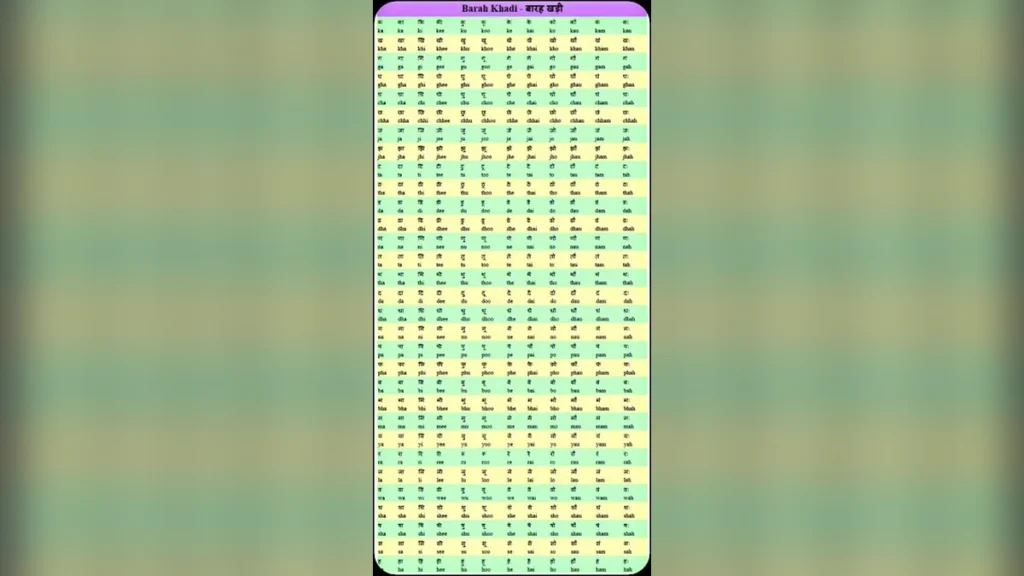
The Barakhadi chart is a fundamental learning tool for mastering the Hindi alphabet (Varnamala). It systematically combines each Hindi consonant with the twelve vowel sounds (matras) that follow it. This creates a grid that shows how each consonant’s sound changes when combined with different vowels, making it essential for learning to read and write in Hindi.
Think of it as the Hindi equivalent of learning the sounds of letters in English, but with a structured approach to vowel combinations. This chart is invaluable for beginners, children learning the language, and even adults looking to refresh their Hindi literacy skills.
Why is the Barakhadi Important?

Understanding the Barakhadi is crucial for several reasons:
- Pronunciation Accuracy: It helps learners correctly pronounce Hindi words by understanding how vowel sounds modify consonant sounds.
- Reading and Writing: It forms the basis for reading and writing, enabling you to decode and encode Hindi words.
- Foundation for Learning: It’s a stepping stone to learning more complex Hindi grammar and vocabulary.
- Universal Application: While the chart is for Hindi, the concept of combining consonants and vowels is universal in many languages.
How to Use the Barakhadi Chart Effectively
Using the Barakhadi chart is straightforward. Each row typically represents a consonant, and each column represents a vowel sound. You’ll see the consonant in its base form, followed by its combination with each of the 12 vowel sounds (including the inherent ‘a’ sound and diphthongs).
Example:
Let’s take the consonant ‘क’ (ka):
- क (ka) – inherent ‘a’ sound
- का (kaa) – with the ‘aa’ vowel sound
- कि (ki) – with the ‘i’ vowel sound
- की (kee) – with the ‘ee’ vowel sound
- कु (ku) – with the ‘u’ vowel sound
- कू (koo) – with the ‘oo’ vowel sound
- के (ke) – with the ‘e’ vowel sound
- कै (kai) – with the ‘ai’ vowel sound
- को (ko) – with the ‘o’ vowel sound
- कौ (kau) – with the ‘au’ vowel sound
- कं (kam) – with the ‘am’ (anuswar) sound
- कः (kah) – with the ‘ah’ (visarg) sound)
By systematically going through each consonant with these vowel sounds, you build a comprehensive understanding of Hindi phonetics.
Tips for Learning the Barakhadi
To make your learning journey smoother and more effective, consider these tips:
- Practice Regularly: Consistent practice is key. Try to review the chart daily, even for a few minutes.
- Say it Aloud: Pronounce each combination clearly and audibly. This helps reinforce the sounds.
- Write it Down: Manually writing the Barakhadi can significantly improve retention.
- Use Flashcards: Create flashcards with consonant-vowel combinations for interactive learning.
- Listen to Native Speakers: Pay attention to how native Hindi speakers pronounce words.
- Break it Down: Don’t try to learn everything at once. Focus on a few consonants each day.
Printing Your Barakhadi Chart
If you’ve downloaded a digital version of the Barakhadi chart (like a JPG image), you can easily print it for your study needs. Here’s how:
- Save the Image: Ensure you have saved the original JPG image of the chart.
- Use a PDF Converter: If your chart is in JPG format, use an online tool or software to convert it into an A4-sized PDF. Many free tools are available for this.
- Check the Preview: Before printing, always open the PDF preview. Carefully examine all the letters and ensure they are clear and legible. Check the borders to make sure nothing is cut off.
- Maintain Aspect Ratio: When resizing or printing, try to maintain the original aspect ratio of the image. Stretching or compressing the image can distort the letters and make them harder to read. If necessary, use the margin settings in your print dialog to add white space around the chart.
- Verify File Size and Resolution: For best results, check the pixel dimensions and file size of the downloaded image. A very small screenshot, when enlarged, will not produce clear text. Ensure the image has sufficient resolution for printing.
Frequently Asked Questions (FAQs)
What is the difference between Varnamala and Barakhadi?
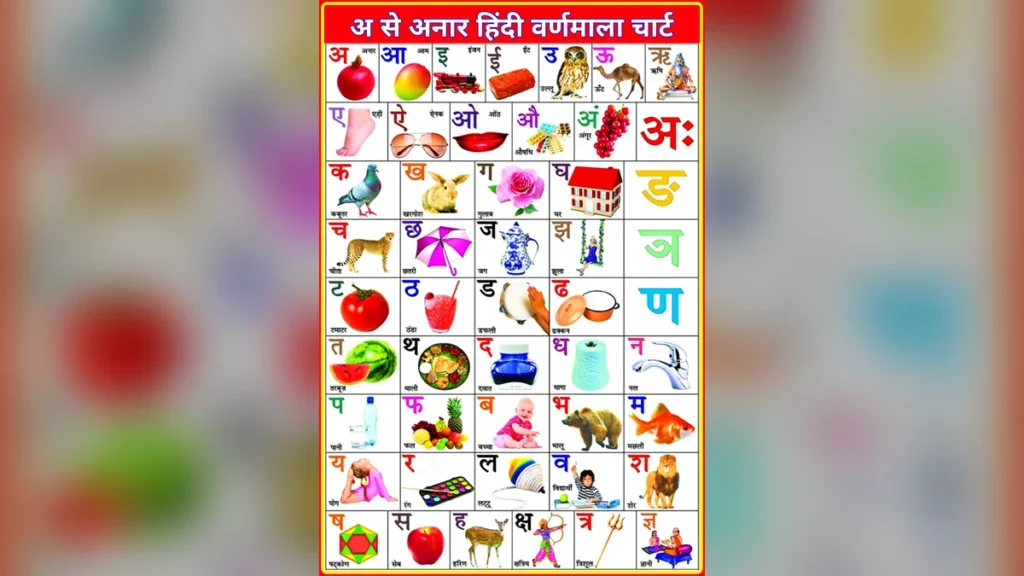
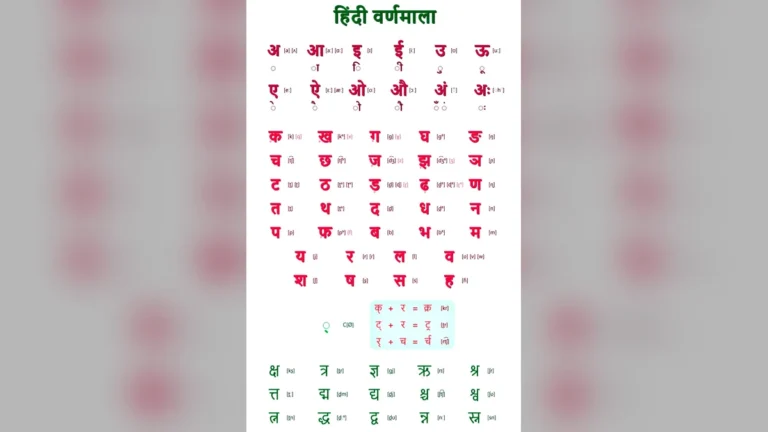
The Varnamala refers to the entire Hindi alphabet, including all consonants and vowels. The Barakhadi specifically focuses on the combinations of consonants with the twelve vowel sounds (matras).
Can I learn Hindi pronunciation using only the Barakhadi chart?
The Barakhadi chart is an excellent starting point for learning Hindi pronunciation, but it’s not the only resource needed. Supplementing your learning with listening to native speakers, practicing speaking, and learning vocabulary will provide a more complete understanding.
Is the Barakhadi chart useful for learning Hindi script for non-native speakers?
Absolutely! The Barakhadi chart is one of the most effective tools for non-native speakers to grasp the phonetic structure of Hindi and learn to read and write the script.
How long does it take to learn the Barakhadi?
The time it takes to learn the Barakhadi can vary depending on individual learning pace and practice frequency. Consistent daily practice for a few weeks can lead to a good level of proficiency.
What are the 12 vowel sounds in the Hindi Barakhadi?
The 12 vowel sounds (matras) represented in the Barakhadi are: a, aa, i, ee, u, oo, ri, e, ai, o, au, am (anuswar), ah (visarg). Note that ‘ri’ is often included, and the last two represent nasalization and aspiration.