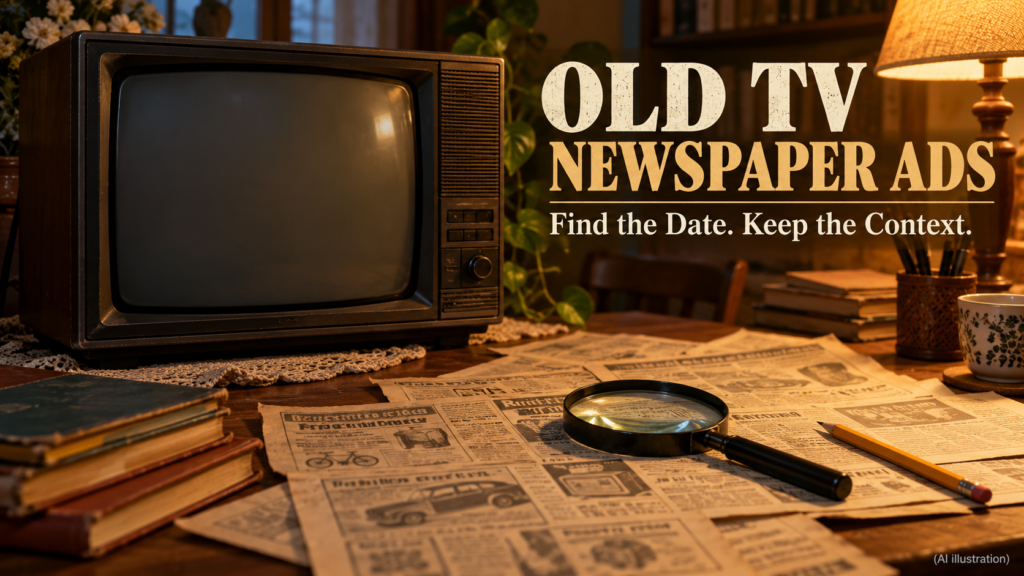
Old Doordarshan serial newspaper ads: from memory to evidence
Waiting for a programme and checking a tiny newspaper schedule can be as memorable as the television itself. Looking for old Doordarshan serial newspaper ads often begins with that feeling, while the exact title, year or city has become uncertain. A useful search turns those fragments into a record that someone else can check.
This article explains how to find and contextualise genuine clippings. It does not present a newly invented advertisement as an original. All three images are fictional AI illustrations, not newspaper scans, actor publicity photographs or authentic serial posters.
An advertisement, a TV listing and a review differ
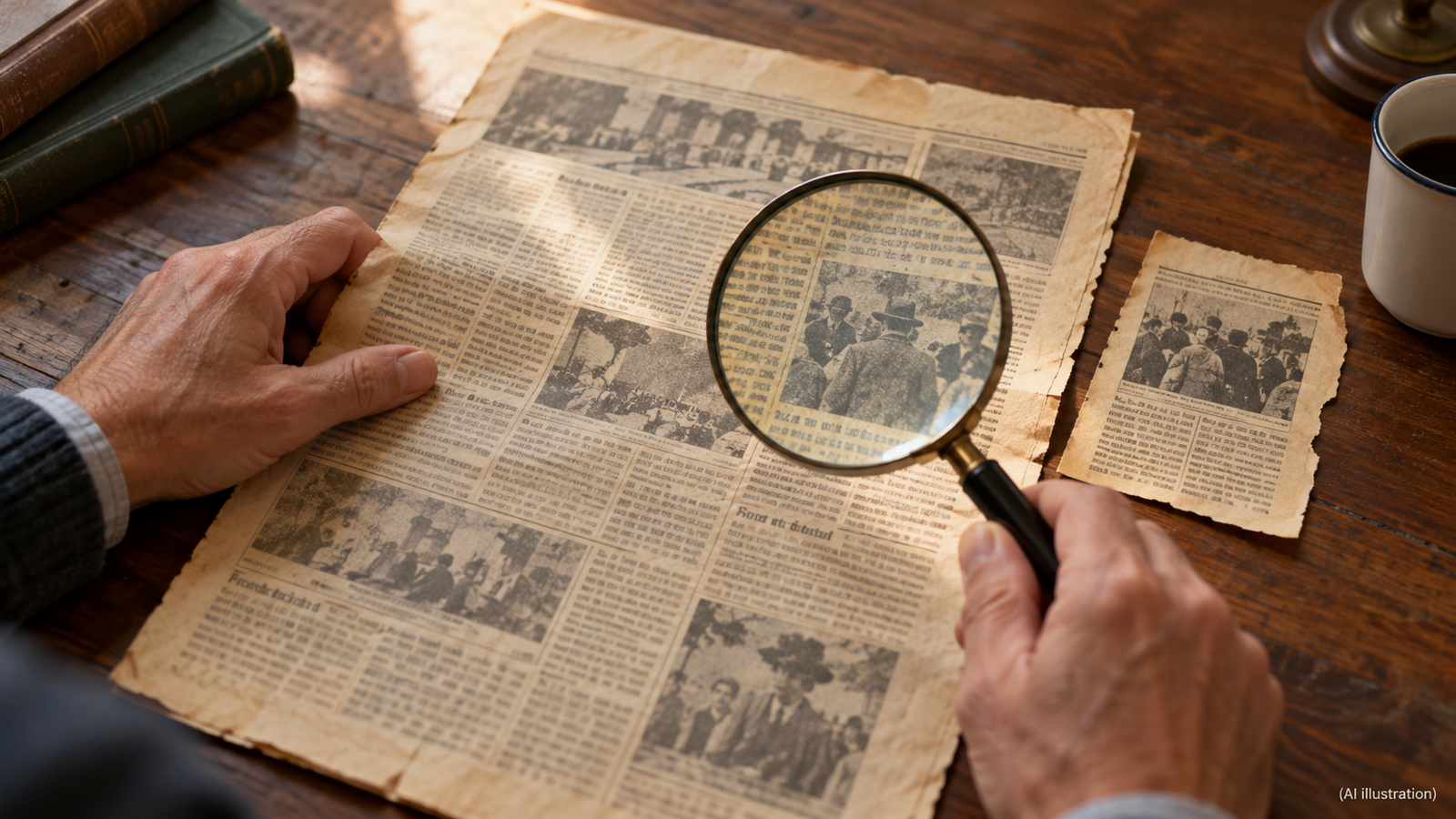
An advertisement may promote a programme; a TV listing may announce a proposed daily schedule; a review comments on a programme. Finding the same title in all three does not make them interchangeable. Label the type of item before drawing a conclusion about its date.
Read “tonight” against the issue date of the newspaper that printed it. The word alone cannot date a detached crop. A time in a listing is evidence of a published schedule, not definitive proof that the transmission occurred exactly as planned.
If researching a premiere, consider repeats, regional slots and later releases separately. This article does not assert an unverified first broadcast date or historic time slot for any particular serial.
Write five search details first
Record five details: likely programme title, approximate year, newspaper language, city or edition, and whether you want an advertisement, listing or review. A range such as around 1988 in a Hindi newspaper’s Bhopal edition is more useful than “old DD ad.”
Try the name in its original script and Roman spelling, with variants and terms such as television schedule, TV listings, advertisement or दूरदर्शन कार्यक्रम. Marathi जाहिरात and Bengali বিজ্ঞাপন/অনুষ্ঠানসূচি can be relevant language variants. These are query ideas, not promises of a result.
Treat a social-media caption’s date as a lead until an original issue record supports it. An actor’s appearance or a typeface alone cannot establish the publication year. Do not turn a remembered estimate into a factual headline.
Newspaper archives and broadcast archives serve different purposes
NDLI’s Newspaper Archives section is an institutional starting point. Available years vary by newspaper. A title in a catalogue does not establish complete digitisation of every decade, city edition and issue; check the contributing provider’s coverage.
NDLI can direct discovery towards the source, where access or login conditions may differ. Do not promise a scan where one has not been located. A newspaper library, publisher archive or city reference library may be able to answer an enquiry with an issue date.
Prasar Bharati Archives preserves sound and audiovisual media. Programme footage or an official upload may help identify a show, but that is not automatically a collection of all its newspaper advertisements. Broadcast and print sources answer different questions.
An official video’s upload date is not necessarily a historic issue date or original broadcast date. Keep a modern thumbnail, retrospective poster and period print advertisement distinct. State what the source actually provides.
How to check the date of a clipping
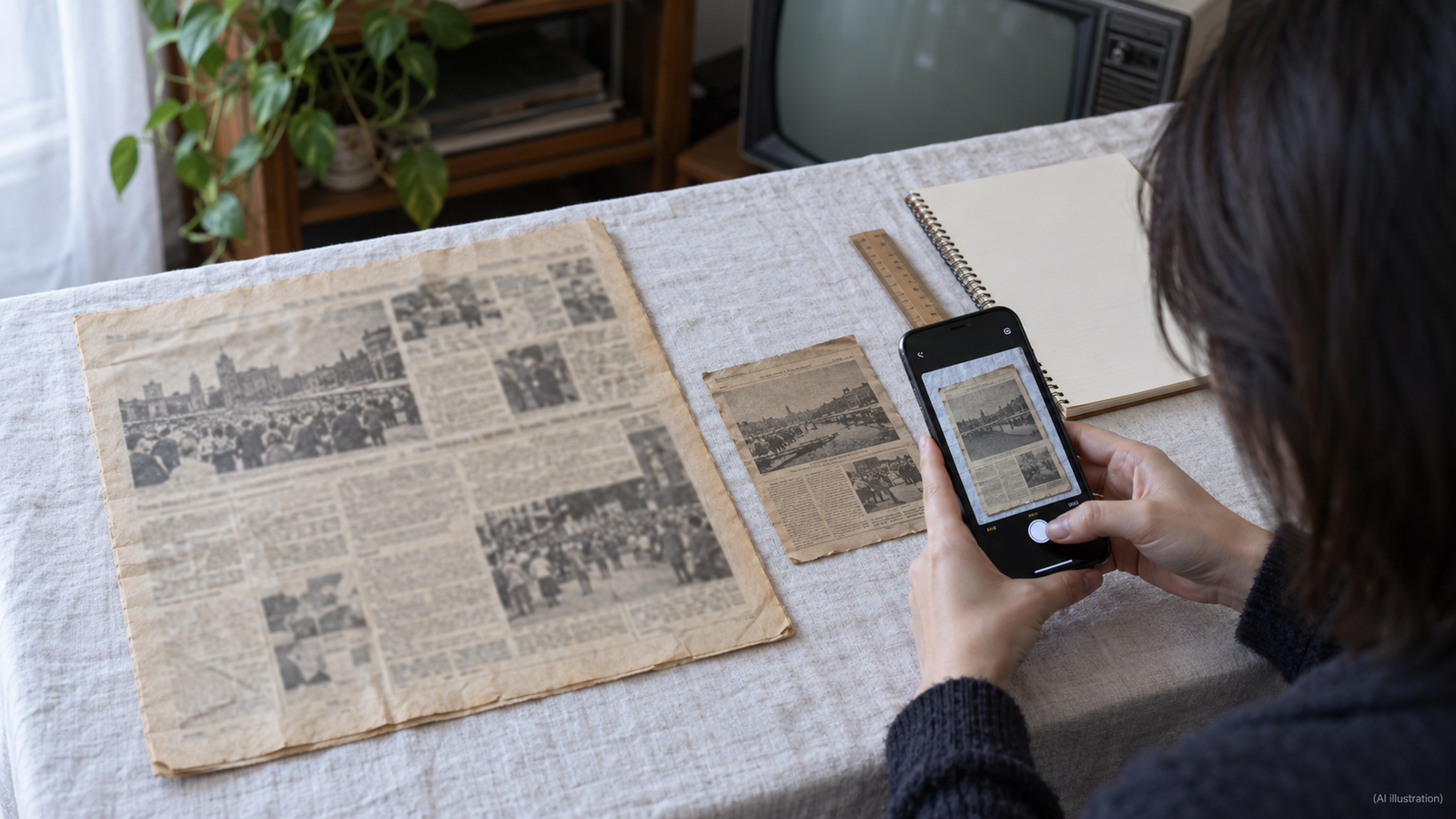
Find the whole page or issue record first. Record newspaper name, date, city or edition, page number and archive identifier before concentrating on the crop. If those details are missing, explicitly leave the date unconfirmed.
Compare archive metadata with a date printed on the page. Check pagination, neighbouring columns and masthead context. If details conflict, question the crop, supplement or catalogue entry rather than silently choosing the most convenient date.
FACT: Clipping publication date, advertised slot, actual transmission and digital-upload date are different records. One does not automatically establish all the others.
If OCR cannot find the title, try spelling variants and nearby dates. Small print and poor scans can defeat text recognition. No search match is not proof that an advertisement was never printed.
Do not treat AI-filled missing letters as original wording. Label an edited reading copy separately from the original and mark uncertain transcription. Image restoration cannot manufacture new historical evidence.
Advice: document what you actually found
Keep a record of newspaper, edition, issue date, page, programme or headline, source link or identifier, and access date. Preserve the connection between whole page and crop. For a private scrapbook, record ownership and the basis of any claimed date.
An honest caption can say that the family clipping’s newspaper is legible but its issue date has not been independently verified. Change that status only when evidence supports it. Do not add rare unseen original solely as a search phrase.
Understand rights and permissions before reproducing someone else’s clipping or a publisher’s scan, and credit the source. Online access does not automatically permit rehosting complete pages or galleries. This article does not upload original newspaper-ad files.
For a surviving clipping, photograph both sides and record issue details first. Do not pull fragile paper, remove old tape or force it flat just for a photograph. Ask a library or conservator about difficult handling.
A personal memory can accompany the record when clearly distinguished from verified facts. Our related textbook/archive guide explains keeping a remembered date separate from publication evidence.
Frequently asked questions
Is this an authentic old-DD-ad gallery? No. It is a search guide with AI illustrations.
Is every TV listing an advertisement? No. Check its label and context.
Does a YouTube upload date establish the original telecast? Not automatically.
Does every NDLI newspaper include every old issue? Check provider and year coverage.
Can a crop establish an exact date? Only with sufficient supporting evidence; otherwise retain uncertainty.
Sources and AI illustration disclosure
General nostalgia and archival research, not authentication of a particular clipping. Doordarshan names are references, not affiliations. All images are fictional AI scenes, not genuine newspaper scans or programme advertisements. Sources checked on 24 October 2026.
- NDLI: newspaper archive discovery and coverage
- NDLI project: discovery through contributing institutions
- Prasar Bharati Archives: sound and audiovisual preservation
Old Balbharati books and searching the official archive