Bhimashankar glowing mushrooms: what is real?
Bhimashankar glowing mushrooms can make a forest photograph look like a fairy tale. The biological phenomenon, the photograph’s location and its displayed brightness are separate questions. Some fungi genuinely produce light; that does not authenticate every green mushroom image online or establish where it was taken.
Kalpavriksh, which works in the Bhimashankar landscape, mentions bioluminescent fungi in its description of the area. This supports a regional discussion, not the date or species of an unrelated viral photograph.
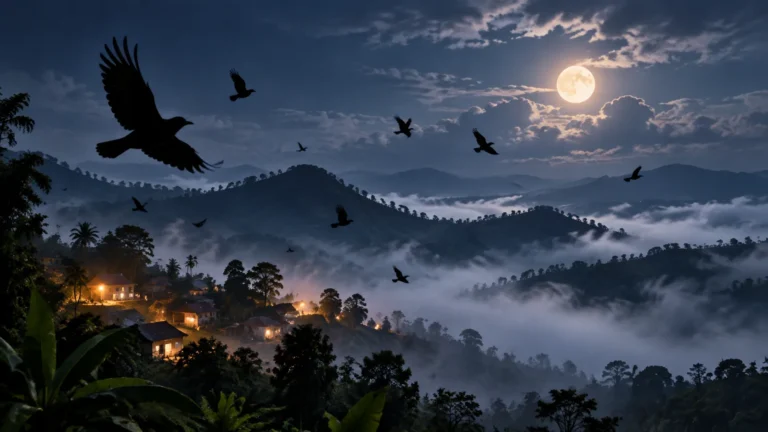
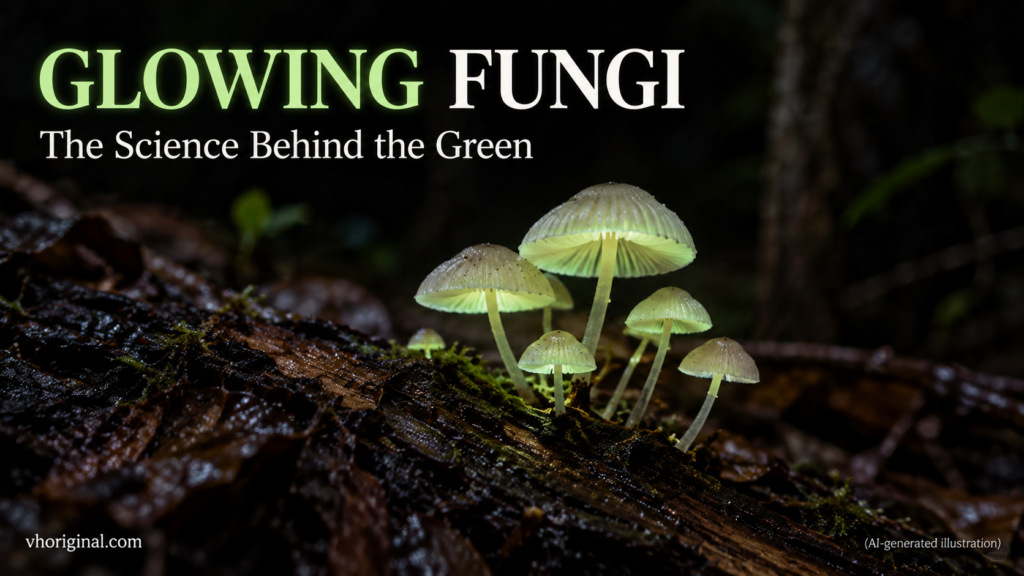
This guide explains the science and image checking. Its three images are conceptual AI illustrations, not original Bhimashankar night photographs. The daylight and night scenes are not a matched before-and-after experiment on one specimen. Real photographic research references are linked below.
Where does bioluminescent light come from?
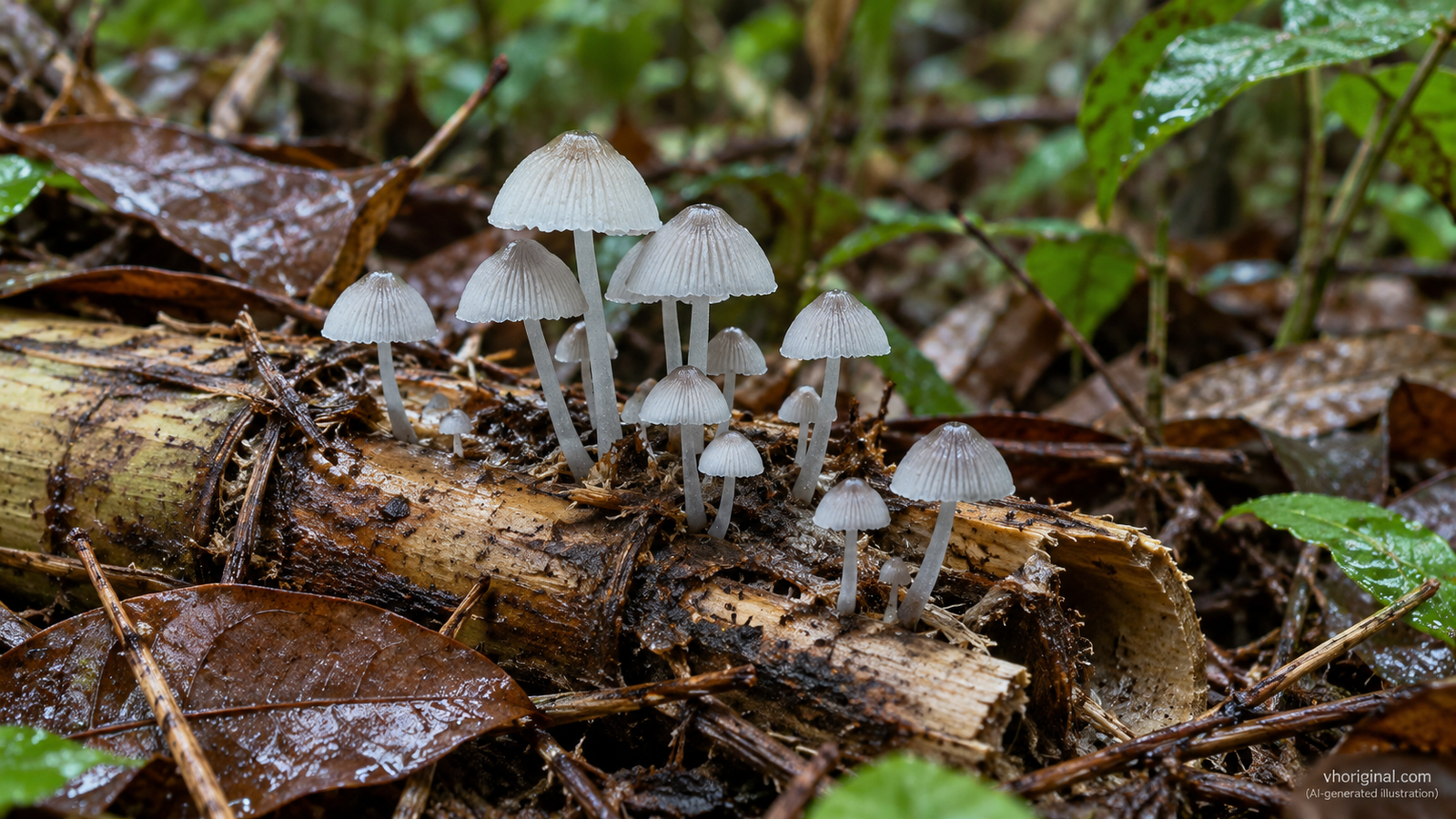
Bioluminescence means light production through biological chemistry. Kew’s fungi article describes light generated by reactions within cells. Illuminating a mushroom with an external green lamp is a different event.
Green colour on a screen cannot establish the mechanism. Ask about torches, flash, UV illumination, reflections and editing. Missing lighting information is a reason to keep a claim uncertain rather than treating colour as proof.
Not all mushrooms glow. Read the relevant study to learn which fungal part emitted light and under what conditions. Apparent glow shape or intensity alone is not species identification.
Keep Bhimashankar and Konkan records distinct
A 2022 Journal of Threatened Taxa paper about Lonavala mentions a previous Bhimashankar record in its abstract. Its new photographic record is from Lonavala. A place name appearing in a paper does not make every photograph a record from that place.
A 2024 paper in the same journal records Mycena chlorophos in Maharashtra’s Sindhudurg region of Konkan. It is relevant Maharashtra research; do not relabel its specimen as Bhimashankar without evidence.
No independent Bhimashankar field survey or authentication of a fresh local night photograph was performed for this article. AI has not supplied that missing evidence. Read the original paper’s image caption and locality.
FACT: A published species record, image location, observation date and the chance of seeing it on a visit are separate matters. A paper does not guarantee a sighting on a chosen evening.
What the eye sees and what a camera records
A camera gathers light during an exposure. Shutter time, ISO, lens and processing affect displayed brightness. A clearer photographic glow is not automatically fake, and an impressive image does not promise identical naked-eye visibility.
A matched comparison needs documented light and dark images of the same specimen. Compare subject, date, framing and lighting information. Two photographs from different locations do not make a before-and-after record.
Night mode may combine frames; read labels for composites or stacking. RAW files and EXIF can provide context, but metadata alone cannot certify location or authenticity.
Added glow, selective green colouring or generative fill should be disclosed as editing or illustration. Exposure adjustment and inventing a light source are different editorial choices; explain material alterations.
Advice: check the context of an original night photograph
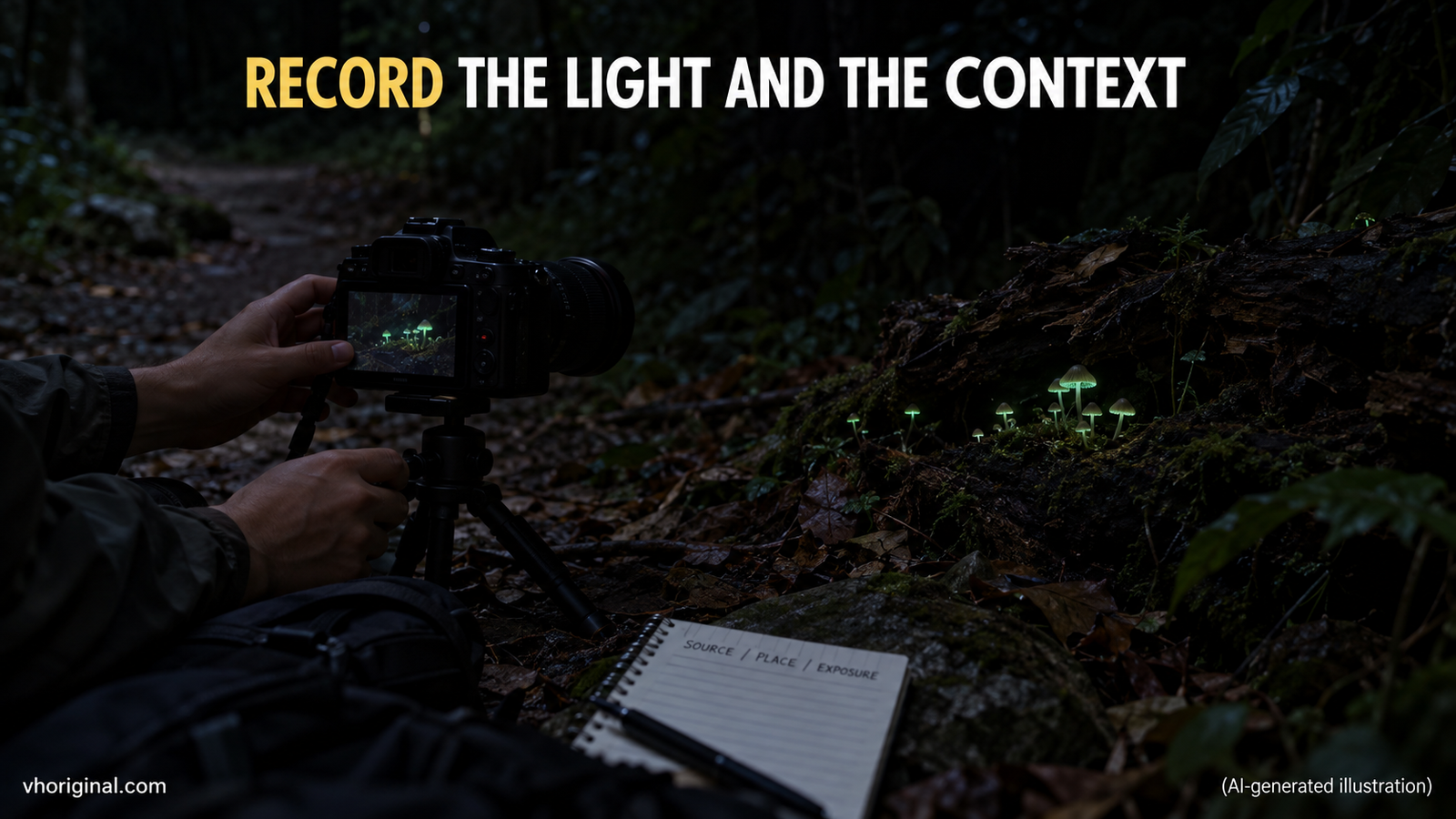
Trace the original photographer or paper. Record where the image was published, what its caption says, the observation’s place and date, and the light source. Do not stop at a thumbnail or forwarded message.
If a scientific name accompanies it, ask who identified the fungus and how. A general mushroom silhouette cannot establish exact species. A paper’s identification concerns its recorded specimen, not every similar mushroom elsewhere.
For your own permitted observation, retain a wider habitat view, a daylight appearance where safe and appropriate, and night-image settings. Keep originals and edited versions separate. Do not detach or relocate specimens for a photograph.
A caption can state locality, available exposure information and the basis of expert identification. Mark missing details as unconfirmed. Claim your own camera record only for photographs you actually made.
Credit photographers and check reuse terms. Research photographs do not all share identical permissions merely because they are visible online. Our AI scenes are not evidence of your visit.
Forest access, habitat and mushroom safety
Before visiting the Bhimashankar wildlife landscape, verify current access, timings, night activities and photography conditions with the official forest office. This guide has not established current night-entry permission. An old news story or tour advertisement is not permission.
Do not follow an unfamiliar dark route solely to find a glowing image. Follow local arrangements and safe paths. Switching off necessary route lighting or wandering alone is not required for a worthwhile photograph.
A glow does not establish edibility or medicinal safety. Do not taste unidentified fungi. This is not a foraging, collecting or treatment guide; colour and light are not food-identification tests.
Leave decaying wood, litter and surrounding habitat in place. Respecting a site matters more than obtaining an image. No unverified rain date, tour price or guaranteed-glow promise is offered.
Five frequently asked questions
Can fungi truly emit light? Yes, bioluminescence is real.
Does every Mycena or mushroom glow? No universal rule should be assumed.
Is a Konkan research photo from Bhimashankar? Keep locality records separate.
Does a brighter camera image mean fake? Brightness alone is insufficient; check exposure and editing.
Are these original night photos? No; they are AI illustrations, with real research links below.
Sources and AI illustration disclosure
General science and photo literacy, not specimen authentication, edibility identification or travel permission. All three images are fictional AI scenes, not actual locality records or precise identification plates. Sources checked: 25 October 2026.
- Kalpavriksh: Bhimashankar conservation landscape — bioluminescent fungi mention
- Royal Botanic Gardens, Kew: fungal bioluminescence
- Patil & Yadav, JoTT 2022: photographic record from Lonavala; earlier Bhimashankar reference
- Koli et al., JoTT 2024: Mycena chlorophos record from Konkan, Maharashtra
- Kew Grow Wild: photographing fungi and recording visual context
How to assess keeda-jadi photographs and species claims