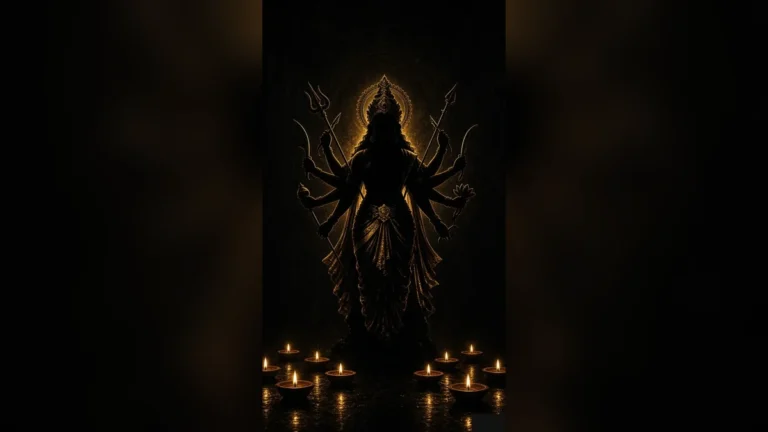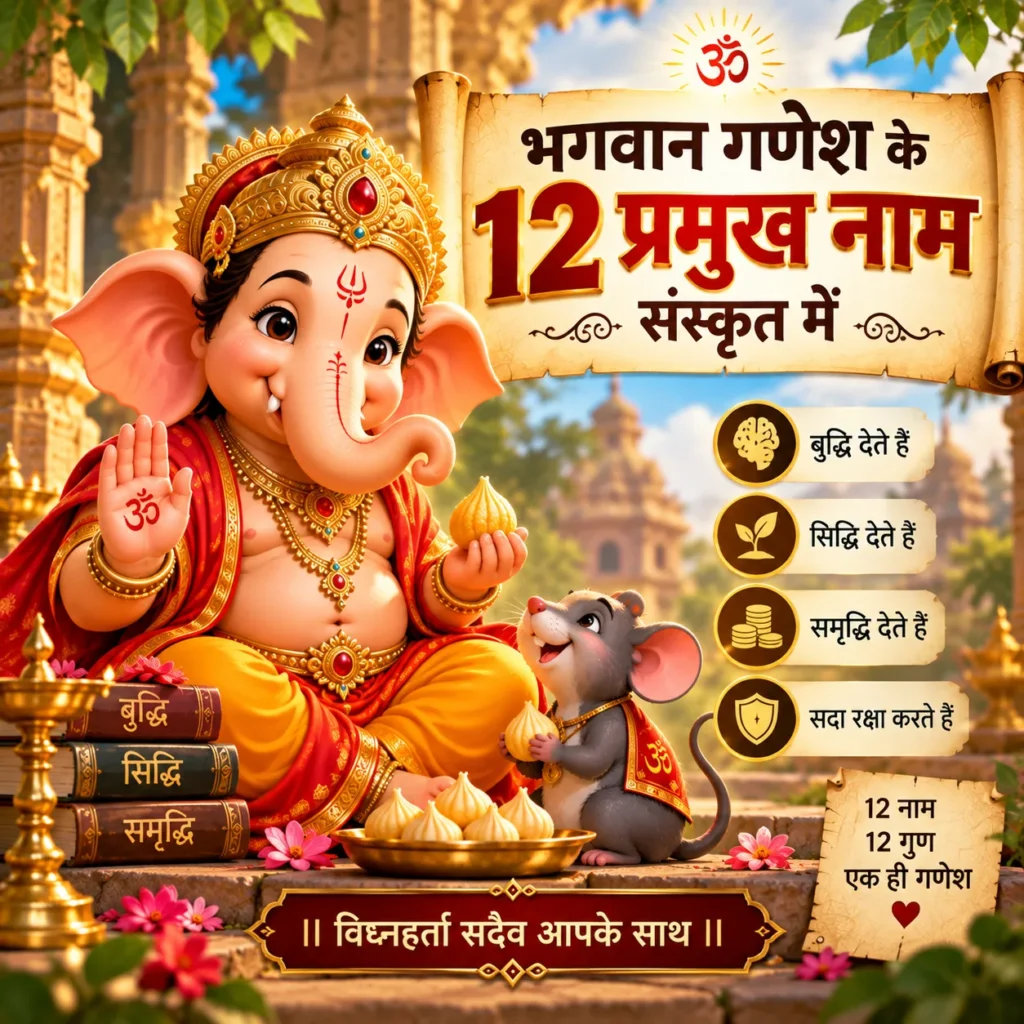
Knowing the 12 names of Lord Ganesha in Sanskrit is not just about memorising a list — it is a classical recital of the Dwadasa Namavali. Starting from Om Sumukhaya Namah to Om Gajananaya Namah in the morning or before embarking on a new task is a traditional practice followed in many households. Below you will find the complete verse (shloka), the mantra-meaning of each name, chanting rules, and the clear meaning of the Phalasruthi (benefits of recitation).
Bappa is revered as the remover of obstacles (Vighnaharta) and the giver of wisdom. When auspicious tasks such as commencing education, joining a job, starting a business, getting married, or undertaking a journey begin, many families first recite these twelve names. This article blends devotion with accurate information — offering no guaranteed miracles, but a clean list of the classic Dwadasa Namavali and a practical chanting guide.
12 Names of Lord Ganesha in Sanskrit — What is Dwadasa Namavali?
When people search for the 12 names of Lord Ganesha in Sanskrit, they are essentially looking for the Dwadasa Namavali — a sacred sequence of twelve names that has been used in worship for centuries. “Dwadasa” means twelve, and “Namavali” means a garland of names. It is not merely a rote exercise; it is a brief ritual of focus and faith where each name recalls a specific attribute or form of Bappa.
In Hindu tradition, chanting names (nama-japa) is considered a simple spiritual practice. Reciting lengthy Chalisa verses or performing complex rituals may not be feasible for everyone every day; however, a sequence of twelve names can be easily read at home, in the office during the morning, or before walking into an examination hall. While Sanskrit pronunciation requires a little care, pure intention makes minor errors pardonable — this recital is meant to connect, not frighten.
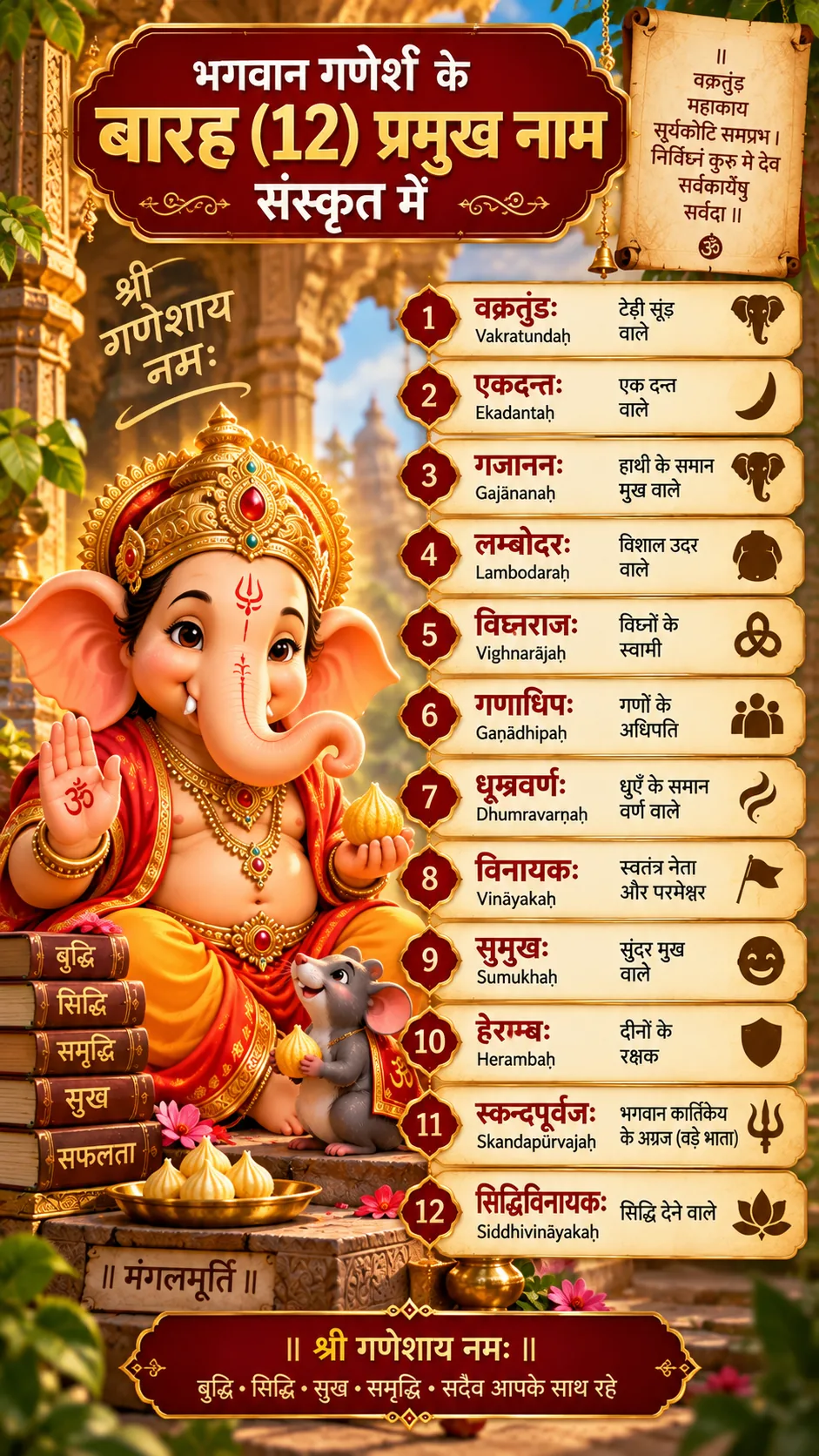
At Vista Hub, we prioritize the classic Dwadasa Namavali: from Sumukha to Gajanana. Some popular infographics display alternative 12-name sets including Vakratunda, Heramba, etc. — these may belong to different stotrams or lists. The focus of this article is strictly on the scripturally prevalent Dwadasa Namavali so that readers find the correct mantras without confusion.
Ahead, you will find the full Sanskrit verse, the Hindi/English meaning of the Phalasruthi, a table of names, a brief meaning for each name, and how to practice the chant — in the morning, before new beginnings, on Wednesdays, Sankashti, and major life occasions. Maintain faith, respect family or temple traditions, and make this recital a part of your daily peace.
Dwadasa Namavali Verse in Sanskrit and Meaning of Phalasruthi
The core verse of the Dwadasa Namavali is traditionally chanted or sung as given below. Read slowly, and wherever possible, listen to the pronunciation from an elder or temple priest. Below is the Sanskrit text followed by the simple meaning of the Phalasruthi.
॥ Sri Ganesh Dwadasa Namavali ॥
Sumukhashchaikadantashcha Kapilo Gajakarnakah ।
Lambodarashcha Vikato Vighnanasho Vinayakah ॥
Dhumraketurganadhyaksho Bhalachandro Gajananah ।
Dwadasaitani Namani Yah Pathechhnrunuyadapi ॥
Vidyarambhe Vivahe Cha Praveshe Nirgame Tatha ।
Sangrame Sarvakaryeshu Vighnastasya Na Jayate ॥
Meaning of the Phalasruthi: Whoever recites or devoutly listens to these twelve names — during the commencement of education (Vidyarambha), marriage (Vivaha), entering or leaving a place, in times of conflict or struggle (Sangrama), and during all other activities — will face no obstacles in their path. This is the essence of the scriptural promise. Treat this recital not as a “guarantee certificate,” but as a prayer for smooth beginnings and the removal of hurdles. The Phalasruthi inspires faith; it does not replace hard work and integrity.
In many households, the complete verse is recited once, followed by chanting individual mantras with Om … Namah for each name. Some simply repeat the chain of names. Both methods are valid. What matters most is concentration: keep your mobile phone aside, settle your breath, and carry the prayer “Bappa, smooth my path” in your heart. If you have children, share these small meanings along with the verse — then names become understanding rather than just sound.
Remember: the Phalasruthi phrase “Vighnastasya Na Jayate” is the language of blessings. Life brings continuous challenges; devotion provides the fortitude to endure and resolve them. Therefore, while reciting the Dwadasa Namavali, lower your anxiety and build your faith — that is the most practical benefit felt daily.
12 Names of Lord Ganesha — Sanskrit Mantras and Meaning Table
Below is the authentic table of the classic Dwadasa Namavali. While some infographics show alternative sets featuring Vakratunda and others, this post follows the classical Dwadasa Namavali from Sumukha to Gajanana. Treat each line as a complete mantra while chanting.
| S.No. | Name | Mantra | Short Meaning |
|---|---|---|---|
| 1 | Sumukha | Om Sumukhaya Namah | The One with a beautiful face |
| 2 | Ekadanta | Om Ekadantaya Namah | The One with a single tusk |
| 3 | Kapila | Om Kapilaya Namah | The One of tawny / golden-brown complexion |
| 4 | Gajakarnaka | Om Gajakarnakaya Namah | The One with elephant-like ears |
| 5 | Lambodara | Om Lambodaraya Namah | The One with a large belly |
| 6 | Vikata | Om Vikataya Namah | The One with a formidable / immense form |
| 7 | Vighnanasha | Om Vighnanashaya Namah | The Destroyer of obstacles |
| 8 | Vinayaka | Om Vinayakaya Namah | The Supreme Leader / Exemplary Guide |
| 9 | Dhumraketu | Om Dhumraketave Namah | The One of smoky hue / cosmic aura |
| 10 | Ganadhyaksha | Om Ganadhyakshaya Namah | The Lord / Commander of the Ganas |
| 11 | Bhalachandra | Om Bhalachandraya Namah | The One who wears the moon on His forehead |
| 12 | Gajanana | Om Gajananaya Namah | The One with the face of an elephant |
You may screenshot this table for quick reference on your phone, though it is ideal to commit the names to memory over a few days. Teach children just three names a day — within a week, they will master the entire sequence. Pay special attention to the pronunciation of “Dhumraketave”; most other names end with “-aya Namah”.
Some devotees silently append a short prayer after each mantra — such as saying “remove the hurdles in my path” upon chanting Vighnanasha. This is not compulsory, but it helps sustain attention. Remember: the order of the list matters; shuffling names breaks the traditional flow, even if it carries no negative effect.
Essence of Each Name — Short Meaning Bullets
Names are not mere labels; they are gateways to Bappa’s divine qualities. Below is a concise, reverent explanation of each name — a single line for memory, a value to adopt in life.
- Sumukha: Possessor of a pleasant and auspicious face — reminding us of grace and gentle blessings.
- Ekadanta: Single-tusked — symbolizing sacrifice, intense focus, and making the incomplete whole.
- Kapila: Possessing a golden-tawny radiance — signifying brilliance and pure spiritual energy.
- Gajakarnaka: Elephant-eared — the listener of all prayers, representing keen listening and compassion.
- Lambodara: Large-bellied — accommodating the entire universe/experiences; representing contentment and generosity.
- Vikata: Formidable form — unwavering power against negativity and ego.
- Vighnanasha: Destroyer of hurdles — the beloved name that removes obstacles.
- Vinayaka: The supreme leader — the divine master and pathfinder.
- Dhumraketu: Smoky-hued flag/comet — divine light piercing through dark illusions.
- Ganadhyaksha: Leader of the Ganas — representing organization, discipline, and leadership.
- Bhalachandra: Moon-crested forehead — bringing composure, peace, and auspiciousness.
- Gajanana: Elephant-faced — the complete form of wisdom, memory, and grace.
Do not treat these interpretations as scientific reports; they are devotional explanations passed down across generations. If a family priest explains a slightly different nuance, both can be respected — faith requires no monopoly. Children often find names like Vikata and Vighnanasha heroic, while Sumukha and Bhalachandra instill calm. Balance is the true beauty of the Dwadasa Namavali.
When you complete the circle from Sumukhaya Namah to Gajananaya Namah, the mind experiences the fulfillment of completing a small rosary. This feeling transforms daily chanting into a joyful habit. Knowing the meanings ensures that japa does not become mechanical — each name turns into a heartfelt prayer.
How to Chant — Timing, Counts, Wednesdays & Auspicious Occasions
Chanting the Dwadasa Namavali does not demand elaborate rituals. Clean hands and face, a quiet corner, and where possible, a lit lamp or simple mental salutation are quite sufficient. Morning recitation after a bath or at the altar is the most common practice. Before starting new work — such as an office presentation, submitting a file, or opening a shop — many people recite it 1 or 3 times.
Repetitions: Tradition suggests chanting 1, 3, 11, or 108 times. For daily routine, 1 or 3 repetitions are practical; on Wednesdays, Sankashti, or during special vows, 11 or 108 repetitions are observed. Chanting 108 times takes longer — a calm recitation of 11 times is far better than rushed mispronunciations. Use a rudraksha or mala if available, or keep count on your fingers.
Wednesdays are specially associated with Lord Ganesha; many devotees make it a point to recite the Namavali on this day. On Sankashti Chaturthi, combining this recital with fasting/fruit diet and Aarti creates a spiritually uplifting atmosphere. Before commencing studies (Vidyarambha), joining a job, initiating a business, prior to marriage rituals, or embarking on a journey — the Phalasruthi specifically highlights these moments.
A practical method: Recite the full verse once → then chant the 12 mantras in order → conclude with “Sri Ganeshaya Namah”. If pressed for time, chant only the 12 mantras. Opening this article on your phone and reading quietly while traveling is also a valid form of devotion. Chanting aloud or silently in the mind are both accepted; if family members are resting, mental chanting (Manasika Japa) is ideal.
An honest note: Certain social media posts claim that chanting a specific number of times guarantees a job by a fixed date. Such claims are not scriptural. Vista Hub emphasizes: recite the names, work hard, and remain patient. Devotion stabilizes the mind; outcomes arise from karma and right timing.
Benefits of Dwadasa Namavali — Wisdom, Success & Obstacle-Free Path
In devotional tradition, chanting Ganesha’s names brings wisdom (Buddhi), attainment/success (Siddhi), a sense of prosperity, and the assurance of divine protection. This can also be understood psychologically: a short morning ritual centers focus, relieves anxiety, and instills a positive resolve that “today’s tasks will go smoothly.” Scriptural tradition expresses this very sentiment in the Phalasruthi — freedom from obstacles.
When students chant the Namavali before exams, they are not asking for a magical shortcut to pass — they pray for concentration and recall. When business owners recite it before opening their shops, it fosters patience in customer handling and ethics in accounting. In a family preparing for a wedding, the recital serves as a collective blessing. Before a journey, a brief chant keeps the heart anchored and peaceful.
Quantifying spiritual benefits in percentages is inappropriate. Regular practitioners often share that their minds feel lighter, hesitation before starting work decreases, and a pleasant morning routine develops within the family. Sitting with children for this recital builds familiarity and respect for Sanskrit. If a full Chalisa feels long, the Dwadasa Namavali acts as a perfect bridge.
To conclude with an authentic note: while some infographics highlight alternative 12-name lists (like Vakratunda), this article stays true to the classic Dwadasa Namavali (Sumukha to Gajanana). Learn the accurate list, chant with devotion — arguing over names is never the goal of true worship.
Also Read:
- Shri Ganesh Chalisa | Full Text and Recitation Guide
- Name of Ganesha’s Mouse — The Story of Krauncha to Mushakraj
- Ganesh Aarti and Mantras 2026: Sukhkarta Dukhharta + Om Gam Ganapataye
- Left Trunk Sitting Ganesh Vastu Photo — Ideal Ganesha Idol for Home
- Ganesh Sthapana Puja Vidhi at Home 2026 — 10 Steps + Samagri List
- Eco-Friendly Ganesh Idol 2026 — Shadu Clay Ganesha Guide
FAQ — 12 Names of Lord Ganesha in Sanskrit
Q1. What are the 12 names of Lord Ganesha in Sanskrit?
The classic Dwadasa Namavali includes: Sumukha, Ekadanta, Kapila, Gajakarnaka, Lambodara, Vikata, Vighnanasha, Vinayaka, Dhumraketu, Ganadhyaksha, Bhalachandra, and Gajanana.
Q2. How to chant the mantra for each name?
Begin with Om Sumukhaya Namah and continue in order up to Om Gajananaya Namah. You can also recite the full Dwadasa Namavali shloka.
Q3. How many times should one chant the Dwadasa Namavali?
1, 3, 11, or 108 times depending on your time and faith. 1 to 3 times daily is practical, while 11 or 108 times is ideal for special occasions.
Q4. When is it auspicious to recite these names?
In the morning, before starting new work, on Wednesdays, Sankashti Chaturthi, and before education, jobs, business, marriage, or travel.
Q5. Why do some sources list Vakratunda among the 12 names?
Those represent alternative popular name-lists or stotrams. This article strictly follows the scriptural Dwadasa Namavali from Sumukha to Gajanana.
Disclaimer: This article is provided for cultural, educational, and devotional reference. It does not constitute medical, legal, or financial advice. Worship rituals may vary based on family, guru, and temple traditions. Please consider your health condition before undertaking fasts or rituals.