 Vista
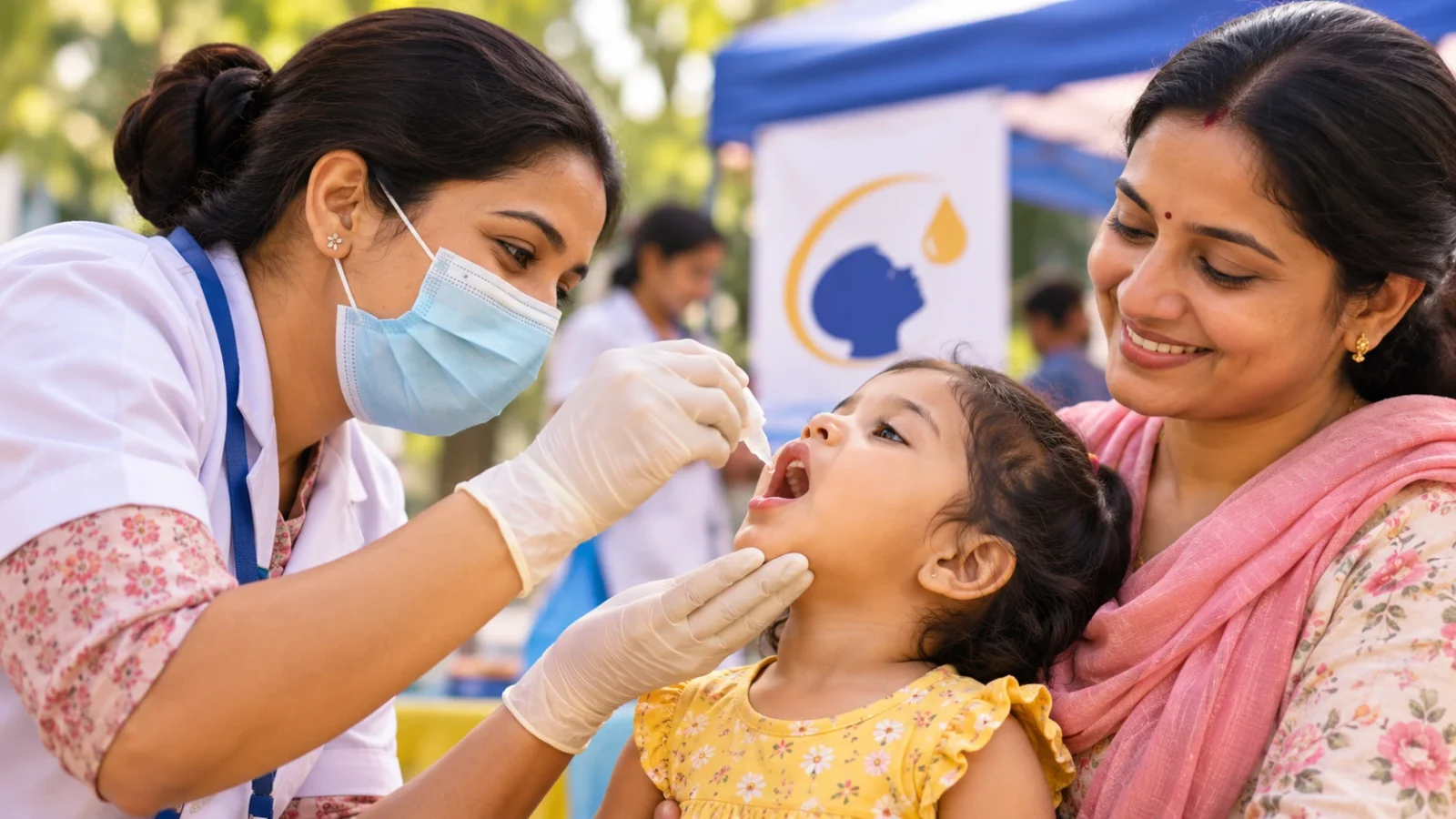
There is no single November 2026 Pulse Polio booth schedule that can safely be applied to every district in India. Sub-national immunisation drives and follow-up visits vary by location. For example, Fazilka in Punjab reported a 22–24 November campaign, selected districts of Telangana scheduled follow-up work on 23–24 November, and health teams in Varanasi are working through the end of the month. Parents should check local health-department notices rather than a national-looking forwarded calendar. The drive targets eligible children under five years of age, including many who have already had routine polio vaccination.
Updated: 23 November 2026; district dates may change—confirm locally.
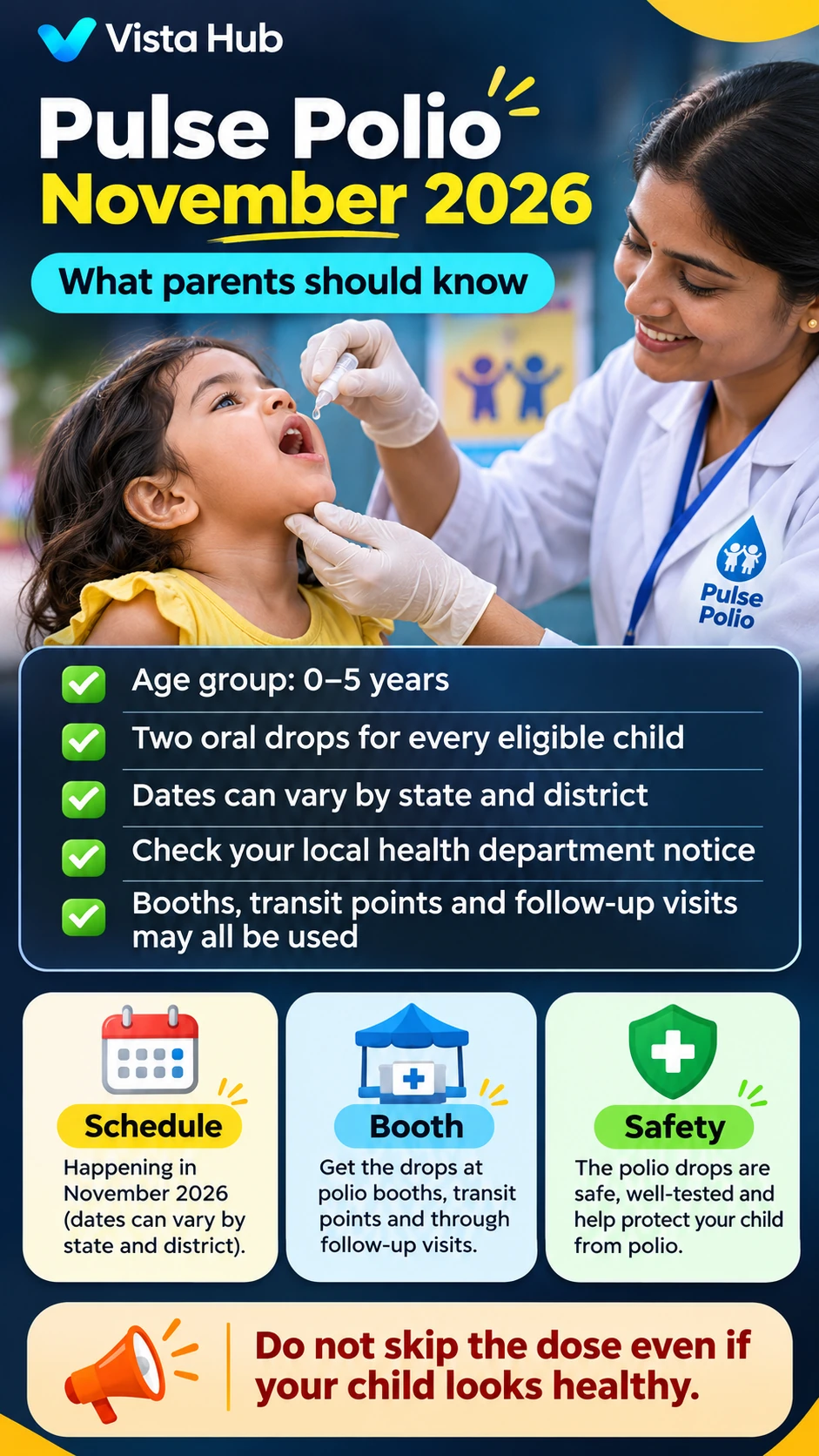
Is there a nationwide Pulse Polio date on 23 November 2026?
A headline saying ‘Pulse Polio today’ can refer to a booth day in one district and follow-up home visits in another. Campaigns may be organised as Sub-National Immunisation Days, district drives, urban outreach or transit-point vaccination. The date a reporter publishes a story is not necessarily the date every booth is open. On 23 November, some teams are visiting households to find children missed on the earlier booth day. A parent who checks only an old poster may travel to the wrong site. The responsible answer is to name the district, specify whether it is a booth day or a follow-up day, and direct readers to the local government health department for the final venue and schedule.
Fazilka, Telangana, Varanasi and Tamil Nadu: local examples
Fazilka district in Punjab set a 22–24 November programme targeting approximately 1.41 lakh children, according to local reporting. In selected Telangana districts, coverage after the booth day was followed by visits on 23 and 24 November. In Varanasi, teams aimed to cover children missed during a drive that began on Sunday 22 November, with outreach reported through 30 November. Tamil Nadu announced sub-national activity on 22 November in six selected districts. These are documented local examples, not proof that every town in each state observes the same dates. Always check whether your particular district is included in a state circular. The most useful ‘state-wise dates’ article identifies uncertainty rather than filling missing districts with invented numbers.
Which children need the oral polio drops?
Campaigns normally target eligible children below five years of age. Public messages sometimes use the shorthand 0–5 years, but parents uncertain about a fifth birthday should ask the health worker about exact eligibility under the local programme. The drops are administered by trained vaccination personnel and have a major public-health role in maintaining protection. An infant or young child may also be receiving polio vaccine through routine immunisation. The fact that the child received earlier doses does not automatically mean the family should skip an officially recommended supplemental campaign dose. Parents should follow the current programme instructions and keep the routine immunisation schedule complete.
How to find your local booth or mobile team
A Primary Health Centre, district health office, local government hospital, urban health clinic, Anganwadi worker, ASHA or ANM can help identify the nearest authorised booth or the arrangement for home visits. Depending on the local plan, vaccination points may include schools, transit hubs, railway or bus stations and busy markets. That does not mean every listed type of place will be operating in your area on every day. A phone call to the local health service can save a wasted trip. When searching online, add the district and date to your query and compare the result with an official notice instead of relying on an image that omits the locality.
Pulse Polio versus routine OPV and IPV vaccinations
Pulse Polio campaigns supplement, rather than replace, the regular childhood immunisation programme. Routine appointments can include oral polio vaccine and inactivated polio vaccine according to the applicable schedule; parents should rely on a trained worker or their child’s immunisation record for the precise next dose. A child who participates in a special drive still needs other routine vaccines on time. Conversely, a child with completed routine doses may also be included in a supplemental district round if health officials recommend it. These are complementary approaches to community protection. Keep a record of vaccinations if available and ask the worker to clarify the next scheduled visit.
What if your child has fever or cannot visit a booth?
Give the health worker accurate information about any current illness, severe allergic history or special medical circumstances. Do not use a social-media chart to decide whether an individual sick child should receive a dose; trained professionals can assess the situation. For a family with mobility difficulties, a hospitalised child or a household in a remote settlement, contact the PHC, ASHA or ANM to learn whether a follow-up team can provide guidance or visit. Some drives use household tracking and transit points specifically to catch children who would otherwise be missed. An authorised worker is also the right person to ask about practical hygiene and vaccination records.
Parent checklist for a safe vaccination visit
Before leaving home, confirm today’s booth and its hours for your specific locality. Check the child’s age and carry the immunisation card if readily available. Tell the trained worker about relevant medical history. Allow authorised staff to administer the drops; do not purchase or use an unlabelled bottle sent through a private message. Some campaigns mark a child’s finger to indicate that the team has reached that child, which helps avoid missed households in follow-up operations. After the visit, ask whether another scheduled dose or routine vaccine is due. If you are unsure about the location, check with official local services rather than sharing a private phone number or bank details.
Why polio drives continue after India eliminated wild polio
India’s progress against polio is a major public-health achievement, but maintaining high population immunity and monitoring for risk remain important. The risk of poliovirus circulation elsewhere and the possibility of vulnerable pockets are reasons vaccination programmes continue to pay attention to missed children. A country remaining polio-free does not mean that immunisation is unnecessary. Coverage can slip when families move, appointments are missed or misinformation spreads. Supplemental campaigns are one tool used to protect communities alongside routine programmes and surveillance. The right message is neither alarm nor complacency: follow evidence-based advice from recognised health professionals.
Avoid fraudulent booth lists and viral health misinformation
An unfamiliar website claiming a guaranteed booth in every postcode, demanding a fee or collecting complete personal identification may not be an authorised health service. Government campaign drops are administered free through official channels. Check district or state health communications and use trusted public clinics, not a social-media account offering to mail medication. A screenshot from a previous campaign should never be relabelled as today’s schedule. If you share information with neighbours, state the exact district, date and official contact rather than a broad claim about all of India. Clear local details help families and prevent needless crowding at the wrong venue.
Pulse Polio November 2026 — FAQs
Are Pulse Polio booths open everywhere on 23 November 2026?
No. Booth and follow-up dates are district-specific.
What age group is included?
The supplementary drive generally targets children under five years old.
Does a vaccinated child need another campaign dose?
Follow the local public-health recommendation; supplemental doses may be advised despite routine vaccination.
Where can parents find booth locations?
Ask the district health department, PHC, ASHA or ANM.
Does the government charge for the drops?
No, official campaign vaccination is free.
What should parents do if a child is ill?
Discuss the child’s condition with a trained health worker or doctor.
Bottom line
Do not assume that every district shares a single booth day. Find the authorised local date and follow your child’s routine and supplemental vaccination advice.
Sources
- Punjab Fazilka 22–24 Nov 2026
- Telangana follow-up local report
- Tamil Nadu district campaign notice summary
- Indian Ministry of Health
General public-health information, not individual medical advice.








Share Your Opinion
Comments are closed on this post.