 Vista
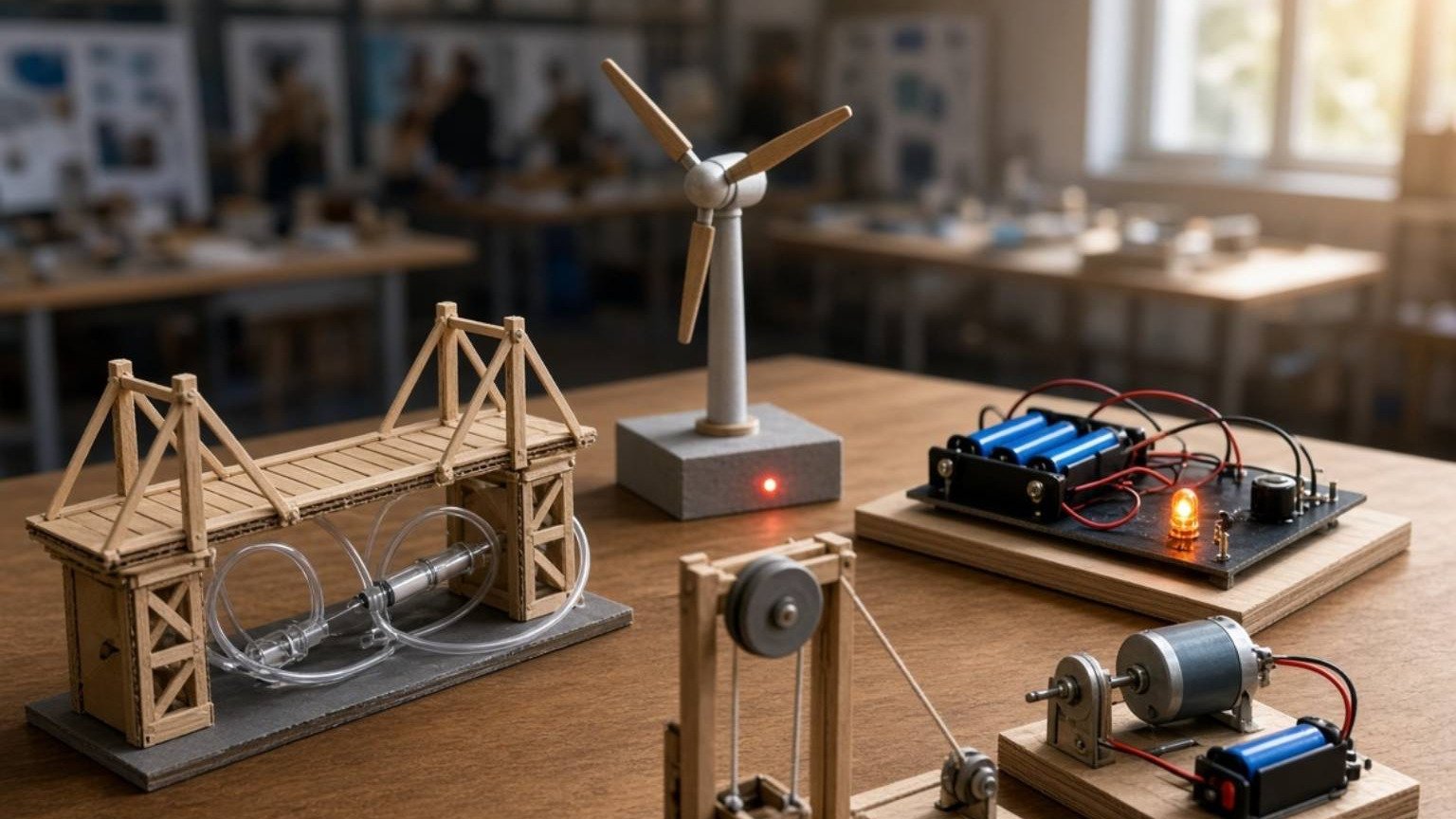
Looking for weather instruments school project models? This image-rich guide has six related activities: a Wind Vane, DIY Cup Anemometer, Rain Gauge, Types of Clouds Chart, Four Seasons Wheel and Sundial Clock. The first three help explain measurements of wind direction, wind speed and rainfall. Clouds, seasons and a sundial are additional observation and teaching activities—not additional instruments measuring those three weather variables. The guide suits approximately Classes 4–9 with full-size pictures, materials, step-by-step model advice and classroom questions. A handmade instrument may demonstrate a scientific principle without producing professional-grade readings. Students should record what they actually observe rather than inventing weather measurements.
Picture 1: Wind Vane Working Model
A wind vane has a freely turning pointer that aligns with the wind. Compass labels around the base help describe direction. Standard wind-direction terminology identifies where wind comes from, not the direction toward which it travels. If the wind comes from the north, it is a northerly wind. A simple model uses lightweight card, a straw, a safely prepared pivot and compass points. Check the arrow’s balance and keep sharp pins away from younger children. Incorrect North and South labels can make an attractive model give confusing results. Use an adult-supervised demonstration in a safe open space.
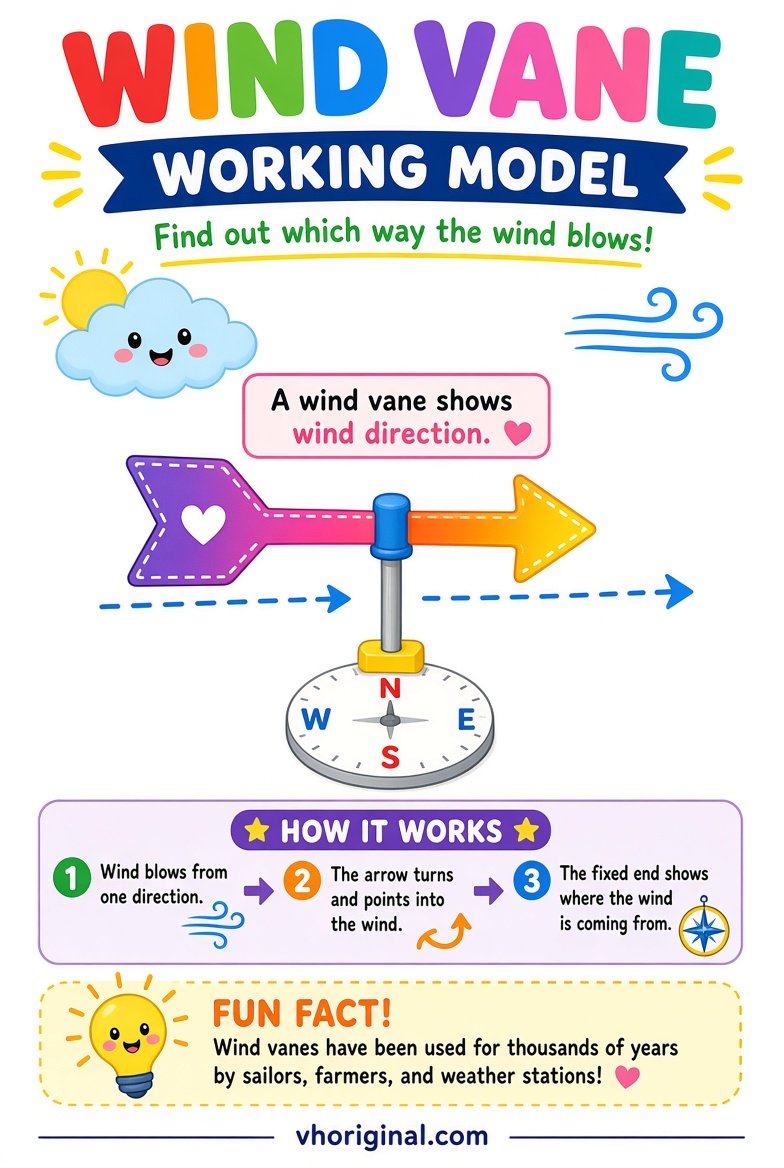
Chart note: A vane’s head points toward the direction the wind comes from. Airflow therefore points the other way. Align the compass markings before taking a reading.
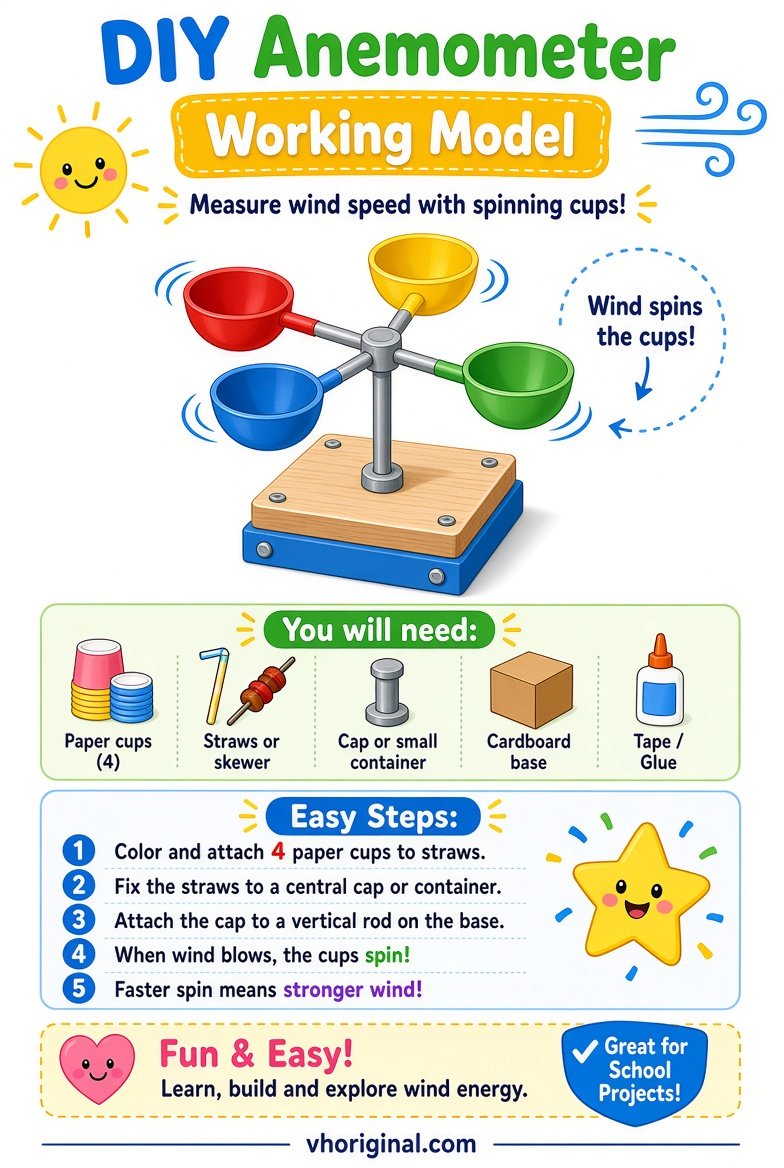
Picture 2: DIY Cup Anemometer Model
A cup anemometer rotates when moving air pushes its cups. The rate of rotation relates to wind speed, but a homemade cup-and-straw arrangement cannot automatically convert every turn per minute into a correct speed without suitable calibration. Make a stable base, attach balanced paper cups and observe whether faster air movement changes rotation. Count rotations if the assignment calls for it, while clearly labelling them as observations rather than certified speed values. Avoid putting fingers or loose parts close to powerful fans. There is no need to take a fragile model onto a roof or roadside during strong winds.
Picture 3: DIY Rain Gauge Working Model
A rain gauge reports precipitation depth accumulated over a period, commonly in millimetres. With a straight container of constant cross-sectional area, water depth can illustrate rainfall depth. Funnels and containers that change width require appropriate calibration. Secure the gauge upright in a suitable open location chosen by an adult and keep it away from unsafe electrical or storm conditions. A classroom demonstration may instead use measured clean water. Mark the scale carefully; do not claim that an arbitrary line on a sloping bottle equals ten millimetres.
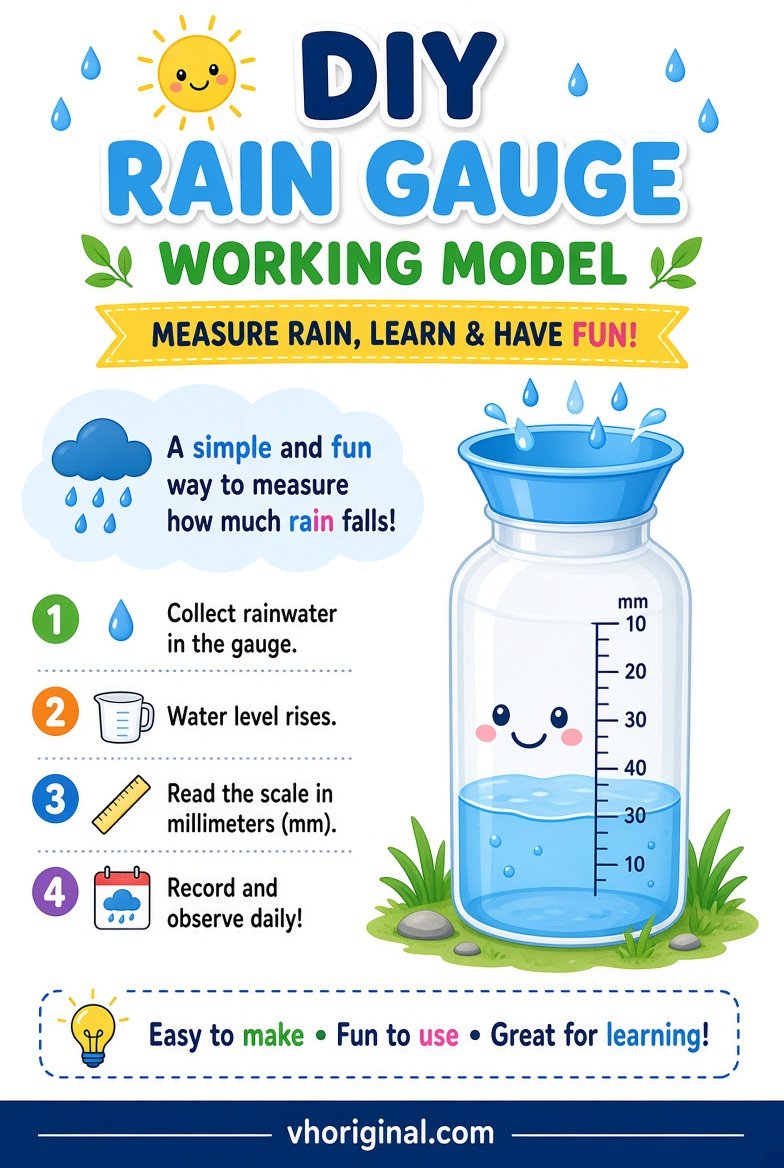
Chart note: The printed ruler is out of order. Start at zero at the bottom and increase millimetres upward. Calibrate a funnel-and-bottle gauge with a known amount if the funnel and container have different cross-sections.
Picture 4: Types of Clouds Chart
Clouds can be grouped into families such as cirrus, cumulus and stratus, with additional forms including cumulonimbus. Their shape and altitude relate to atmospheric conditions, but one cloud photograph cannot guarantee exactly when rain will begin. Choose a few clearly recognisable types and label them from a reliable weather reference. Never send children outdoors to inspect clouds during a thunderstorm. Cloud observation is educational when it is safe and connected with the actual sky and weather.

Chart note: Use nimbostratus or cumulonimbus for examples of rain-bearing cloud types. “Nimbus” on the poster is an informal shorthand here.
Picture 5: Four Seasons Wheel Craft
A four-seasons wheel often illustrates spring, summer, autumn and winter. It is a useful craft, although India’s regional seasons and traditional seasonal systems do not always match that four-part picture exactly. Earth’s axial tilt and orbit produce the main annual pattern of seasons, not simply the changing distance from the Sun. Students can make a paper disc with four sections and a rotating pointer, then add local examples such as monsoon rainfall where appropriate. Explain that season patterns vary between latitudes and hemispheres.
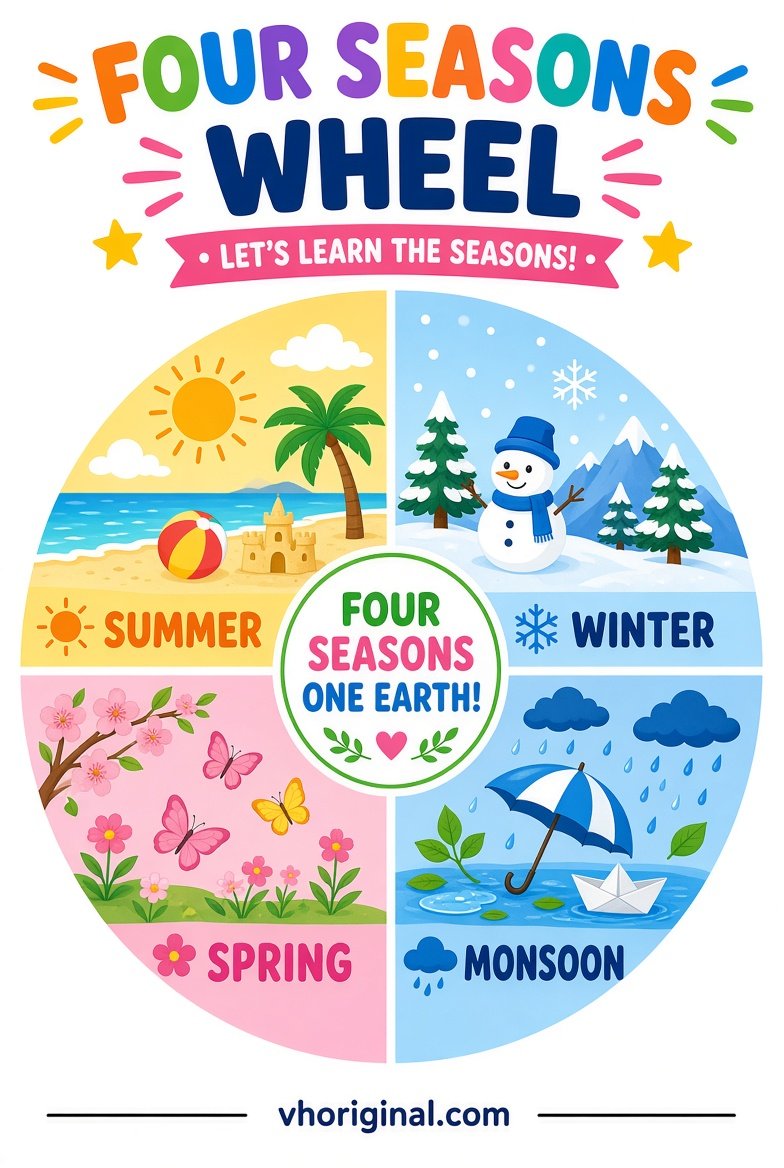
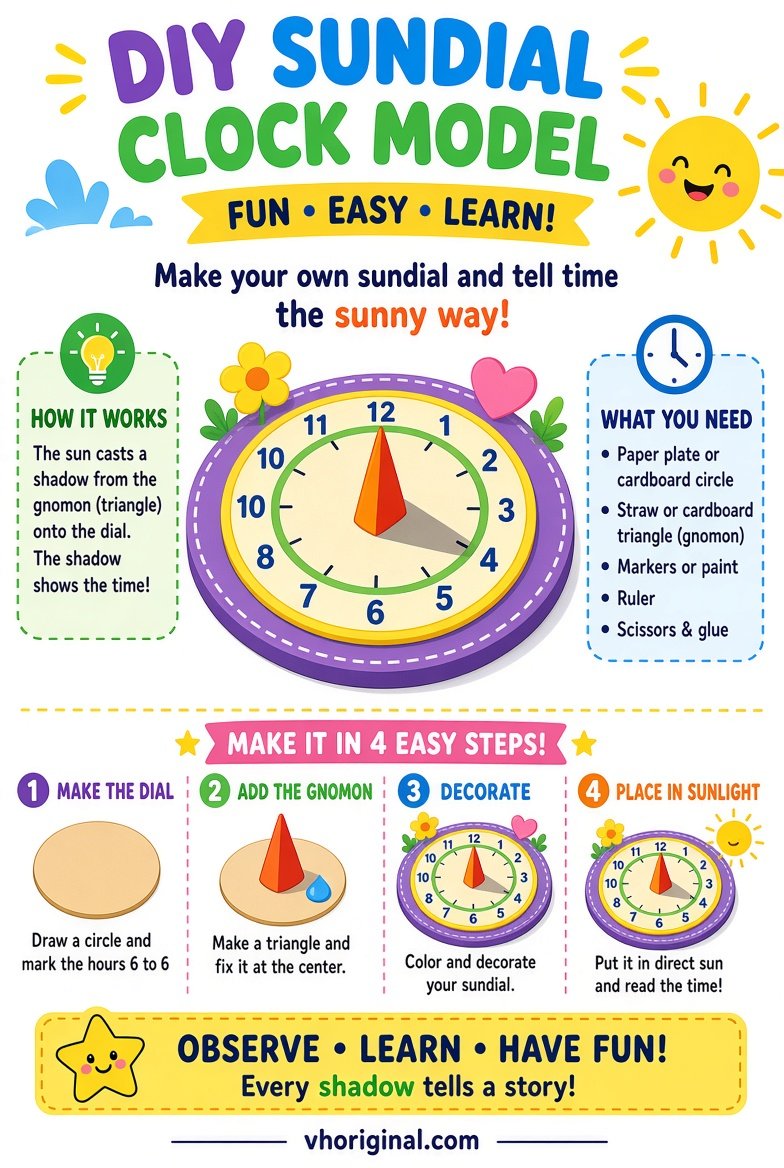
Chart note: The dial face is decorative. Actual hour lines depend on location and the gnomon angle. Mark your observed shadow positions against a reference clock.
Picture 6: DIY Sundial Clock
A sundial uses the shadow of a pointer, sometimes called a gnomon, as the Sun appears to move across the sky. The changing shadow relates to Earth’s rotation. A paper base, safely attached pointer and measured marks can show the idea. Local solar time and clock time are not always identical; alignment, location and date matter. Do not promise that an uncalibrated cardboard sundial keeps perfect time all year. Children should not stare directly at the Sun or spend long periods outside in extreme heat. The demonstration can be kept short and supervised.
Materials and step-by-step project assembly
Gather paper, card, safe tape, straws, small paper cups, pencil, ruler and colour markers. First choose which device the teacher requested. For a wind vane, check smooth rotation and directions; for an anemometer, balance the cups; for a rain gauge, make a reliable upright scale. Draw cloud types clearly on one chart and use a separate wheel for seasons. Build a sundial with a stable pointer and note actual shadow positions. Give each project a one-sentence explanation and a limitation. Avoid exposed sharp pins, powerful rotating fans, unsafe storms and improvised electrical components.
Presentation questions, mistakes and downloads
Teachers might ask whether a wind vane measures speed or direction, whether a sundial shows clock time, or why seasons occur. Answer briefly: vane for direction, anemometer for speed, rain gauge for precipitation, and axial tilt for seasonal patterns. A cardboard model does not need to pretend to be a calibrated instrument. Open each full-size poster link and save the picture if needed. Inspect labels, arrows and measurement scales before printing. If recording actual data, write down the date and time instead of copying unverified numbers from an illustration.
Frequently asked questions
What is the difference between a vane and anemometer?
A wind vane indicates wind direction, while an anemometer measures wind speed.
What does a rain gauge report?
Precipitation depth over a period, usually in millimetres.
Is a four-seasons wheel a measuring instrument?
No. It illustrates annual seasonal patterns.
Will a homemade sundial match a wristwatch?
Not necessarily; solar time, location and alignment can affect its reading.
Conclusion and references
The weather pictures are most useful when students distinguish accurate measurements from educational models of clouds, seasonal change and solar shadows.
Related projects: Science Working Models · Solar System Drawing
References: NOAA/NWS — Weather Instruments; NC State — Measuring Weather.
Related project: rooftop rainwater harvesting model













Share Your Opinion
Comments are closed on this post.