 Vista
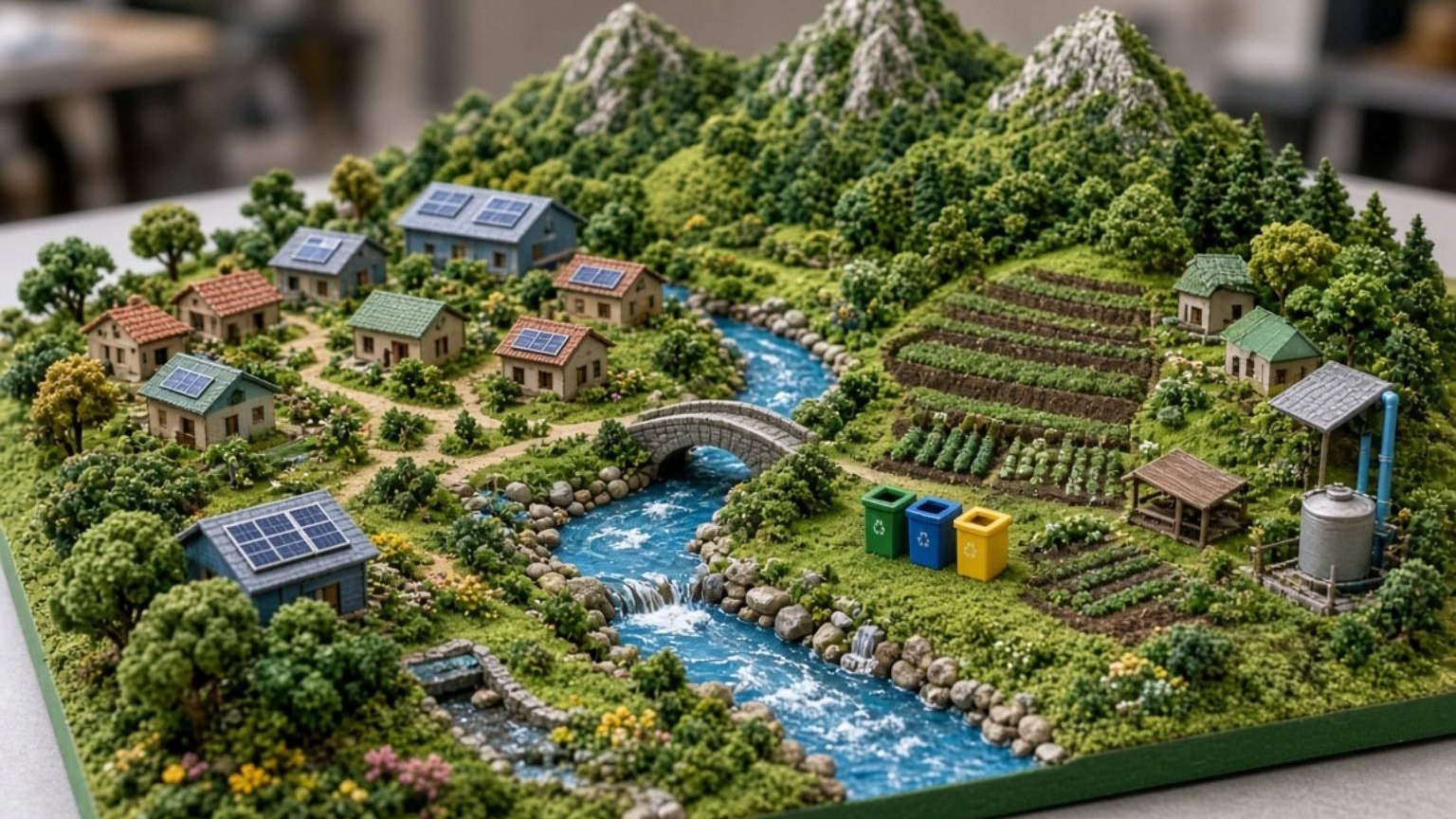
Looking for a rainwater harvesting working model for a school project? Here are three complementary visuals: a rooftop collection house model, a rainwater harvesting process chart, and a groundwater aquifer cutaway. They are useful for approximately Classes 5–10 because they explain different destinations for rainwater: collection, storage, runoff and possible infiltration into the ground. Every picture has a full-size view and download link. A cardboard demonstration, however, is not an engineering plan for building a real recharge pit or a drinking-water system. Use the diagrams for accurate school learning, not as permission to alter a household’s drainage or groundwater infrastructure.
Rainwater harvesting versus groundwater recharge
Rainwater harvesting can involve collecting rainfall for storage or directing it toward a useful purpose. Rooftop harvesting captures runoff from a roof and carries it through a gutter and downpipe to an appropriate collection point. Groundwater recharge describes water entering suitable subsurface material and adding to a groundwater system. They are related but not identical. Local geology, rainfall, contamination risks and building conditions influence what is feasible. A rooftop tank is not an aquifer, and water should not automatically be directed into a well or recharge structure without a suitable design. In a school project, give collection and recharge separate labels and explain what each does.
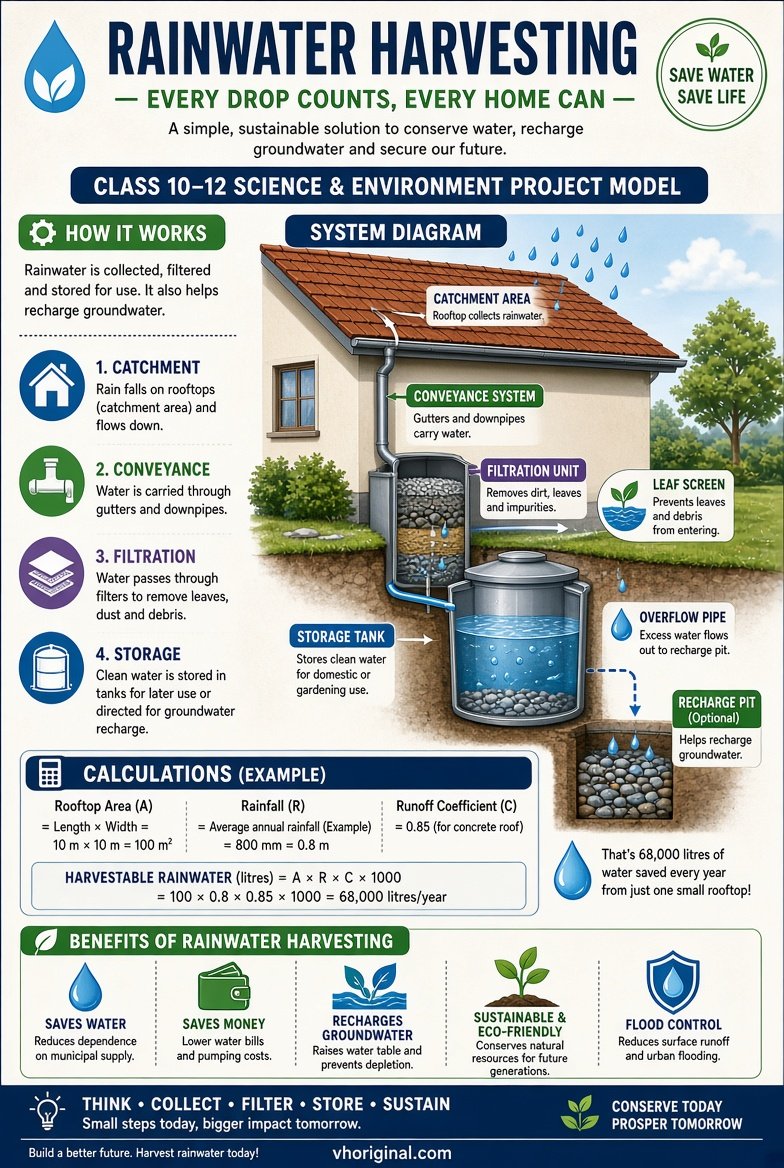
Picture 1: Rooftop Rainwater Harvesting House
A rooftop model can show a sloping roof, gutter, downpipe and storage tank. Rainfall reaches the roof, moves toward the collection channel and flows downward when the slope and connection allow it. Actual installations must consider leaf screens, cleaning, the initial dirty runoff, overflow and maintenance. A classroom poster cannot certify the safety of a real installation. For a simple model, construct a small cardboard house and paper gutters above an empty labelled tank. Use arrows if pouring water would make the board messy. The student should be able to trace the water’s route without guessing which pipe is connected to which component.
Picture 2: Rainwater Harvesting Process Chart
This diagram helps students follow a series of steps: rainfall, roof collection, gutters, conveyance and storage or recharge. If it is gravity-based, explain why the downward slope matters. A diagram can also distinguish between water intended for storage and water intended to seep through appropriately designed soil structures. Collected rainwater is not automatically safe to drink. Avoid writing a made-up ‘90% saved’ figure without actual rainfall and roof-area data. A good process chart uses clear arrows, separate destinations and realistic limitations rather than decorative pipes that lead nowhere. It also shows the importance of maintenance.
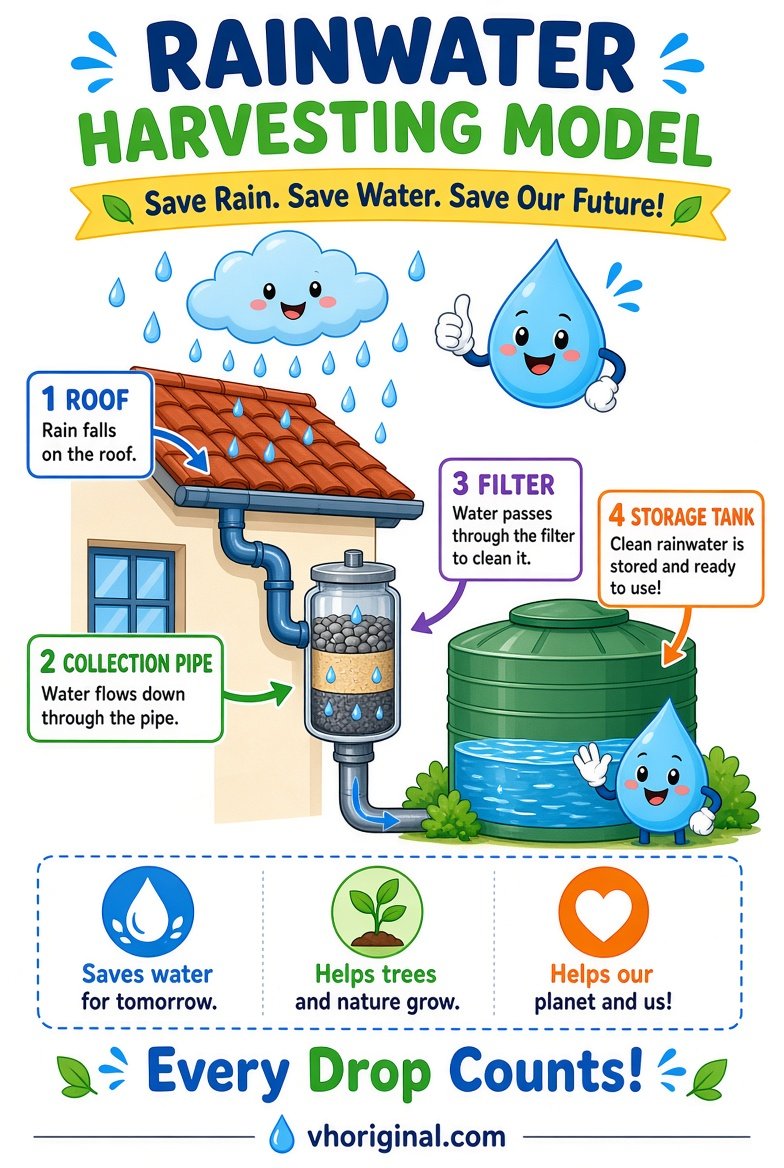
Chart note: The tank demonstrates collection and storage. Collected or visibly clearer rainwater should not be used as drinking water without suitable treatment and verification.
Picture 3: Groundwater Aquifer 3D Cutaway
A groundwater aquifer consists of suitable saturated geological material that can store and transmit groundwater. It is not necessarily a vast underground open lake. Water often occupies spaces between grains or fractures in rock. A school cutaway might label the ground surface, unsaturated zone, water table and water-bearing layer. The USGS explains that sand, gravel and certain rock formations can act as aquifers, depending on their properties. Groundwater quality is not always safe just because the water has passed through soil. Check the direction of arrows showing infiltration and the distinction between a water table and the underlying saturated material.
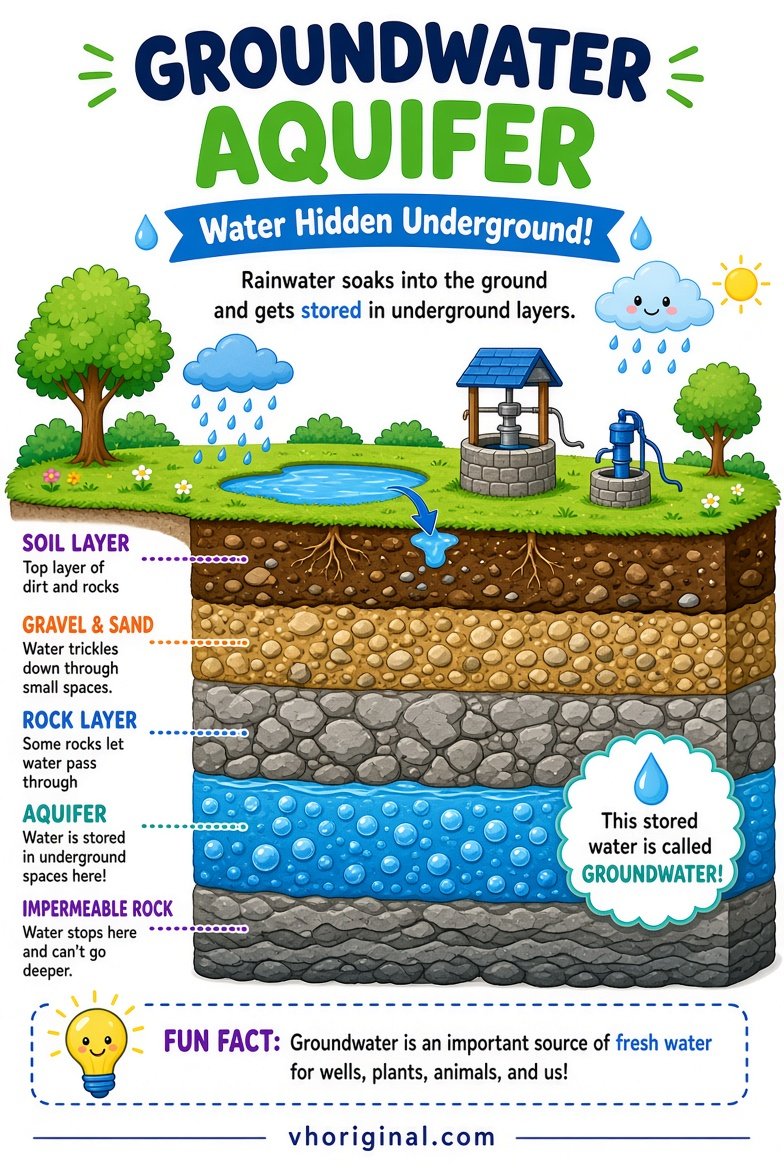
Chart note: The blue area simplifies water stored in pores and fractures. An aquifer is not necessarily an open underground lake.
Materials for an easy rooftop and aquifer model
Gather cardboard, coloured paper, a small clean bottle, straws, safe adhesive, tape and markers. A sturdy base board makes a project easier to carry to school. Draw a house with a roof that slopes toward a paper gutter, and put a tank below. For the aquifer, draw or construct a separate cutaway with coloured sediment layers and a water table line. Younger children should not use sharp cutters or hot glue without adult help. No electrical pump is needed for a basic gravity explanation. If you use a small amount of water, do it over a stable tray to avoid spills.
Step-by-step: build the rainwater model
First sketch positions for the house, gutter, tank and ground. Build the house and add a sloping roof. Place the gutter where rooftop runoff would realistically flow, then connect it to a downpipe. Show the storage tank with a clear label. If you want a recharge pathway, depict it separately rather than routing every pipe into an imaginary underground void. Create soil, rock and saturated layers for the aquifer cutaway. Add blue arrows to trace water movement and check that the arrows follow the actual geometry. Finish with a title, two observation points and names of the main parts.
School presentation and viva ideas
A student can say: ‘My model shows how rain on a roof can be collected and how some water may enter underground layers.’ A teacher may ask whether groundwater is a giant underground lake: not necessarily. Can tank water be consumed directly? It needs appropriate assessment and treatment. Does every area suit the same recharge design? No, local ground conditions and regulations matter. Another question is why gutters and slopes are needed; they guide runoff to the intended place. These answers show understanding rather than memorising an unrealistic promise that every model will solve water scarcity.
Common mistakes, safety and download tips
Keep arrows consistent with gravity and separate storage from recharge. Do not claim collected rainwater is automatically drinkable. Students must not climb roofs, enter wells or dig real recharge pits for an assignment. Open the full-size image links and inspect water-table labels carefully before copying the diagrams.
Frequently asked questions
Which classes can make this model?
Classes 5–10 can adapt the same concept from a flat drawing to a simple 3D exhibition display.
Is an aquifer just an empty underground reservoir?
Not usually; groundwater often occupies pores and fractures in geological material.
Is collected rainwater always safe to drink?
No. Quality assessment and appropriate treatment may be needed.
Do I need a motor or electric pump?
No. A sloping roof and gravity are sufficient for a basic demonstration.
Conclusion and references
A sound school project explains where rainfall goes, how storage differs from recharge, and why real infrastructure needs careful design and water-quality safeguards.
Related Science Working Models
Sources: USGS — Groundwater Basics; Central Ground Water Board — FAQ.
Related project: rain gauge and wind vane models


















Share Your Opinion
Comments are closed on this post.