 Vista
Mythical Creatures in Hindu Mythology: A Quick Guide
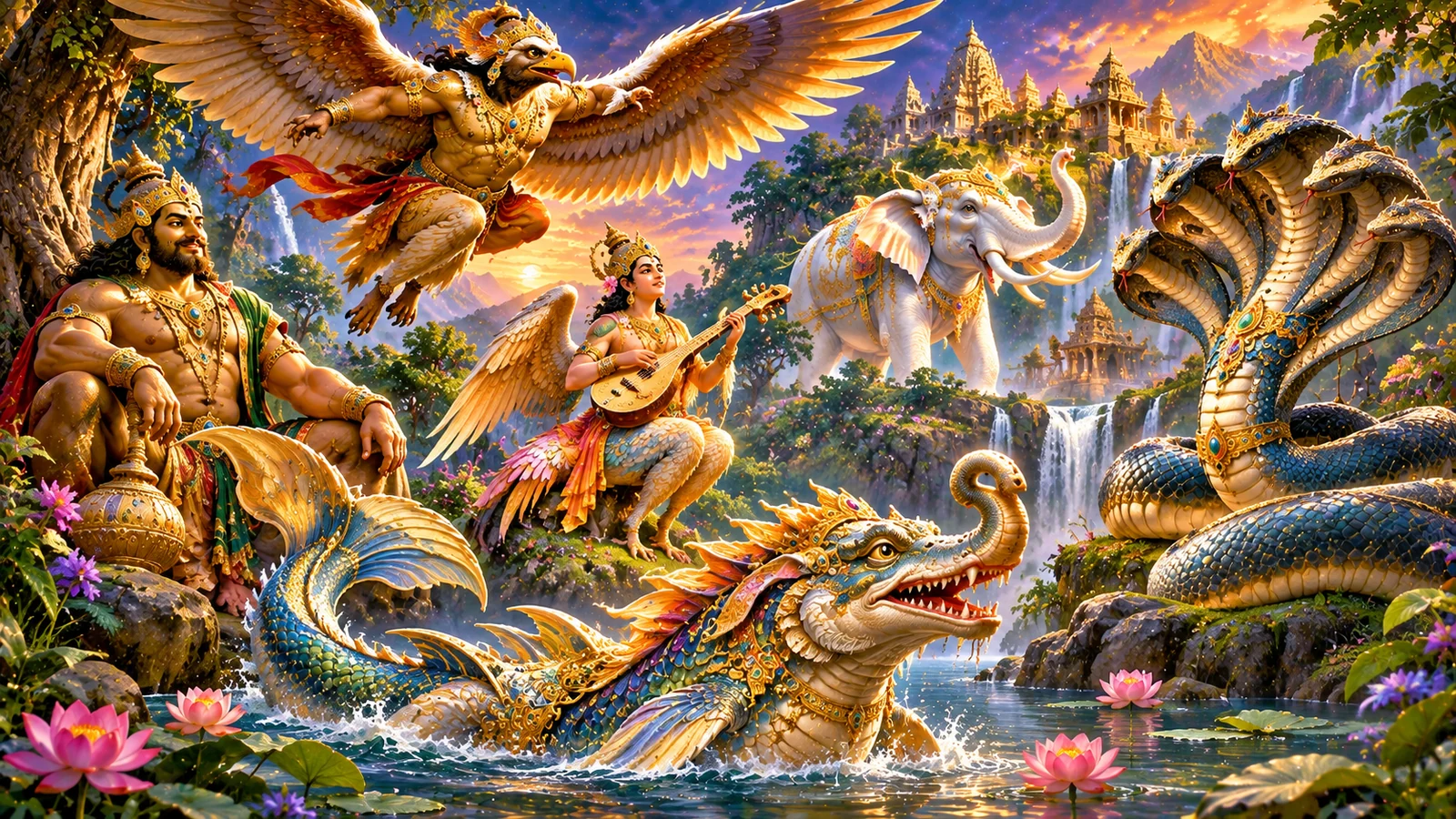
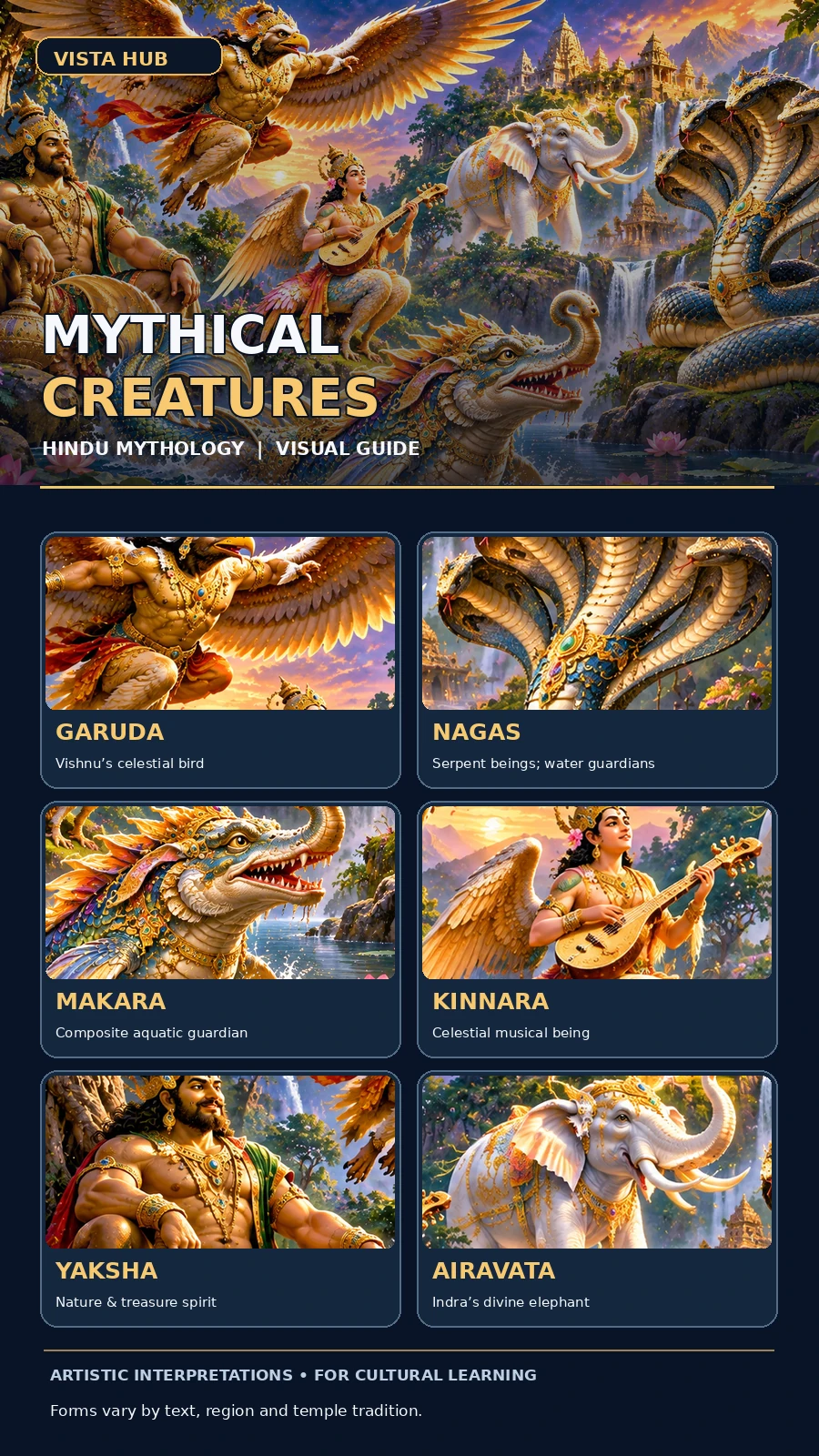
Hindu mythology is full of extraordinary beings: Garuda, the eagle-like mount of Vishnu; Nagas, serpent-associated guardians of waters and treasures; Makara, a composite aquatic creature; Kinnaras, celestial musicians represented in different hybrid forms; Yakshas and Yakshis, nature spirits; and Airavata, the elephant linked with Indra. The world of the Ramayana and Mahabharata also includes Vanaras, Rakshasas, Gandharvas, Apsaras and memorable individuals such as Jatayu. Some are animals with divine status, some are human-like communities, some are spirits, and some are primarily artistic motifs. Calling all of them “monsters” creates more confusion than understanding.
The most useful question is not whether a creature would win a fantasy battle. It is what the figure means in a particular narrative, why its appearance changes between regions and whether it is shown as a guardian, helper, rival or teacher. Hindu traditions have never relied on one fixed illustrated encyclopedia of magical species. Stories and sculptures evolved across languages and centuries, often sharing imagery with Buddhism and Jainism. This guide separates the names, symbols and literary roles, while treating these beings as parts of religious culture rather than verified zoological discoveries.
Garuda: Vishnu’s Celestial Bird and the Enemy of Serpents
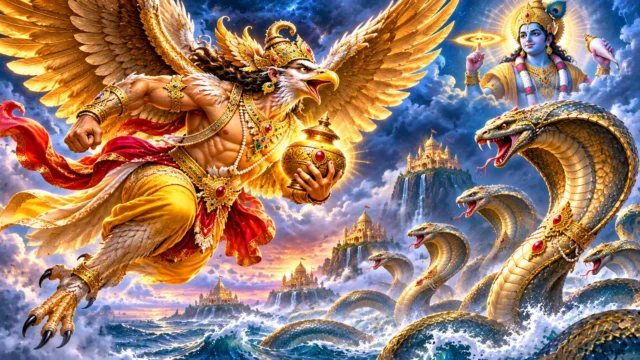
Garuda is among the most recognizable mythological beings in Hindu tradition. He is commonly depicted as an immense eagle-like bird or a partly human figure with wings, beak and talons. In Vaishnava art he serves as Vishnu’s vahana, a vehicle or mount that can also symbolize devotion and protective strength. Garuda is not simply a wild bird made unusually large. He is an intelligent, powerful figure with his own genealogy, choices and relationships. In many tellings his mother is Vinata and his father is the sage Kashyapa.
The opening books of the Mahabharata describe a family conflict involving Vinata and Kadru, the mother of the serpent lineage. Garuda seeks amrita, the nectar of immortality, to release his mother from servitude. The complicated struggle with the Nagas explains a famous rivalry without requiring readers to believe that every real eagle is naturally fighting a supernatural cobra. The stories also connect Garuda with Vishnu and with the protection of devotees. Some traditional images show him in a reverent seated posture rather than a battle scene; a Tamil Nadu sculpture in the Metropolitan Museum of Art offers an example. His identity combines fierce speed with loyalty and freedom.
For a full narrative of the amrita quest, the Garuda–Naga story deserves its own article. Here, the key distinction is that Garuda is a divine personage and Vishnu’s mount, while the Nagas form a larger serpent-related class with several named figures.
Nagas and Naginis: More Than Ordinary Snakes
Nagas and Naginis are serpent-associated beings who appear throughout South Asian religious literature and sacred art. They may be depicted as cobras, humans with serpent hoods, or figures combining human and snake features. Water, fertility, protection, ancestral traditions and underground realms frequently surround their imagery. Their identities are not limited to one temperament: some can be threatening, while others defend sacred places or form important relationships with deities. Treating the word Naga as a synonym for evil snake misses much of the tradition.
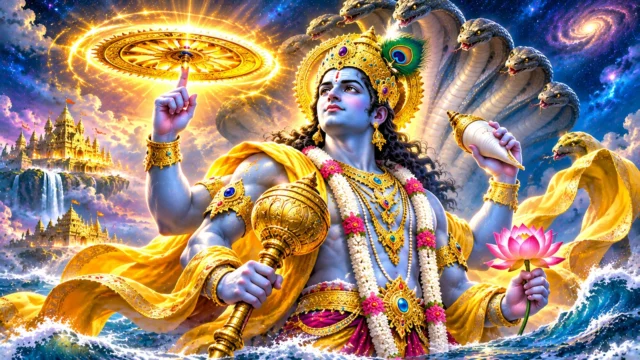
Ananta or Shesha is associated with Vishnu reclining in cosmic repose. Vasuki plays a different role as the serpent used like a rope during Samudra Manthan, the churning of the ocean. Takshaka appears prominently in Mahabharata narratives concerning King Parikshit and the later serpent sacrifice of Janamejaya. These figures are not interchangeable merely because they are serpentine. The locations and narrative purposes differ significantly.
Contemporary “ichchadhari nag” stories about shapeshifting snakes belong to a blend of folklore, fiction, cinema and older serpent symbolism. Such claims are not scientific evidence that real cobras become humans. A museum sculpture of a hooded Naga can establish that this imagery existed historically; it does not establish the creature as a newly identified biological species. If you see a serpent-headed guardian at a temple, look for the local deity and context before assigning it a dramatic backstory.
Makara: The Mysterious Water Creature in Temple Art
A Makara is a composite aquatic creature whose body can combine traits associated with crocodiles, fish, elephants and other animals. Artists have never used a single perfectly standardized anatomical drawing. One sculpture emphasizes a crocodile-like mouth; another adds an elephant-like trunk, fins, curling tail or elaborate ornament. The creature is often associated with water, fertility, safe passage and the threshold between ordinary and sacred space. It may appear as an architectural guardian, on jewelry or as an associated vehicle of water-related deities.
The Metropolitan Museum of Art has a terracotta Makara toy from northern India dated to approximately the second–first century BCE. The same museum notes its composite appearance and the relationship of such creatures with water. The Rijksmuseum documents a Central Javanese example combining a dragon-like muzzle, elephant trunk and ram’s horns at a temple entrance. These objects prove that artists and worshippers represented Makara in historic material culture. They do not prove that a crocodile-elephant hybrid once swam in the Ganga.
A common error is to translate Makara as simply “crocodile.” That can erase why the figure looks so unexpected in sculpture. Another error is to assume it is exactly the same being as a Chinese or European dragon. Comparisons can be interesting, but the local symbolism deserves to be explained first. The Makara is best understood as a flexible icon of the power and mystery of water.
Kinnaras: Celestial Musicians With Changing Forms
Kinnaras and Kinnaris belong to the wonderful category of celestial or semi-divine beings whose appearance varies between texts and art traditions. They are often associated with music, beauty, affection and refined performance. In different Indian and Himalayan contexts they may appear with avian features, human-like bodies or other hybrid imagery. Because images change over time and geography, one popular illustration should not be used to insist that every Kinnara must have precisely the same wings, feet or face.
The term also occurs in Buddhist narratives and iconography, showing that the artistic world of South and Southeast Asia crosses more than one religious tradition. A Kinnara playing an instrument in a temple carving is therefore not automatically a warrior or a dangerous monster. Such beings may help a sculpture create the impression of a divine assembly filled with sound and movement. Sometimes they are rendered as elegant human musicians, and sometimes the otherworldly nature is conveyed through a mixture of human and animal features.
For readers searching “are Kinnaras half human and half bird?”, the responsible short answer is that bird-human forms are common in some regional iconographies, but not universal. There is no known biological species matching these depictions. Their value lies in myth, performance traditions and the history of artistic imagination.
Yakshas and Yakshis: Spirits of Nature, Wealth and Place
Yakshas and Yakshis are nature-associated semi-divine beings found in early Indian religious culture. Their stories often concern fertility, gardens, trees, treasures, protective power and the spirits of a particular place. Not every Yaksha is a fierce guardian, and not every Yakshi is simply a decorative figure. A temple sculpture may connect a Yakshi with an abundant flowering tree, while another image conveys a robust guardian presence. These figures are important across Hindu, Buddhist and Jain artistic contexts.
Kubera, associated with wealth and guardianship of treasures, is connected with the Yaksha world in many traditions. The Metropolitan Museum of Art describes early nature deities and Yaksha sculptures in its collection, noting their physical power and place in religious art. This is useful evidence because Yakshas are not just modern fictional inventions; material representations survive from early historic South Asia. Still, the sculptures document beliefs and artistic conventions, not supernatural beings proven by archaeological testing.
The word “spirit” is only an approximation. In English it may suggest ghosts, but a Yaksha can be protective, prosperous or powerful without being treated as the disembodied soul of a deceased human. Local stories often matter more than generic creature lists. If you encounter a Yaksha at a shrine or in a sculpture, ask what kind of object it is and which regional tradition identifies the figure.
Gandharvas and Apsaras: Celestial Music and Dance
Gandharvas are associated with celestial music, skill, beauty and certain forms of divine courtly life. Apsaras are commonly linked with heavenly dance and graceful performance. They are better described as classes of celestial beings than as wild animals or fantasy beasts. Their narratives are diverse, and the cultural appeal of the pair is visible in temple sculpture, paintings, literature and later performing arts. Names familiar to readers include Menaka, Urvashi and Rambha among the Apsaras, though each has distinct stories in particular sources.
The Metropolitan Museum of Art has an eleventh-century sculpture of a Gandharva playing a flute, originally made for an architectural setting in a Hindu temple. This gives readers a concrete example of how heavenly music entered physical sacred architecture. A figure in a carving is not merely an illustration of a modern television costume. It participates in the visual idea of a temple as a place connecting earthly life with a heavenly sphere.
Not every account of an Apsara can be simplified into seduction. Performance, divine messages, emotional relationships and literary transformation also shape individual narratives. When a website lists “ten dangerous creatures,” including Apsaras among demons is misleading. A better index has separate categories for celestial artists, guardians, animal-like vehicles and potentially hostile beings.
Rakshasas and Vanaras: Epic Characters, Not Simple Species Labels
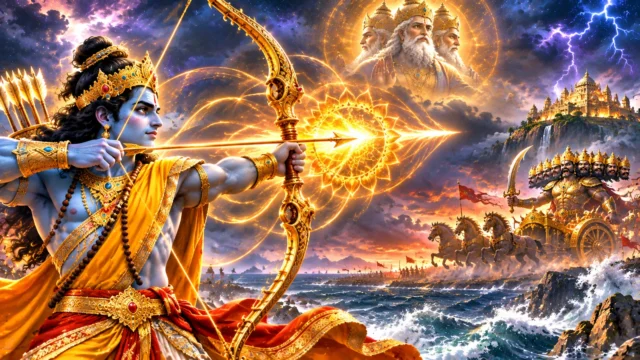
The Ramayana and Mahabharata include Rakshasas, often translated as demons, but the English term has limits. They can be formidable, deceptive, frightening, loyal or morally complex depending on the text and individual. Ravana is one of the most famous Rakshasa kings in the Ramayana; Vibhishana, associated with the same family, chooses a different path. Calling every Rakshasa irredeemably wicked ignores those distinctions. Their depiction in performance and painting often uses exaggerated features to communicate intensity rather than consistent physical anatomy.
The Vanaras of the Ramayana include Hanuman, Sugriva, Vali and the allied forces who help Rama. Many retellings present them as monkey-like beings, but they are narrative agents with speech, kinship, intelligence and political choices. They should not be casually reduced to biological monkeys that an ancient expedition photographed. The meaning and imagined appearance of the word Vanara are topics of interpretation, and popular media often draws on its own visual conventions.
Both groups make the epics morally interesting. A figure’s origin does not settle whether that figure acts with courage or cruelty. Hanuman is revered for devotion and strength, while Vibhishana shows that a Rakshasa character can act against wrongdoing within his own family. These stories offer more than a two-column chart of heroes and monsters.
Airavata, Jatayu and the Divine Animals of the Epics
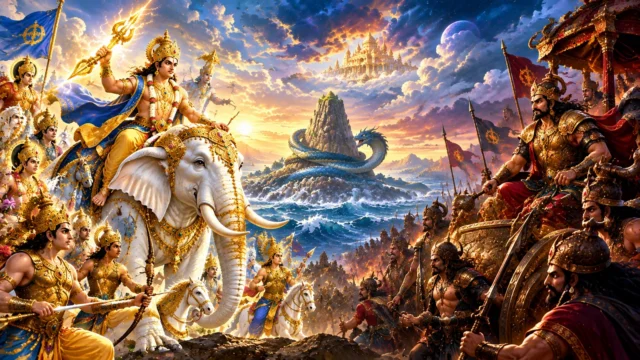
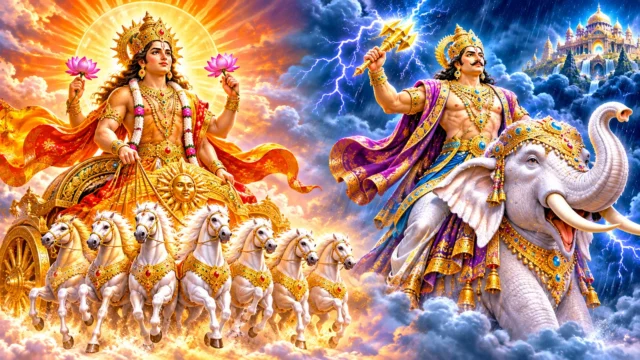
Airavata is the elephant associated with Indra and is often represented as a magnificent white celestial elephant. The number of heads or trunks in art can differ; claiming that one elaborate festival image is the only “original” form misses artistic variation. Airavata belongs with divine mounts and royal symbols rather than with creatures invented only to frighten audiences. Its presence reinforces ideas of sovereignty, clouds and rain in several contexts.
Jatayu is the courageous vulture-like figure who attempts to stop Ravana’s abduction of Sita in the Ramayana. His importance comes from an act of protection undertaken despite great danger. Sampati, connected with Jatayu in the epic, is another bird figure with a different role. Their stories often remind readers that moral courage does not depend on being the most powerful participant in a conflict.
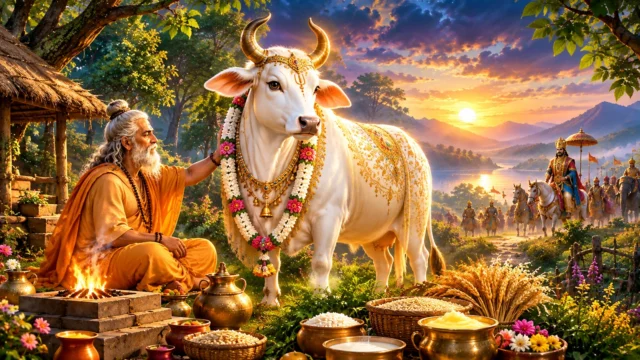
Kamadhenu or Surabhi, the divine cow of abundance, belongs to yet another category. Some traditions connect sacred cows with nourishment, plenty and the life of a hermitage. This is not a claim that a genetically unique living cow can materialize any wish. The point of comparing Airavata, Jatayu and Kamadhenu is to show how mythic animals can be mounts, helpers, protectors or embodiments of cultural values rather than one class of “monsters.”
Yali, Vyala and Sharabha: Creatures in Regional Art and Tradition
Yali or Vyala is a composite guardian figure especially visible in parts of Indian temple architecture. Artists combine leonine and other animal features, frequently using the figure on pillars and entrances. A towering Yali on a South Indian temple does not necessarily correspond to one named character with a uniform biography across all Hindu scriptures. Architectural figures can express strength and protective force independently of a single narrative plot. They also offer clues about regional art workshops and changes in style.
Sharabha is described in particular Shaiva-related traditions as an extraordinary composite creature, sometimes with lion, bird and other aspects. Its appearance and role vary significantly by school and text, particularly in traditions discussing Narasimha. These theological differences should be described as traditions rather than proof that a strange animal species existed. Avoid circulating a modern creature illustration as an ancient manuscript without identifying the source.
Regional diversity is essential. A figure known in Tamil temple art may look different in Odisha, Nepal or Java. Southeast Asian interpretations of Garuda, Naga and Makara developed their own local conventions. The label “Indian mythology” is a useful entry point, but its images travel across regions, languages and religious boundaries. A serious guide should welcome that variety rather than erase it.
Comparison Table: Who Is What in Hindu Mythology?
A quick comparison is helpful only when the categories stay accurate. Garuda and Airavata are divine mounts, Nagas and Yakshas are broad classes of beings, Makara is a highly variable aquatic icon, and Gandharvas or Apsaras often inhabit the domain of celestial arts. Kinnaras can be represented through hybrid musical iconography. Rakshasas and Vanaras are major groups in epic storytelling. Jatayu is an individual character who shows great courage. Kamadhenu is associated with nourishment and abundance.
There is no trustworthy scientific evidence that art showing a multi-hooded Naga proves the existence of a human-serpent species, or that a Makara sculpture records the discovery of a crocodile with an elephant trunk. What museums verify is the physical age, origin and artistic character of the objects. What religious texts preserve are narratives and meanings. Both kinds of evidence matter, but they answer different questions. Modern films, games and AI art may combine these beings into fresh fantasy forms, and audiences should enjoy them while recognizing creative adaptation.
Comparison at a Glance
| Being | Type / role | Key association |
|---|---|---|
| Garuda | Celestial bird; Vishnu’s mount | Devotion, freedom, protection |
| Nagas | Serpent-associated beings | Water, guardianship, cosmic imagery |
| Makara | Composite aquatic icon | Water and temple thresholds |
| Kinnara | Celestial musical being | Music and artistic imagination |
| Yaksha/Yakshi | Nature-linked spirits | Trees, fertility, riches |
| Gandharva/Apsara | Celestial artists | Music, dance, stories |
| Rakshasa/Vanara | Epic communities | Conflicts and moral choices |
| Airavata/Jatayu | Divine mount / epic bird hero | Kingship / courage |
Where to Find Trustworthy Stories and Visual Evidence
Start with the Mahabharata’s opening Adi Parva for the mythic family conflicts around Garuda and the Nagas, and the Ramayana for Hanuman, Jatayu and the Vanara and Rakshasa characters. For divine animals, Puranic narratives and regional devotional traditions add important variations. Read a reputable translation when a dramatic online quote claims to come from a specific Sanskrit verse; chapter divisions and word choices vary between editions. A comparison that names its textual source is more useful than a viral list of “secret creatures discovered in India.”
For physical visual evidence, visit the catalogues of the Metropolitan Museum of Art and Rijksmuseum. They identify early Makara objects, Hindu images of Garuda, sculpted nature spirits and celestial musicians. You can explore why artists chose particular forms without confusing a temple sculpture with a fossil. Historical Indian art is real; the supernatural abilities portrayed in that art remain matters of religious narrative and belief. The same distinction makes public conversations about snakes and biodiversity safer. Real snakes deserve respect, appropriate wildlife protection and medical caution, not folklore-based handling or attempts at capture.
Frequently Asked Questions
What are the most famous mythical creatures in Hindu mythology?
Popular examples include Garuda, Nagas, Makara, Kinnaras, Yakshas, Gandharvas, Apsaras, Airavata, Jatayu and various epic Rakshasas and Vanaras.
Is Garuda a bird or a god?
Garuda is a powerful divine bird-like being and the mount of Vishnu. Iconography may show him as birdlike or partly human.
Are Nagas the same as ordinary snakes?
No. In religious narratives Nagas are serpent-associated beings with protective, divine and sometimes humanlike qualities. This does not make real snakes shape-shifters.
What is a Makara?
A variable mythical aquatic hybrid in Indian art, often mixing crocodile, fish or elephant features and linked with water and sacred thresholds.
Are Kinnaras half human and half bird?
Some forms have bird-human features, but artistic traditions vary; many are described primarily as celestial musicians.
Were all Rakshasas evil?
No. Individual characters have different moral choices; Vibhishana is a well-known counterexample to a simplistic stereotype.
Is there scientific proof these hybrid creatures lived?
No credible zoological evidence establishes divine hybrid beings as biological species. Ancient sculptures document belief and art, not live specimens.
Conclusion: Wonder With Context
The most fascinating aspect of Hindu mythical creatures is their variety. Garuda can embody protection and freedom, the Nagas sacred waterways, Makara the mystery of the aquatic world, and Kinnaras or Gandharvas celestial music. Yakshas, Apsaras, Rakshasas, Vanaras and extraordinary animal companions occupy other narrative roles. By reading named texts and observing historical art, we can appreciate these figures without forcing them into a modern “monster species” chart. Their stories remain imaginative, spiritually meaningful and culturally significant precisely because they open so many different ways of thinking about nature, power, loyalty and the sacred.
Sources and Further Reading
- The Metropolitan Museum of Art — Garuda (Vishnu’s Mount)
- The Metropolitan Museum of Art — Nature Deities of Early South Asia
- The Metropolitan Museum of Art — Makara toy
- The Metropolitan Museum of Art — Gandharva sculpture
- Rijksmuseum — Makara
- The Metropolitan Museum of Art — Vishnu on Garuda
- Classical literary context: Mahabharata (Adi Parva) and Valmiki Ramayana. Check passages in the specific translation used.
Related Vista Hub Articles
Updated: 13 November 2026. Mythological descriptions express religious belief and artistic traditions; they are not zoological claims. AI illustrations are interpretive artwork.



Share Your Opinion
Comments are closed on this post.