Narmadeshwar Shivling identification: what stripes can show
People researching Narmadeshwar Shivling identification often look for close-up photographs of distinctive stripes. A brown line, rounded shape or a colour change when wet cannot by itself prove Narmada origin. A photograph records a visible surface. Material identity, changes made to that surface and collection history need different kinds of evidence.
Ask what the seller means by genuine: natural stone, an unshaped river form, a documented Narmada source or a religious designation? Those claims should not be treated as interchangeable. This guide offers an initial photo checklist and practical questions about the exact piece being offered.
Observe colour, bands and the oval shape carefully
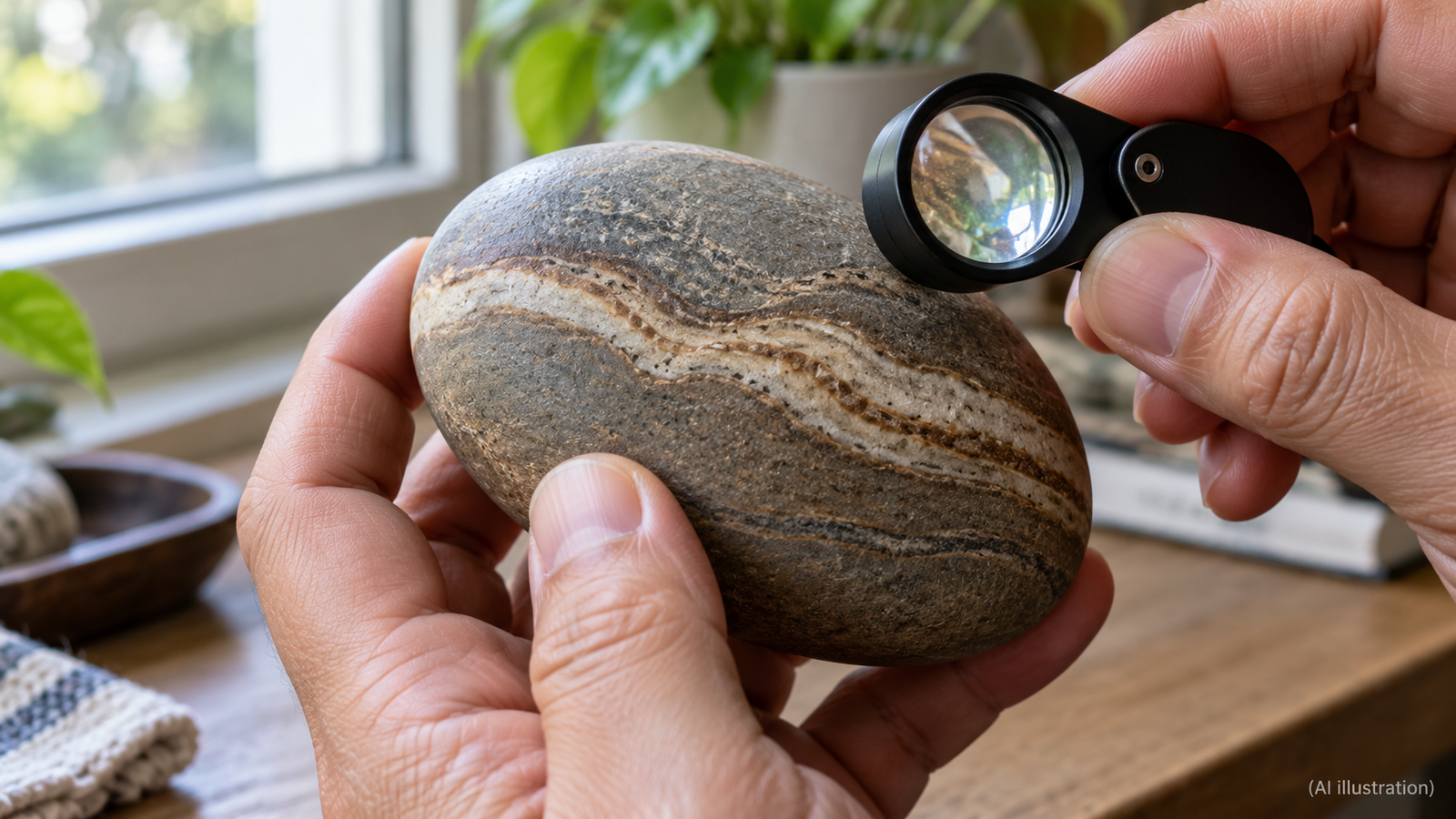
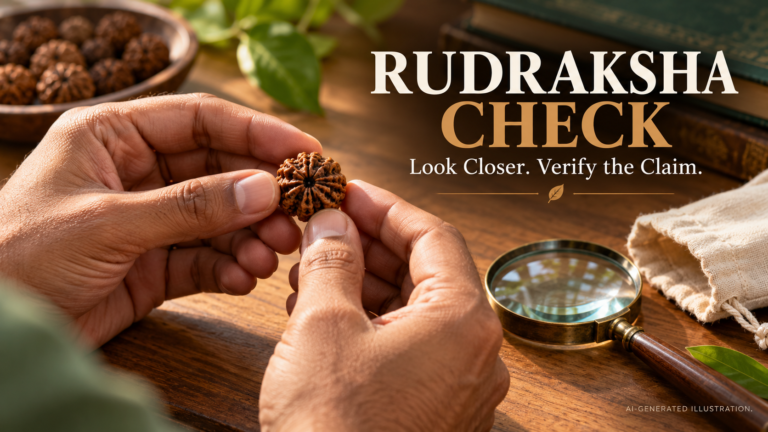
Record the apparent colour, width of a band, surface texture and how the marking continues across different views. Describe what is visible as a brown band or pale line. Do not immediately assign a mineral, vein type or authenticated natural pattern. Lighting and camera processing can change the apparent colour.
The Utah Geological Survey explains why colour alone is often unreliable in mineral identification. This is a general identification principle, not a special Narmadeshwar certification test. We therefore do not provide a universal rule claiming that one colour or a specific number of stripes proves a Narmada origin.
River transport can round pebbles through collision and abrasion; the Geological Society describes the general process. Roundness is not unique to one river. An oval outline also does not establish whether a stone was later shaped, cut or polished. Treat the outline as an observation rather than a complete history.
Natural material, natural shape and Narmada origin differ
Separate three questions. First, is the material natural rock, a composite or a manufactured replica? Second, how was its present shape obtained: river wear, later working or a combination? Third, is there documentation connecting this specific object to the stated Narmada source? One answer cannot substitute for all three.
Natural stone can still be deliberately shaped. Identifying a mineral or rock does not automatically establish a collection location. If a report only concludes something about material identity, it should not be presented as proof of the river in which this particular object was collected.
Research on the Narmada basin describes multiple geological units. It does not assign every object sold as Narmadeshwar a single composition or hardness. A religious or trading name is not a laboratory identification of a specific rock type. Ask which conclusion was reached for the specimen in front of you.
FACT: Natural material, surface modification and geographical provenance are separate checks. Evidence for one does not automatically prove the others. Keeping belief distinct from the seller’s physical description makes it easier to ask a clear, respectful purchasing question.
Ask about polishing, coatings and colour treatment
Ask whether the object has been cut, shaped, polished, coated, filled or dyed. High shine alone does not prove a replica, while a matte surface does not prove an untouched stone. A photograph may not resolve a particular treatment. Request a written description of what has been done.
Request a dry-surface photograph first. If the seller also shows the stone with water or oil, label that condition separately. Do not compare differently prepared surfaces as though lighting and treatment were identical. A darker wet appearance is not scientific evidence that energy has activated or authenticity has been established.
A raised edge, join, uneven-looking coating or pit near a line can justify a close-up and a question. It is not a conclusive fraud diagnosis. Avoid scratch, acid, heated-needle, flame or breaking experiments on a valued devotional object; they can damage the surface and leave the main question unanswered.
The USGS advises that accurate rock and mineral identification requires in-person examination from different perspectives and that photographs are difficult to identify reliably. We accordingly do not certify a stone as 100% original Narmada material from a picture.
Seven details to request in the seller’s photographs
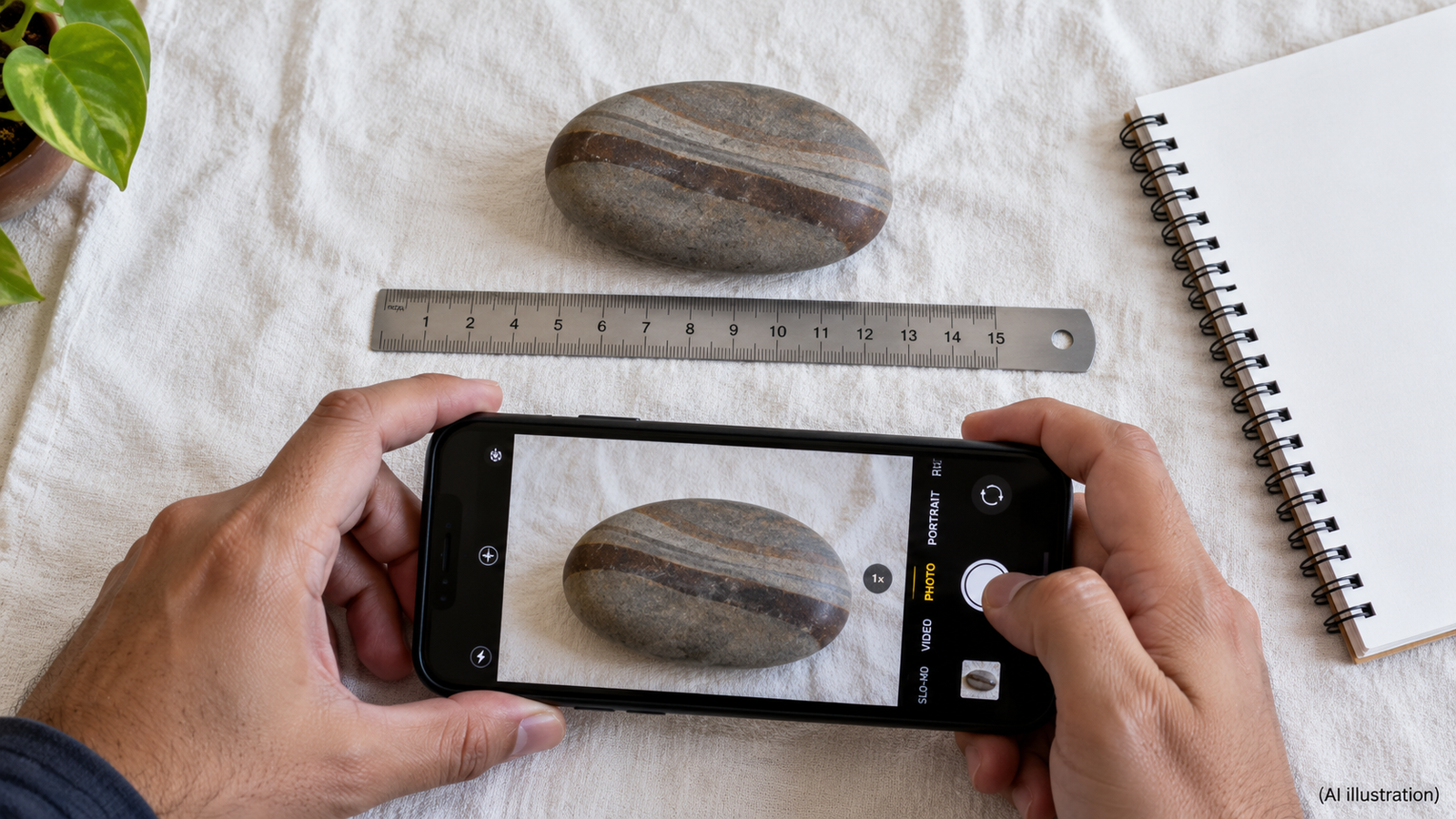
Request seven things: the actual piece rather than a stock photograph; complete front, back, side and end views; a sharp close-up of the marking without heavy sharpening; a ruler beside the stone in approximately the same plane; diffuse daylight on a dry surface; disclosure of water, oil or finishing; and a continuous rotating video.
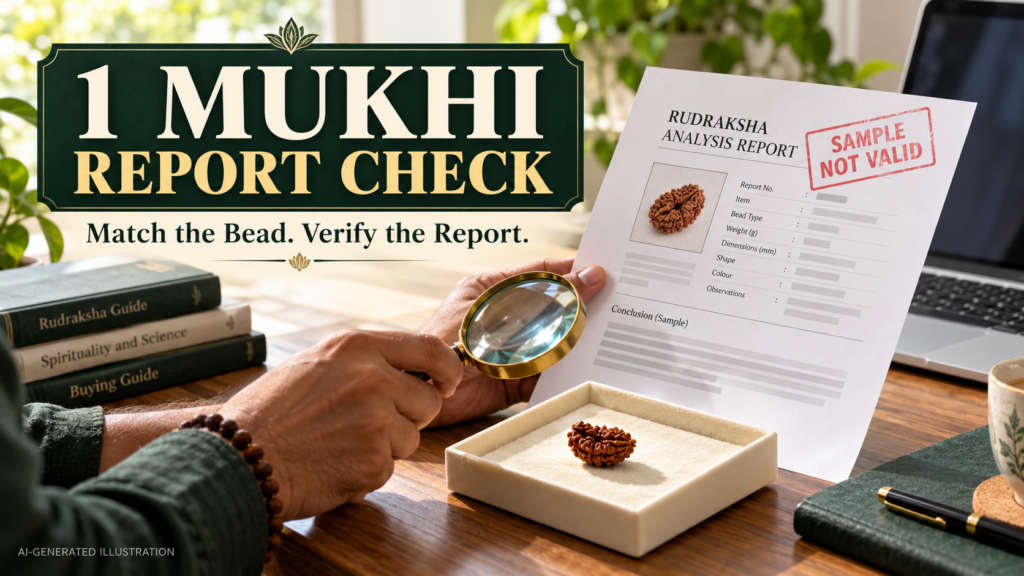
This is a buyer’s documentation checklist, not a compulsory government test format. A dated order-reference card can help link the images to the offered object. It does not establish where the stone was collected. Match the dimensions, weight and visible marks with the invoice and delivered item.
If the base and the upright stone are different materials, request separate descriptions. A statement about the base cannot identify the main object. Likewise, a picture taken outside a riverside shop or in front of the Narmada is not independent proof that this particular stone came from that river.
Good documentation helps resolve whether the seller sent the described piece. It still does not create a chain of provenance. Keep the original listing, messages and photographs so an expert can see both the item and the claim that actually matters.
Advice on evidence, reports and return terms
Send this question: “Please show every side of this exact piece dry, with dimensions and weight. Has it been shaped, polished, dyed, filled or coated? What record supports the claimed Narmada source? What return terms apply if independent inspection does not match the description?” Save the written response and invoice.
For a substantial purchase, ask a suitable geologist, university geology department or natural history museum whether they examine such objects. Not every institution offers commercial certificates, religious classification or valuation. Confirm the service scope, specimen requirements and limits of any written conclusion first.
For a report, compare its specimen photograph, dimensions, reference and findings. Find the issuer’s contact independently. A natural stone finding does not necessarily prove an untouched shape, Narmada origin, age or spiritual effect. Seek clarification before paying when a seller expands a limited finding.
Consult someone familiar with your tradition for worship practices. This article does not promise wealth, a cure or a supernatural outcome from a stripe. Its purpose is to explain buying descriptions and the limits of physical identification claims.
Frequently asked questions
Can a stripe prove Narmada origin? No. Visible markings and collection history are separate.
Does no stripe mean fake? Do not reach that conclusion from this feature alone.
Does polishing make a stone a manufactured material? No. Natural stone can receive finishing; ask what was done.
Can a photo establish a quartz composition? A definitive identification may need appropriate direct examination.
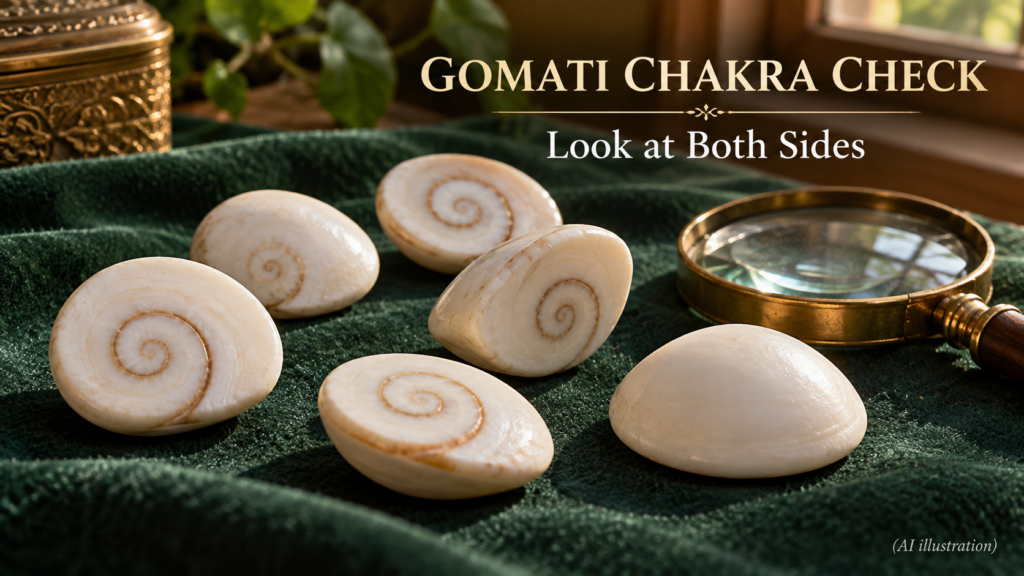
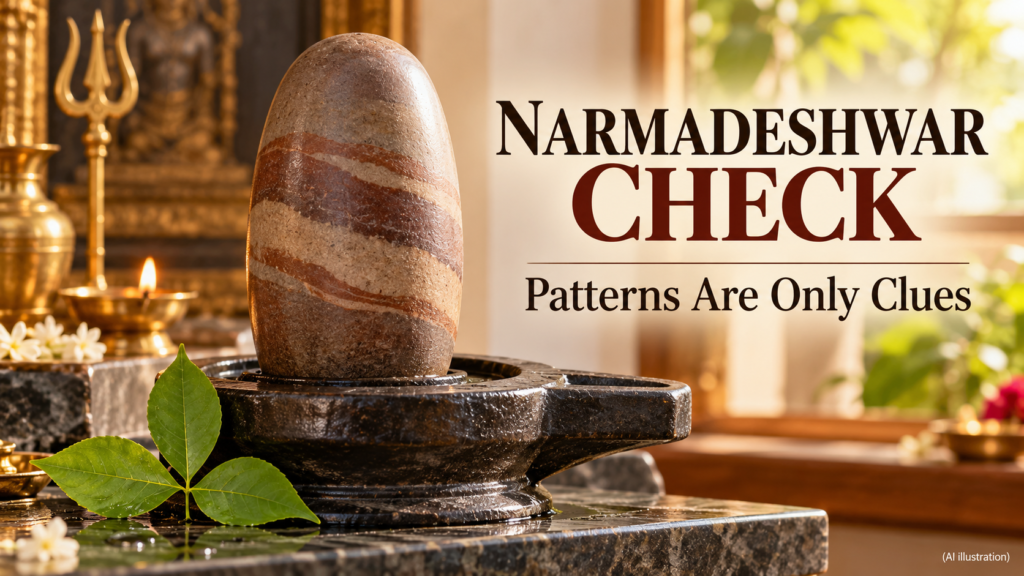
Are the images authentic reference photographs? No. All three are fictional AI illustrations and cannot authenticate another specimen by resemblance.
Sources and AI image disclosure
General information, not certification, valuation or a religious ruling about a specific object. Sources support general geology and identification limits; no seller is endorsed. The three images are AI illustrations, not documented Narmada specimens. Checked on 24 October 2026.
- USGS: in-person rock and mineral identification
- Utah Geological Survey: physical properties and colour limits
- Geological Society: river transport, abrasion and rounding
- Research: Narmada basin geological units and sediment sources
Dakshinavarti shankh identification and photograph limits