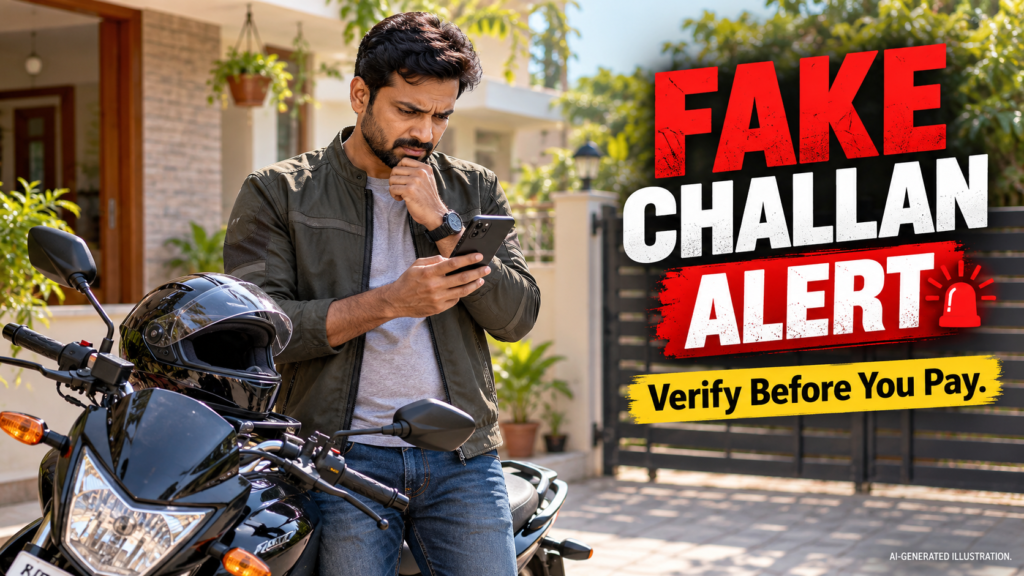
Received a fake traffic challan message? Pause first
An unexpected message says a traffic fine is pending. It includes a link or an APK file and pressures you to pay immediately. A fake traffic challan message can exploit a driver’s worry about fines. Instead of paying through the message, check the record independently through an official channel.
A genuine fine may also exist, so dismissing every notification is not a useful solution. Close the suspicious message, open the official service yourself and match the record to your vehicle. Do this while parked safely, never while riding or driving.
Warning signs in WhatsApp APK files and payment links
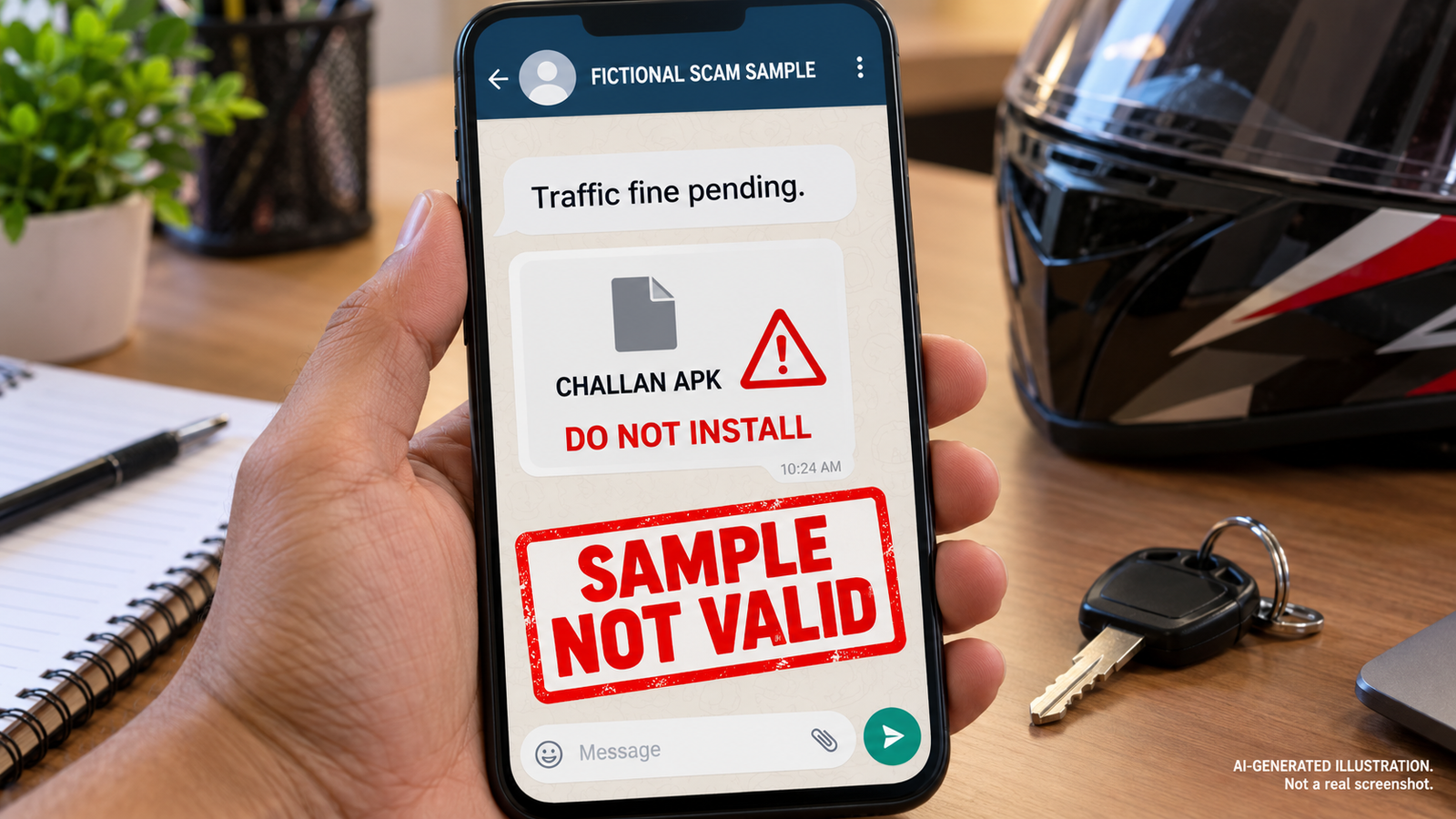
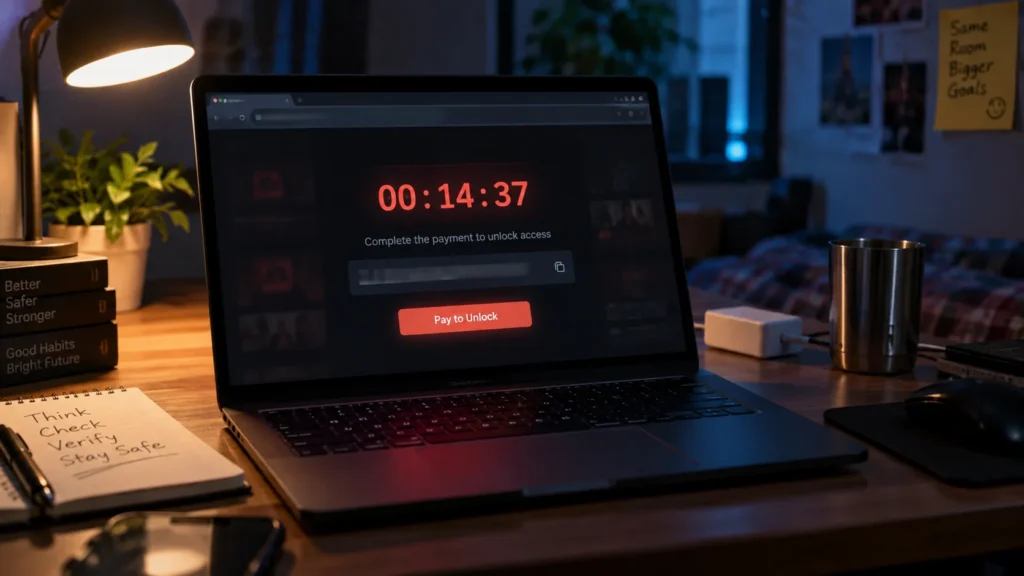
The image below is a fictional awareness sample. It is not a real WhatsApp conversation, government challan or Parivahan app screenshot. It demonstrates pressure to install an APK rather than serving as evidence of a specific incident.
An APK is an Android application installation file. Installing an unfamiliar APK received as a supposed challan is not a safe way to verify a fine. A PDF-like icon or a filename containing RTO or Challan does not establish trust. Check the actual file type.
A fraudulent website can imitate official colours, logos and names. A browser padlock concerns the connection; it does not authenticate the organisation. Treat shortened links, alarming deadlines and unexplained private-account payments as reasons to stop and verify.
How to check a challan through official records
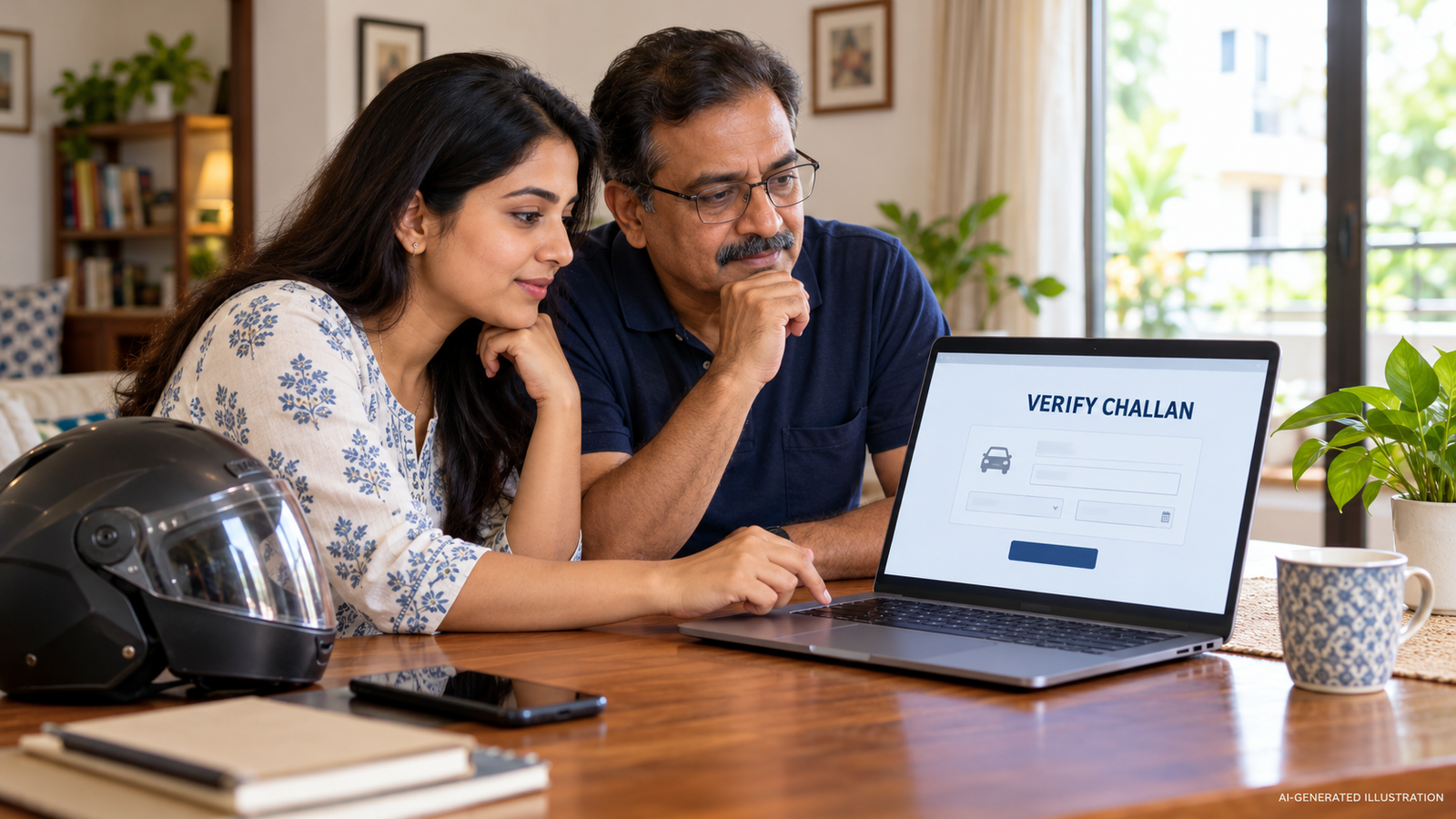
Type echallan.parivahan.gov.in into your browser yourself. Use the available challan-number, vehicle-number or driving-licence search option. Complete verification only within the official service you opened. Entering an OTP there is different from reading it out to an unexpected caller.
Compare the vehicle or licence details, reference, date, state, amount and status. Examine any available incident information or photograph. If you already paid, check the receipt and transaction status before paying again because another SMS arrived.
Some states or cities operate their own official traffic services. Reach those through the relevant department’s website. Failure to find a record immediately is not conclusive proof of fraud: check the details and ask the issuing authority about an absent or mismatched entry.
FACT: A message containing your correct vehicle registration does not authenticate the whole message or its payment link. Verify the record and payment route independently.
A scam message and a wrongly issued challan are different
A scam may invent a fine or use information about a genuine fine to divert you to a different payment destination. Avoid using its link or APK and report suspected cyber fraud when appropriate. A genuine record does not make every related message trustworthy.
A different situation arises when the official record exists but you dispute the vehicle image, registration, location or alleged violation. Use the relevant portal’s complaint/grievance route or ask the issuing traffic authority how to raise the issue.
Keep the challan copy, registration document and genuine evidence supporting your objection. Explain precisely which entry is wrong. Preserve the acknowledgement or ticket number. Submitting a grievance does not, by itself, establish cancellation or suspend a deadline; check the authority’s response and next steps.
What to do after a click, installation or payment
If you only opened a link, stop before entering information, paying or installing anything. Do not assume a single click necessarily compromised the entire device. Identify what you submitted, what downloaded and whether an app was installed.
If an APK downloaded but was not installed, do not run it. If you installed an app or granted permissions, stop sensitive banking activity on that phone and contact your bank from a trusted device. Obtain reliable help with permissions, removal and device security checks. Uninstalling alone is not a guarantee that every consequence is resolved.
For financial loss, notify your bank or payment provider immediately and report to 1930 and cybercrime.gov.in. Preserve transaction references, time, amount, recipient details and the suspicious message. Prompt reporting is useful, but recovery is not guaranteed.
If a login or OTP was disclosed, secure the affected account and contact the provider. Warn contacts through a separate trusted channel if messages appear to have been sent from your account. Do not forward a suspicious APK to other people as evidence.
Advice: build a safer challan-checking routine
Bookmark the official eChallan service. Check records before payment and retain receipts afterwards. Show less confident family members how to open the service independently rather than relying on a link in every new message.
If a real fine is disputed, use the appropriate process with truthful records. Do not alter evidence. Neither panic payment nor ignoring all official communication is a substitute for independent verification.
A simple enquiry can say: “The vehicle/incident details in challan reference ___ do not match my records. Please explain the process to review the attached evidence and track my grievance.” This is a writing example, not a statutory form or a promise of cancellation.
Questions about fake eChallan messages
Is every traffic challan SMS fake? No. Genuine notifications can exist. Verify through the official record.
Should I install a WhatsApp APK to read a challan? Do not install an unfamiliar file from a message. Use an independently verified official service.
Is an OTP always evidence of a scam? No. A genuine portal may use verification. Never disclose the code to an unexpected caller.
Does “challan not found” prove fraud? No. Check your details and the appropriate issuing authority.
Will a wrong-challan grievance cancel the fine automatically? No. Review the authority’s decision and required next steps.
Official sources and image clarification
This is general cyber-safety and process information for India, not individual legal advice. Portal options can differ by jurisdiction and change over time. All three images are AI-generated illustrations with fictional screens, not official records. Information checked on 24 October 2026.
- MoRTH / NIC: Official eChallan portal and fraud warning
- MoRTH / NIC: Check challan status
- MoRTH / NIC: Grievance route; use current portal navigation
- Indian Bank: Fake challan APK warning
- National Cyber Crime Reporting Portal
Also read: FedEx parcel scams and payment verification
Accidentally Installed a Wedding or Challan APK? What to Do Next
How to reduce traffic challan in Lok Adalat: Virtual court procedure and penalty waiver rules