 Vista
Indira Gandhi Birth Anniversary 2026: Life, Decisions and History
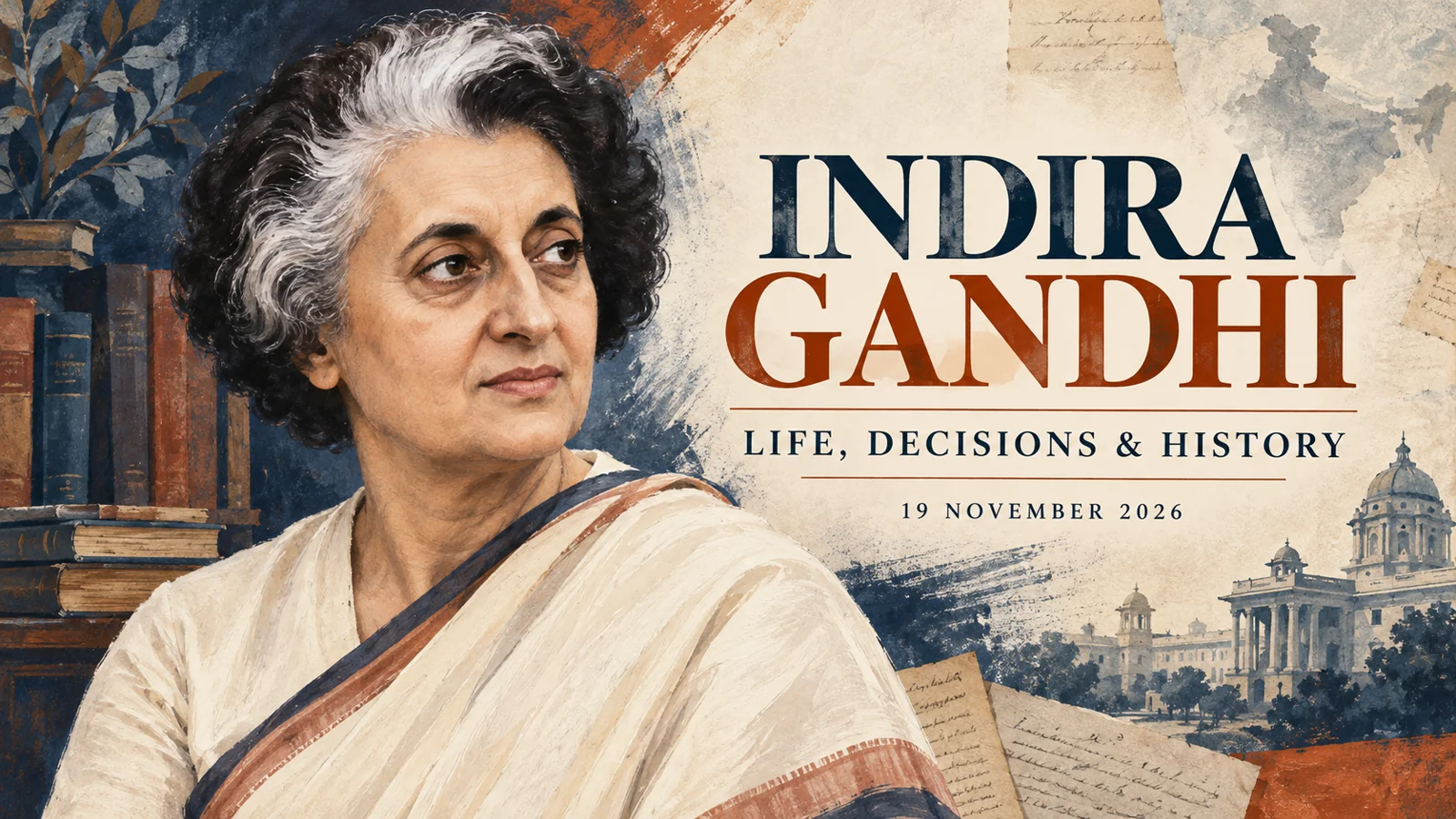
Indira Gandhi’s birth anniversary falls on 19 November. Born on 19 November 1917, her 109th birth anniversary falls in 2026. India’s first woman Prime Minister is associated with bank nationalisation and the events of 1971, but the Emergency of 1975–77 and restrictions on civil liberties are equally essential to understanding her record.
This guide introduces the main dates, decisions and questions for students. A historical assessment needs more than admiration or condemnation: it should examine policies, institutions and consequences.
Who Was Indira Gandhi, and When Was She Prime Minister?
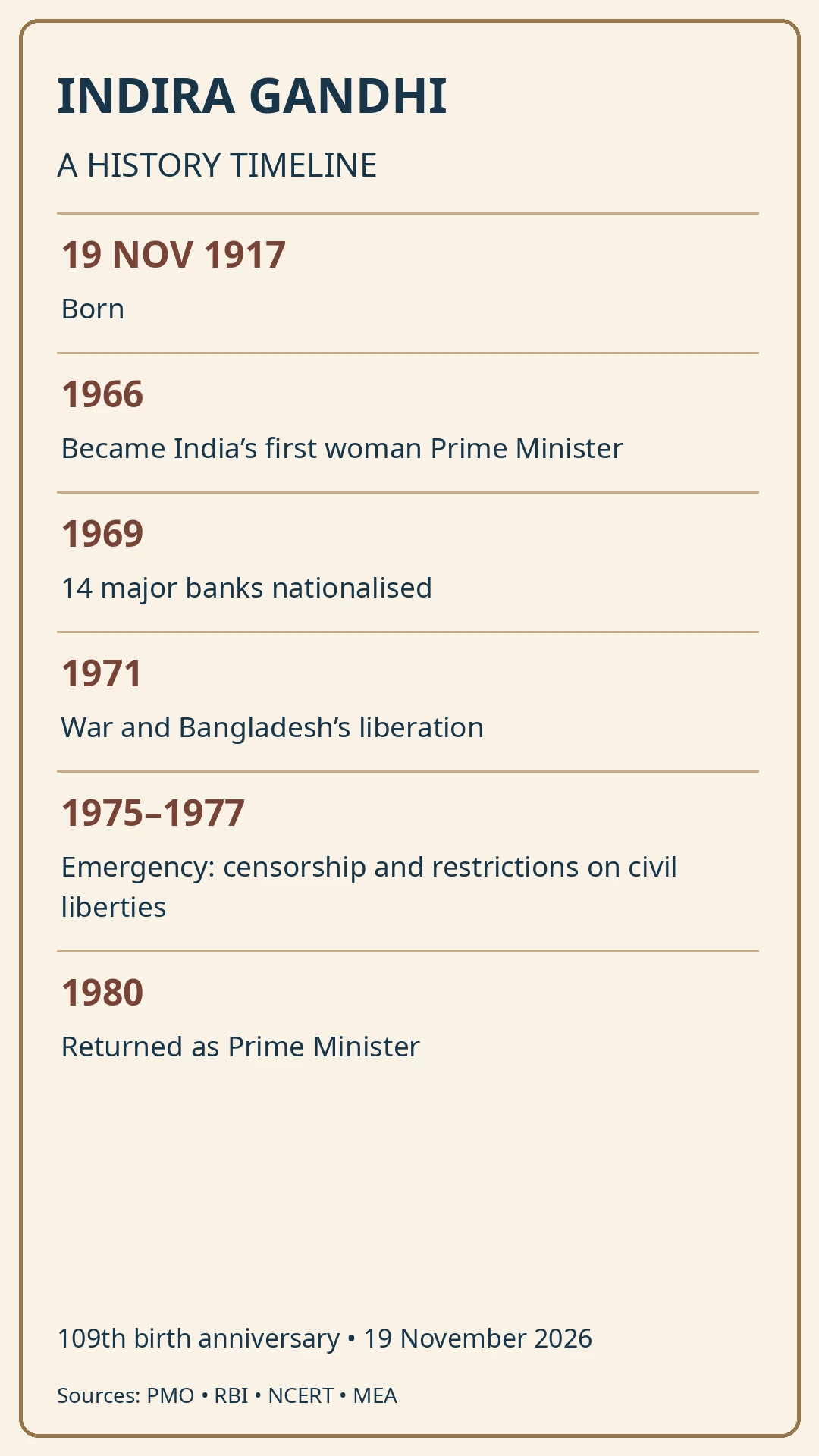
Indira Gandhi was Jawaharlal Nehru’s daughter and became India’s first woman Prime Minister. The Prime Minister’s Office lists her first period in office as 24 January 1966 to 24 March 1977 and her second as 14 January 1980 to 31 October 1984. She did not hold the office continuously from 1966 to 1984.
Before becoming Prime Minister, she served as Minister for Information and Broadcasting. Her public career included party organisation, Parliament and government. A short school introduction should prioritise the birthday, principal role and two periods in office rather than an unstructured list of positions.
Family background is one part of a biography, not a complete explanation for every decision. Policies should also be studied in relation to economic conditions, international developments and the institutions within which political leaders operate.
Why Was Bank Nationalisation in 1969 Important?
The Reserve Bank of India’s historical chronology records the nationalisation of 14 major commercial banks on 19 July 1969. This was a major economic decision of the government led by Indira Gandhi. Connecting banking resources with development and national priorities was among its stated purposes.
Nationalisation brought the specified banks under government ownership. It does not mean that every bank in India was nationalised that day or that every household immediately received a loan. The policy’s objective, implementation and eventual results are separate questions.
For quick revision, remember “1969—14 banks”. A longer answer about rural access or lending should use evidence for a defined period. Decades of institutional change cannot be explained entirely by one date, even when the decision itself was significant.
What Was Her Role in the Events of 1971?
The political and humanitarian crisis in East Pakistan, refugees arriving in India and Bangladesh’s liberation struggle formed the wider background to 1971. Indira Gandhi was India’s Prime Minister during these events. India’s diplomatic and military involvement should be understood within that setting.
On 16 December 1971, Pakistani forces surrendered in Dhaka to the joint forces of India and Bangladesh. Ministry of External Affairs commemorative statements recognise that joint contribution. Saying that one leader single-handedly created Bangladesh overlooks its liberation movement, its people and the military effort.
Political leadership mattered, but several levels of history belong together: a people’s struggle, a humanitarian emergency, military operations and international relations. A useful school project can give each a short section. Remembering a historical conflict should not become hostility towards a present-day community.
Why Is the Emergency of 1975–77 Controversial?
The Emergency from 25 June 1975 to 21 March 1977 is a grave chapter in India’s democratic history. The government invoked internal disturbance. An assessment must also address what followed: arrests of opposition figures, press censorship and major restrictions on civil liberties.
NCERT’s chapter “The Crisis of Democratic Order” examines the background and consequences. It includes the example of the blank editorial space in Indore’s Nai Dunia on 27 June 1975. For students in Madhya Pradesh, that is a concrete local connection with the national history of censorship.
Coercive sterilisation and other abuses during the period also attracted serious criticism. Omitting these issues from an anniversary article would leave a distorted picture. At the same time, a short introduction should avoid unsupported claims about every incident or sweeping statements that erase important legal distinctions.
The Congress lost the 1977 Lok Sabha election, and a Janata Party government took office. Indira Gandhi returned as Prime Minister in 1980. Studying this sequence is also a way to examine elections, judicial institutions, a free press and public accountability.
“Iron Lady”, Her Birthday and the 1984 Date
“Iron Lady” is a popular description associated with her image as a forceful political leader. It is not a constitutional title or a complete historical verdict. A leader’s public image should be distinguished from an evidence-based assessment of individual decisions.
She was assassinated on 31 October 1984. 19 November is her birthday; 31 October is her death anniversary. Posters for the two occasions should not be confused. Reusing an old design by changing only the year can reverse the meaning of the observance.
The Punjab crisis and the final years of her government require further study beyond this introductory timeline. It does not replace a complete account of the period. Collective blame against a community and unsupported conspiracy claims do not provide a sound historical explanation.
MPPSC Revision and a Short Anniversary Speech
For MPPSC and other general-studies preparation, make three columns: event, date and significance. Keep terms in office, bank nationalisation and the Emergency distinct. Check which institution made or implemented a decision rather than attributing every action solely to one individual.
Respected teachers and dear friends, on 19 November we remember Indira Gandhi’s birth anniversary and reflect on India’s history. She was the country’s first woman Prime Minister and served in two separate periods.
Her years in office included bank nationalisation and the major events of 1971. The same history includes the Emergency and restrictions on civil liberties. Responsible study requires us to learn from achievements and failures together.
When we study any political leader, we should value evidence, context and democratic principles. A free press, public accountability and citizens’ rights remain essential to our shared public life. Thank you.
This is an original school speech, not a quotation from Indira Gandhi. Students can attach sources to their notes and explain disputed issues with context rather than turning the presentation into slogans.
Frequently Asked Questions
When is Indira Gandhi’s birth anniversary?
19 November. The year 2026 marks her 109th birth anniversary.
Was she India’s first woman Prime Minister?
Yes. She first took office on 24 January 1966.
Was she Prime Minister continuously until 1984?
No. She was out of that office between March 1977 and January 1980.
How many banks were nationalised in 1969?
Fourteen major commercial banks on 19 July 1969.
When was the Emergency discussed here?
The internal Emergency ran from 25 June 1975 to 21 March 1977.
Advice for a Balanced Biography
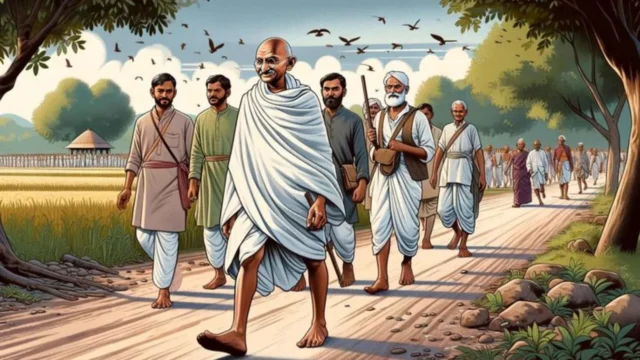
Explain decisions and consequences instead of relying on a nickname. Recognise institutions and other contributors when discussing achievements. Include critical episodes and avoid unsourced quotations. The featured image is artistic, not archival.
Educational historical introduction. It is not a complete political biography or a campaign for a current political party.
Related reading
Sources
- PMO: Indira Gandhi biography
- PMO: former Prime Ministers and terms in office
- RBI: historical chronology, 1968–1985
- NCERT: The Crisis of Democratic Order
- PIB: Emergency chronology and abuses
- MEA: Vijay Diwas and the joint forces of India and Bangladesh
- Prime Ministers’ Museum: Indira Gandhi


Share Your Opinion
Comments are closed on this post.