 Vista
Lala Lajpat Rai Death Anniversary 2026: What Happened in 1928?
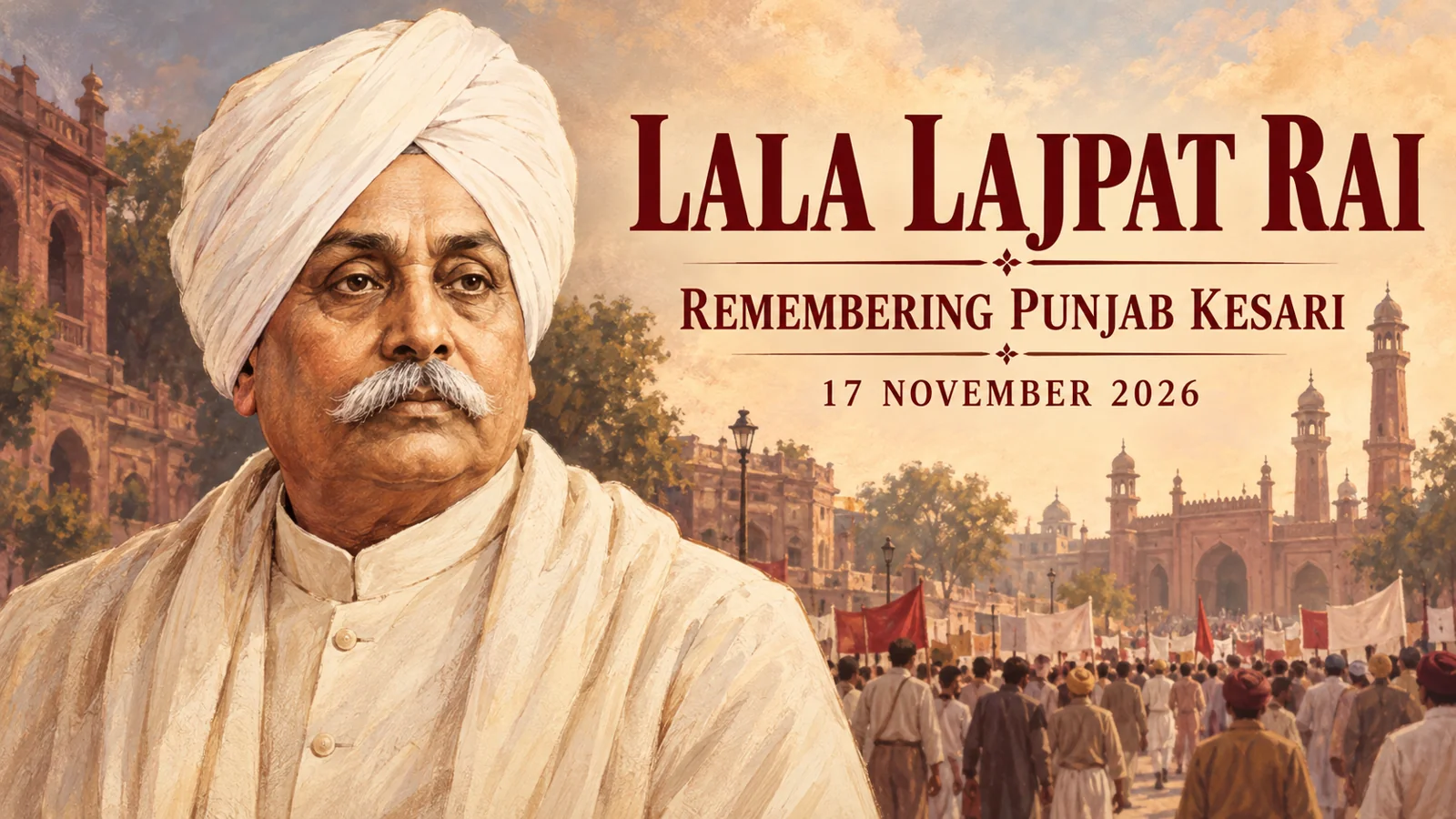
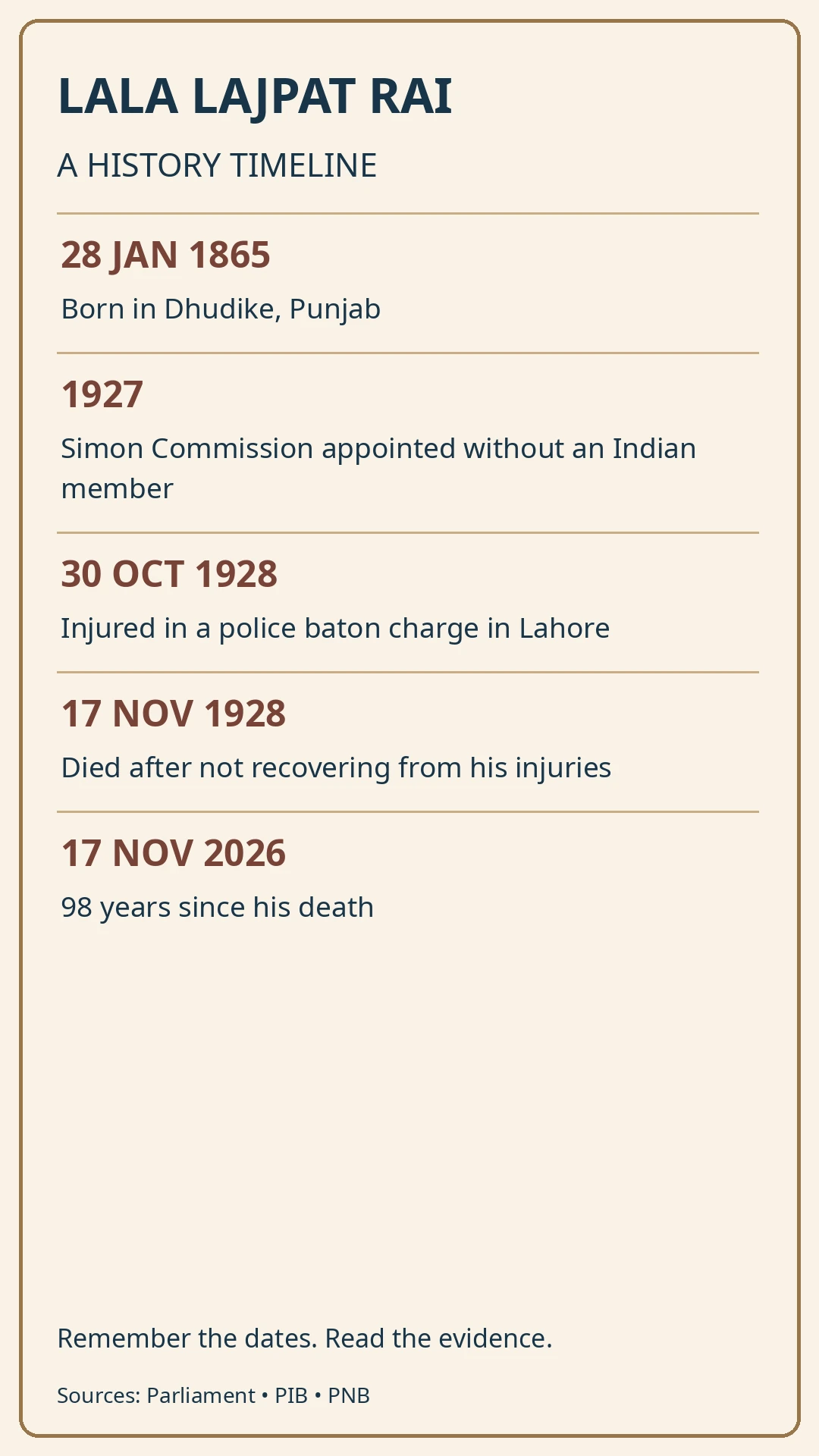
Lala Lajpat Rai is remembered on 17 November, his death anniversary. He was injured during a police baton charge while leading a protest against the Simon Commission in Lahore on 30 October 1928. He did not fully recover and died on 17 November 1928. Keeping those dates separate prevents a common mistake: the assault and his death did not occur on the same day.
The year 2026 marks 98 years since his death. This guide explains Punjab Kesari’s life, the reason for the protest, his institution-building work and useful school revision points.
Who Was Lala Lajpat Rai?
Born on 28 January 1865 in Dhudike, Punjab, Lajpat Rai became a leader of India’s freedom movement, a writer and a participant in educational and social work. “Punjab Kesari” is the popular honorific associated with him. It should not be mistaken for a government office or formal appointment.
He is commonly studied with Bal Gangadhar Tilak and Bipin Chandra Pal as “Lal-Bal-Pal”. The expression combines references to three people; it is not the name of a separate organisation. Students should practise writing their full names rather than recalling only the shorthand.
A biography limited to the final protest misses much of his public life. His role included political resistance, writing and support for institutions. A useful classroom introduction should give space to both confrontation with colonial authority and constructive work in society.
Why Was the Simon Commission Opposed?
The Simon Commission was appointed in 1927 to review India’s constitutional arrangements. It had no Indian member. That exclusion was a central reason for opposition when the Commission visited India in 1928: the people whose political future was being discussed had no representative on the body.
“Simon Go Back” became associated with the protests. To understand the slogan, begin with the representation question rather than treating it as an isolated phrase to memorise. Who participated in the decision-making process, and whose voice was absent?
Keep appointment and visit separate. Some short accounts compress everything into 1928, but the parliamentary biography identifies 1927 as the appointment year. A clear timeline is more useful than forcing several related events into one date.
What Happened Between 30 October and 17 November?
On 30 October 1928, Lajpat Rai led a protest procession in Lahore. Police used a baton charge, and he was seriously injured. Official historical accounts connect those injuries with his subsequent death on 17 November. Describing him as having died immediately at the protest is therefore inaccurate.
There is no need to invent a final conversation or detailed medical scene to make this history moving. The documented sequence is significant on its own. For revision, give each date its own line and describe only the event that belongs to it.
A timeline also helps distinguish a public protest from its later consequences. Historical explanations depend on that sequence; removing the interval can change the reader’s understanding of what happened.
What About the Famous “Every Blow” Saying?
The saying connecting the blows against him with the eventual end of British rule is associated with Lala Lajpat Rai. Versions appear in PIB and parliamentary accounts. Their wording is not identical, and popular Hindi posters circulate further translations.
Its general meaning is that repression would not extinguish the demand for freedom and would deepen resistance to colonial rule. That is a paraphrase, not a verbatim transcript. If a school poster uses a translation or an adaptation, label it accordingly instead of claiming that every word is authenticated.
A sourced short quotation is better than a long invented statement. Students can also write an original remembrance message, provided they do not place it in quotation marks and attribute it to the historical figure.
What Were His Contributions Beyond the Protest?
Lajpat Rai was associated with Arya Samaj and educational initiatives, including early efforts connected with DAV education. His books included Unhappy India and England’s Debt to India. These writings show another part of the freedom movement: arguments, publications and public debate.
Punjab National Bank’s institutional history identifies him among the patriotic figures whose efforts helped establish the bank. It began business in Lahore on 12 April 1895. Describing him as one important participant in that collective effort is more accurate than saying he created it entirely alone.
This helps explain a constructive side of swadeshi: building Indian institutions as well as opposing colonial arrangements. A two-column study sheet can separate protest activity from educational and economic institution-building. Both belong in an assessment of public contribution.
School Speech and Revision for MP Students
For MPPSC, MP Police and Patwari general studies, revise the dates, the Commission’s composition and the full names behind Lal-Bal-Pal. These are useful historical facts rather than a prediction of examination questions. The following speech is an original school sample.
Respected teachers and dear friends, today we remember Lala Lajpat Rai on his death anniversary. Known as Punjab Kesari, he contributed to the freedom movement and to educational and public work.
In 1928, he led a protest against the Simon Commission in Lahore. Its exclusion of Indian members raised an important question about representation. He was injured in the baton charge on 30 October and died on 17 November.
Remembering him should mean more than repeating a slogan. We can read history carefully, support our statements with evidence and contribute useful work to society. Courage and thoughtful public service can be studied together. Thank you.
For a classroom activity, assign students the Commission, the protest and the timeline. Ask another student to identify a source and state precisely which fact it supports. This turns a remembrance programme into an exercise in historical reading.
Frequently Asked Questions
When did Lala Lajpat Rai die?
On 17 November 1928. November 2026 marks 98 years since his death.
Did the baton charge and his death happen on the same day?
No. The baton charge was on 30 October; he died on 17 November 1928.
Why was the Simon Commission opposed?
It had no Indian member, raising the issue of discussing India’s political future without Indian representation.
Who were Lal-Bal-Pal?
Lala Lajpat Rai, Bal Gangadhar Tilak and Bipin Chandra Pal.
When is his birth anniversary?
28 January. The 17 November observance is his death anniversary, not his birthday.
Advice for Remembrance Posters
Check the date, include two clear contributions and identify the source of any quotation. Label artistic imagery accurately. The featured image here is an illustration, not an archival photograph.
Educational historical introduction. Check local event notices and prescribed examination material separately.
Related reading
- Jhalkari Bai and the history of 1857
- Birsa Munda and Janjatiya Gaurav Divas
- Constitution Day and citizens’ rights
Sources
- Parliament: Lala Lajpat Rai biography
- PIB: life and the 1928 protest
- Ministry of Culture: education, publications and public work
- Ministry of Culture: Lal-Bal-Pal
- PNB: collective institutional history
- Nehru Archive: contemporary interview and the Lahore protest











Share Your Opinion
Comments are closed on this post.