 Vista
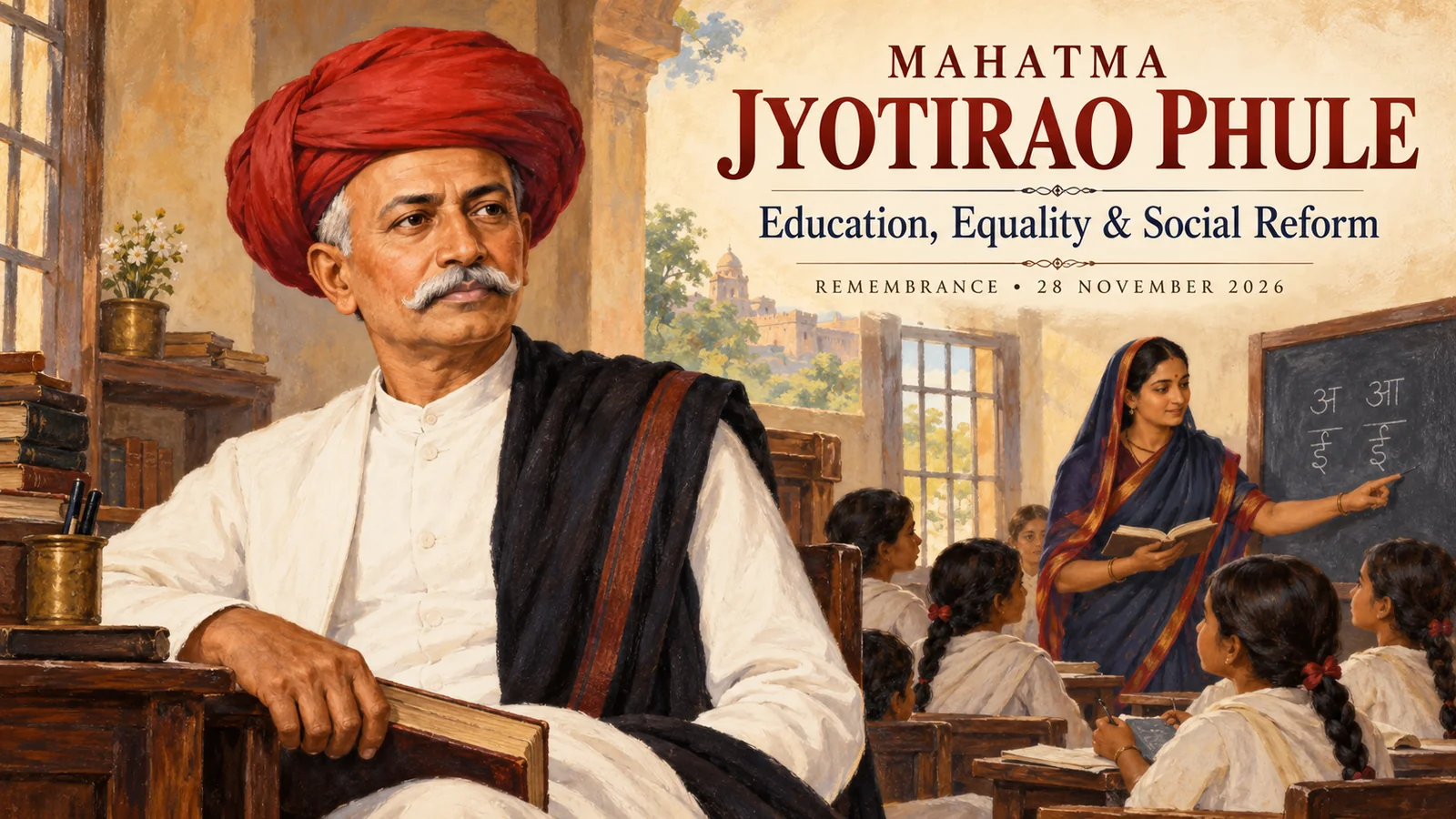
Jyotiba Phule’s Social Work: Education, Satyashodhak Samaj and Savitribai
What should we learn about Jyotiba Phule beyond sharing a portrait on his death anniversary? His work connected girls’ education, resistance to caste discrimination, social dignity and collective organisation. This guide explains Jyotirao and Savitribai’s partnership, the Satyashodhak Samaj, a useful timeline and an original short speech for students remembering his contribution on 28 November.
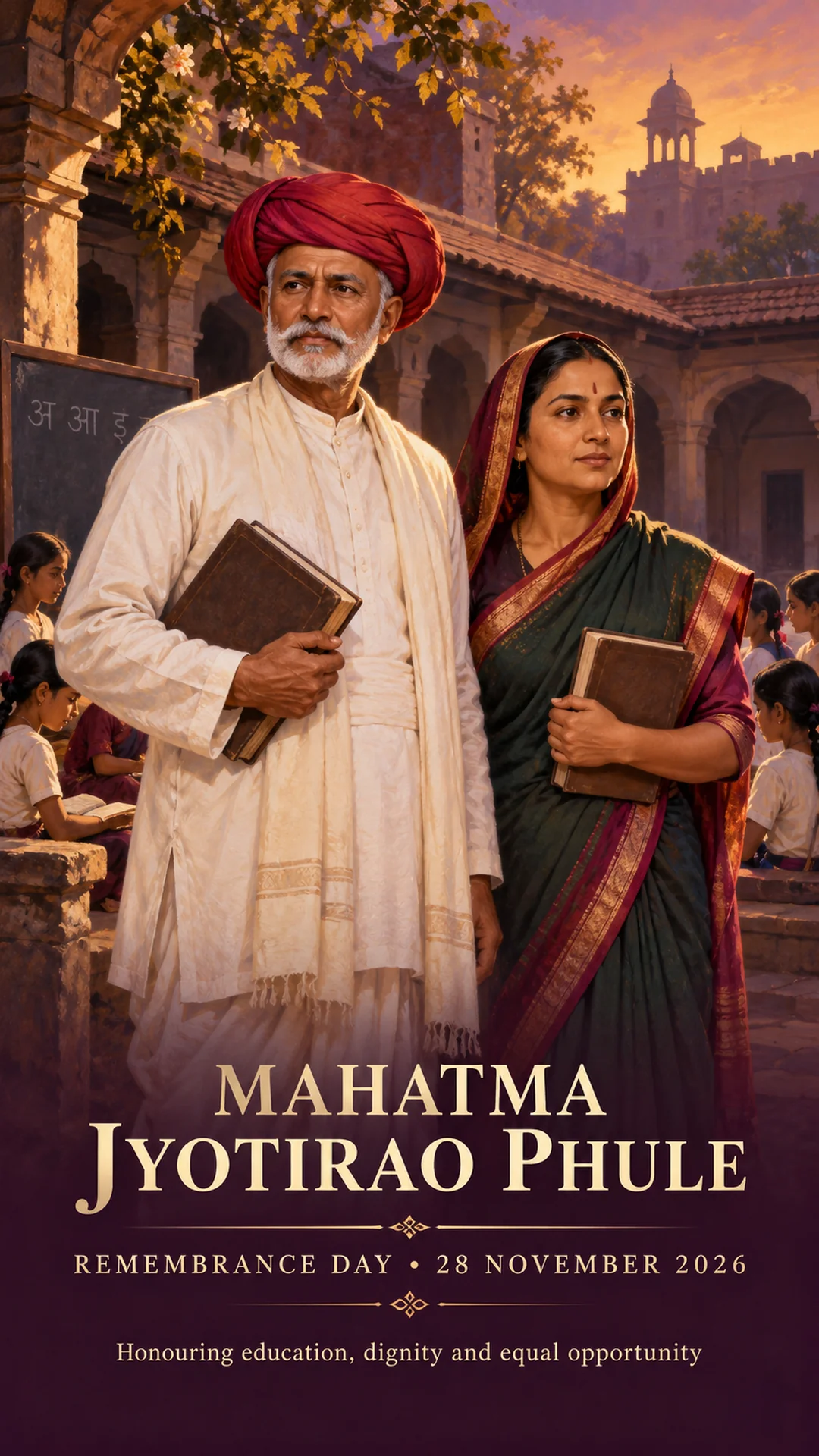
Who was Mahatma Jyotiba Phule, and when is his death anniversary?
Mahatma Jyotiba Phule’s full name was Jyotirao Govindrao Phule. He was born on 11 April 1827 and died on 28 November 1890. His Jayanti is therefore observed on 11 April, while 28 November commemorates his death. Jyotiba, Jyotirao and Jotirao are different spellings used for his name.
He was a major nineteenth-century social reformer, thinker and writer. Education as a means of social change, and opposition to injustice rooted in caste and gender, were central to his work. His contribution should not be reduced to one anniversary or one book.
For a post or poster dated 28 November 2026, use a remembrance or tribute message. A birthday greeting would confuse the occasion. Understanding what is being commemorated is the first step towards an accurate educational resource.
Jyotirao and Savitribai’s contribution to girls’ education
Jyotirao and Savitribai Phule are associated with the school for girls begun in Pune in 1848. Savitribai was an active teacher and social reformer, not merely a supporting figure in her husband’s biography. Her own leadership deserves attention.
Girls and historically disadvantaged communities faced substantial barriers to education. Starting a school meant more than finding a building. It involved teaching, developing families’ confidence and continuing the work despite opposition. Their partnership matters because it combined an educational idea with sustained practical effort.
Avoid sweeping claims such as “the first school in the world” or “the first occasion on which any girl was educated in India”. A more careful account recognises the Phules as pioneers of schooling for girls and excluded communities in India.
Why was the Satyashodhak Samaj founded?
Jyotiba Phule founded the Satyashodhak Samaj on 24 September 1873. Its name conveys the search for truth. Its work was associated with social equality, the dignity of oppressed communities and resistance to exploitation.
Inequality affects more than abstract ideas. It shapes access to education, status, work and opportunity. Creating an organisation was an important part of Phule’s approach because it offered a public platform for questioning accepted hierarchies and bringing people together.
The Ministry of Culture’s account also connects the movement with opposition to economic and social exploitation. Understanding it only as an organisation that holds commemorative events misses that purpose. Its founding aims and later activities can be studied through different historical sources.
What were Phule’s main areas of social work?
| Area | What the contribution involved |
|---|---|
| Girls’ education | Schooling and teaching initiatives undertaken with Savitribai. |
| Social equality | Criticism of caste discrimination and humiliation based on birth. |
| Organisation | Bringing people together through the Satyashodhak Samaj. |
| Writing | Questioning social arrangements through works such as Gulamgiri. |
| Women’s dignity | Support for widow remarriage and assistance to women in difficult circumstances. |
Education and dignity are connected. Allowing a child into a school does not create equal opportunity if the child is continually humiliated in the classroom. Discussing Phule’s legacy can help students consider both access to education and the environment in which learning happens.
This is a present-day educational illustration, not a quotation from a particular historical address. Eligibility for any current scholarship or government programme must be checked against its own official rules.
How should readers approach Gulamgiri and his ideas?
Gulamgiri, published in 1873, is one of Phule’s major works. It criticises social subordination and inequality. Two motivational sentences on the internet cannot explain an author’s complete argument. Reading the work, a reliable translation and its historical background provides a stronger foundation.
Consider the language and criticism in relation to the society of the period. Before sharing a sentence attributed to Phule, look for the work and context from which it comes. A modern Hindi or English translation is not necessarily a word-for-word representation of the Marathi original.
Reading Jyotirao and Savitribai together also makes the educational story more complete. It brings attention to teaching, public engagement and the daily work needed to sustain a school, alongside the decision to establish it.
A short speech for Jyotiba Phule’s death anniversary
Respected teachers and friends, today we remember the social contribution of Mahatma Jyotiba Phule on his death anniversary. He died on 28 November 1890, but his work for education and equality continues to give us important questions to consider. Alongside Savitribai Phule, he worked for girls’ education and founded the Satyashodhak Samaj.
His legacy reminds us that education means more than providing books. Every child should have the dignity and opportunity to learn, ask questions and progress. In our own school, we should never ridicule someone because of caste, gender, language or family circumstances. Helping a classmate, sharing a book and making sure no child is left out are small but useful steps. Let us remember the people who worked to widen opportunity by bringing greater respect and cooperation into our own lives. Thank you.
This is an original sample. The poster message, “Honouring education, dignity and equal opportunity”, is also an original editorial tribute. It is not presented as an authenticated quotation by Phule.
Advice, activities for MP schools and FAQs
Readers in Madhya Pradesh can explore the relevance of Phule’s educational legacy without changing his geographical background to manufacture a local connection. Schools can discuss girls’ attendance, participation by all children and access to a library. Students can create a joint Jyotirao–Savitribai timeline and introduce one relevant book.
When is Jyotiba Phule’s death anniversary?
On 28 November. He died in 1890.
When was the Satyashodhak Samaj founded?
On 24 September 1873.
Should Savitribai’s contribution be studied separately too?
Yes. She was an active teacher and reformer whose own leadership deserves recognition.
Who wrote Gulamgiri?
Mahatma Jyotirao Phule. It was published in 1873.
Are the posters authentic historical photographs?
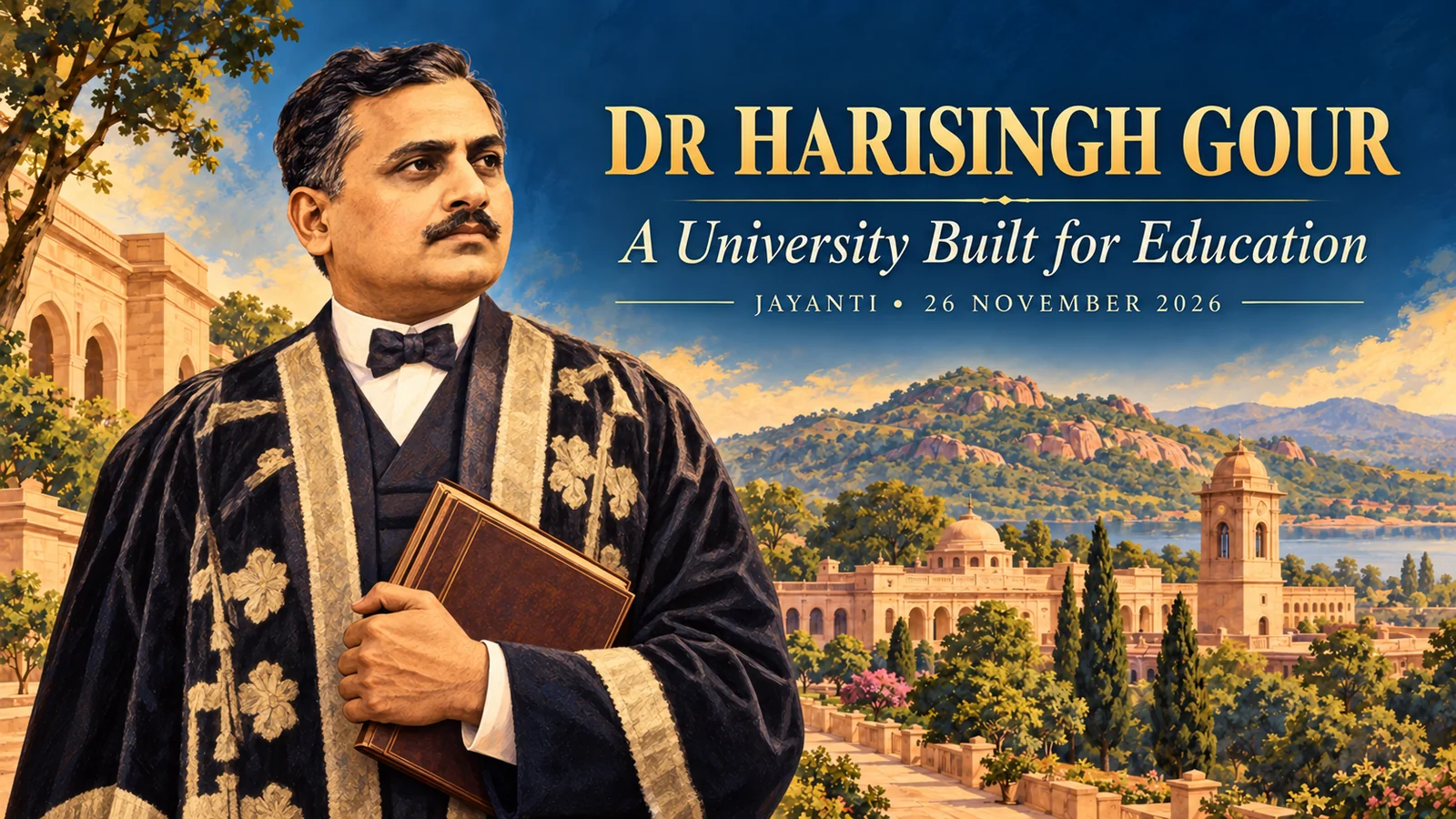
No. The images are artistic interpretations, not archival photographs.
Note: This is historical and educational material. Speeches and tribute messages are original; no unverified quotation is attributed to a historical person.
Sources
- Ministry of Culture: Satyashodhak Samaj
- PIB / New India Samachar: life, education and social work
- PIB: remembrance on 28 November
- LBSNAA library catalogue: Gulamgiri
- NCERT journal: educational thought of Mahatma Jotiba Phule
Related reading
- Dr Harisingh Gour and Sagar University
- Constitution Day: the Preamble and its meaning
- Birsa Munda and Janjatiya Gaurav Divas
- School speeches and anchoring
Related reading: Sathya Sai Baba: education, healthcare and service
























Share Your Opinion
Comments are closed on this post.