Crying, yawning or shaking during puja: what does it mean?
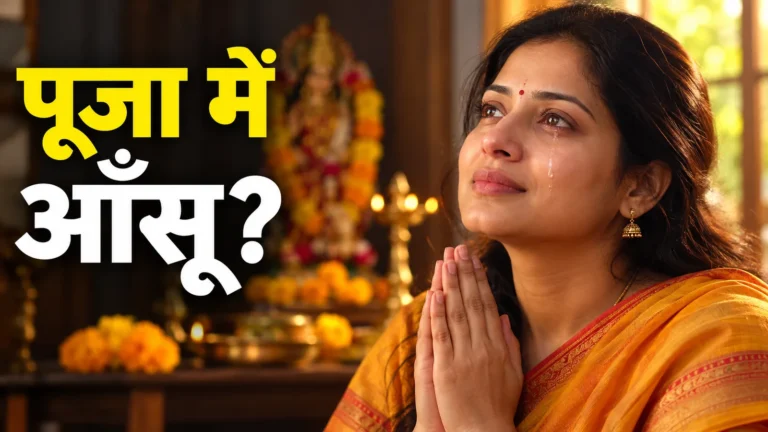
Your eyes fill with tears during aarti. You keep yawning while reading a mantra, or your hands begin to shake. Is it a sign from the Goddess, a spiritual experience or an ordinary bodily response? These are three different experiences, so one explanation will not fit them all. Notice what is happening and whether you also feel unwell.
An experience can have personal religious meaning without establishing a medical cause, a future event or a deity’s intention. This guide respects faith and does not label every emotion an illness. Its aim is to help you understand the situation, avoid frightening assumptions and seek appropriate help when needed.
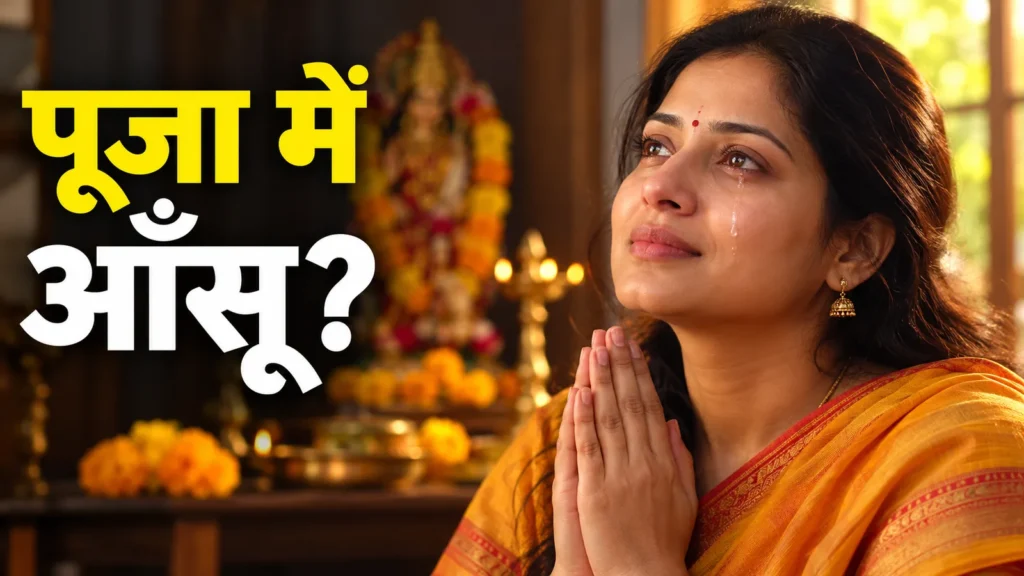
Are tears during prayer a sign of the Goddess?
A familiar devotional song may bring back memories. During prayer you may think about family, a loss, a worry or something you feel grateful for. Feeling moved is possible in that setting. Tears do not require you to call yourself weak or immediately search for an extraordinary explanation.
You may understand the moment as meaningful devotion. That is a personal interpretation, rather than proof that a wish is about to come true. Equally, not crying does not demonstrate a lack of faith. People express emotion differently, and worship does not need to become a comparison of those expressions.
Is crying during puja auspicious or inauspicious?
Tears alone cannot establish good or bad fortune. Some families associate an emotional moment with devotion; others simply recognise it as a feeling. Giving your experience personal meaning is different from using it to predict a particular outcome for someone else.
One person sits quietly, another sings and another becomes tearful. There is no need to compete, force tears to appear or feel ashamed because they do. You do not have to perform an emotional reaction to prove sincerity to relatives or people at a worship gathering.
Watery eyes from incense are different from emotional tears
Notice whether the watering comes with stinging, irritation or itching. NHS information about watering eyes lists smoky environments, allergies and other eye problems among possible causes. Watery eyes should not automatically be classified as an emotional or spiritual experience.
Move away from smoke directed at your face and consider ventilation. Severe eye pain or changes in vision need prompt medical advice. Putting worship ash, oil or a homemade mixture into the eye is not a suitable substitute for identifying the problem.
What if crying and distress keep returning?
Being moved during one aarti and feeling distressed throughout the day are different situations. Ask whether worry, sadness or difficulty sleeping also happens outside worship. Has a particular event continued to affect you? A label such as “good omen” or “bad omen” will not answer those practical questions.
Talking with a trusted person can be a starting point. If distress is interfering with everyday life, consider qualified health or mental health support. Telling someone that their difficulty must be caused by insufficient faith is unlikely to help them explain what they are experiencing.
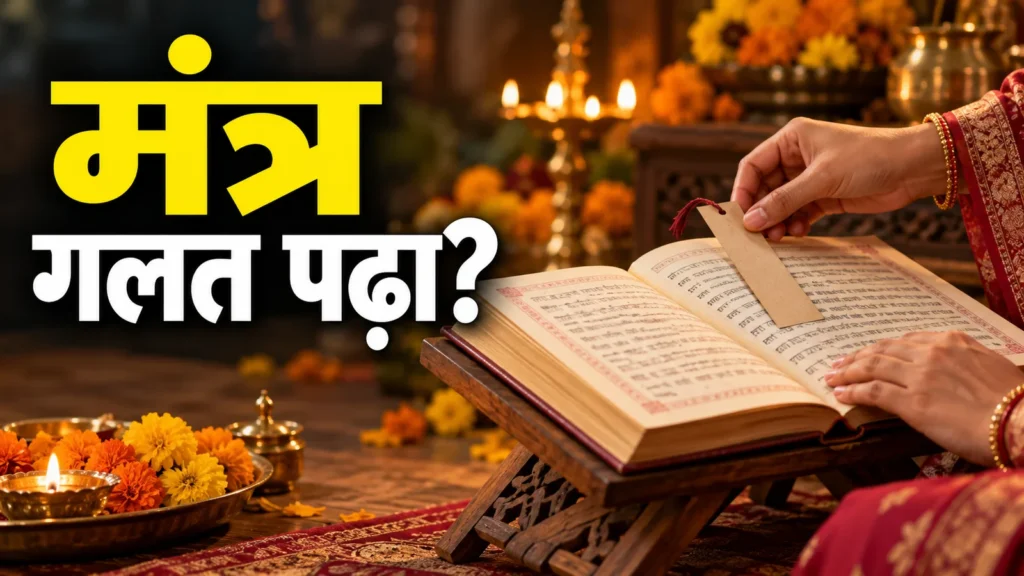
Why do you yawn during prayer? Is negative energy leaving?
MedlinePlus information about yawning identifies tiredness and sleepiness as common explanations. Start by considering your sleep and fatigue. Something happening during worship is not necessarily something caused by worship.
Statements that yawning proves negative energy is leaving, or that somebody has performed a ritual against you, are interpretations rather than findings established by the yawn. If another person yawns too, that does not show that your difficulty has transferred into their body.
Does yawning spoil a mantra or the puja?
A bodily reaction cannot measure sincerity. In ordinary reading, take a break when tired and organise rest. If you have undertaken a particular religious vow, ask about its arrangements for interruptions. Do not create pressure to keep yourself awake while feeling unwell.
Seek medical advice if yawning is unusually frequent, unexplained or accompanied by excessive daytime sleepiness. Bring information about sleep and medication. Do not diagnose yourself with a serious condition merely because you have seen it mentioned in a symptom list online.
Shaking hands, body movements or a racing heartbeat during puja
NHS tremor guidance explains that stress, tiredness, anxiety, caffeine and temperature can make shaking more noticeable. Medicines and health conditions can also contribute. The fact that you were praying when it happened does not identify the cause.
Does shaking prove Mata Aana or Devi possession?
A community may attach that religious interpretation to an event. Shaking alone cannot establish supernatural presence. It also does not justify declaring somebody a fortune-teller, accusing them of pretending or making a medical diagnosis on the spot. Attend to the person’s condition and safety first.
NHS information about panic disorder includes shaking and a racing heartbeat among possible symptoms, while noting that other conditions can produce similar symptoms. Dismissing every event as anxiety would be another mistake. Recurrent or worsening problems deserve medical assessment.
What details are useful if shaking happens again?
Note when it began, how long it lasted, whether you remained aware and what else you felt. Does it happen outside worship too? Has sleep, medication or tea and coffee consumption changed? Share those observations with a clinician rather than using them to make your own diagnosis.
Get advice if shaking is worsening or affects writing, eating or other ordinary tasks. Do not suddenly stop prescribed medication. A message saying “this is a spiritual process, so stop your treatment” is not a reliable basis for a treatment decision.
Loss of consciousness or strong jerking needs practical help
Do not dismiss a collapse, lost awareness or repeated strong jerking as ordinary emotion. You do not need to name the illness at the scene before helping. Focus on safety and medical assistance. Clear lamps, hot objects and other nearby hazards that could cause an injury.
CDC seizure first aid advises against restraining movements or putting anything into the mouth. Do not offer food or water until the person is fully alert. Stay nearby, clear the space and note the duration.
NHS seizure guidance recommends emergency help for a first seizure, one lasting more than five minutes, repeated seizures without recovering consciousness, serious injury or breathing difficulty. Do not wait for five minutes if a first event or another emergency criterion already applies. Contact local emergency services.
If the person has an established medical care plan, someone trained to use it can follow it. Slapping, frightening the person or exposing them to smoke is not a replacement for appropriate help. Being at a religious gathering should not become a barrier to receiving medical care.
Advice
Arrange worship around your realistic capacity and daily routine. Plan rest and avoid pressure to complete a lengthy session while exhausted. If you are fasting and feel unwell, take your health needs and medical advice seriously. A single rigid arrangement is not suitable for every household or person.
Do not turn somebody’s experience into a spectacle. Recording them without permission, sharing the clip as a miracle or demanding predictions does not provide care. Speak calmly and ask how they feel. Respect and the person’s actual needs should guide your response.
It can help to describe the event plainly: “My hands shook for a short time and I stayed aware,” rather than beginning with a supernatural explanation. This leaves room to discuss both personal meaning and health without deciding the cause in advance.
FAQ about tears, yawning and shaking during prayer
Do tears mean a wish will come true?
The moment may feel personally meaningful, but tears do not establish the outcome of a wish. Not crying does not indicate less devotion either.
Does yawning release negative energy?
A yawn cannot demonstrate that claim. Consider tiredness and sleep first; persistent or unusual yawning deserves health advice.
Is shaking during mantra chanting Mata Aana?
That may be a religious interpretation, but shaking alone does not confirm it. Physical and emotional explanations may also need assessment.
Should I continue if incense makes my eyes water?
Move away from the smoke and review ventilation. Severe pain or a change in vision needs prompt advice. Enduring irritation is not a test of sincerity.
Should you put water or prasad into an unconscious person’s mouth?
No. Wait until they are fully alert and can swallow safely. Problems with awareness, breathing or seizure-like movements need appropriate medical assistance.
Read next
What to do if the Akhand Jyot goes out
Health disclaimer: General information, not a personal diagnosis or treatment plan. Religious meaning cannot confirm or rule out a physical cause. Seek professional care for concerning symptoms and emergency help for severe events. Do not start, stop or change medication yourself.