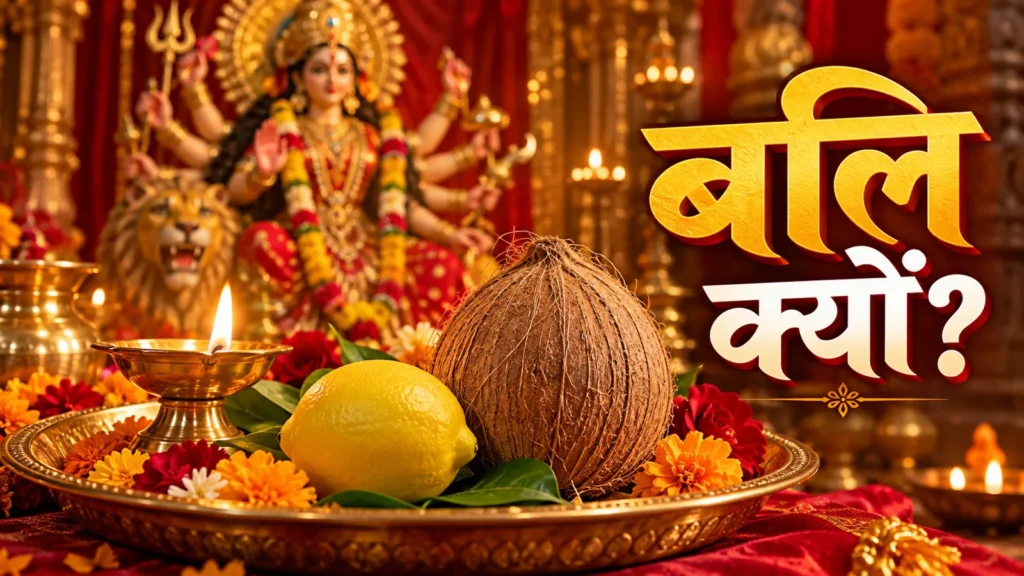
Lemon, coconut and goat sacrifice during Navratri: are they the same?
One family offers a coconut during Navratri, another uses a lemon, and someone mentions animal sacrifice at a temple. Are these simply different versions of one ritual? Must a devotee offer a sacrifice to worship the Goddess properly? There is no single rule covering every community. The object being offered, the ritual and the local religious context matter.
Offering a coconut, using a lemon in a local custom and sacrificing an animal should not be treated as identical practices. Goddess worship includes different traditions. A custom followed by one temple or family does not automatically apply to every devotee. This article explains beliefs and differences without providing instructions for harming animals.
Bali, bhog and prasad: understanding the words
In everyday conversation, “bali” often brings animal sacrifice to mind. In a ritual context, it can also describe a symbolic offering. When someone says that a ceremony includes bali, ask what is actually being offered. The word alone does not tell you everything about the practice.
Bhog commonly refers to food offered to a deity. Prasad is generally associated with offerings received or distributed after worship. Calling every offering a sacrifice, or treating every sacrifice as ordinary food, can create confusion. Ask about the local name and purpose of the ceremony.
For example, a coconut placed on a kalash belongs to a particular arrangement of worship. A coconut used as a symbolic offering in another ceremony may have a different role. A photograph of the object cannot establish that the two rituals have the same meaning.
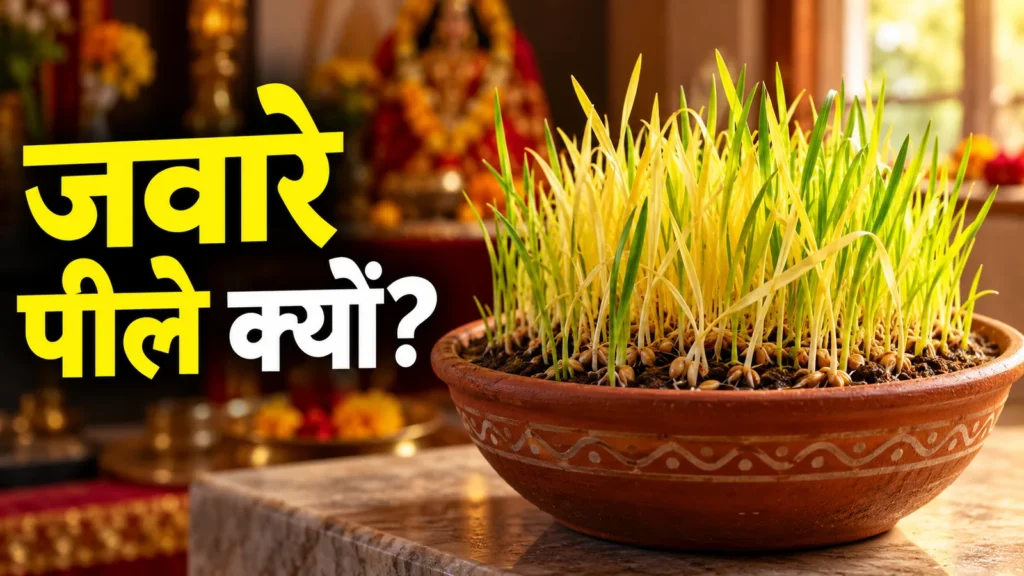
Why are coconuts offered or broken during Navratri?
Coconut is a familiar item in Goddess worship. India’s official Incredible India account of Navratri includes it among worship materials. Its presence does not, by itself, establish animal sacrifice or a universal substitute for it. Household worship and a particular temple ceremony may differ.
You may hear interpretations linking the hard shell with ego and the white interior with purity. Treat these as symbolic explanations. They do not describe a scientifically demonstrated power of the coconut or one interpretation shared by every religious text. It is reasonable to ask a teacher where an explanation comes from.
Does a spoiled coconut mean the worship failed?
A coconut is a food item and can be spoiled inside. Its colour, water or pattern of breaking does not reliably predict a future event. Avoid eating spoiled food. If you want to replace an offering, ask a knowledgeable person in your tradition calmly rather than assuming misfortune is coming.
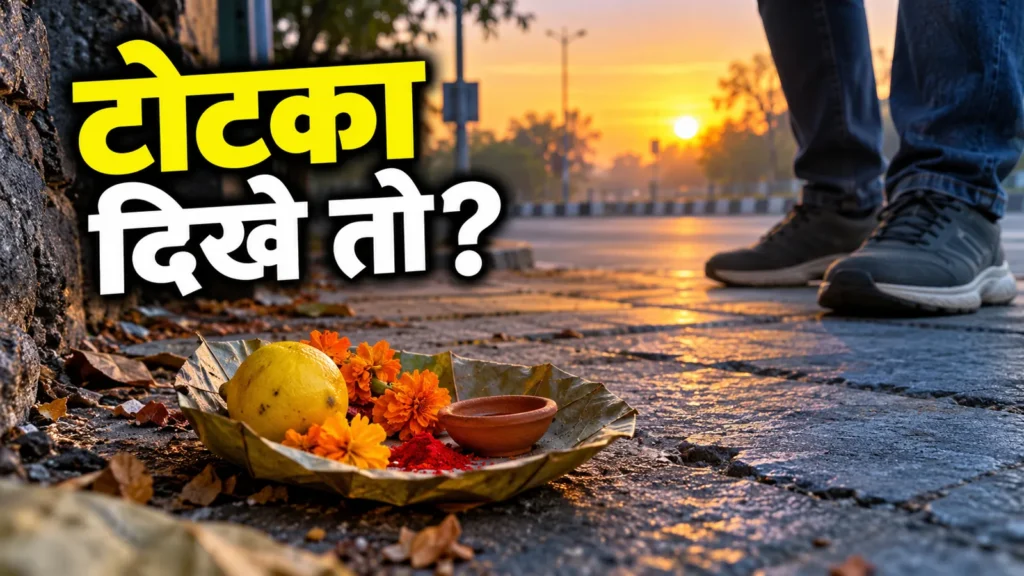
Lemon bali and cutting a lemon: what does it mean?
Different households and local ceremonies describe lemons differently. Someone may call it an ordinary offering, a protective symbol or bali. The sources checked for this article do not establish one universal Navratri rule for lemons. Giving the same explanation for every practice would therefore be misleading.
If a lemon is used in your community, ask which ceremony it belongs to and whether it is understood as an offering, symbol or specific local ritual. Claims that it always replaces blood or removes negative energy go beyond merely describing the object.
Does cutting a lemon definitely remove ghosts or negative energy?
That guarantee is not justified. You can respect a religious symbol without treating a supernatural outcome as established. For illness, household conflict or a relationship problem, investigate the actual issue and seek relevant help. Fear should not turn every everyday difficulty into evidence of a ritual attack.
Why do some Goddess traditions include goat or animal sacrifice?
Animal sacrifice has been part of some historical and local Goddess-worship traditions. A website describing Kamakhya’s traditions records service roles associated with offered animals. That documents a practice within that setting; it does not establish a requirement for all temples or all Navratri devotees.
Some communities explain an offering through inherited custom, a vow or devotion. There is no need to invent one origin story that covers every place. A family’s explanation should not be presented as a compulsory teaching shared throughout Hinduism.
Views on devotion, nonviolence and animal welfare can differ. A respectful discussion can describe a tradition accurately while allowing disagreement with violence. Understanding a practice does not require mocking a community or encouraging a devotee to participate in an act they reject.
Will the Goddess be angry if I do not offer an animal?
It is inappropriate to use that claim to frighten someone. Goddess worship also takes place without animal sacrifice. Exploiting guilt or fear to pressure a person into a ceremony is not sound advice. A devotee should be able to choose peaceful, nonviolent worship.
Can fruit or coconut be offered instead of an animal?
Belur Math provides a clear documented example of symbolic offerings. Its own account states that animal sacrifice is not performed there and describes banana at Sandhi Puja, with white pumpkin and sugarcane at Navami. This shows that established Goddess-worship traditions can include nonviolent offerings.
That example is not an instruction to rewrite every temple’s practice yourself. If you want a symbolic alternative within a specific tradition, ask its responsible religious adviser. For ordinary household worship, familiar offerings of fruit, flowers, food and prayer can be followed without assuming animal sacrifice is necessary.
We discuss white pumpkin separately: Why is a white pumpkin offered as bali during Navratri? Do not automatically apply that article’s context to every lemon, coconut or animal offering.
Before visiting a ceremony, ask the organisers what takes place. This is especially useful if you are accompanying children or someone uncomfortable with animal sacrifice. Choosing a different setting for worship can be a thoughtful decision, without turning the visit into a confrontation.
Advice: understand the tradition without acting under pressure
- Ask what object is offered and what purpose the local tradition assigns to it.
- State clearly if you want a nonviolent alternative. Do not immediately agree to demands made through threats or fear.
- Keep children away from sharp objects and activities such as breaking coconuts.
- Handle edible prasad hygienically. Avoid spoiled, contaminated or unknown substances.
- Check current local requirements and the temple’s arrangements. An online description is not permission to conduct a ceremony.
You do not need to perform every disputed practice to understand religion. Study, prayer, charity and familiar worship are also ways to express faith. If family members disagree, start with a practical question: “What peaceful and safe approach can we agree on?”
For example, a relative may insist on copying a ceremony seen in a video. Before buying materials or making commitments, identify the location, tradition and source. A short clip may leave out essential context or show a practice different from your own household custom.
FAQ: Navratri lemon, coconut and animal offerings
Is goat sacrifice compulsory for Navratri worship?
No. It is not a universal requirement for every devotee. Established traditions of Goddess worship without animal sacrifice also exist.
Is every coconut a substitute for an animal sacrifice?
No. A coconut may be worship material, an ordinary offering or part of a specific symbolic ceremony. Ask about the context.
If a lemon turns red, does that mean a spirit left?
A colour change alone cannot establish that conclusion. Consider the materials and ordinary explanations for the visible change.
Are there documented nonviolent fruit offerings?
Yes. Belur Math’s account describes banana, white pumpkin and sugarcane in its symbolic offering practices.
What if someone threatens misfortune unless I offer a sacrifice?
Pause rather than agreeing through fear. Speak with a trusted person or knowledgeable religious adviser. Seek local assistance if threats or coercion are involved.
Sources: Belur Math: Durga Puja; Kamakhya traditions: Shebait roles; Incredible India: Navratri Utsav.
Disclaimer: This is general religious and cultural information. Local traditions and requirements vary. It does not provide animal-sacrifice instructions, legal permission or individual medical advice. The featured image is symbolic AI artwork.