Why is a white pumpkin offered during Navratri?
You see a white pumpkin being cut during a temple ceremony. Someone explains that it stands for an animal. Then a bowl of milk is offered, and you hear that salt has turned it into ritual liquor. These statements raise a fair question: what is an actual ingredient, what is a religious symbol, and what has simply been repeated without checking?
The direct answer: a white pumpkin can serve as a symbolic alternative to animal sacrifice in some Goddess-worship traditions. Milk also appears among substitutes for ritual wine in certain tantric discussions. But adding salt to milk does not make alcoholic liquor. Neither practice should be presented as a compulsory rule for every Navratri celebration.
What does Kushmanda Bali mean?
The white pumpkin associated with this offering is commonly identified as ash gourd, also called petha or Kushmanda. It should not automatically be confused with every orange pumpkin sold as a vegetable. Drik Panchang mentions white-pumpkin bali in its account of Goddess Kushmanda. Reference: Drik Panchang
A documented example comes from Belur Math. Its official account says that white pumpkin and sugarcane are offered during Navami worship, and that animal sacrifice is not performed there. This establishes a real practice; it does not establish an identical rule for every temple. Reference: Belur Math
The useful distinction is between an offering and a living victim. The word bali may be used for a symbolic ceremony, so hearing the word alone does not tell you what happened. Ask about the object offered and the particular worship tradition before deciding what the ceremony means.
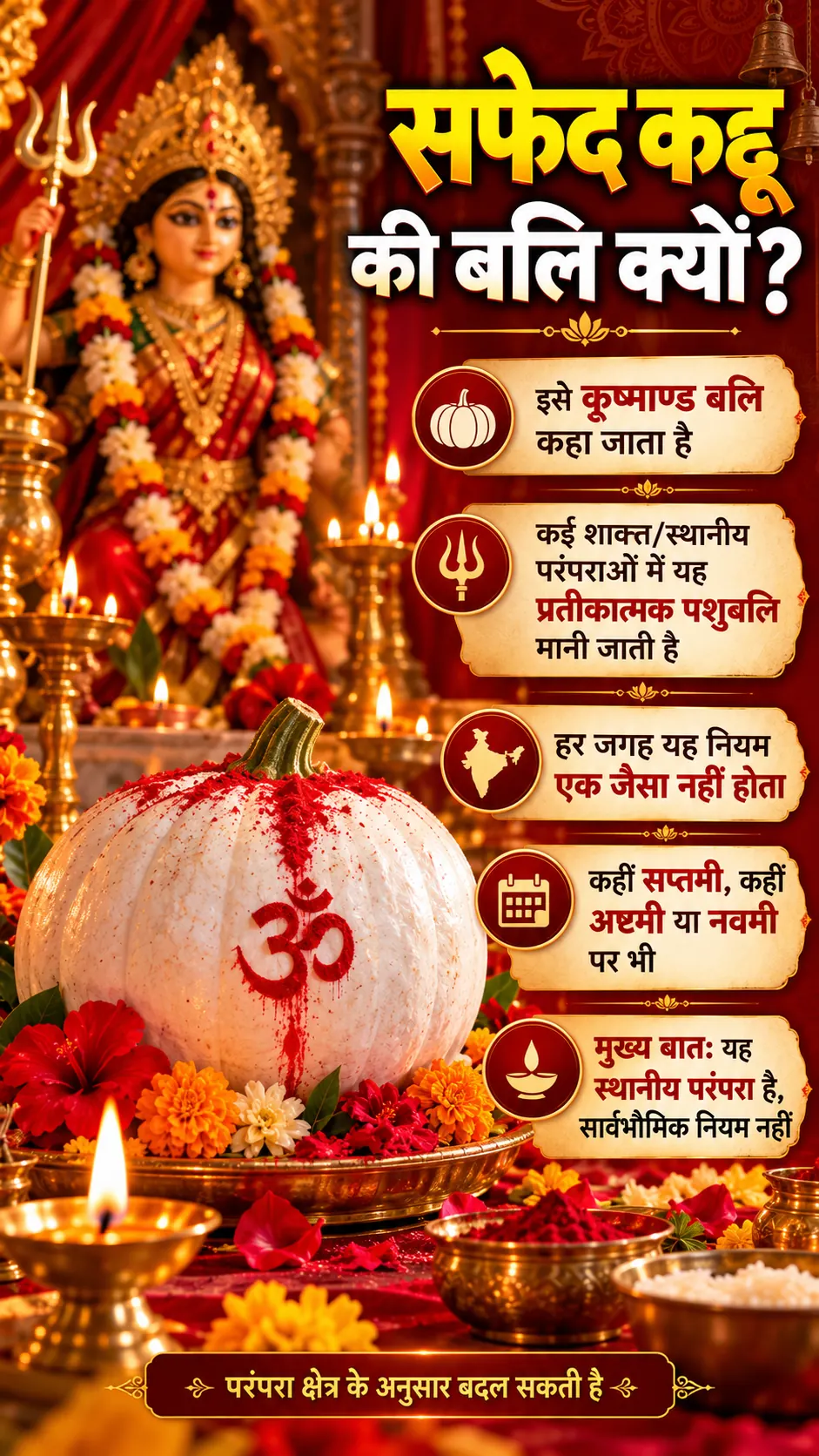
Is the pumpkin literally regarded as an animal?
If a priest explains that a pumpkin represents an animal in a particular rite, that describes its ritual role. The fruit has not become an animal in a biological sense. A substitute can occupy the place of another offering without becoming the same physical thing.
A simple comparison may help. A lamp can represent knowledge at a ceremony, but its flame does not become a book. This is an everyday explanation, not a scriptural definition. It shows why symbolic language needs to be read in its own context.
Do not use decorations, marks on the pumpkin or the appearance of a cutting ceremony to invent a complete explanation. Ask whether the object is an alternative to animal sacrifice, an ordinary offering, or part of a distinct family custom. Those questions are more useful than guessing from a photograph.
You may also hear a spiritual interpretation about giving up anger, pride or harmful habits. Such an interpretation can be meaningful to a devotee. It should still be distinguished from a documented explanation of a specific rite. An encouraging message is not automatically the single historical origin of a practice.
Does white-pumpkin bali happen only on Saptami?
No universal Saptami-only rule is established. Your family or local temple may observe it on Saptami. The Belur Math account, however, places its white-pumpkin offering under Navami worship. That is enough to show why one local day cannot be turned into a rule for everyone.
A 2010 local report from Patna described vegetable offerings, including white pumpkin, during Ashtami Sandhi Puja. It is a report about particular celebrations at that time, not a current instruction for every pandal. Reference: Times of India local report
Another possible confusion concerns Goddess Kushmanda, who is worshipped on the fourth day in the usual Navdurga sequence. That does not mean every offering involving a white pumpkin must take place on the fourth day. The sequence of Goddess forms and the timetable of a particular rite are different questions.
For your ceremony, consult the temple’s announced programme and the person responsible for its worship. Avoid copying a date from an unrelated video. A general cultural article can explain a distinction, but it cannot replace the instructions of every community.
Why might milk be described as a substitute for wine?
Arthur Avalon’s English introduction to the Mahanirvana Tantra discusses substitutes for ritual substances, including milk in place of wine in specified contexts. This is a reference to the edition’s explanatory introduction, not a claim that we are quoting a particular Sanskrit verse. Reference: English introduction to Mahanirvana Tantra
Salt occurs separately in that discussion of substitutes. The passage does not establish a recipe in which salt added to milk makes wine. Combining two separate mentions into a new scriptural rule would be misleading.
If salted milk is offered in your locality, that observation may describe a local custom. Its precise origin and wider acceptance have not been verified from the sources used here. This is not a reason to dismiss someone’s experience; it is a reason to keep the claim within what the evidence actually supports.
When explaining the custom, say which community or ceremony you mean. “This is how our temple describes the offering” is a more accurate statement than “all Hindu worship requires salted milk as liquor.” The first identifies an observed practice; the second makes a much broader claim that needs separate evidence.
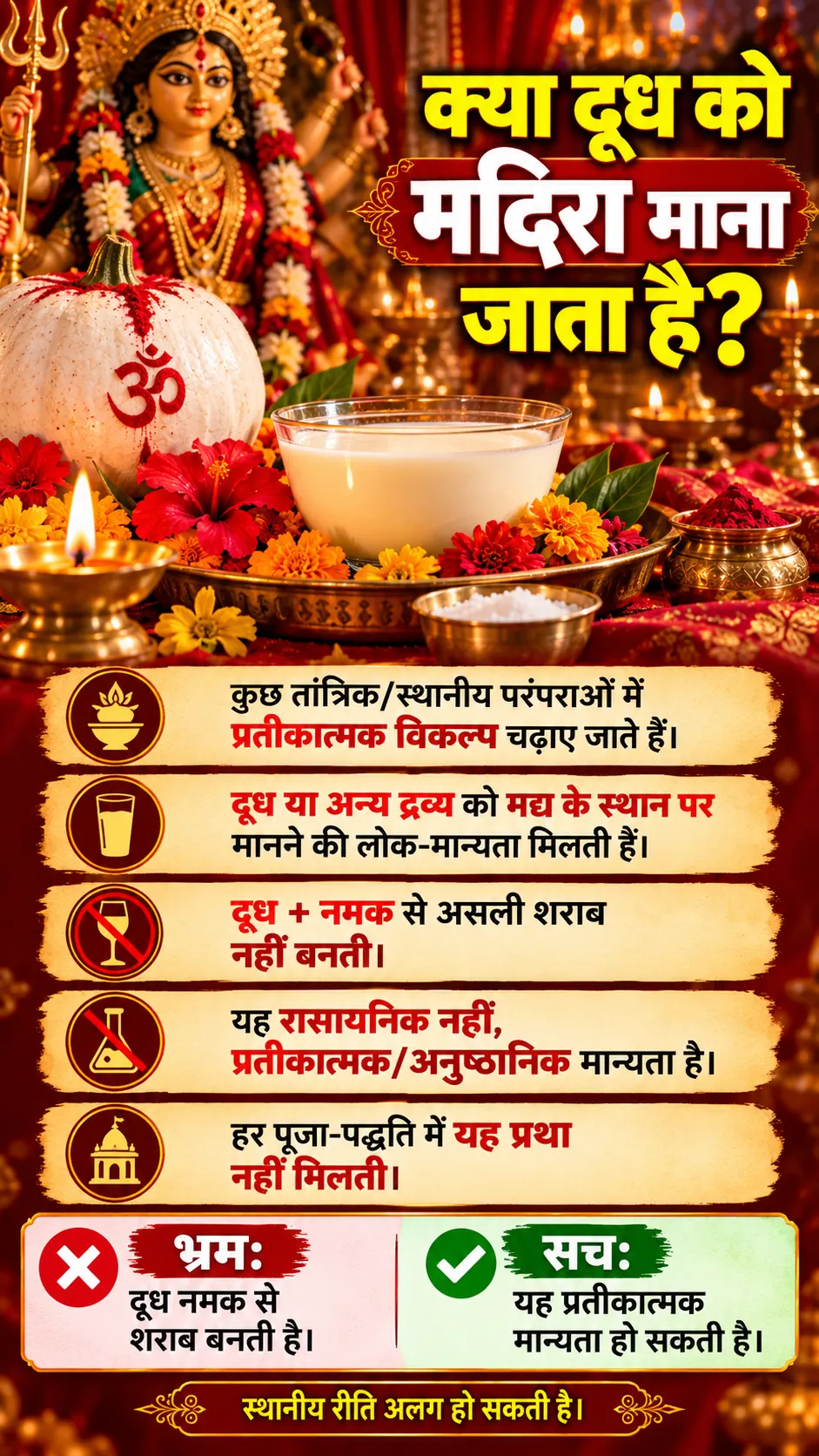
Can adding salt to milk make alcohol?
No. Simply mixing milk and salt does not produce alcoholic liquor. Adding salt is not a process that makes the ethanol found in alcoholic drinks. If a ceremony calls that bowl a representation of madya, the name describes a ritual role rather than its chemical composition.
Keep three questions separate: what is actually in the bowl, what does the bowl represent in the ceremony, and what do people call it in conversation? The first concerns ingredients, the second concerns symbolism, and the third concerns language. Confusing them can make a symbolic explanation sound like a physical transformation.
A change in taste or milk going bad is not proof that wine has formed. Do not drink an unknown mixture simply because someone associates it with worship. Know the ingredients and whether it has been handled cleanly. A religious name does not guarantee that a substance is safe to consume.
For children, a clear explanation is enough: in this ceremony, this substance is being offered in place of another. Saying that the milk “became alcohol” introduces an unnecessary misunderstanding. Respect for a tradition and accurate language can go together.
Advice: how to understand your local practice
Start by asking for the name of the rite. Then ask whether the explanation comes from a written worship manual, a teacher within the tradition, or an inherited family custom. These are different kinds of information, and naming them helps everyone understand what is being discussed.
If a scripture is cited, ask for the book and passage rather than relying on a forwarded sentence. A meaningful quotation should be checked in context. The fact that two ingredients appear somewhere in a long religious text does not establish that they are meant to be mixed for the same purpose.
You do not need to start a new sacrifice ritual after reading this article. A description of a practice is not an instruction to perform it. Do not combine ordinary home worship with unfamiliar elements of a specialised ceremony just because a short video presents them together.
When sharing a post, avoid absolute claims such as “everyone must do this” or “salt turns milk into liquor.” Explain the community involved, distinguish symbolism from ingredients, and leave room for traditions that do things differently. Uncertainty should be stated plainly rather than filled with an impressive-sounding story.
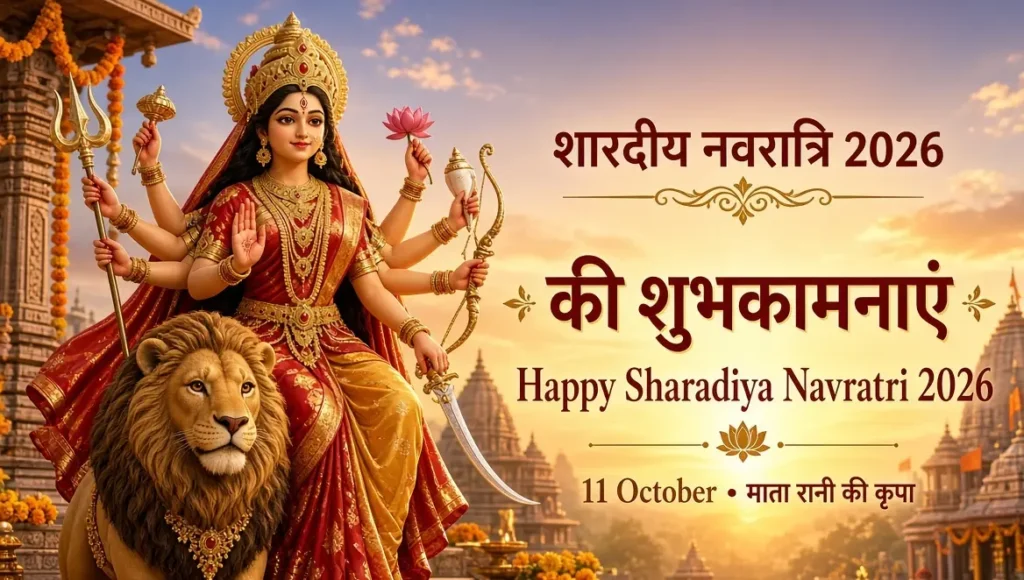
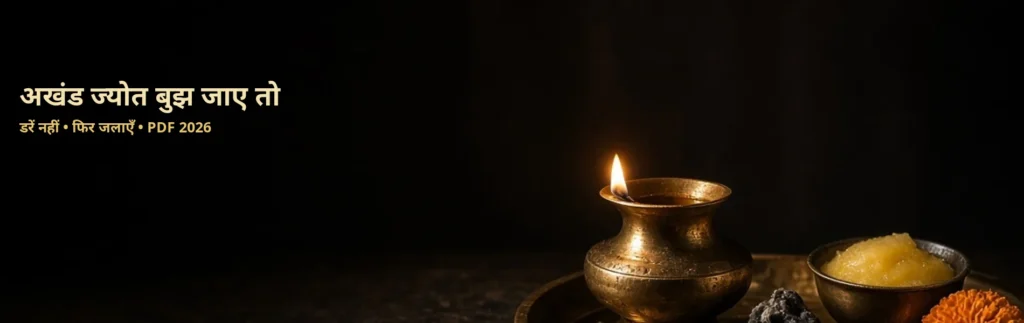
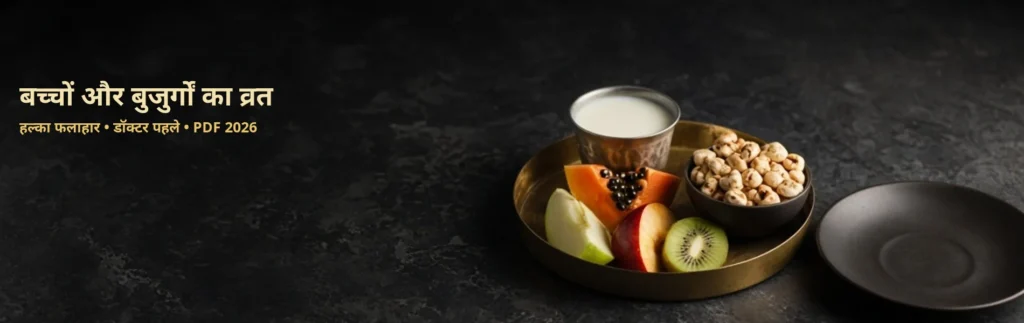
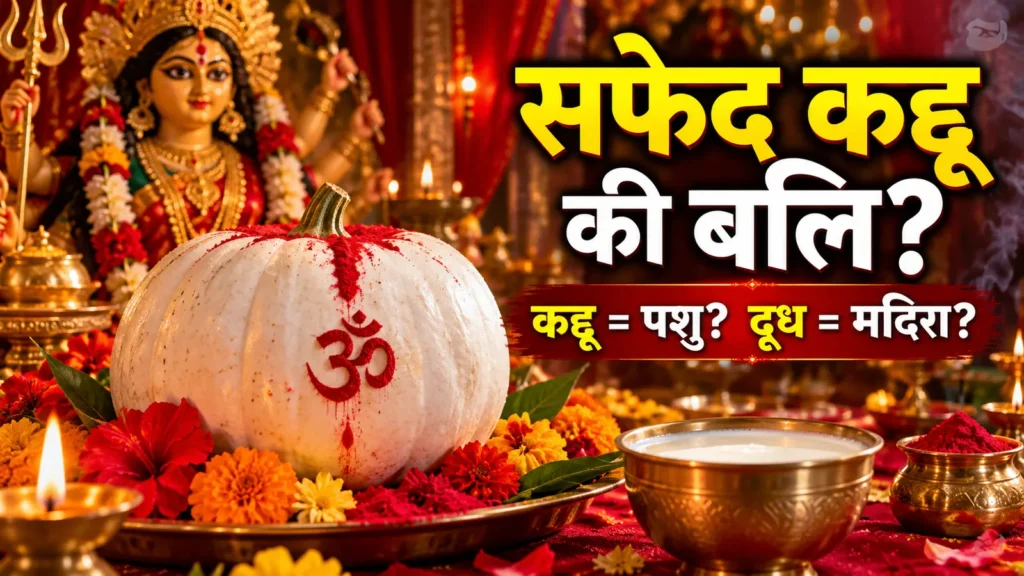
The two information posters accompanying this article are in Hindi. They summarise the same distinctions: local practices vary, the pumpkin offering is symbolic, and milk mixed with salt does not become alcohol. They are illustrations created to explain the topic, not photographs documenting a real ceremony.
For related reading, explore our information on the significance of Kanya Bhojan and Ashtami–Navami Kanya Pujan. The Kanya Bhojan link is in Hindi; the Kanya Pujan link is in English.
FAQ: white-pumpkin sacrifice and milk offerings
What is Kushmanda Bali?
It refers to a white-pumpkin offering or symbolic sacrifice in Goddess worship. In some traditions it serves as an alternative to animal sacrifice. Details depend on the particular ceremony.
Is white-pumpkin sacrifice compulsory during Navratri?
No universal requirement is established by the examples discussed here. A custom followed by one temple should not automatically be applied to every household.
Is it performed on Saptami, Ashtami or Navami?
Follow the specific worship tradition. Navami and Ashtami Sandhi Puja examples are documented; a local Saptami custom may differ. There is no single day established for everyone.
Is there verified scriptural support for adding salt to milk as wine?
The discussion of milk as a substitute exists, but the specific milk-and-salt claim has not been established as a universal scriptural rule from these sources.
Does calling milk madya give it alcohol?
No. A symbolic designation does not change a substance’s chemical nature. Adding salt to milk is not a method of producing alcoholic liquor.
Disclaimer: This article provides cultural and religious information, not instructions for worship or a specialised ritual. Practices vary by region, family and tradition. The origin of the specific salted-milk custom has not been verified. The accompanying images are explanatory illustrations, not photographs of an actual ceremony.