Legal disclaimer
This article provides general legal information about India, reviewed on 9 October 2026. It is not personalised legal advice. Ask an advocate to examine the ownership history, applicable personal law, state rules and family documents before making or contesting a transfer.
Start with the ownership question
A daughter’s property rights do not disappear because her father is unhappy with her, she has married, or a newspaper carries a disowning notice. A father’s lawful options depend on what he actually owns. Disposing of property held in complete ownership and taking away somebody else’s existing share are different legal questions.
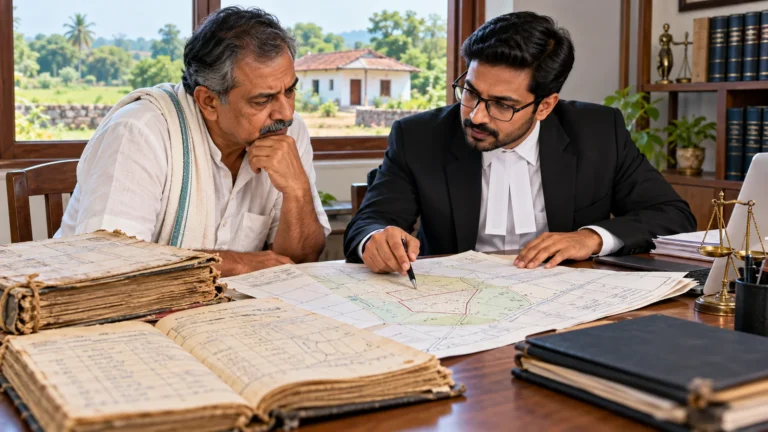
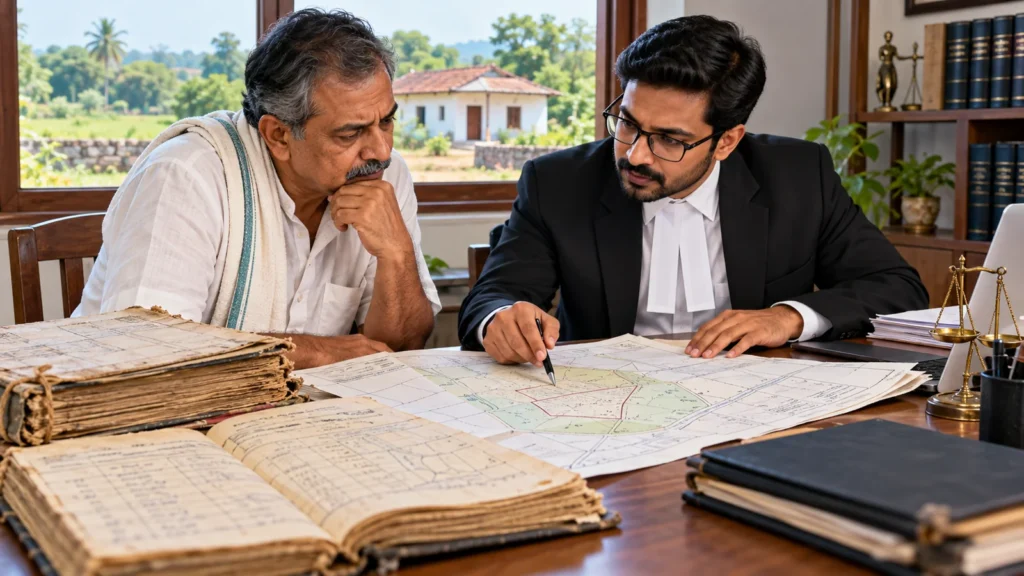
The name on a revenue record does not answer every ownership issue. Examine the purchase deed, source and nature of the acquisition, inheritance documents and any earlier partition. A property may have several relevant owners or interests even when one family member deals with its administration. Mutation is not a substitute for proving title.
The Hindu Succession Act applies to persons within its statutory scope, including Hindus, Buddhists, Jains and Sikhs. Other personal laws may produce different answers. Section 2(2) also contains a Scheduled Tribe exception unless the Central Government directs otherwise through an applicable notification. Do not apply one family-law explanation to every community without checking its scope. [1]
Self-acquired property and coparcenary property
An owner of separately owned property can generally consider lawful sale, gift or testamentary disposition within the extent of their rights. Mortgages, co-ownership, contractual restrictions, court orders and other legally relevant claims can affect that freedom. Saying that the father funded the purchase does not remove the need to check the documents.
In a Mitakshara Hindu joint family, Section 6 recognises a daughter’s coparcenary status with the same rights and liabilities as a son. A father cannot simply treat everybody’s coparcenary shares as his exclusive property. His own lawful interest and the value of the whole family property may be very different amounts.
Property inherited from a grandfather is not automatically coparcenary property in every later generation. The method and date of succession matter. An acquisition through Section 8 succession, a valid earlier partition and a continuing joint-family acquisition need separate analysis. Avoid labelling an asset ancestral merely because it has been in the family for a long time.
FACT: Marriage, dowry or payment of wedding expenses does not automatically extinguish a daughter’s statutory property share. Any separate lawful arrangement needs examination on its own terms.

What a will can lawfully cover
Section 30 of the Hindu Succession Act permits testamentary disposition of property that the person can legally dispose of in that manner. A father can record wishes concerning property held in complete ownership or his disposable interest. He cannot turn another co-owner’s existing share into his own by including it in a will. [1]
A will generally operates after death. It is different from a completed lifetime gift. Depending on the circumstances, the maker can change or revoke a will through the legally appropriate process while alive and competent. If a family needs an immediate ownership transfer, writing a will alone does not achieve that result.
The applicable provisions of the Indian Succession Act address capacity, free decision-making and execution. For an ordinary unprivileged will, Section 63 includes the relevant signature and attestation requirements involving at least two witnesses. Sections 59 and 61 also matter where capacity, fraud or coercion is disputed. A signature on paper does not answer all these issues. [3]
A daughter may receive no benefit under a valid will dealing with exclusively owned property in some circumstances. That does not erase her independently existing coparcenary share. A will may still be challenged, and proving its execution and validity is a separate question. Registration or professional drafting should never be presented as a guarantee against litigation.
Gift deeds involve different consequences
Under the general framework of Section 122 of the Transfer of Property Act, a gift is voluntary, without consideration and must be accepted in the legally required manner during the donor’s lifetime. The ordinary Section 123 rule for immovable property requires a registered instrument signed by or on behalf of the donor and attested by two witnesses. Applicable personal-law or statutory exceptions must be checked separately. [2]
A donor cannot transfer more ownership than the law allows them to transfer. Co-ownership and joint-family restrictions remain relevant. Giving an asset to a son does not automatically cancel a daughter’s share in that asset. First identify the donor’s actual interest and the limits on its disposal.
Registration does not cure forged signatures, coercion or absence of authority. Verify ownership, identity, applicable stamp duty and any existing litigation or restraint. Do not conceal a pending dispute from the adviser or the registering authority. A cheap document template is not a reliable answer to a complicated family title problem.
A completed gift also affects the donor’s control. Reversal is not guaranteed merely because the donor changes their mind later. Section 126 and other applicable provisions regulate revocation in relevant circumstances. A parent should obtain independent advice about housing, maintenance and future needs before making an irrevocable transfer.
What happens without an effective will?
When a father dies without an effective will governing the relevant estate, intestate succession must be assessed. Sections 8, 9 and 10 and the Class I Schedule of the Hindu Succession Act recognise daughters among the principal heirs. There is no general rule permitting the son to remove his sister from the list simply because he manages the property. [1]
Consider a limited example: a father owns separate property and leaves only a widow, one son and one daughter as the relevant Class I heirs, with no other affecting facts or claims. The ordinary distribution gives each an equal share. If his mother survives, a predeceased child leaves a relevant branch, or other eligible heirs exist, the calculation changes.
For joint-family property, the father’s interest may first need to be identified before succession to that interest is worked out. A daughter’s own coparcenary interest and her inheritance from her father are distinct parts of the assessment. Do not combine them into a confident percentage without examining the family tree and property history.
What Vineeta Sharma clarified
In Vineeta Sharma v. Rakesh Sharma, (2020) 9 SCC 1, the Supreme Court clarified daughters’ equal coparcenary rights under amended Section 6. The father did not have to be alive on 9 September 2005 for the daughter’s right to arise. The decision concerns the relevant coparcenary framework; it does not create a lifetime equal share in every separately owned asset. [4]
Protected earlier dispositions and partitions remain important. The statutory framework contains savings connected with relevant transactions before 20 December 2004. That is not permission to invent an earlier partition date. The judgment also treated unsupported oral-partition claims cautiously, while recognising narrowly evidenced exceptional situations. Old public records and actual legal events matter.
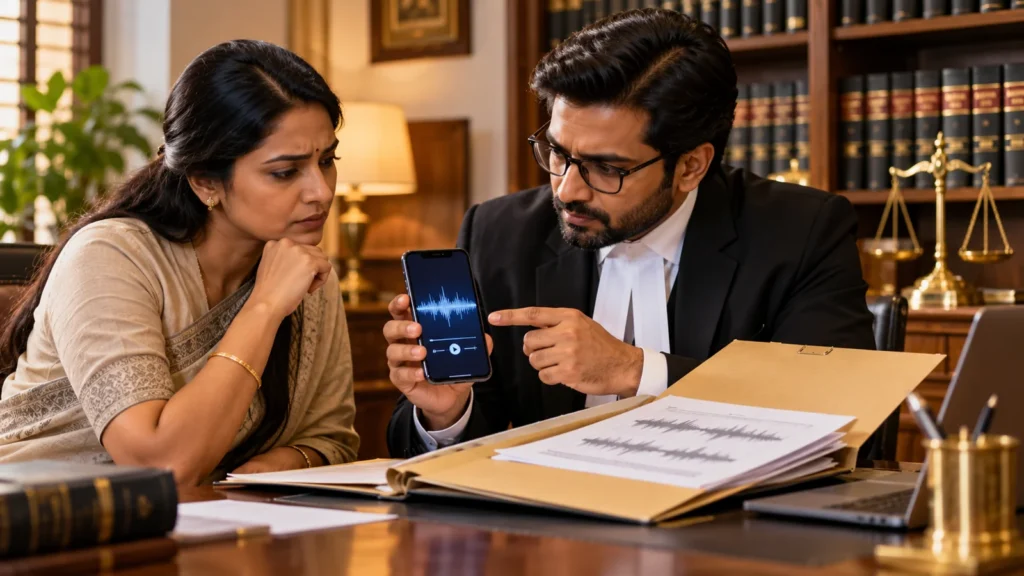
Use the ruling to identify rights, rather than as a shortcut around them. Relevant questions include whether the coparcenary existed, how the asset entered it and what valid transactions had already occurred. A short quotation from a video cannot settle those facts. Get the original documents and a reasoned assessment before taking action.
Prepare a lawful estate plan or response
Collect certified deeds, the ownership chain, death certificates, the family tree, relevant wills, gift or partition documents and revenue records. Record the dates of disputed sales or interference with possession. Ask the adviser to establish ownership before deciding what document should be used. Choosing a preferred outcome first can conceal the central legal problem.
A release or family settlement requires genuine consent and the applicable formalities. Do not obtain blank signatures, forge a relinquishment or pressure a daughter into surrendering rights. If agreement is not possible, partition, declaration or an injunction may be appropriate depending on the dispute. The proper remedy and limitation period need individual assessment.
Frequently asked questions
Does a newspaper disowning notice end a daughter’s share?
No. The notice does not itself extinguish statutory rights or established ownership.
Can a married daughter claim property rights?
Yes, where the applicable succession or coparcenary rules give her those rights. Marriage alone does not remove them.
Can a father will the entire ancestral property to his son?
He cannot treat other persons’ existing shares as his own. Identify his disposable interest and the applicable restrictions first.
Is a registered gift immune from challenge?
No. Lack of authority, fraud, coercion and other recognised grounds can still require examination.
Do wedding expenses automatically count as the daughter’s property share?
No. A valid separate arrangement needs its own legal assessment; wedding expenditure alone is insufficient.
Advice
Base estate planning on verified ownership and respect for existing rights. Review the documents and family tree, then obtain independent advice about any appropriate will, gift or settlement. Do not use false records or pressure to defeat a daughter’s lawful interest. Explain the consequences to everyone whose genuine consent is required.
Related reading: Adverse possession 12 years rule: Supreme Court landmark judgments on property title by possession · Tenant not vacating house legal action: Step-by-step legal eviction procedure without police overreach
Official sources and judgment
[1] India Code — Hindu Succession Act, 1956, Sections 2, 6, 8–10, 30 and Class I Schedule: https://www.indiacode.nic.in/indiacode/handle/123456789/1713?view_type=browse
[2] India Code — Transfer of Property Act, 1882, Sections 122, 123 and 126: https://www.indiacode.nic.in/bitstream/123456789/14648/1/tpa.pdf
[3] India Code — Indian Succession Act, 1925, relevant Sections 59, 61 and 63: https://www.indiacode.nic.in/indiacode/handle/123456789/2385?view_type=browse
[4] Supreme Court Reports hosted by the Andhra Pradesh High Court — Vineeta Sharma v. Rakesh Sharma, (2020) 9 SCC 1: https://aphc.gov.in/docs/imp_judgements/Vineeta%20Sharma%20_%20Rakesh%20Sharma%20%26%20Ors._1700823168.pdf
Detailed legal disclaimer
This educational article does not endorse forged wills, forced signatures, concealed ownership histories or deprivation of another heir’s lawful rights. Applicable law, documents and individual circumstances require separate assessment. No transfer, litigation outcome or platform-policy approval is guaranteed. This disclaimer does not remove legal duties or another person’s rights.