
India, a land of diverse traditions and rapid modernization, still grapples with societal taboos, particularly around sexual education and health. This silence breeds numerous myths and superstitions, especially concerning women’s bodies and sexual lives. These misconceptions not only spread misinformation but also negatively impact mental, physical, and emotional well-being. This article delves into prevalent sexual myths and superstitions related to women in India, examining them from a scientific perspective and highlighting the necessity of dispelling these age-old beliefs.
Why Do Sexual Myths and Superstitions Spread in India?
Several complex factors contribute to the prevalence of these misconceptions:
- Lack of Sex Education: Insufficient attention to comprehensive sex education in schools and homes.
- Social Taboos: Viewing discussions about sexual topics as shameful or ‘private’.
- Incomplete Information: Relying on fragmented and incorrect information from friends, the internet, or media.
- Old Beliefs and Conservatism: Unquestioning acceptance of centuries-old traditions and norms.
- Lack of Scientific Awareness: Limited understanding of scientific facts related to sexual health.
Common Sexual Myths and Superstitions Related to Women in India

Numerous myths surrounding women’s sexual health and bodies deeply affect their lives.
1. Myths Related to Menstruation (Periods)
Menstruation, a normal biological process, is unfortunately surrounded by superstitions in India that label women as impure or unholy.
- Myth of Impurity: ‘Women are impure during periods and should stay away from temples, kitchens, or religious activities.’ Reality: Menstruation is a natural biological process. There is no impurity associated with it; it is merely a physiological change.
- Myth of Not Touching Things: ‘Touching pickles during periods spoils them, or plants wither.’ Reality: There is no scientific basis for this. These are merely old superstitions.
- Period Pain is Normal, No Treatment Needed: ‘Period pain is common; there’s no cure.’ Reality: While mild discomfort can be normal, severe pain (Dysmenorrhea) might indicate an underlying health issue like endometriosis or PCOS, which is treatable. Consulting a doctor is crucial.
- Irregular Periods Mean Infertility: ‘Irregular periods mean a woman can never become a mother.’ Reality: Irregular periods can stem from various causes like hormonal imbalances, stress, or lifestyle. It doesn’t always signify infertility, and often, it is treatable.
2. Myths Related to Virginity
In India, a girl’s virginity is often equated with her ‘purity’ and ‘character,’ leading to many misconceptions.
- Hymen as Proof of Virginity: ‘The tearing of the hymen and bleeding during the first sexual intercourse is proof of virginity.’ Reality: The hymen is a thin membrane at the vaginal opening. It can tear not only from sexual intercourse but also from sports, physical activities, or tampon use. In many girls, it is naturally very elastic or absent from birth. Bleeding or its absence is not a definitive proof of virginity.
- First-Time Sex is Always Painful: ‘First-time sex is always painful.’ Reality: With adequate foreplay and a comfortable partner, first-time sex need not be painful. Pain often results from anxiety, stress, or lack of lubrication.
3. Other Myths Related to Sexual Relations
- Masterbation Causes Weakness or Illness: ‘Masterbation weakens the body, damages eyesight, or causes impotence.’ Reality: Masterbation is a normal and healthy sexual activity that causes no harm to the body. It is a safe way to relieve sexual tension.
- Specific Methods for Conception or Determining Baby’s Sex: ‘Certain positions or methods lead to conception or determine the baby’s gender.’ Reality: Conception requires sperm to meet an egg. No sexual position affects conception chances or determines the baby’s sex. The baby’s sex is determined by the chromosome (X or Y) in the father’s sperm.
- Sex is Only for Reproduction: ‘Sexual relations are only for having children.’ Reality: Sexual relations are an integral part of human relationships, fostering physical pleasure, emotional connection, and intimacy.
- Sex During Pregnancy is Harmful: ‘Sex during pregnancy can be harmful to the baby.’ Reality: In a normal and healthy pregnancy, doctors often consider sex safe throughout most stages. The cervix and amniotic sac protect the baby. However, in certain specific conditions, doctors may advise against it.
What is the Impact of These Myths?
These misconceptions have several negative effects on society and individuals:
- Mental Stress and Anxiety: Women often experience shame, guilt, and anxiety due to these superstitions.
- Health Problems: Misinformation can lead to delayed or incorrect treatment, exacerbating health issues.
- Misunderstandings in Relationships: Lack of communication and misconceptions can strain relationships.
- Gender Inequality: These myths are sometimes used to demean and control women, perpetuating gender inequality.
- Low Self-Esteem: These beliefs can make women feel insecure about their bodies and sexual health.
How to Break These Superstitions?
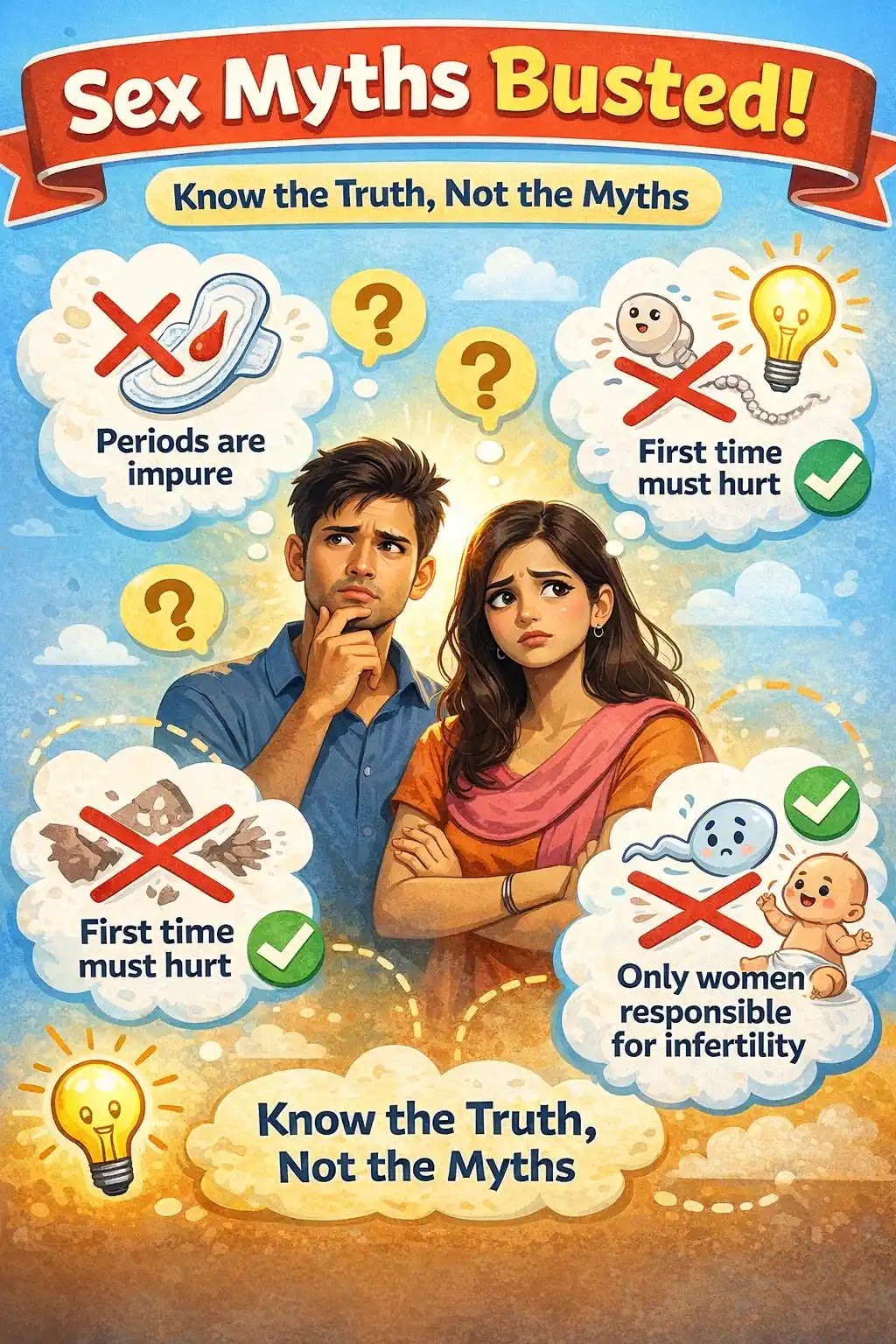
To break these myths and build a healthier society, the following steps can be taken:
- Proper Sex Education: Provide scientific and accurate sex education in schools and homes.
- Open Dialogue: Foster an environment for open conversations about sexual topics within families and among friends.
- Expert Consultation: Seek advice from doctors or health experts for any doubts or issues related to sexual health.
- Awareness Campaigns: Spread accurate information through media and social media.
- Adopt a Scientific Approach: Evaluate every belief with logic and scientific evidence.
Conclusion
Sexual myths and superstitions related to women in India have deep-rooted historical origins. However, it is essential to challenge them with modern science and open-mindedness. Sexual health is a critical subject that requires informed and sensible discussion. By breaking these myths, we can build a society where every individual, especially women, feels aware and empowered about their bodies and health.
Frequently Asked Questions
What are the common myths about menstruation in India?
Common myths include the belief that menstruating women are impure, should avoid touching certain things like pickles or religious items, and that period pain is normal with no need for treatment. The idea that irregular periods automatically mean infertility is also a prevalent myth.
Is the hymen a reliable indicator of virginity?
No, the hymen is not a reliable indicator of virginity. It’s a thin membrane that can tear due to various reasons other than sexual intercourse, such as physical activity or even from birth. Bleeding during first intercourse is also not guaranteed and its absence doesn’t mean a loss of virginity.
Can masterbation cause harm or health problems?
Masterbation is a normal and healthy sexual activity. It does not cause physical weakness, damage eyesight, or lead to impotence. It’s a safe way to explore one’s sexuality and relieve sexual tension.
Is it true that certain sexual positions can determine a baby’s gender?
No, this is a myth. The sex of a baby is determined by the father’s sperm (carrying either an X or Y chromosome) that fertilizes the egg. Sexual positions have no influence on whether the baby will be male or female.
How can we effectively combat sexual myths and superstitions in India?
Combating these myths requires a multi-pronged approach: promoting comprehensive sex education, encouraging open dialogue about sexual health, seeking advice from qualified healthcare professionals, running public awareness campaigns, and critically evaluating information with a scientific mindset.



























Share Your Opinion
Comments are closed on this post.