The Enduring Mystery of Past Lives and Death
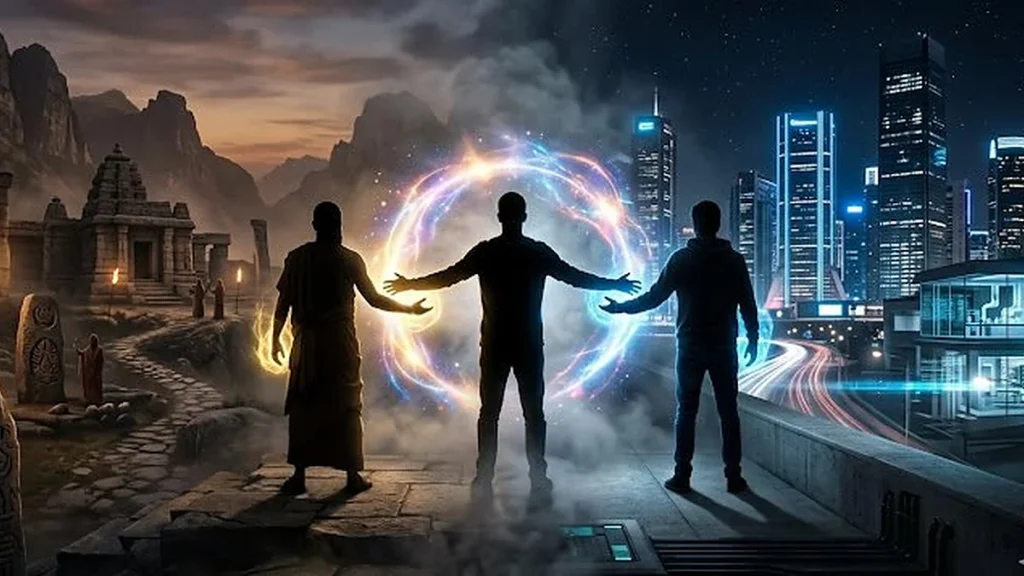
Human curiosity has always been drawn to the unknown, and few mysteries are as profound as the concept of a past life. Did we truly exist before this life? If so, who were we, and how did our previous existence end? Are our current habits, fears, or preferences linked to a life lived before? These questions have intrigued religion, philosophy, and now, science for centuries. This article explores religious beliefs, scientific explanations, and psychological viewpoints to provide a comprehensive understanding of this complex topic.
Religious and Spiritual Views on Rebirth
Many ancient religions and spiritual traditions worldwide embrace the principle of rebirth or reincarnation, where the soul transitions from one body to another. This concept offers a framework for understanding human existence and the significance of karma.
1. Hinduism: The Cycle of Rebirth and Karma
In Hinduism, the soul (Atman) is considered eternal and indestructible, with the body being a mere garment it wears and sheds. The law of karma dictates that our actions in this life determine our future rebirths. Good deeds lead towards Moksha (liberation from the cycle of birth and death), while negative karma perpetuates the cycle. Death is viewed as a transition point, where the soul leaves one body to inhabit another. The manner of death in a past life is believed by some to influence experiences in the current life.
2. Buddhism and Jainism: Continuity of Consciousness
Buddhism, while differing slightly in its concept of the soul, also emphasizes rebirth. It’s often described as a ‘stream of rebirth’ where karma and consciousness flow from one life to the next, with the ultimate goal being Nirvana, liberation from this cycle. Jainism strongly believes in karma and rebirth, asserting that the soul takes birth in various forms (Yonis) according to its karmic actions. Breaking free from karmic bonds is essential to achieve Kevala Jnana (omniscience or liberation).
3. Beliefs in Other Cultures
Ancient Egyptian, Greek (Plato), Native American tribes, and various African cultures have also held beliefs in the transmigration of souls or the continuation of life in another form after death. These traditions generally underscore that life is a continuous journey, and death is a transformation rather than an end.
Scientific and Psychological Perspectives: Can Science Explain Reincarnation?
While religion often posits rebirth as a matter of faith, science seeks empirical evidence. Modern science has not yet definitively proven reincarnation. However, certain psychological and neuroscientific concepts offer alternative explanations for experiences attributed to past lives.
1. Déjà Vu: A Trick of the Brain
Déjà vu is the uncanny feeling of having experienced a present situation before. Neuroscience suggests this phenomenon often arises from temporary glitches in the brain’s memory processing. It occurs when the brain momentarily misinterprets new information as familiar, leading to a false sense of recognition. Direct links to past lives have not been established.
2. False Memory Syndrome
In psychology, false memory syndrome describes a condition where individuals strongly believe in events or memories that never actually occurred. These can be influenced by suggestion, imagination, or external factors. Some claims of past-life memories might be understood within this framework.
3. Phobias and Talents: Inherited or Past-Life Echoes?
Unexplained phobias are sometimes linked to past-life trauma. Psychology, however, often attributes them to unresolved childhood experiences, subconscious learning, or genetic predispositions. Similarly, innate talents, like exceptional musical or artistic ability in children, are spiritually seen as a result of past-life practice, while science points to genetics, early brain development, and environmental influences.
4. Regression Therapy: A Controversial Tool
Regression therapy, often using hypnosis, attempts to access supposed past-life memories to resolve current issues. However, the scientific community remains divided on whether these ‘memories’ are genuine past-life recollections or products of the subject’s imagination and suggestion. Mainstream science does not accept this as proof of reincarnation.
5. Research by Dr. Ian Stevenson
Psychiatrist Dr. Ian Stevenson conducted extensive research on children who claimed to have past-life memories. He documented cases where children provided specific details about previous lives that were later verified. However, his work falls under parapsychology, and mainstream science considers it inconclusive due to a lack of replicable, controlled experiments.
The Truth About Death: Religious vs. Scientific Views
Like past lives, death is viewed through various lenses.
1. Religious Perspective on Death
Most religions perceive death as the soul’s departure from the body to embark on a new journey, not an absolute end. Religious texts often describe the soul’s post-death journey, concepts of heaven and hell, or preparations for rebirth. How one died in a past life is often linked to karma and circumstances, potentially influencing current life experiences.
2. Scientific Perspective on Death
Science defines death as the irreversible cessation of biological functions—heart stoppage, brain activity termination, and the end of bodily processes. It does not incorporate concepts of the soul or an afterlife, focusing solely on observable, measurable physical events.
3. Near-Death Experiences (NDEs)
Individuals who have come close to death sometimes report NDEs, which can include sensations of leaving the body, seeing a light, or encountering deceased loved ones. Scientists often explain these as hallucinations caused by oxygen deprivation or chemical changes in the brain, while spiritual interpretations view them as evidence of the soul’s journey.
Finding a Balanced Perspective
There is no single, universally accepted ‘truth’ regarding past lives and how we died. The answer often depends on individual faith, beliefs, and worldview.
Spiritual Truth
If you lean towards spirituality or religion, you might embrace the principles of rebirth and karma. This perspective can provide meaning, ethical guidance, and highlight the importance of present actions.
Scientific Truth
If you prioritize scientific evidence, you might interpret claims of past lives as psychological phenomena or complexities of the human brain. This approach encourages understanding the world through logic and reason.
Respecting both perspectives is crucial. Some mysteries may remain beyond current scientific grasp, while some spiritual experiences might find future scientific explanations. Ultimately, the narrative that offers you the most comfort and meaning is the one that resonates most deeply.
FAQs About Past Lives and Death
Q1: Can we remember our past lives?
While some individuals claim to have vivid memories of past lives, often through regression therapy or spontaneous recall, these memories are not scientifically proven. Psychology suggests they could be false memories, imagination, or subconscious influences. Religious traditions often view such memories as echoes of past karma or spiritual insights.
Q2: How does karma affect our past life and current life?
In religions like Hinduism and Buddhism, karma is the principle of cause and effect. Actions performed in a past life are believed to shape the circumstances, challenges, and opportunities of the current life. Similarly, actions in the current life determine future rebirths. It emphasizes personal responsibility for one’s destiny.
Q3: What is the scientific explanation for unexplained fears or talents?
Science typically explains unexplained fears (phobias) through psychological factors like trauma, learned behavior, or genetic predispositions. Innate talents are often attributed to a combination of genetic inheritance, early environmental influences, and brain development, rather than past-life experiences.
Q4: Is death the absolute end according to science?
From a scientific standpoint, death is the irreversible cessation of all biological functions that sustain a living organism. Science, as it currently stands, does not provide evidence for consciousness or existence continuing after biological death. It focuses on the physical and material aspects of life and death.
Q5: How do different religions view the cause of death in past lives?
Different religions offer varied perspectives. In Hinduism and Jainism, the cause and manner of death in a past life are often seen as a consequence of accumulated karma. In Buddhism, it’s part of the continuous stream of existence driven by karmic forces. Spiritual traditions generally suggest that the circumstances of death are tied to the soul’s karmic ledger and its journey towards liberation.