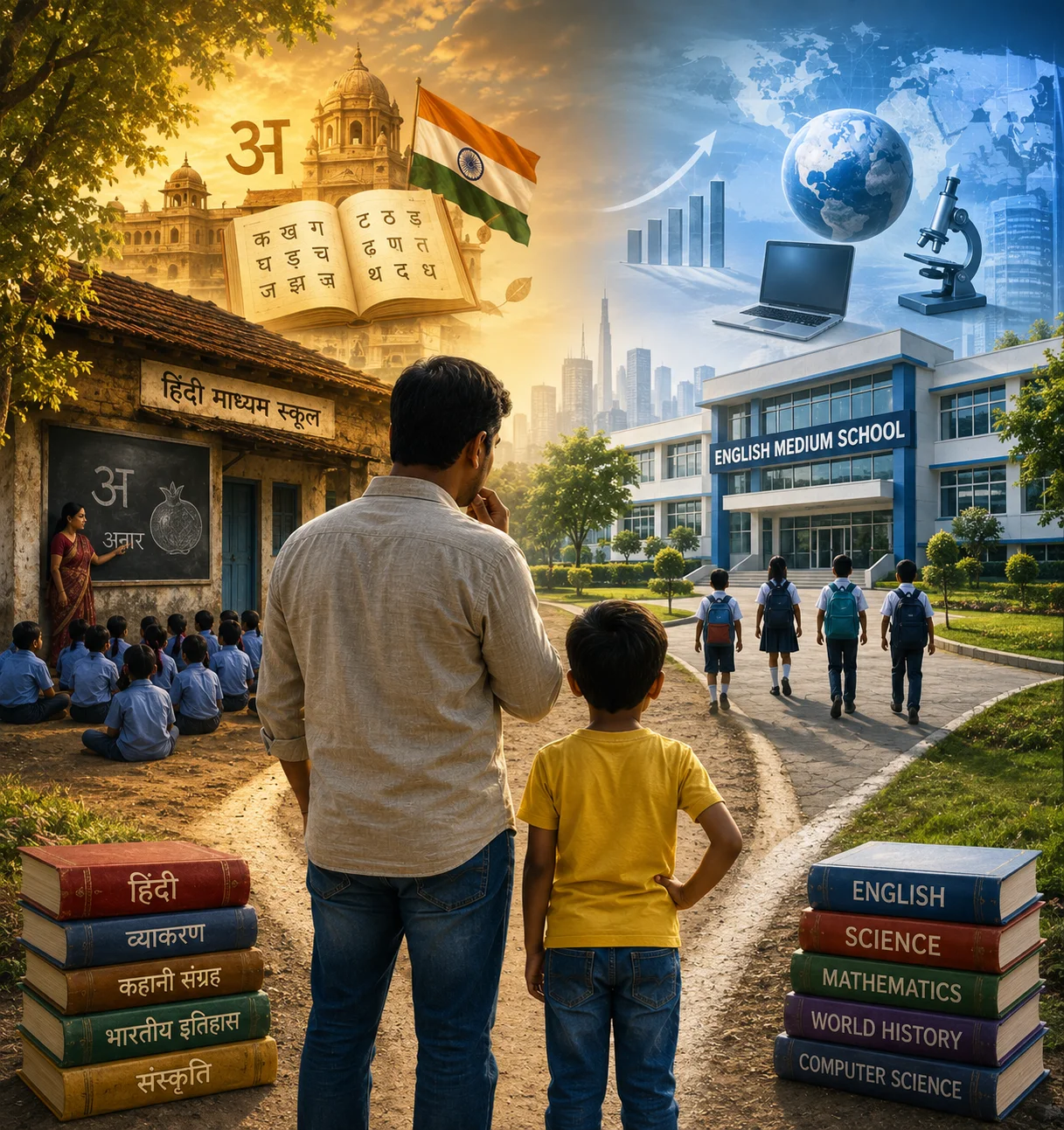
Understanding the Core Debate: Understanding vs. Societal Perception
There’s a common societal belief that fluency in English equates to higher intelligence. This perspective often overshadows the true purpose of education, which is to impart knowledge and facilitate understanding. Language is merely a tool for communication and learning, not the sole measure of intellect. When children grasp concepts in their everyday language, their learning process is significantly faster and more effective. Conversely, if complex subjects are introduced in a language they are unfamiliar with, they may resort to rote memorization instead of genuine comprehension. Therefore, when selecting a medium of instruction, it’s crucial to consider the environment in which the child can think most comfortably. Language should be a window to knowledge, not a barrier.
The Strength of Hindi Medium: Deep Understanding and Cultural Roots

One of the primary advantages of studying in Hindi medium is that students don’t face a dual challenge of understanding a concept and translating it simultaneously. They can focus entirely on the subject matter without expending energy on word-for-word translation. This often leads to a deeper grasp of foundational principles. Furthermore, children who learn in their mother tongue tend to develop a greater sensitivity towards their culture, literature, and local societal issues. This profound conceptual clarity becomes their greatest asset. Hindi medium students have historically performed exceptionally well in state-level competitive exams and civil services due to this strong foundation.
The Necessity of English Medium: The Reality of the Tech and Private Sector
The current reality cannot be ignored. The corporate world, IT sector, software development, and multinational companies largely operate in English. For students aspiring to build a significant career in the private or tech industries, proficiency in English is almost a prerequisite. Studying in an English medium curriculum often makes it easier for students to navigate technical books, research papers, and international courses at the college level, providing them with global exposure. Fluency in English also boosts confidence in interviews, presentations, and client meetings, potentially leading to better packages and opportunities early in their careers.
A Practical Comparison of Both Mediums
To simplify the decision-making process, let’s compare the key aspects of both mediums without bias. The table below illustrates the impact of each medium:
| Aspect | Hindi Medium | English Medium |
|---|---|---|
| Initial Understanding | Quite easy and natural | Takes a little time initially |
| Private & Tech Jobs | Limited but pathways exist | Abundant opportunities and preference |
| Availability of Books | Limited resources at higher levels | Vast global content available |
| Family Budget | Affordable and accessible | Relatively more expensive |
This comparison highlights that both mediums have their merits, catering to different paths and priorities. Research indicates that while children who learn foundational concepts in their mother tongue often have stronger conceptual grounding, English offers better opportunities in the global job market.
Home Environment: The Most Crucial Factor in Decision Making
Parents often overlook assessing their home environment when choosing a school medium. If parents are not comfortable with English and enroll their child in a rigorous English medium school, the child may feel isolated. They might struggle to get help with homework or school projects at home. This can lead to excessive mental pressure on the child. If you opt for an English medium education, parents must also take some responsibility for learning a bit of English and creating a conducive learning environment at home. Without such support, the child’s development might be slower.
The Hybrid Approach: A Balanced Path for Today’s World
Confining oneself to just one language is not wise in today’s era. The best solution is what’s known as a hybrid approach, ensuring a balanced proficiency in both languages, regardless of the school’s medium of instruction. If a child attends a Hindi medium school, they should be encouraged to practice speaking and writing English separately. Conversely, if a child is in an English medium school, ensure they respect and engage with their mother tongue and Hindi, read books, and practice speaking it correctly. Mastery of two languages ensures a child is never left behind, staying connected to their roots while being ready for global opportunities.
Expert Advice: Focus on Learning, Not Just the Medium
Parents often express a fear of making the wrong decision that could impact their child’s future. While debates about which medium is better are common, the real essence is often missed. The medium of instruction is just a path, not the destination. What truly matters is what the child is learning and how open their mind is. The dominance of English in the private sector, tech industry, and corporate jobs is undeniable. While you may or may not like it, knowing English provides a distinct advantage in job interviews and global projects. However, this doesn’t mean students from Hindi medium backgrounds are left behind. With a strong grasp of the subject, language proficiency can often be acquired with focused effort.
Key takeaway: Whichever medium you choose, ensure your child doesn’t become a rote learner. Foster a hunger for learning new things. If your budget allows and you can dedicate time at home, an English medium education might be more practical for today’s job market. However, if the budget is tight or home support is limited, choose Hindi medium without hesitation and focus separately on improving their English speaking skills. Don’t blindly trust the school board or medium. Focus on nurturing your child’s curiosity, basic concepts, and thinking abilities. A sharp mind will pave the way to success in any language.
Frequently Asked Questions
- Can a student from a Hindi medium background succeed in the tech or IT sector?
Yes, absolutely. The tech industry values coding logic and problem-solving skills. A Hindi medium student would need to focus on understanding basic technical terms and improving their communication in English.
- If no one at home speaks English, should a child be enrolled in an English medium school?
It’s possible, but it will require extra time and support for the child initially. If parents are patient and try to learn alongside their child, they can adapt more quickly.
- What is the best option for career prospects?
For private, MNC, and tech sectors, English medium generally offers more opportunities. For government jobs and competitive exams, both mediums offer similar chances for students.
- What can parents do at home to improve a child’s English?
Encourage them to read informative English comics and interesting stories. Practice simple, everyday English sentences daily.