 Vista
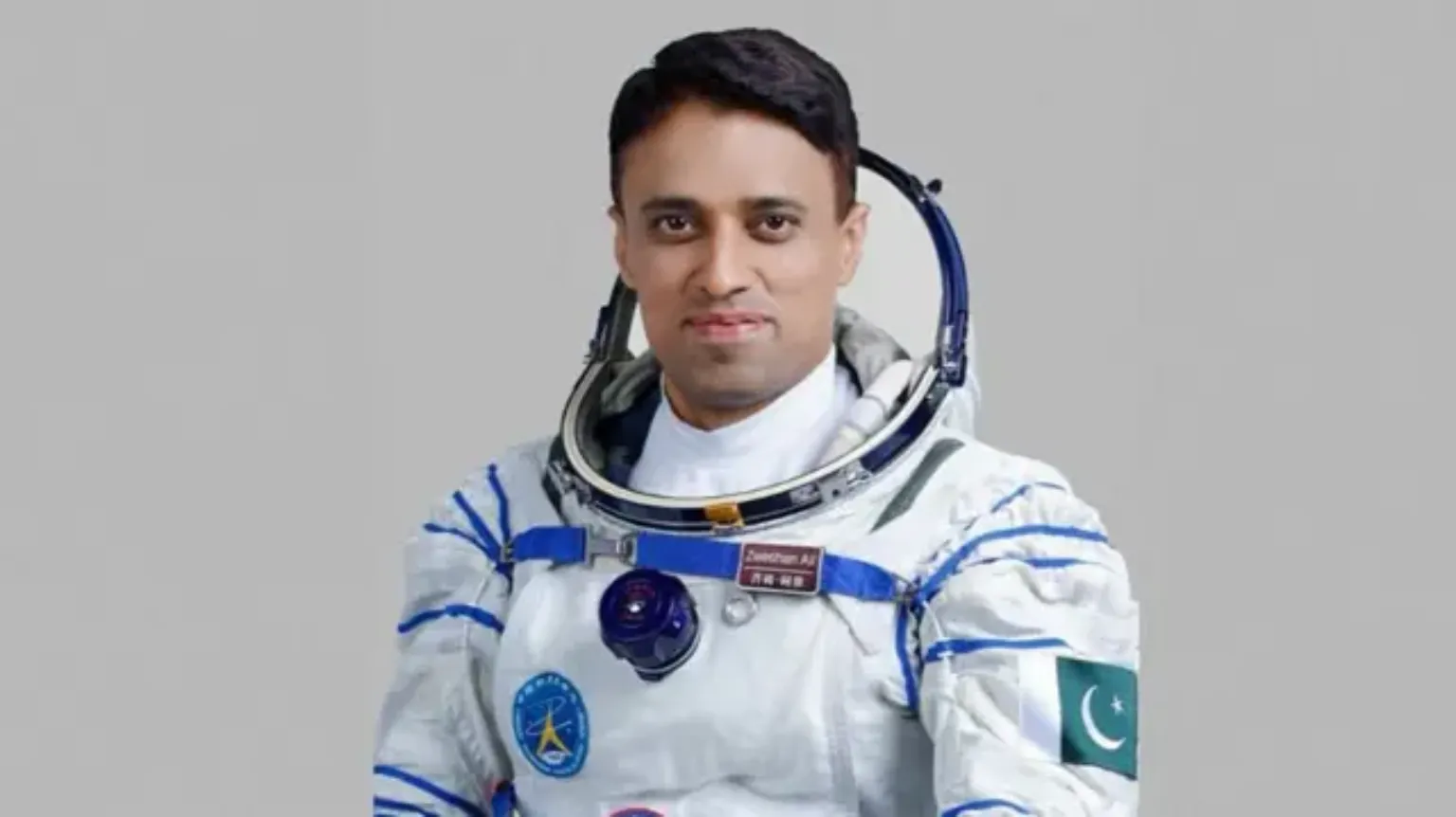
25 November 2026: Muhammad Zeeshan Ali has become Pakistan’s first astronaut to undertake an orbital mission and the first non-Chinese national to enter China’s Tiangong space station. The 40-year-old Pakistani pilot launched aboard Shenzhou-24 with Chinese crew members Tang Hongbo and Wu Yi. The crew entered the station on the same day. Ali is serving as a payload specialist, carrying out scientific work rather than commanding the spacecraft.
Muhammad Zeeshan Ali biography and mission facts
| Item | Details |
|---|---|
| Name | Muhammad Zeeshan Ali |
| Nationality | Pakistani |
| Professional background | Pilot |
| Age at launch | 40, according to contemporary reporting |
| Spacecraft | Shenzhou-24 |
| Role | Payload specialist |
| Launch date | 25 November 2026 |
| Destination | Tiangong, China Space Station |
Pakistan’s Space and Upper Atmosphere Research Commission, SUPARCO, states that Ali traveled to China’s astronaut training center in April 2026. The official mission profile identifies him as a payload specialist. Details about his family, qualifications and personal life should not be invented from unofficial profiles. The achievement is already significant without adding unverifiable biographical claims.
How did Pakistan’s first orbital astronaut reach Tiangong?
The mission follows a cooperation agreement between Pakistan and China concluded in February 2025. On November 25, Shenzhou-24 launched from the Jiuquan Satellite Launch Center aboard a Long March-2F rocket. After launch, the spacecraft reached orbit and rendezvoused with Tiangong. The crew subsequently entered the station and joined astronauts already aboard.
Launching, reaching orbit, docking and entering a space station are separate milestones. A launch does not automatically establish a successful docking. In this case, contemporary reporting confirms the crew’s arrival inside Tiangong. Ali’s planned visit is shorter than the ordinary Chinese crew rotation, and his return is expected aboard Shenzhou-23. The actual return schedule remains subject to mission decisions.
What does a payload specialist do?
A payload specialist is trained for particular scientific or technical responsibilities associated with a mission. A spacecraft commander has different duties involving crew coordination and flight operations. The distinction is useful when discussing international astronaut programs. Every astronaut must learn essential emergency procedures and how to live and work in the spacecraft environment, regardless of the experiments assigned to them.
In orbit, equipment, samples and liquids behave differently from their behavior on the ground. Astronauts must follow research protocols, record observations and keep samples in specified conditions. A carefully designed experiment needs comparison data from Earth so that researchers can separate the effects of microgravity from unrelated influences.
Four Pakistani science projects in space
SUPARCO identifies four collaborative research projects. One explores lightweight graphene-containing composite materials that could help protect spacecraft against radiation while limiting mass. Another examines carbon-fiber composite materials designed to repair small cracks. Both are research objectives, not announcements of proven commercial spacecraft technology.
A third project studies quinoa seeds, including how exposure to the space environment may influence seed longevity, genetic characteristics and nutritional properties. A fourth investigates growing microalgae and cyanobacteria for possible uses in future life-support systems. Photosynthetic organisms use light energy and can participate in carbon dioxide and oxygen cycling. Cultivating them reliably in a spacecraft would require careful management of water, light, nutrients and contamination.
Ali is expected to carry out an in-orbit cyanobacteria experiment as part of the mission. Results must be analyzed after the experiments; the launch itself does not prove a particular biological outcome. Such research may contribute to long-duration spaceflight, where transporting every resource from Earth would be expensive and difficult.
Tiangong space station versus the International Space Station
Tiangong is China’s modular laboratory in low Earth orbit. Its core module is Tianhe, joined by the Wentian and Mengtian laboratory modules. The International Space Station is a separate facility operated through another international partnership. Shenzhou spacecraft transport crew members to Tiangong, while cargo supply missions support its operation. Neither station is a permanent habitat independent of Earth.
Space stations offer sustained microgravity because they and their occupants are continuously falling around Earth in orbit. Gravity is not absent there. Research platforms allow repeated experiments, maintenance and observations over longer periods than many short spacecraft missions. The first international visitor to Tiangong represents an expansion of its crewed cooperation, but does not imply that Pakistan launched its own independent human-rated spacecraft.
Why this mission matters for students and space research
Human spaceflight requires expertise in engineering, biology, medicine, computing, communication and many other areas. An astronaut is the visible member of a large team that includes researchers, technicians and mission planners. Pakistan’s participation provides an opportunity to conduct selected experiments in orbit and build experience with international crewed missions. The scientific impact will depend on research quality, results and follow-up rather than the symbolism of the launch alone.
FAQs
Who is Pakistan’s first astronaut?
Muhammad Zeeshan Ali is the country’s first astronaut on an orbital mission.
Which spacecraft carried him?
China’s Shenzhou-24.
Did Pakistan launch its own crewed rocket?
No. Ali flew aboard a Chinese spacecraft under a cooperative program.
Which space station did he enter?
China’s Tiangong, not the International Space Station.
When will he return?
The plan is a short stay followed by return aboard Shenzhou-23; follow official updates for the final schedule.
How astronauts prepare for international scientific missions
Training involves familiarization with the station, emergency procedures, communications and experiment equipment. Crew members may need to practice working with colleagues who have different first languages. Communication is particularly important when a task requires several people to coordinate, because misunderstandings can affect both research quality and safety. Training on Earth cannot recreate every aspect of the orbital environment, so procedures are designed to support careful work after arrival.
Readers seeking mission photographs should consult the official SUPARCO mission hub and the accompanying credits. Pictures of an earlier spaceflight should not be presented as photographs of the Shenzhou-24 crew. A mission profile may describe planned experiments, while a later scientific report will document the actual outcomes.
Conclusion
The milestone combines human spaceflight cooperation and practical scientific research. The next important updates will concern experiments, mission operations and safe return.
Sources: SUPARCO official astronaut biography and experiments; Associated Press, 25 November 2026; Dawn/Reuters, 25 November; China’s official information office/Xinhua.
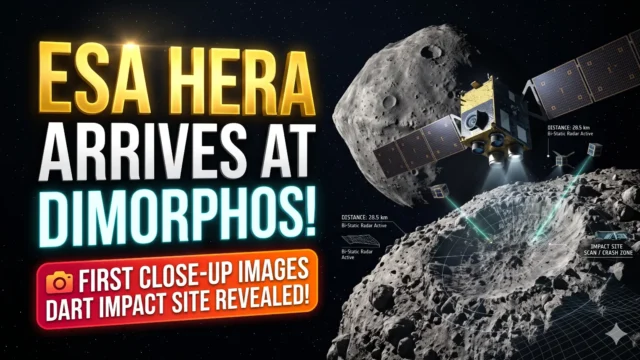
Related reading: ESA Hera Mission 2026: Dimorphos Asteroid First Close-Up Images, DART Impact and Planetary Defense





















Share Your Opinion
Comments are closed on this post.