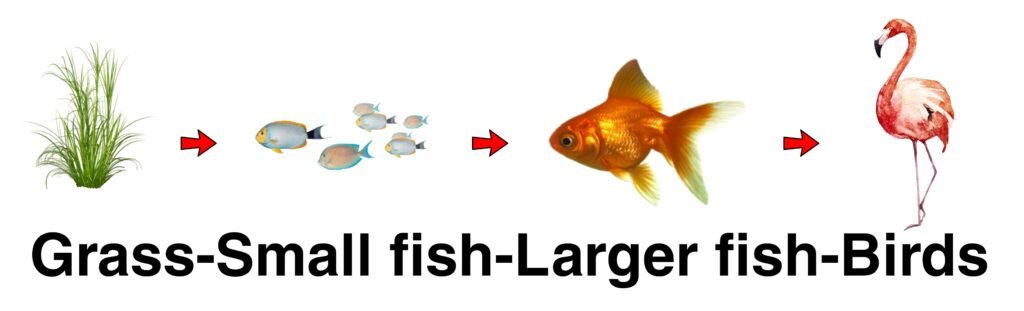
What is a Food Chain?
Simply put, a food chain illustrates the sequence in which energy is transferred from one organism to another through food. It reveals ‘who eats whom’ and how energy moves within an ecosystem. Every living being on Earth requires energy to survive and function, and this energy comes from food. For instance, grass uses sunlight to create its energy (producer). A deer eats grass, transferring the grass’s energy to the deer (primary consumer). A lion hunts the deer, transferring the deer’s energy to the lion (secondary consumer). When the lion dies, decomposers break down its body, returning nutrients to the soil, which are then used by plants again. This is a continuous cycle that sustains life on Earth.
Why is the Food Chain Important?

Studying the food chain is more than just a scientific concept; it helps us understand nature’s balance and the continuity of life. It shows how energy moves from one level to another, forming the basis of life. Each organism plays a specific role. If one link breaks, the entire ecosystem can become unbalanced. The predator-prey relationship helps control populations, preventing any single species from becoming too numerous. Changes in the food chain can also be early indicators of environmental problems like pollution or climate change.
Key Components of a Food Chain
An ideal food chain typically has three main levels that depend on each other:
1. Producers
These are organisms that create their own food using sunlight (photosynthesis) or chemical energy. They are also called ‘autotrophs’. Examples include all green plants, algae, and some types of bacteria. They form the foundation of the food chain.
2. Consumers
These organisms rely on other living things for energy. They are also known as ‘heterotrophs’. Consumers are further classified based on their eating habits:
- Primary Consumers: These directly eat producers (plants). They are called ‘herbivores’. Examples: deer, rabbits, cows, goats, grasshoppers.
- Secondary Consumers: These eat primary consumers (herbivores). They can be ‘carnivores’ (meat-eaters) or ‘omnivores’ (eating both plants and meat). Examples: foxes, snakes, frogs (which eat insects).
- Tertiary Consumers: These eat secondary consumers. They are often at the top of the food chain and are called ‘top carnivores’. Examples: lions, tigers, eagles, hawks.
- Quaternary Consumers: In some very long food chains, quaternary consumers may exist, eating tertiary consumers. Examples: some large predatory birds or marine animals.
3. Decomposers
These are microorganisms that break down dead plant and animal matter. They decompose complex organic substances into simple inorganic compounds, which are returned to the soil. Decomposers are nature’s clean-up crew and recyclers. Without them, dead organisms would pile up, and nutrients wouldn’t return to the soil, hindering new plant growth. Examples: bacteria, fungi, and some insects.
Types of Food Chains

There are mainly two types of food chains:
1. Grazing Food Chain
This chain starts with producers (green plants) and moves to herbivores, carnivores, and top carnivores. It shows the direct flow of energy starting from sunlight. Example: Grass → Grasshopper → Frog → Snake → Hawk.
2. Detritus Food Chain
This chain begins with dead organic matter (detritus). Decomposers (like bacteria and fungi) break down this dead matter, and small organisms that feed on these decomposers become part of this chain. This chain plays a crucial role in nutrient recycling. Example: Dead leaves/animals → Fungi/Bacteria → Earthworm → Small bird.
Food Web vs. Food Chain
Often, people confuse food chains and food webs, but there’s a key difference. A food chain is a direct, linear path of energy flow, showing ‘who eats whom’ in a specific order. A food web, however, is a complex network of interconnected food chains. In reality, an organism often eats more than one type of food and can be preyed upon by multiple predators. This complex relationship presents a more realistic and intricate picture of nature. For instance, a rabbit eats grass, but foxes, eagles, and snakes might all prey on the rabbit. Meanwhile, a fox might eat not only rabbits but also mice or small birds. These complex interactions form the food web.
Human Impact on the Food Chain

Humans significantly impact food chains through various activities:
- Pollution: Plastics, chemicals, and pesticides enter the food chain, harming organisms and eventually reaching humans.
- Deforestation: Clearing forests destroys many producers, endangering the herbivores and carnivores that depend on them.
- Overfishing/Overhunting: Excessive hunting or fishing of a species reduces its population, affecting other species in the food chain that rely on it.
- Climate Change: Rising global temperatures and changing weather patterns affect the habitats and food availability for plants and animals, impacting the entire food chain.
Protecting Our Ecosystem
Maintaining the balance of the food chain and ecosystem is crucial for our planet and our own survival. We can all contribute through small efforts: Use less plastic and reduce waste. Choose eco-friendly products. Support local and seasonal food. Plant trees and respect nature. Spread awareness about protecting wildlife and their habitats. The food chain is not just a scientific concept; it’s a symbol of life’s cycle and nature’s incredible intelligence. Understanding it makes us more responsible towards our planet.
A Practical Perspective
Think about the food chain not just in books but in your daily life. When you eat something, consider where it came from and the energy it took to produce it. When you discard a plastic bottle, think about where it will end up and how many lives it might affect. In nature, every small thing matters. Our choices have consequences. So, be mindful, pay attention to your plate, and take care of the environment. That’s the real knowledge, my friend!