The Mystery of Emperor Ashoka’s ‘Real’ Image: Why No Camera Photos Exist
It’s natural to be curious about the appearance of historical figures like Emperor Ashoka. Many people search for ‘Emperor Ashoka’s real photo’ or ‘original painting.’ However, it’s crucial to understand the historical context. The Mauryan Empire, which Ashoka ruled, existed thousands of years ago (roughly 304 to 232 BCE). Photography and realistic portrait painting as we know them today had not yet been invented. Therefore, a ‘real photo’ or a life-size, contemporary painting of Emperor Ashoka is impossible.
The images and paintings of Ashoka we see today are not literal depictions but artistic interpretations. Artists create these based on a combination of historical evidence, archaeological findings, and ancient texts. They draw inspiration from:
- Ancient Inscriptions and Edicts: Ashoka’s pillars and rock edicts provide invaluable information about his reign, his philosophy of Dhamma, and his policies. While they offer insights into his character, they do not contain any direct visual representations of him.
- Sculptures on Stupas: Monuments like the stupas at Sanchi and Sarnath feature intricate carvings that depict the art, culture, and lifestyle of the Mauryan period. Some figures in these carvings are sometimes interpreted as Ashoka or his family members, but they are not definitive portraits.
- Historical Texts and Foreign Accounts: Greek traveler Megasthenes and various Buddhist texts describe Ashoka’s personality, his vast empire, and his significant actions. Artists use these detailed descriptions to conceptualize his appearance.
- Mauryan Art and Architecture: The aesthetic sensibilities and artistic styles derived from Mauryan sculptures, coins, and architectural remains also influence these modern interpretations.
The Convergence of Historians and Artists: How Ashoka’s Images Are Created

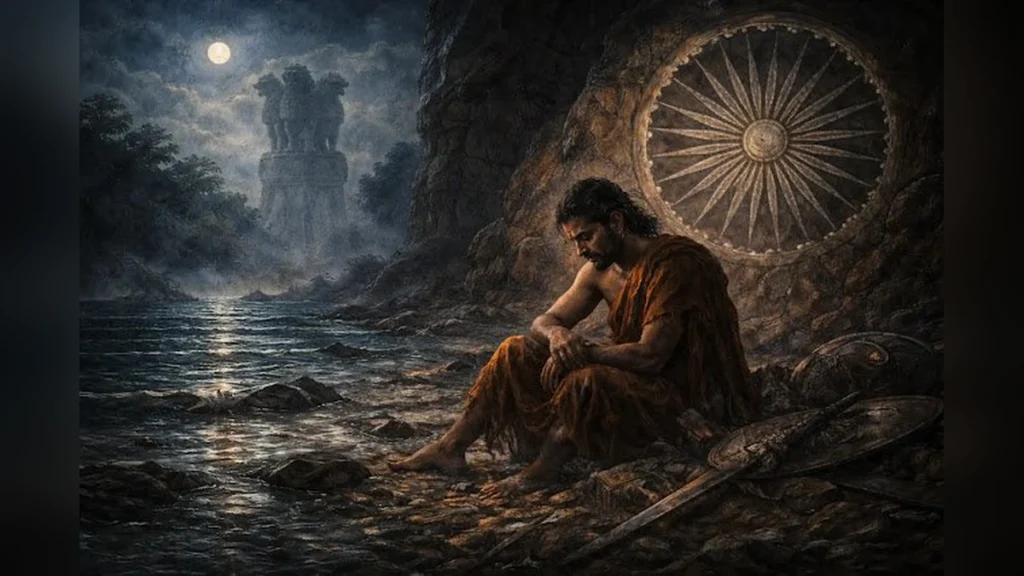
Creating an image of Emperor Ashoka is a collaborative process involving historians and artists. Historians meticulously gather information from ancient sources, and artists translate this knowledge into visual form. In these artistic renditions, Ashoka is often portrayed as a powerful and majestic ruler. He might be depicted as a fearless emperor in a warrior’s stance or as a serene Buddhist devotee embracing Dhamma after the Kalinga War.
These paintings frequently showcase his royal attire, crown, and scepter. His facial expressions often convey seriousness and determination in depictions of his earlier life, transitioning to compassion and peace in later portrayals. These images aim not just to capture his physical likeness but also to reflect the different phases of his life and his profound inner transformation.
Significant Depictions of Emperor Ashoka and Their Importance
The images of Emperor Ashoka prevalent today are more than just artworks; they symbolize his immense personality and enduring legacy.
The Lion Capital of Ashoka and National Symbols
The iconic Lion Capital atop the Ashoka Pillar at Sarnath, featuring four lions back-to-back, serves as India’s national emblem. It represents Ashoka’s power, his propagation of the Dharma (Dhamma), and his just rule. The ‘Ashoka Chakra’ (Wheel of Dharma) at the base of this pillar is a vital part of India’s national flag, standing as an eternal testament to Ashoka’s vision and values, even without a direct image of the emperor himself.
Sculptures on Sanchi and Other Stupas: Glimpses of Art
The carvings on the gateways of the Great Stupa at Sanchi are exquisite examples of Mauryan art and craftsmanship. They often illustrate Jataka tales and events from the life of the Buddha. Some scholars believe certain figures in these carvings might represent Ashoka or his family, offering us a glimpse into the royal fashion and grandeur of that era.
Modern Paintings and Digital Art: New Generations’ Interpretations
Contemporary artists and digital art professionals continue to create new interpretations of Emperor Ashoka. These modern images often blend historical accuracy with current artistic styles. Ashoka is depicted variously as a great warrior, a philosopher, or a peacemaker who renounced violence for the path of non-violence (Ahimsa). These artworks present his story in fresh and engaging ways, helping younger generations connect with his narrative.
The Inspiring Aspects of Emperor Ashoka’s Imagery

The images of Emperor Ashoka serve multiple inspiring purposes:
- Symbol of Power and Transformation: They represent a ruler who expanded his empire and later, witnessing the horrors of war, chose the path of peace and Dhamma.
- Message of Non-Violence and Compassion: His depictions convey a timeless message of Ahimsa, tolerance, and compassion towards all beings, which remains highly relevant today.
- Pride in Indian Culture and Heritage: They are integral to India’s glorious past, the spread of Buddhism, and our rich cultural heritage.
- Education and Awareness: These images are valuable tools in education, aiding in the understanding of history and inspiring future generations.
Downloading Emperor Ashoka’s Images: Tips and Sources
If you wish to download high-quality paintings or artistic images of Emperor Ashoka, consider the following:
- Choose Reliable Sources: Look for authentic and high-quality images on government cultural websites, online galleries of renowned museums (like the National Museum, Archaeological Survey of India), and reputable art galleries.
- Educational and Non-Commercial Use: Most historical and artistic images are available for educational or personal non-commercial use. Always seek permission for commercial use.
- Explore Variety: View paintings by different artists that depict various aspects of Ashoka’s life – his youth, his role as a warrior, and his reign as a Buddhist emperor.
- Wallpapers and Inspiration: You can use these images as wallpapers for your computer, phone, or tablet as a constant reminder of his values and teachings.
Conclusion

While a ‘real photo’ or ‘life-size painting’ of Emperor Ashoka does not exist, his images live on. These visual representations are a beautiful fusion of history, art, and imagination, reminding us of a great ruler who not only built a vast empire but also paved the way for peace and Dhamma for humanity. His artistic portrayals help us understand his life, his philosophy, and his legacy, continuing to inspire us centuries later.
Frequently Asked Questions about Emperor Ashoka’s Images
Q1: Is there any actual photograph of Emperor Ashoka?
No, there is no actual photograph of Emperor Ashoka. Photography was invented thousands of years after his reign.
Q2: How do artists create paintings of Emperor Ashoka?
Artists create paintings of Emperor Ashoka based on descriptions in ancient texts, historical accounts, and archaeological evidence, combined with their artistic interpretation.
Q3: What do the lions on the Ashoka Pillar at Sarnath represent?
The four lions on the Sarnath pillar represent power, courage, confidence, and pride. It is India’s national emblem.
Q4: Can I use images of Emperor Ashoka for my school project?
Yes, images of Emperor Ashoka are generally available for educational and non-commercial use. Always check the source’s usage policy.
Q5: Where can I find authentic images or paintings of Emperor Ashoka?
Authentic images can often be found on the websites of reputable museums, archaeological surveys, and government cultural portals.