 Vista
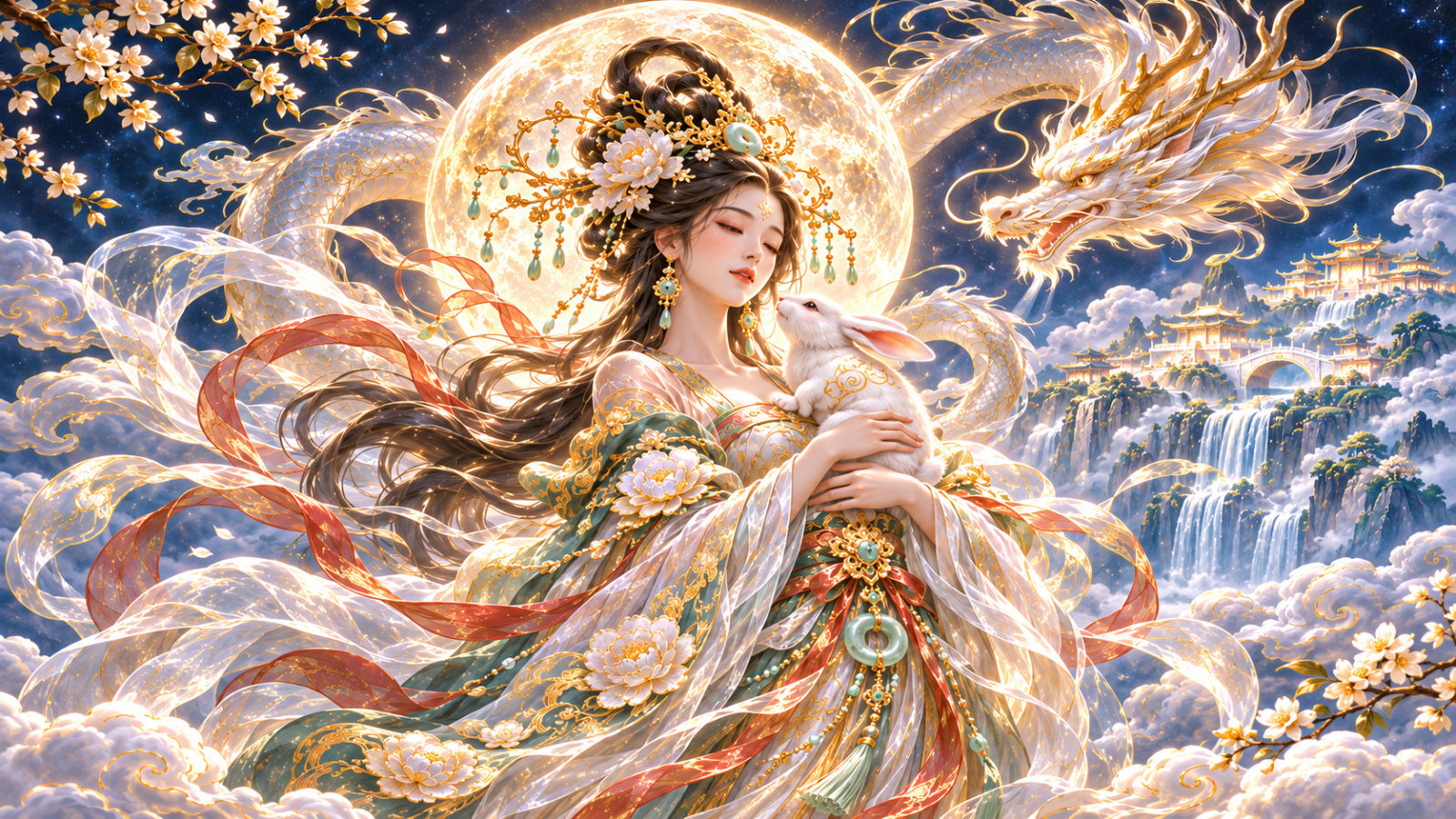
Chinese mythology is the vast body of creation myths, divine figures, heroic legends, spirit beliefs and folklore that developed across China over more than two thousand years. It includes the giant Pangu who separated heaven and earth, the goddess Nüwa who made humans and mended the sky, the moon goddess Chang’e, the dragon kings of the seas, the Jade Emperor’s heavenly court, shape-shifting fox spirits and the Monkey King Sun Wukong. This guide is one master reference for Chinese gods and goddesses, Chinese mythology characters, Chinese mythical creatures and the best-known Chinese mythology stories, with clear notes on what comes from ancient texts, what comes from religion and what was shaped later by novels, opera and film.
What Is Chinese Mythology?
Chinese mythology is not a single, tidy canon like a pantheon written in one book. It is a collection of stories scattered across ancient geography books, philosophical texts, histories, Taoist and Buddhist writings, local cults and later novels. Many myths were treated by early Chinese writers as history, so legendary rulers such as the Yellow Emperor, Yao, Shun and Yu the Great sit somewhere between myth and early chronicle.
Quick overview:
- Key themes: harmony of heaven, earth and humans; cosmic balance (yin and yang); filial duty; the cycle of life and death.
- Key early sources: the Classic of Mountains and Seas (Shanhaijing), the Huainanzi (2nd century BCE), the Zhuangzi and the Chu Ci.
- Later layers: Taoist and Buddhist deities, and novels such as Journey to the West and Investiture of the Gods (both Ming dynasty).
- Living tradition: deities such as Mazu, Guanyin and the Kitchen God are still honoured in homes and temples, so respectful language matters.
History and Origins of Chinese Mythology
Ancient Chinese belief systems
Early Chinese religion, visible in Shang dynasty oracle bones (around the second millennium BCE), centred on ancestors, nature powers and a high celestial authority sometimes called Di or Tian (Heaven). Kings consulted ancestors through divination, and bronze vessels from the period show fierce animal masks such as the taotie. These practices form the oldest background for later myth.
Early myths and how they survive
Unlike Greece, China has no single epic that gathered the gods. Fragments survive in works like the Shanhaijing, which describes strange peoples and beasts, and the Huainanzi, which preserves the story of Nüwa mending the sky and Hou Yi shooting suns. Some famous myths are recorded surprisingly late: the earliest known account of Pangu comes from the third century CE.
Taoism, Buddhism, folk religion and ancestor belief
Taoism supplied an organized heaven with ranked immortals, while Buddhism, which reached China from India in the first centuries CE, added hells, bodhisattvas and ideas of karma. Folk religion blended all of this with local heroes and protectors. Ancestor veneration runs underneath everything.
Mythology vs folklore vs religion vs literature
| Category | What it means | Example |
|---|---|---|
| Mythology | Sacred or foundational stories about origins and divine beings | Pangu, Nüwa and the sky |
| Folklore | Popular tales passed on orally, often about spirits and local heroes | Cowherd and Weaver Girl |
| Religion | Worship, ritual and temple practice | Mazu temples, Kitchen God offerings |
| Literature | Authored novels, plays and operas that reshaped older material | Sun Wukong in Journey to the West |
Keeping these four apart avoids the most common mistake in popular articles: treating a novel character as an ancient god. Compare how our Japanese mythology guide separates chronicle myth from later folklore.
Chinese Creation Myth
Pangu: the Chinese creation myth
In the Pangu Chinese creation myth, the universe begins as a dark, formless chaos like an egg. Pangu is born inside it and sleeps for 18,000 years. When he wakes and stretches, the light, clear part rises to become heaven and the heavy, murky part sinks to become earth. Pangu keeps growing for another 18,000 years, pushing the two apart. When he dies, his body becomes the world: breath turns to wind and clouds, voice to thunder, eyes to sun and moon, limbs to mountains, blood to rivers. Later versions say the fleas on his body became humans, though other tellings credit Nüwa.
Note that this story first appears in texts of the third century CE, much later than Nüwa, which suggests it may reflect influence from outside traditions or southern oral lore. Treat it as one important creation tradition, not the only one.
Nüwa: the creator goddess
Nüwa creator goddess is shown with a human head and a serpent or dragon body. A Han-dynasty account says she moulded humans from yellow clay one by one, then, tired, dragged a rope through mud so the flicked drops became more people; the hand-made ones were the nobles, the splashed ones the common folk. This is a story with a social message and should not be read as literal history. Nüwa is also credited with creating marriage customs and the reed pipe.
Nüwa repairing the sky
The Nüwa repairing the sky story appears in the Huainanzi. In a cosmic war, the water god Gonggong, defeated, smashes his head against Mount Buzhou, the pillar holding up the heavens. The sky tilts, the earth cracks, floods and fires spread. Nüwa melts five-coloured stones to patch the sky, cuts the legs of a giant turtle to prop up the four corners, and stops the flood with reed ashes. Many Chinese readers connect it to why rivers flow southeast: the earth tilted that way after the pillar fell.
Chinese Gods and Goddesses
The list below is a Chinese mythology gods list of figures readers search for most. Chinese tradition does not have one fixed “Olympus”, so roles can differ between regions and periods.
| Deity | Role | Typical symbol |
|---|---|---|
| Pangu | Giant who separated heaven and earth | Axe or hammer, body of the world |
| Nüwa | Creator goddess, mender of the sky | Serpent body, compass, colored stones |
| Fuxi | Culture hero, inventor of trigrams, nets and writing in tradition | Serpent body, bagua |
| Jade Emperor | Ruler of heaven in Taoist and folk religion | Crown with hanging beads, imperial robes |
| Xi Wangmu | Queen Mother of the West, keeper of immortality peaches | Peach, phoenix, Kunlun mountain |
| Chang’e | Moon goddess | Moon, jade rabbit, osmanthus |
| Hou Yi | Divine archer | Bow, nine arrows, suns |
| Mazu | Sea goddess, protector of sailors | Ship, lantern, red robe |
| Guanyin | Bodhisattva of compassion | Willow branch, vase, lotus |
| Zhurong | Fire god | Fire, tiger or dragon mount |
| Gonggong | Water god, rebel | Flood, serpent form |
| Erlang Shen | Warrior god with a third eye | Three-pointed spear, hound |
| Ne Zha | Child warrior deity | Lotus, wind-fire wheels, spear |
| Caishen | God of wealth | Gold ingots, scroll |
| Zao Jun | Kitchen God | Stove, paper image |
Fuxi in Chinese mythology
Fuxi Chinese mythology treats him as one of the legendary Three Sovereigns, a culture hero who is said to have taught fishing with nets, domestication and the eight trigrams (bagua) later used in the I Ching. Han tomb art often shows Fuxi and Nüwa with intertwined serpent tails, sometimes holding a square and a compass. Whether they are brother and sister or husband and wife depends on the source.
Zhurong and Gonggong: fire and water
Zhurong fire god and Gonggong water god are ancient rivals. In the commonly told version Gonggong fights Zhurong, loses, and breaks the pillar of heaven. Other sources name a different opponent for Gonggong, such as the legendary ruler Zhuanxu, so the details are not fixed.
Guanyin in Chinese folklore and religion
Guanyin is the Chinese form of Avalokiteshvara, the Indian Buddhist bodhisattva of compassion, a link Indian readers will recognise. In China the figure was gradually depicted as female, especially from around the Song dynasty, and legends such as the princess Miaoshan grew around her. She is a Buddhist and folk-religion figure, not part of the earliest myth layer.
Caishen: god of wealth
Caishen is actually several figures, including the historical-turned-deified Bi Gan and the military wealth god Zhao Gongming, honoured especially around Lunar New Year. Shops keep his image, and families welcome him with firecrackers. As with many folk deities, the identity changes by region.
Kitchen God Zao Jun
The Kitchen God Zao Jun watches over each household and, in late-year custom, reports on the family’s behaviour to heaven in the last month of the lunar year. Families offer sweets, in some versions to sweeten his words, and burn his paper image before the new year. It is a good example of how the Chinese heavenly court mirrors a state bureaucracy.
Chinese Mythology Female Characters and Goddesses
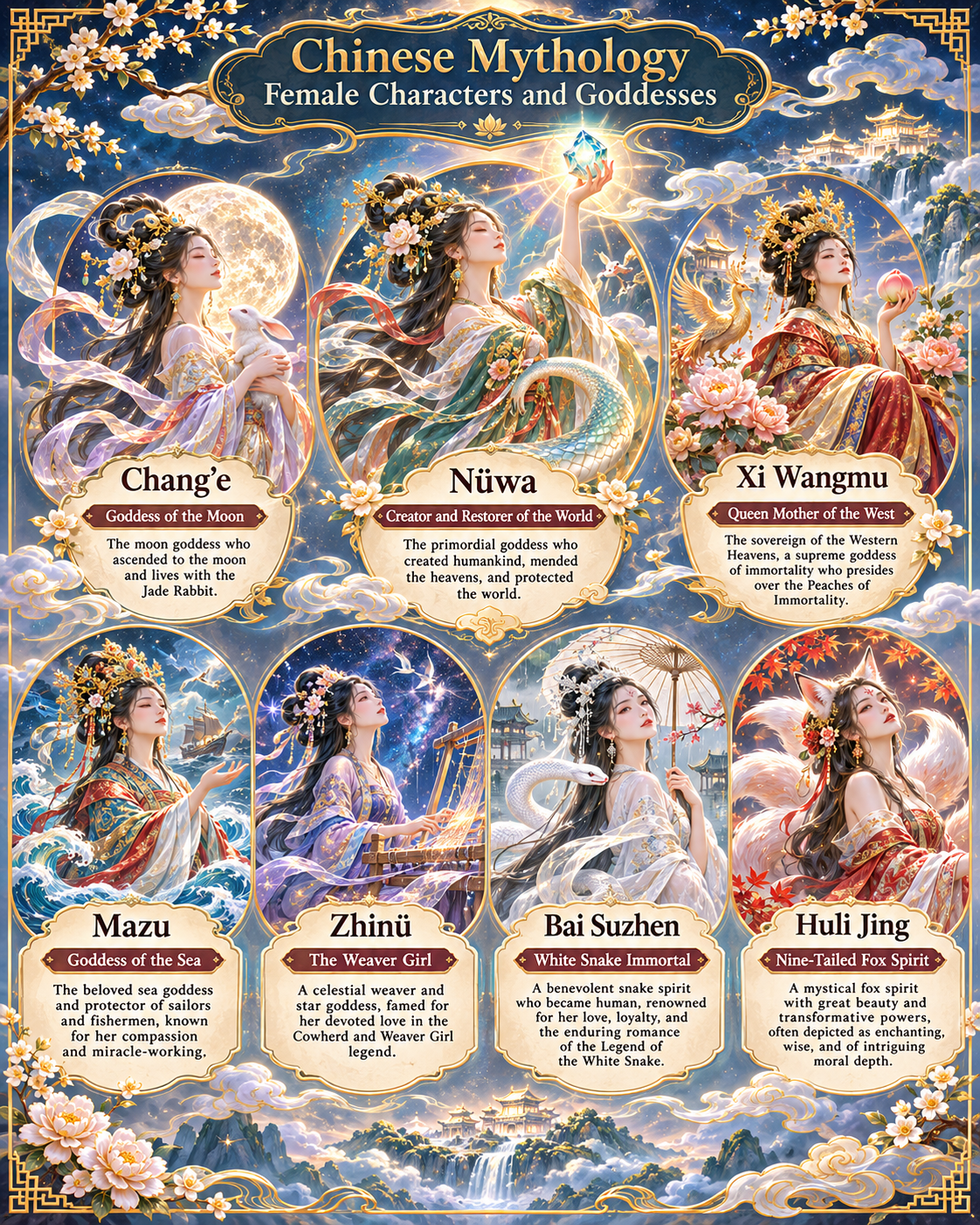
Searches for Chinese mythology female characters, Chinese goddess names and a Chinese goddesses list are among the most popular. The important thing is to know what kind of figure each woman actually is, because not every beautiful fantasy heroine is an ancient goddess.
| Figure | Type | Main source tradition |
|---|---|---|
| Nüwa | Primeval creator goddess | Ancient myth (Huainanzi, Han texts) |
| Xi Wangmu | Goddess / immortal queen | Shanhaijing, later Taoism |
| Chang’e | Moon goddess (originally a mortal who became immortal) | Huainanzi, folklore, festival tradition |
| Mazu | Deified historical woman, sea goddess | Song-dynasty folk religion |
| Guanyin | Buddhist bodhisattva | Buddhism, Chinese adaptation |
| Zhinü (Weaver Girl) | Star deity in a folk romance | Folklore, Qixi festival |
| Bai Suzhen | Snake spirit heroine | Ming-Qing literature, opera |
| Huli jing | Fox spirit (not a goddess) | Folklore, novels |
Nüwa goddess
The Nüwa goddess is the earliest and most powerful female figure: a creator and protector who acts on a cosmic scale. She is revered in some folk traditions as an ancestor goddess and as a matchmaker.
Chang’e: the Chinese moon goddess
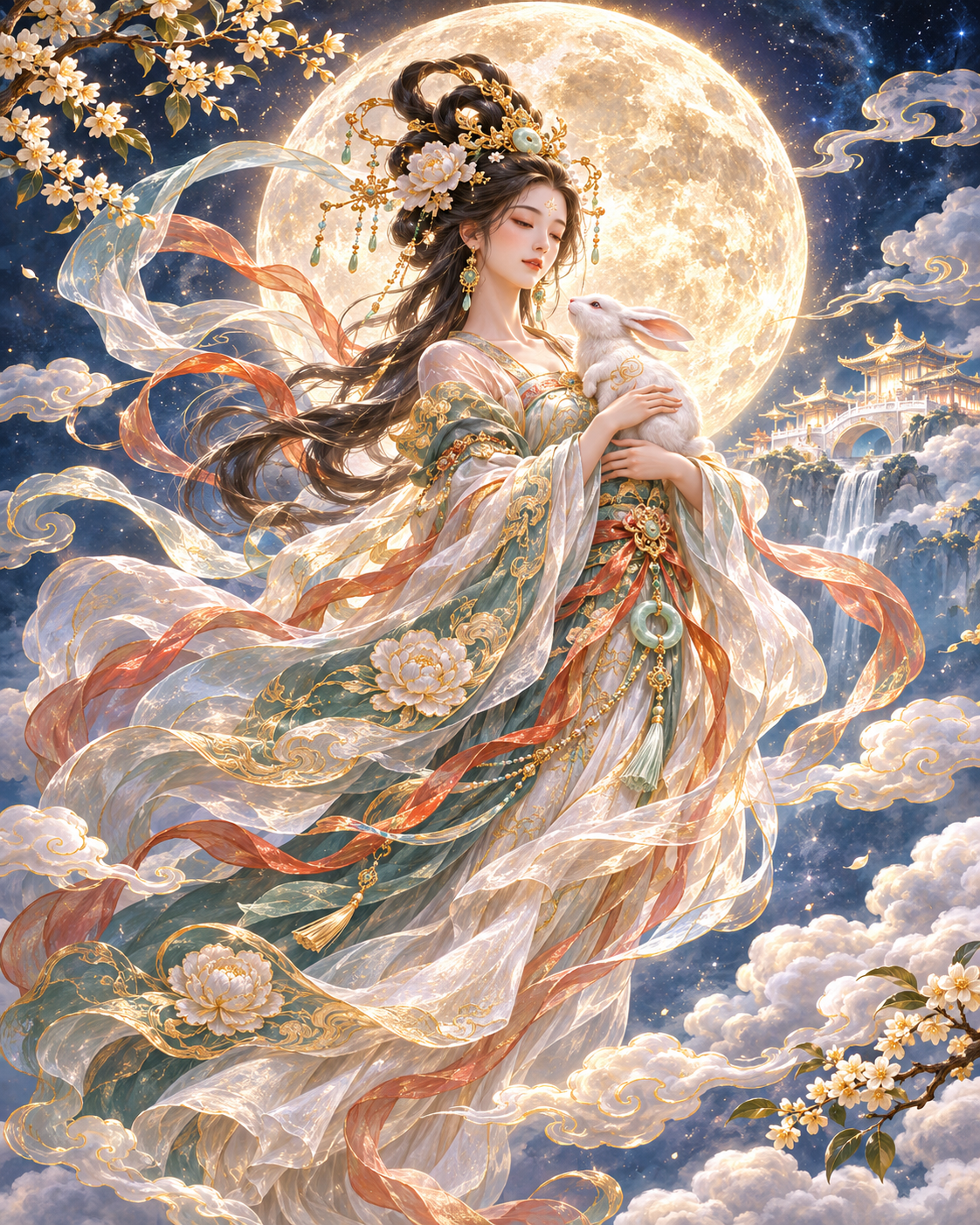
Who is Chang’e? She is the Chinese moon goddess, honoured at the Mid-Autumn Festival. In the popular story she is the wife of Hou Yi. After he is given an elixir of immortality, she swallows it, whether to protect it from a thief or by accident depending on the version, and floats to the moon, where a jade rabbit pounding medicine, a toad and an osmanthus tree are her companions. Her name was also chosen for China’s lunar exploration programme, which shows how alive the myth remains.
Xi Wangmu: Queen Mother of the West
Xi Wangmu Queen Mother of the West changes dramatically over time. In the earliest descriptions in the Shanhaijing she is a frightening figure with a leopard’s tail and tiger’s teeth who governs plague and punishment. By the Han dynasty she has become a gracious queen on Mount Kunlun with a garden of peaches that grant immortality and the power to bestow the elixir. In Journey to the West, her Peach Banquet is famously disrupted by Sun Wukong.
Mazu: the Chinese sea goddess
Mazu sea goddess began as a real woman, usually identified as Lin Moniang of Meizhou in Fujian during the tenth century, who was said to rescue sailors. After her death she was worshipped, and over centuries imperial courts raised her titles, culminating in “Empress of Heaven” (Tianhou). Mazu temples now stand across China, Taiwan and Southeast Asian ports, and her festivals draw large crowds. She is a clear example of a historical woman becoming a deity.
Zhinü: the Weaver Girl
Zhinü, the Weaver Girl, is a celestial weaver identified with the star Vega, whose love for the cowherd Niulang (Altair) is the heart of the Qixi legend. She belongs to folklore and romance more than to temple worship, although Qixi is still celebrated as a festival of love.
Bai Suzhen: the White Snake
The White Snake legend woman, Bai Suzhen, is a thousand-year-old snake spirit who becomes human, marries the scholar Xu Xian and is opposed by the monk Fahai. Her story is a well-loved folk opera and novel tradition, not an ancient creation myth, and she is better called a legendary heroine or spirit than a goddess.
Huli jing: fox-spirit women
The Chinese fox spirit woman, or huli jing, may appear as a seductress, a loyal wife or a villain depending on the story. They are spirits, not goddesses, and are covered in detail in the fox section below.
Goddess, immortal, spirit, heroine or literary character?
Use this rule of thumb. A goddess receives worship (Mazu, Nüwa in some cults). An immortal is a being who gained long life by cultivation (many Taoist figures). A spirit is a non-human being that took human form (huli jing, Bai Suzhen). A folklore heroine belongs to tales (Zhinü). A literary character exists mainly through an author’s book. Many modern “Chinese goddess” fantasy artworks mix all these categories freely; that is fine for art, but it should not be mistaken for ancient religion.
Chinese Mythology Family Tree and Divine Order
There is no single Chinese mythology family tree, because texts from different periods and regions describe different relationships. Instead of forcing one chart, it is more accurate to describe a few common clusters:
- Primordial figures: Pangu (sometimes), then Nüwa and Fuxi, who in many traditions are sibling-spouses and cultural founders.
- Legendary rulers: the Three Sovereigns and Five Emperors, including the Yellow Emperor, treated partly as history and partly as myth.
- Cosmic conflicts: Gonggong, Zhurong and Zhuanxu, whose relationships vary by source.
- The Taoist court: a hierarchy under the Jade Emperor, organized like a government, not a blood family.
Treat any single “family tree” graphic as a simplified teaching aid. For comparison with a better-documented genealogy, see our Greek mythology guide.
Jade Emperor and the Heavenly Court
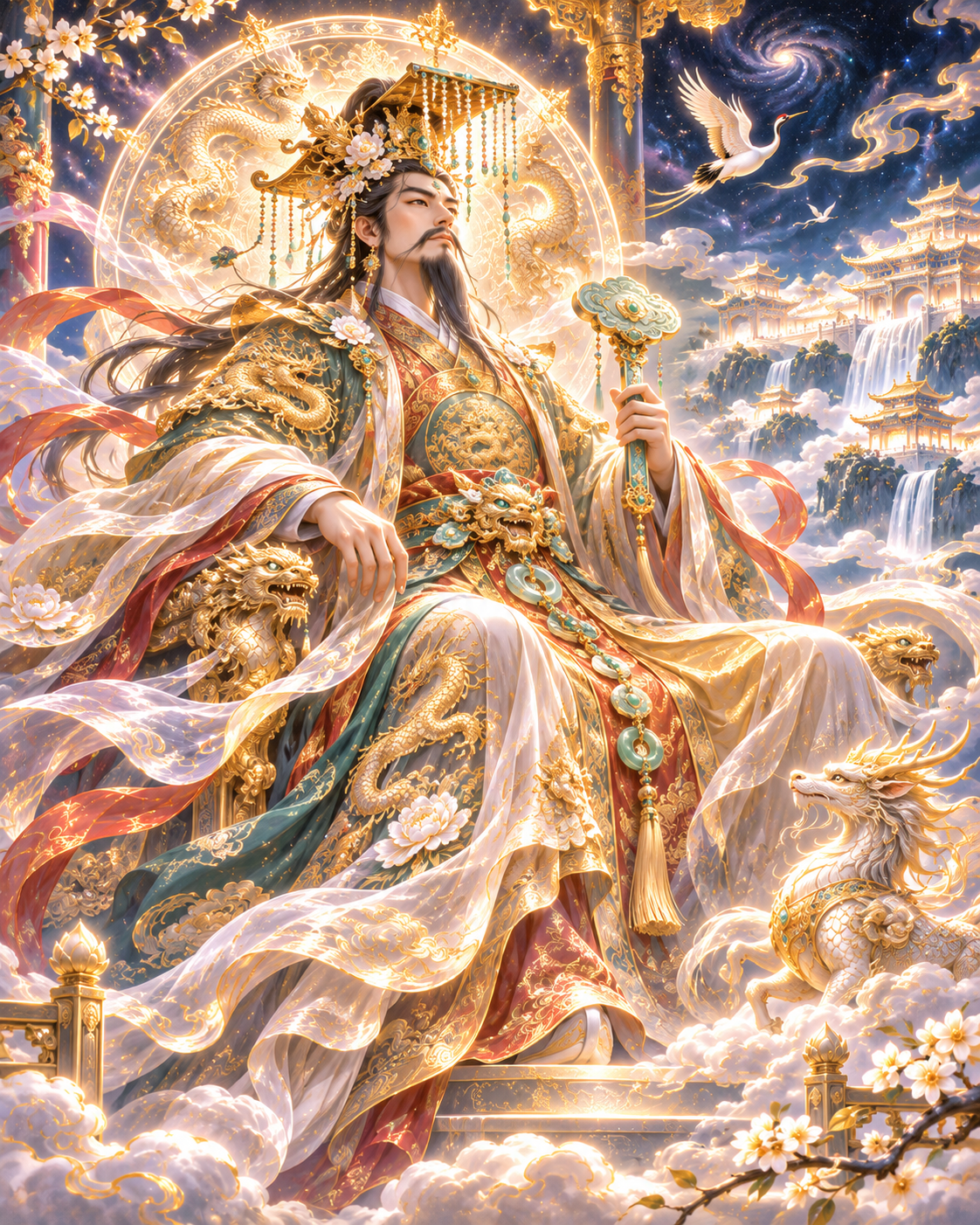
The Jade Emperor Chinese god (Yu Huang) rules heaven in Taoist and folk belief. His prominence grew especially during the Song dynasty, when emperors honoured him officially. The heavenly court he leads is modelled on the imperial government: ministers, generals, clerks and local gods such as the City God and Earth God who report upward. Souls and deeds are recorded; promotions and punishments pass through offices.
This explains why many Chinese myths feel administrative: gods file reports (as the Kitchen God does), hold banquets, issue orders and make appointments. In Journey to the West, Sun Wukong’s rebellion is partly a rebellion against this bureaucracy because he is given a low post, the “stable keeper”, and takes offence. Above the Jade Emperor, Taoism places loftier figures such as the Three Pure Ones, so he is not the highest being in every tradition.
Chinese Dragons and Sacred Creatures
Chinese dragon mythology and the meaning of Long
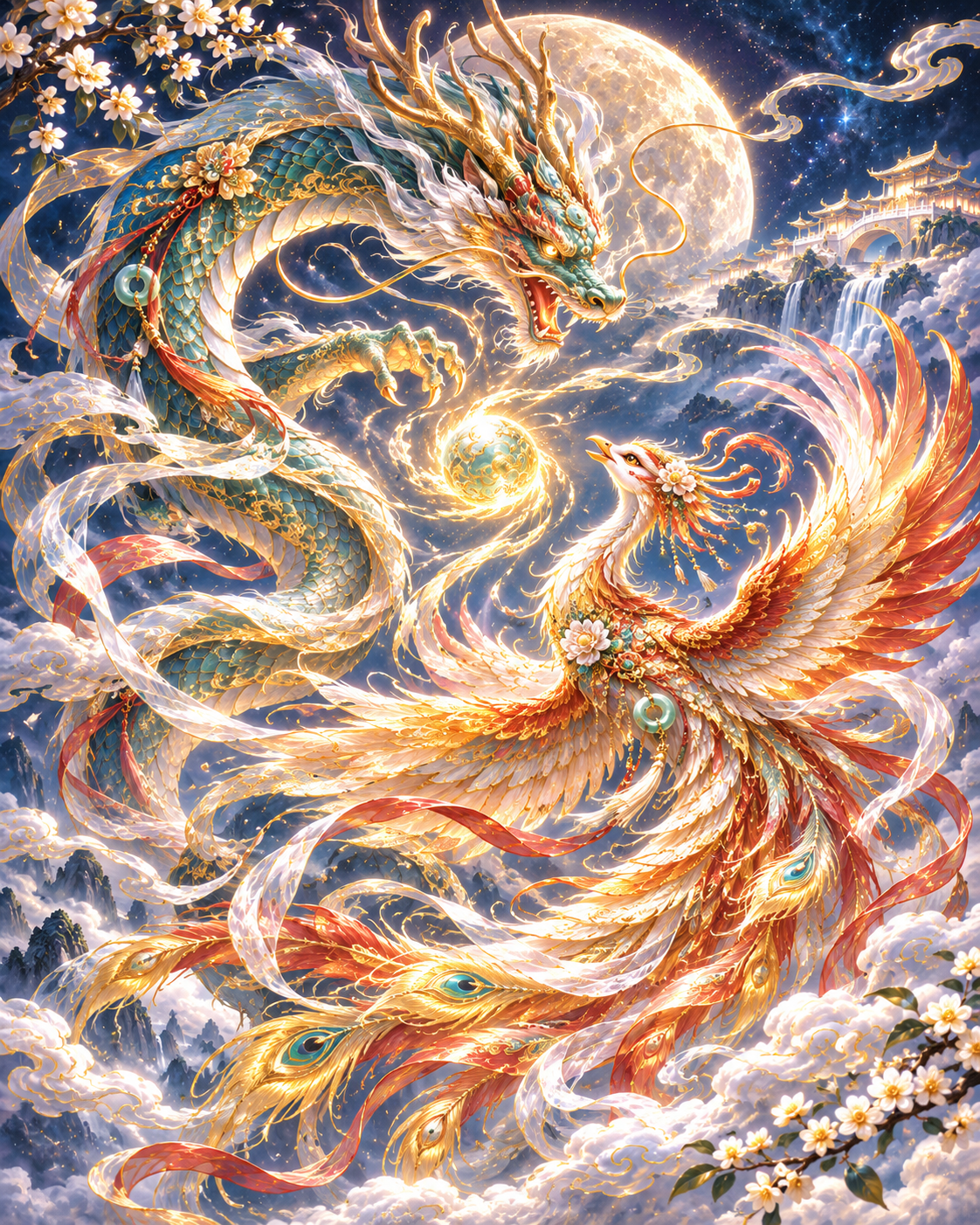
The Long dragon meaning in Chinese culture is largely positive: it is a rain-bringing, water-controlling creature of strength and good fortune, unlike the fire-breathing monsters of medieval Europe. It is imagined as a composite of many animals, with antlers, scales and claws, and no wings, yet it flies. Dragons live in rivers, seas and clouds. Later folk religion organized them into the four Dragon Kings of the seas, led by Ao Guang, who appear in Journey to the West and the Ne Zha story.
The dragon also became the emperor’s emblem, and the five-clawed dragon was reserved for imperial use. Buddhist nāga serpents from India influenced the dragon-king idea. For readers who enjoy this theme, our guide to Hindu mythical creatures such as Nagas and Makara shows the Indian counterpart. The Chinese dragon god is not a single deity but a category of water powers, so be careful with claims about “the” dragon god.
Fenghuang: the Chinese phoenix
The Phoenix Fenghuang is not the Western fire-reborn phoenix. It is a composite bird, a symbol of virtue, harmony and good government that appears only when a wise ruler reigns. In early texts, feng was male and huang female; later the pair was associated with the emperor and empress. It is often paired with the dragon as a symbol of marriage.
Qilin: the Chinese benevolent beast
The Qilin Chinese creature is a hoofed, scaled chimera, sometimes with a single horn, that never harms living things and appears at the birth or death of a sage. Tradition says a qilin was seen around the birth of Confucius. In the Ming dynasty a giraffe brought from Africa to the court was welcomed as a qilin. It is a symbol of kindness and good omens.
Pixiu: the wealth guardian
Pixiu Chinese mythology depicts a winged lion-like beast with a single horn, said in later folklore to swallow wealth without letting it out. Today it appears as a lucky charm, but its role as a treasure-keeper is a later popular belief, not an ancient doctrine.
The Four Symbols
The Four Symbols Chinese mythology are four celestial guardians tied to the directions, seasons and star groups:
| Creature | Direction | Season | Element |
|---|---|---|---|
| Azure Dragon (Qinglong) | East | Spring | Wood |
| Vermilion Bird (Zhuque) | South | Summer | Fire |
| White Tiger (Baihu) | West | Autumn | Metal |
| Black Tortoise (Xuanwu) | North | Winter | Water |
These four, with a yellow centre, form a map of space and time in Han-era cosmology and appear on tombs, mirrors and tiles. Zhuque is a bird of fire and the south; Xuanwu is a tortoise entwined with a snake. Each represents a group of seven lunar mansions in the sky.
Chinese Mythical Creatures, Spirits and Monsters
Besides the sacred beasts above, Chinese tradition is full of Chinese mythology monsters and demons. Many come from the Shanhaijing, which records dozens of odd creatures with notes on what they mean for people who see them. Others come from later demon-hunting tales and novels.
Taotie: the gluttonous mask
The Taotie mythological creature is best known as a mask-like face on Shang and Zhou bronze vessels. Later texts describe the taotie as a greedy monster, one of the “four evil beasts”, though scholars still debate what the ancient makers meant by the design. Do not state its original purpose as fact.
Guardian lions
Chinese lion guardian symbolism: stone lions, often in a male-and-female pair, flank gates, palaces and temples to protect against evil. Lions are not native to most of China, so the image arrived through contact with Central Asia and Buddhism, then became thoroughly Chinese in style. The male typically rests a paw on a ball, the female on a cub.
Kun and Peng
The Kun Peng mythology opens the Zhuangzi: a gigantic fish, Kun, transforms into a bird, Peng, whose wings are like clouds and who flies thousands of miles. The story is a philosophical parable about perspective and freedom, not a cult myth.
Baihu, Xuanwu and Zhuque in context
The Baihu White Tiger, Xuanwu Black Tortoise and Zhuque Vermilion Bird are covered in the Four Symbols table above. Xuanwu later became a major Taoist deity, the Perfect Warrior, honoured in temples such as those on Mount Wudang.
Chinese Fox Spirit and Nine-Tailed Fox Traditions
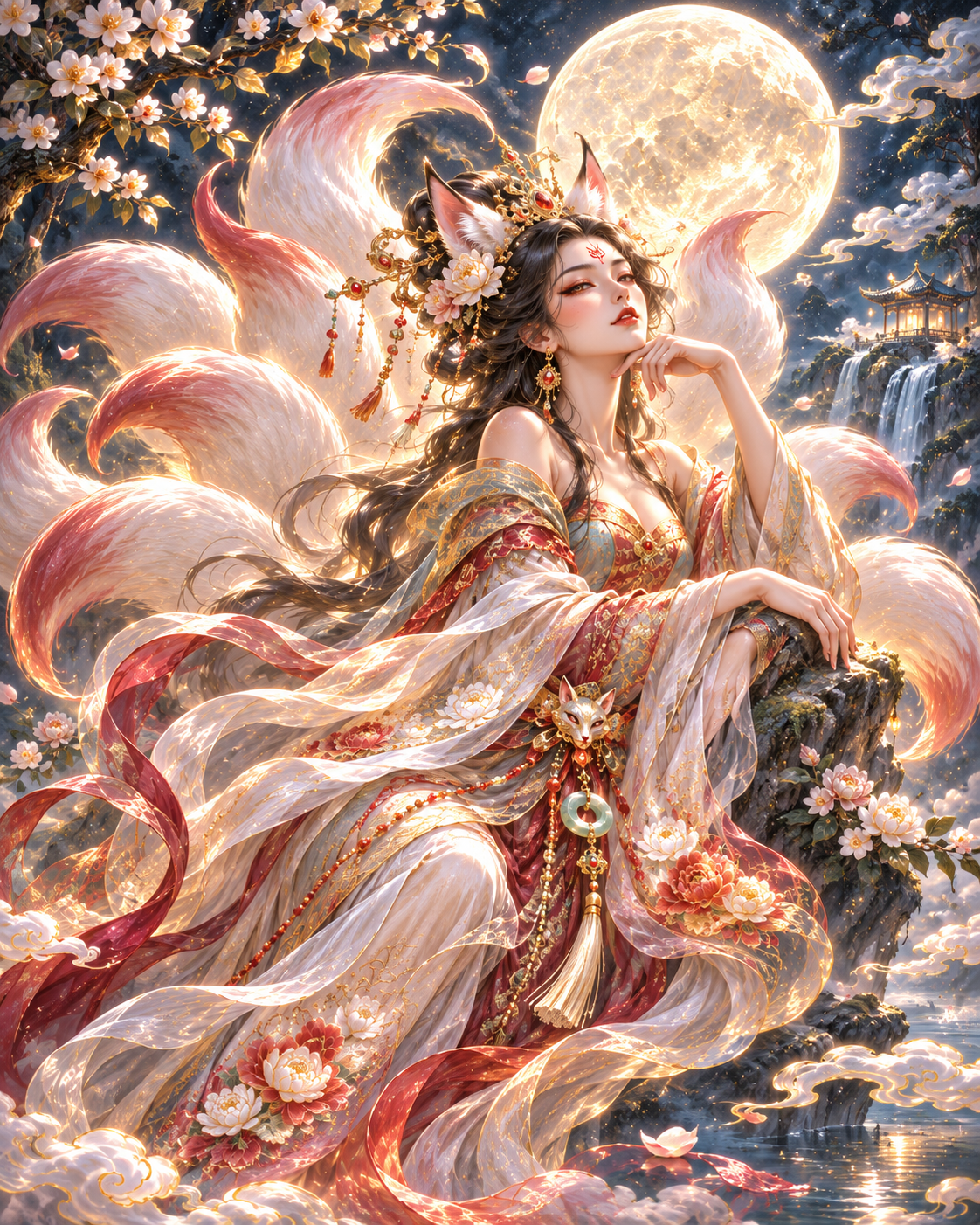
The Huli Jing fox spirit is a fox that has cultivated magic powers and can take human form. The Chinese fox spirit tradition is old and changes a great deal:
- Early omen: in the Shanhaijing a nine-tailed fox is a creature that eats people, but in Han-era sources a nine-tailed fox can also be an auspicious sign of prosperity, linked to the story of Yu the Great’s marriage.
- Seductress: by the Tang dynasty fox women are shown seducing scholars. In Investiture of the Gods (Ming), the fox spirit possesses the consort Daji and brings down the Shang dynasty, an influential image of the villainous fox woman.
- Fox immortals and folk gods: in northern China some foxes were worshipped as household or local spirits.
- Sympathetic heroines: Qing stories such as Pu Songling’s Strange Tales from a Chinese Studio present loyal, loving fox women.
Nine-tailed fox in Chinese mythology
The nine-tailed fox Chinese mythology concept is often confused with the Japanese kitsune and Korean gumiho. They share ancestry and ideas, but they are not identical: in Japan the fox is tied to the god Inari, and in Korea the gumiho is typically a fox that craves human livers or hearts. When writing about Chinese tradition, keep the Chinese sources, such as the Shanhaijing and Daji’s story, at the centre. See our Japanese mythology guide for the kitsune.
Sun Wukong, Ne Zha and Popular Mythological Heroes
Sun Wukong and Journey to the West
Is Sun Wukong part of Chinese mythology? He is a Chinese mythic figure, but his fame comes mainly from the sixteenth-century novel Journey to the West, attributed to Wu Cheng’en, not from an ancient myth. The book fictionalizes the real seventh-century monk Xuanzang, who travelled to India to bring back Buddhist scriptures, a journey Indian readers know from his time at Nalanda. In the novel, the stone-born monkey learns magic, steals peaches of immortality, rebels against heaven, is trapped under a mountain for five hundred years and finally becomes the monk’s protector. Some scholars suggest older monkey folk-heroes, and perhaps Indian tales such as Hanuman’s, influenced him, though this is debated. Sun Wukong is also worshipped as a deity in some folk cults, so he exists on both literary and religious levels.
Ne Zha: the lotus child
Who is Ne Zha? In Investiture of the Gods, Ne Zha is a rebellious boy born from a fleshy ball, who accidentally kills the Dragon King’s son. To spare his parents, he returns his flesh and bones and is reborn from lotus stems, becoming a powerful warrior with fire-tipped spear and wind-fire wheels. His name and story are linked to the Indian Buddhist figure Nalakubara, who is a protector deity, showing how foreign ideas were reshaped. He is now widely worshipped in Taiwan and southern China.
Erlang Shen: the three-eyed warrior
Erlang Shen is a three-eyed god with a spear and a celestial hound. His identity is debated: some traditions link him to the water-control engineer Li Bing’s son or to other historical figures. In Journey to the West he fights Sun Wukong to a standstill. His third eye symbolizes true sight.
Classical literature vs folk belief vs pop culture
Keep three layers apart: the original folk or religious figure, the version in the Ming novels, and the modern film or game version. Sun Wukong in a video game, for example, borrows the novel’s look more than any temple tradition.
Famous Chinese Mythology Stories and Legends
These are among the most famous Chinese mythology stories. Pangu and Nüwa were covered earlier; here are the others.
Hou Yi and Chang’e
In the Hou Yi archer myth, ten sun-birds, children of the sun, rise together and scorch the earth. The archer Hou Yi, sent by heaven or by the ruler Yao depending on the version, shoots down nine, leaving one sun. He is rewarded with an elixir of immortality from Xi Wangmu. Chang’e takes it and ascends to the moon. Some tellings add that Hou Yi later turns cruel, or that Chang’e is punished with a toad body; the oldest versions are short, so treat the romantic ending as a later development. The Hou Yi and Chang’e story is the basis for Mid-Autumn Festival customs, including mooncakes.
Cowherd and Weaver Girl
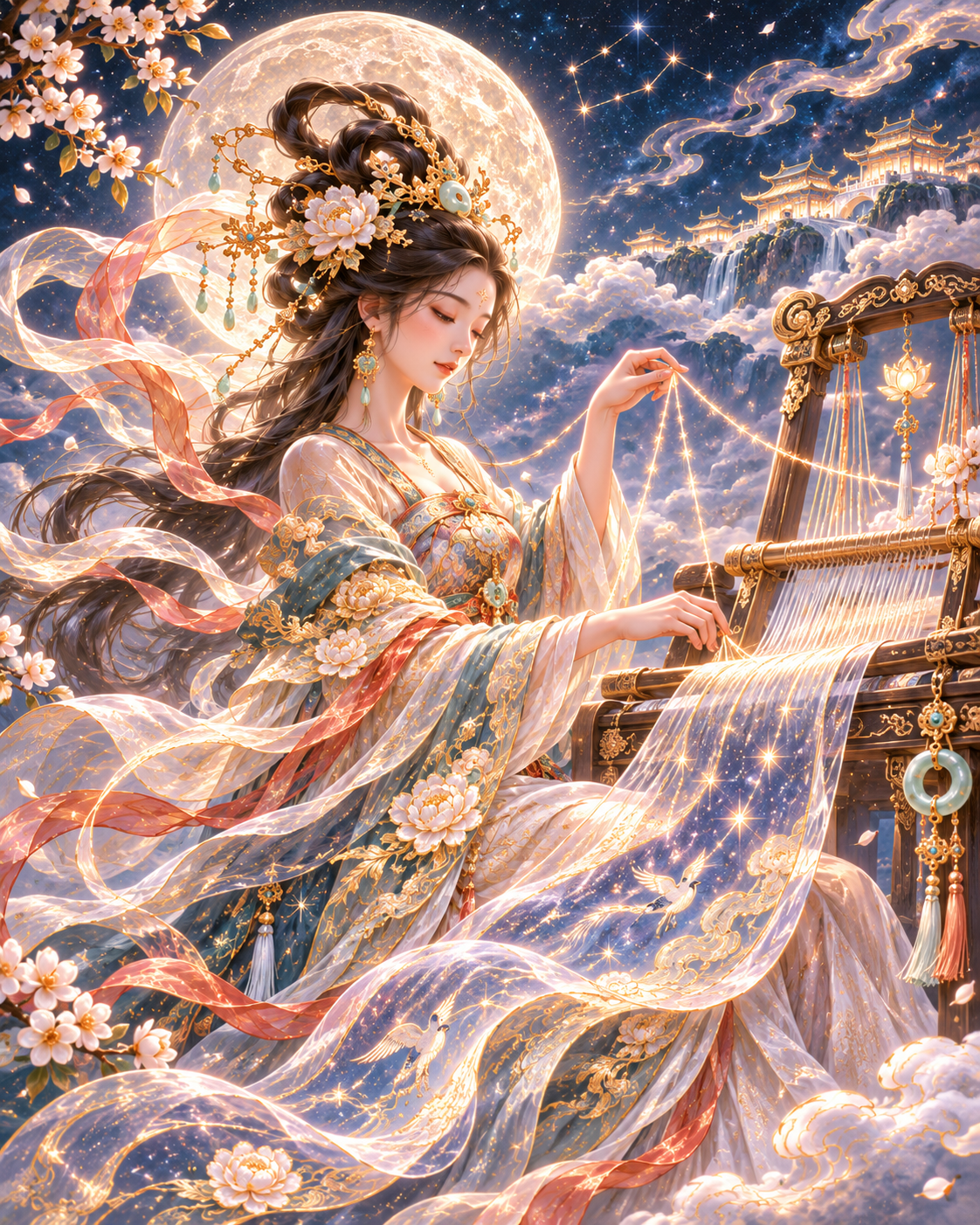
A cowherd steals the clothes of a weaving goddess who is bathing and marries her. When the Queen Mother or heavenly authorities find out, she is taken back to heaven and the Milky Way is drawn between them. Magpies form a bridge across it once a year, on the seventh night of the seventh lunar month, celebrated as Qixi. This is a folk love story based on stars, not temple myth. The Cowherd and Weaver Girl tale is often compared with similar celestial lovers in other cultures.
The White Snake legend
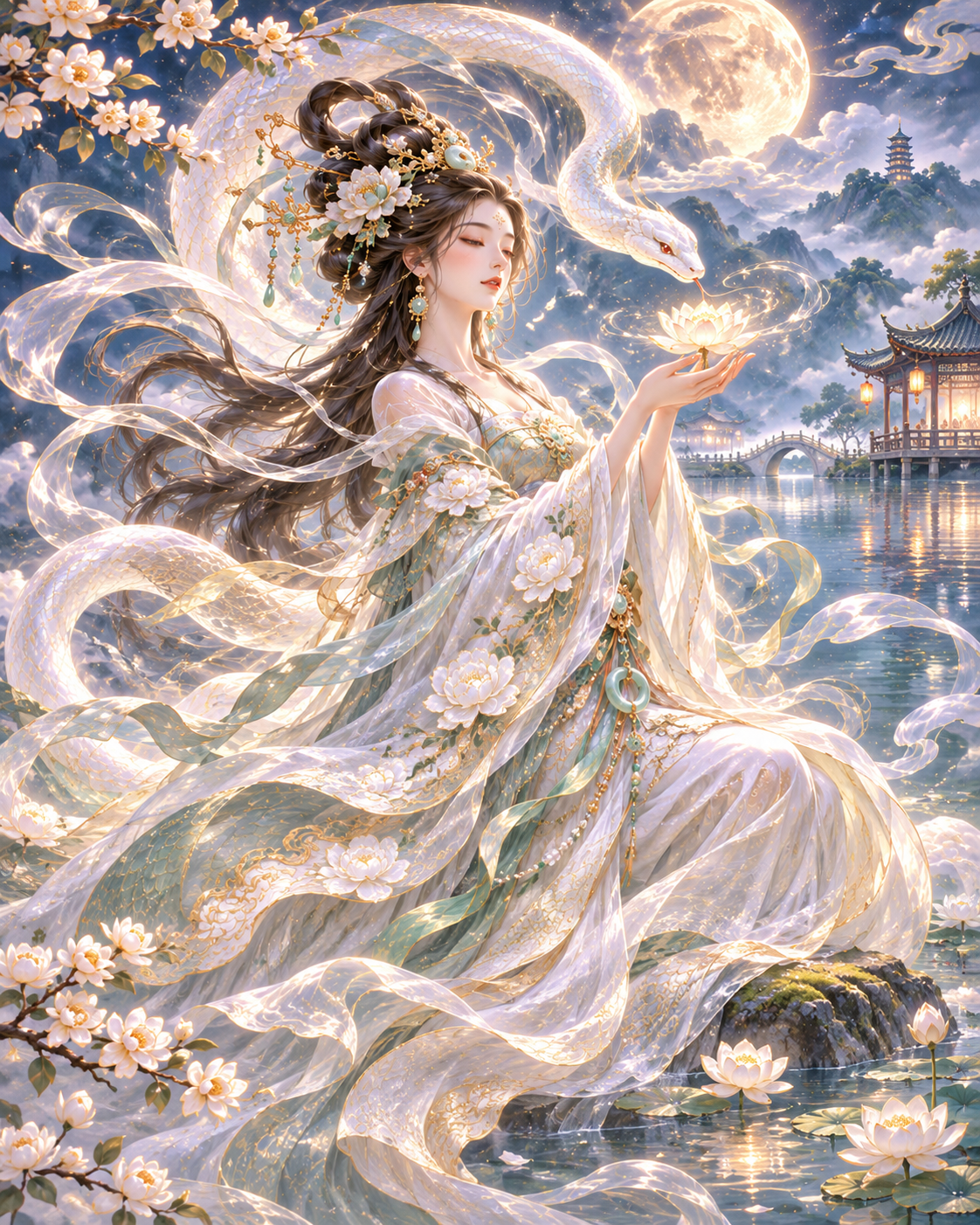
Bai Suzhen, a snake spirit, and her companion Xiaoqing live as humans in Hangzhou. She marries the pharmacist Xu Xian, but the monk Fahai reveals her true form, causing her husband to die of fright. She fights to save him, floods the Jinshan Temple and is finally imprisoned beneath Leifeng Pagoda in the tale’s best-known version. The story was written down in the Ming dynasty and adapted for countless operas, films and series; in some modern versions she is freed. It is a love story and a debate about religion versus human feeling.
Chinese Underworld Mythology
Chinese underworld mythology is shaped by Taoist, Buddhist and folk ideas of the afterlife. Early beliefs pictured a dark “Yellow Springs” below the earth; later, Buddhist influence from India introduced a system of hells, called Diyu (“earth prison”).
Diyu and the Ten Kings of Hell
The Ten Kings of Hell Chinese mythology are ten judges, each presiding over a court where the dead are examined. The fifth king, Yanluo, is the best known and is the Chinese form of Yama, the Indian god of death, another connection Indian readers will notice. Guards with ox and horse heads escort souls. Souls may receive punishment proportional to their deeds and are then sent to be reborn.
Afterlife beliefs and spirit judges
Before rebirth, a figure called Meng Po offers a soup that erases memories of the past life. Families support the dead through rituals, burning paper offerings, such as imitation money, at Qingming and during the Ghost Festival. Many modern Chinese people treat these as cultural practice rather than literal belief, and temples vary in how they describe hell. Treat the court as a moral and legal metaphor shaped by centuries of storytelling, not a verified place.
Chinese Mythology Symbols and Their Meanings
| Symbol | Common meaning | Note |
|---|---|---|
| Dragon | Power, rain, good fortune, the emperor | Water spirit, not a monster |
| Phoenix (Fenghuang) | Virtue, harmony, the empress | Often paired with the dragon |
| Yin-yang | Interdependent opposites | From cosmology and the Taoist tradition |
| Peach of immortality | Long life | Xi Wangmu’s garden |
| Moon | Reunion, femininity, Chang’e | Mid-Autumn Festival |
| Clouds | Heaven, good luck | Common in art for gods and immortals |
| Guardian lions | Protection | Placed at gates |
| Koi | Perseverance | Carp that leaps the Dragon Gate becomes a dragon |
Symbols often work through wordplay: the word for bat sounds like “fortune”, and the word for fish sounds like “surplus”. Because meanings vary by period and region, use these as common associations, not universal rules. The Chinese mythology symbols here are drawn from folk art and religion, and some, such as the yin-yang diagram in its familiar form, are later than the oldest myths.
Chinese Mythology Tattoo Designs and Meanings
Chinese mythology tattoo designs are popular worldwide, but meanings are modern interpretations built on traditional symbols, not fixed ancient rules. A tattoo of a dragon does not have one official meaning, so research the motif and the source tradition before you commit. Also note that in many Chinese social settings tattoos carry old stigmas, tied to Confucian ideas about preserving the body, so context matters.
Dragon tattoo meaning
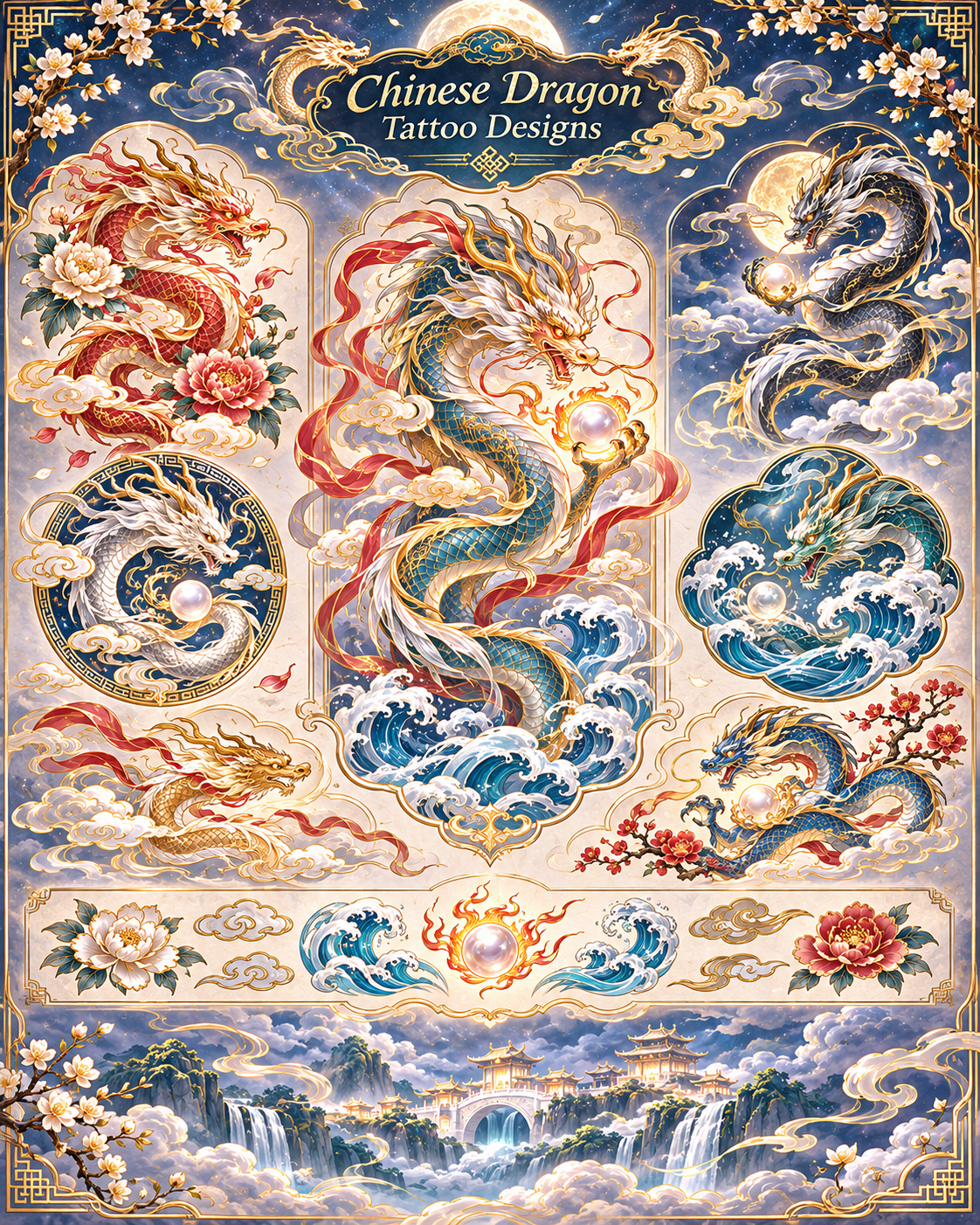
A Chinese dragon tattoo meaning usually points to strength, protection, luck and mastery of water; it can also suggest ambition. Clouds, waves or a pearl are common additions.
Phoenix tattoo meaning
The phoenix tattoo meaning in a Chinese style is balance, grace and good fortune, often drawn with long flowing tail feathers and paired with a dragon for partnership. Avoid confusing it with the Western rebirth-from-ashes phoenix.
Moon goddess tattoo ideas
Moon goddess tattoo ideas and Chinese mythology tattoo designs for women often use Chang’e with flowing sleeves, a crescent or full moon, a jade rabbit or osmanthus branches. Popular placements are the forearm, shoulder and back. Meanings usually revolve around longing, independence, femininity and reunion.
Fox spirit tattoo meaning
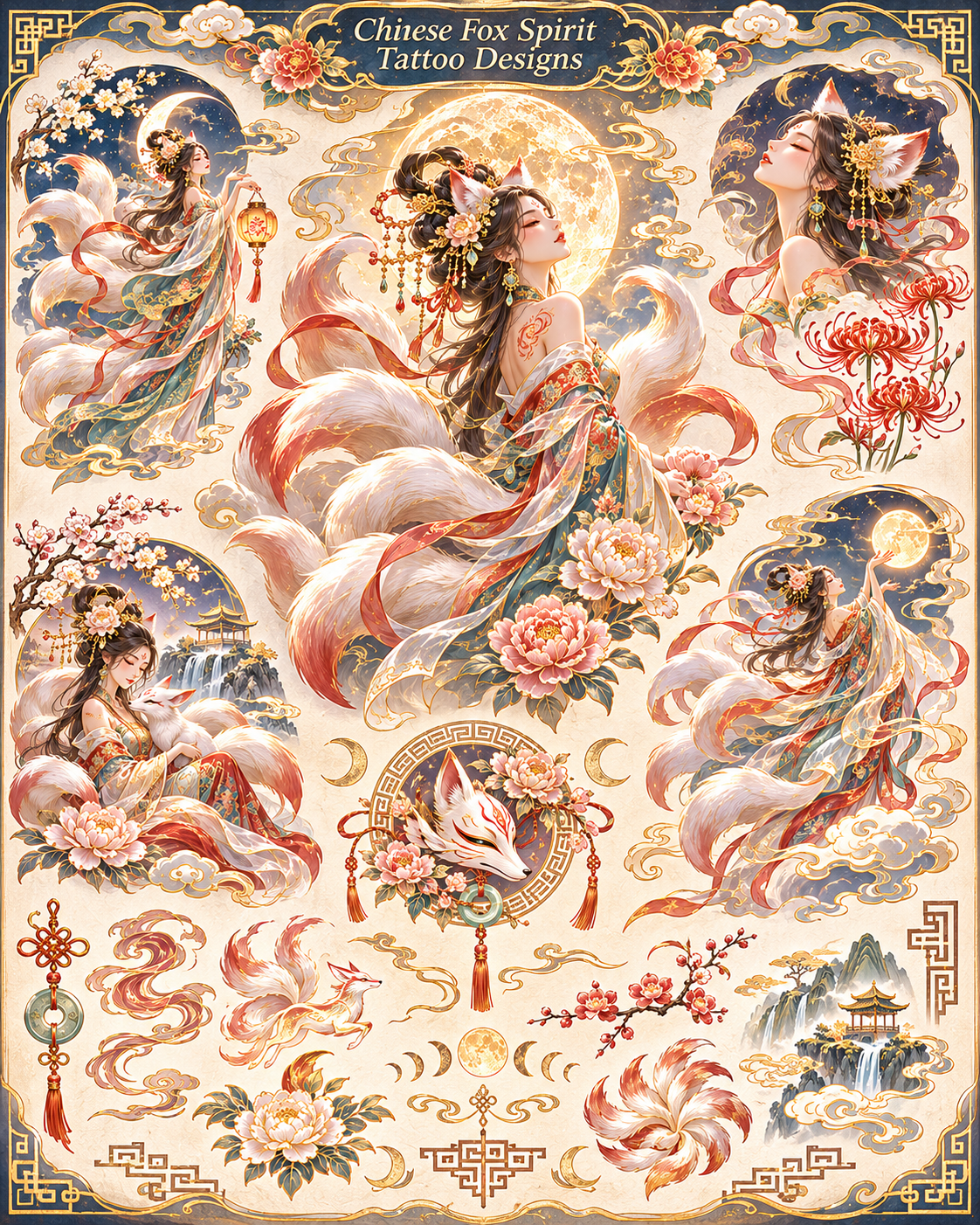
A fox spirit tattoo meaning mixes cleverness, charm and transformation, with a nine-tailed fox suggesting power and mystery. Because the fox can be a villain or a heroine, the meaning depends on the story you have in mind.
Koi, clouds and divine motifs
Koi leaping a waterfall refers to the Dragon Gate legend and suggests perseverance and success. Cloud and wave patterns frame the main figure. If you want Chinese characters, have a native speaker check them. For a comparison with another tradition’s tattoo culture, see our Egyptian mythology tattoo guide.
Chinese Mythology Art and Mobile Wallpapers
Chinese mythology art ranges from Han tomb reliefs and Tang-era paintings to temple murals, paper-cut, opera masks and modern digital illustration. Popular themes include:
- Fantasy goddess artwork: flowing sleeves, ribbons, cloud thrones and jade ornaments.
- Moon goddess art: Chang’e with a rabbit under a full moon.
- Dragon wallpaper themes: ink-wash dragons, golden dragons in clouds, azure dragons over mountains.
- Fox spirit wallpapers: a nine-tailed fox in moonlit bamboo or snow.
- Celestial princess style: inspired by Hanfu clothing and Tang or Song aesthetics.
Chinese mythology female fantasy wallpapers
Chinese fantasy goddess art and Chinese mythology wallpapers for mobile screens usually favour tall vertical compositions: a robed goddess, a glowing moon, drifting petals. Many are modern creations that blend the Xi Wangmu, Chang’e and Guanyin looks with video-game styling; they are inspired by mythology, not authentic temple icons. The matching artwork for this guide will be added later, so nothing here should be treated as a downloadable wallpaper pack until those files are in place.
Chinese Mythology in Movies, Games and Pop Culture
Modern media reshape older myths, often dramatically, so use them as entry points, not sources.
- Journey to the West and Monkey King media: retold in many TV series, films and anime. Each version changes the plot, so a particular adaptation is not the book.
- Ne Zha adaptations: the animated films Ne Zha (2019) and Ne Zha 2 (2025) reinterpret the Investiture of the Gods story with a more sympathetic, modern take on the boy hero and achieved record box-office success in China.
- Games: Black Myth: Wukong (2024) draws on Journey to the West; role-playing worlds such as Genshin Impact’s Liyue region borrow Chinese cultural styling.
- Other animation: Over the Moon (2020) retells the Chang’e myth as a family musical.
When a fantasy work names a “Chinese goddess” or “demon”, check whether it uses an actual tradition or invents a character. Compare how the same kinds of retellings affect other myths in our Egyptian mythology monsters guide.
Frequently Asked Questions
What is Chinese mythology?
It is the collection of creation myths, divine figures, legends and folklore of China, preserved in ancient texts, Taoist and Buddhist writings, folk religion and later novels.
Who are the main Chinese gods?
Key figures include Pangu, Nüwa, Fuxi, the Jade Emperor, Xi Wangmu, Chang’e, Mazu, Guanyin, Erlang Shen, Ne Zha, Caishen and the Kitchen God.
Who is Nüwa in Chinese mythology?
Nüwa is the serpent-bodied creator goddess who made humans from clay and repaired the broken sky.
Who is Chang’e?
Chang’e is the Chinese moon goddess, a woman who drank an immortality elixir and rose to the moon, honoured at the Mid-Autumn Festival.
What is the story of Hou Yi and Chang’e?
Hou Yi shot down nine of ten suns, received an elixir, and his wife Chang’e swallowed it and ascended to the moon. Versions differ on her motive.
What is the Chinese dragon in mythology?
A wingless, composite water spirit linked to rain, rivers and imperial power, generally a force of good fortune.
What is a Huli Jing?
A fox spirit that has gained magical powers and can appear as a human, sometimes a villain, sometimes a loyal heroine.
What is the Chinese nine-tailed fox?
A powerful fox in Chinese sources, an omen in early texts and later a seductive spirit such as Daji. It is related to, but not the same as, Japan’s kitsune and Korea’s gumiho.
Who is the Jade Emperor?
The ruler of heaven in Taoist and folk religion, who presides over a bureaucratic court of gods.
Is Sun Wukong part of Chinese mythology?
Yes, as a mythic and literary figure, but he was popularized mainly by the Ming novel Journey to the West and is also worshipped in some folk cults.
Who is Ne Zha?
A child warrior deity from Investiture of the Gods, reborn from lotus stems, with wind-fire wheels and a fire-tipped spear.
What are the most famous Chinese mythology stories?
Pangu creating the world, Nüwa repairing the sky, Hou Yi and Chang’e, the Cowherd and Weaver Girl, the White Snake and Journey to the West.
What are Chinese mythology symbols?
Common ones are the dragon, phoenix, yin-yang, peach of immortality, moon, clouds, guardian lions and koi.
What are popular Chinese mythology tattoo ideas?
Dragons, phoenixes, nine-tailed foxes, Chang’e with a moon, koi and cloud motifs. Meanings are modern interpretations, so research before choosing.
Which female figures are important in Chinese mythology?
Nüwa, Xi Wangmu, Chang’e, Mazu, Guanyin and Zhinü, plus legendary heroines such as Bai Suzhen and fox-spirit women who are spirits, not goddesses.
Conclusion
Chinese mythology is best understood as a long conversation: early cosmic myths about Pangu and Nüwa, the court of heaven shaped by Taoism, Buddhist hells and bodhisattvas from India, and centuries of novels, operas and now films and games. What ties it together is a vision of a connected world in which sky, earth, ancestors and humans depend on one another. Use the old texts for the oldest myths, religion for living practice, and modern media for imagination, and keep them distinct.
Reference sources: Classic of Mountains and Seas and Huainanzi (translations); Encyclopaedia Britannica; World History Encyclopedia; Mythopedia; scholarship on Journey to the West and Investiture of the Gods.














Share Your Opinion
Comments are closed on this post.