 Vista
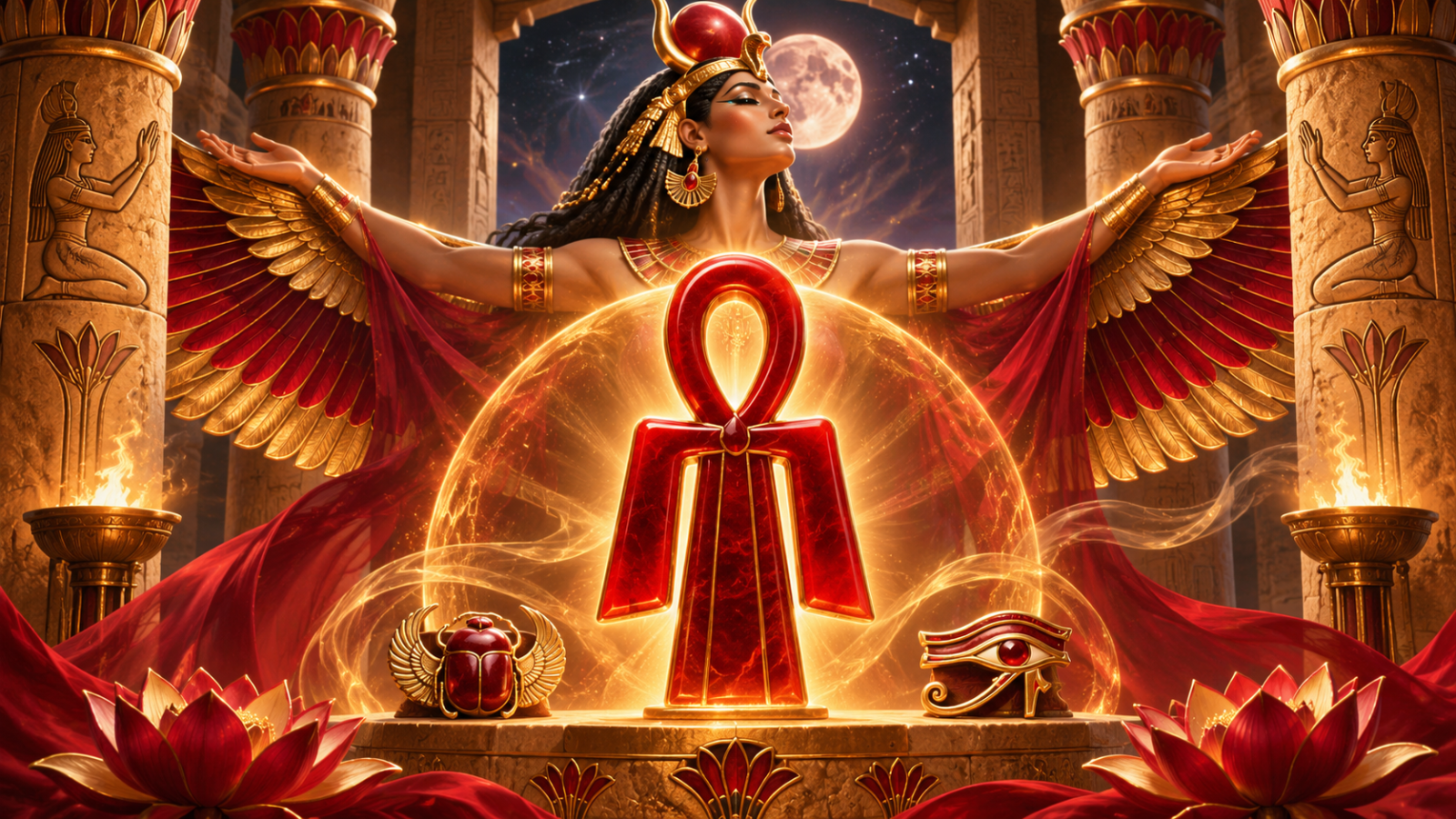
The Tyet (also spelled tjet or tit) is an ancient Egyptian amulet symbol, often called the Knot of Isis or the “Blood of Isis”. It looks like an ankh with its arms folded down, resembling a knot of cloth. It was linked with the goddess Isis and with protection and well-being, and was commonly made of red stone such as jasper, carnelian or red glass. Egyptian funerary texts tell the dead to wear it, and say it provides the protection of Isis. Its exact origin and original meaning are still debated.
This guide explains what the Tyet looks like, what Book of the Dead Spell 156 says, the “Blood of Isis” idea, how it differs from the ankh and djed, and what remains uncertain.
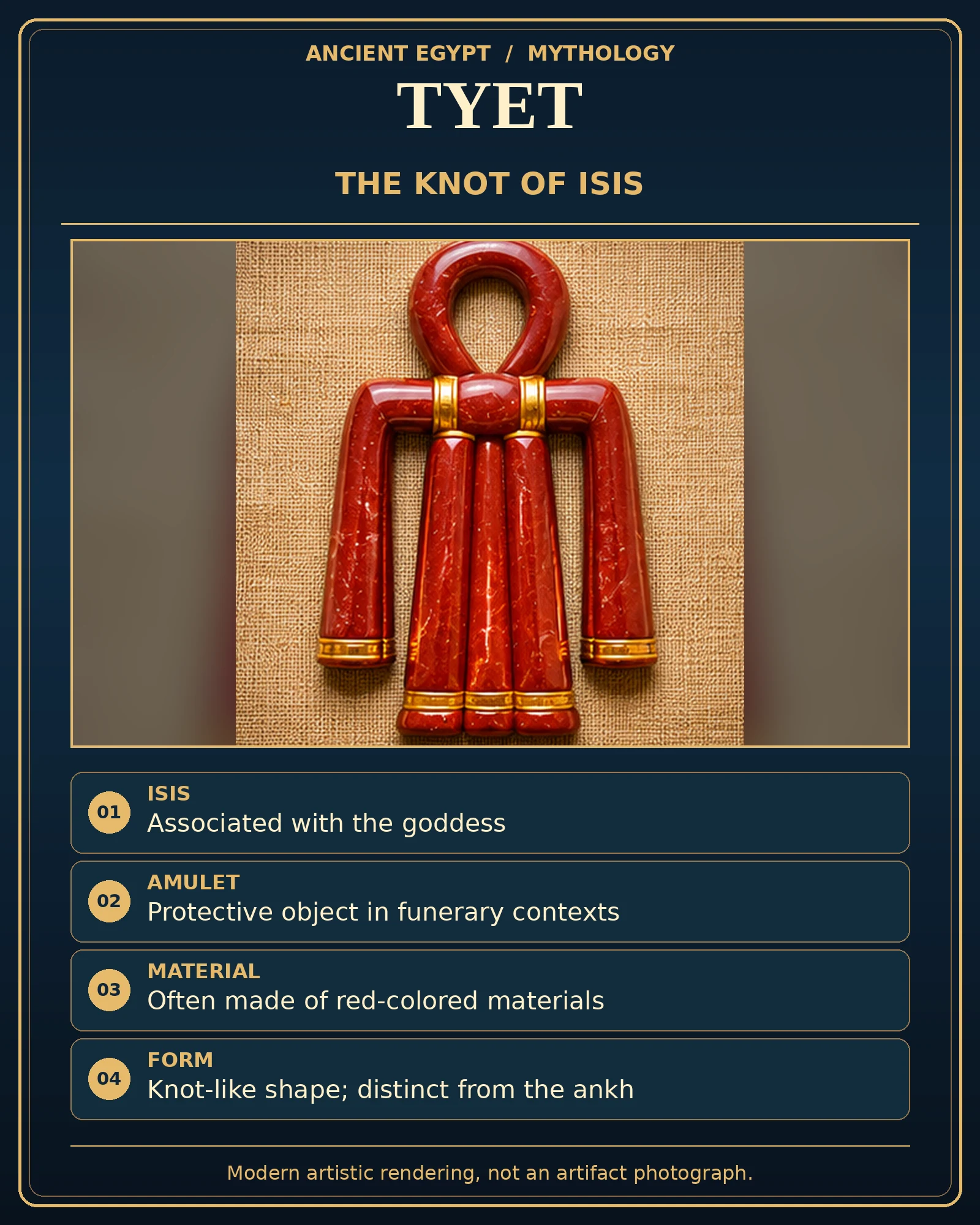
Tyet Quick Facts
| Item | Detail |
|---|---|
| Names | Tyet, Knot of Isis, Blood of Isis |
| Look | A knot with a loop, arms pointing down, like an ankh with drooping arms |
| Materials | Red jasper, carnelian, red glass, faience, gold |
| Linked goddess | Isis |
| Text | Book of the Dead Spell 156, for an amulet of red jasper |
| Meaning | Protection, welfare, life, the care of Isis |
What Is the Tyet?
The Tyet appears from the early dynastic period, and later became a standard funerary amulet. The word tyet may relate to a word for “welfare” or “life”, though translations vary. Some Egyptologists call it a knot of cloth, similar to a girdle or a bandage. Others suggest it could represent part of a goddess’s clothing. As with the ankh, the origin is not settled. Our guide to the ankh covers that sign.
Isis and the “Blood of Isis”
Spell 156 of the Book of the Dead is for a tyet of red jasper. It says that the amulet should be placed on the neck of the dead person, and describes it as the blood of Isis and her power, protecting the person. The spell links the amulet with the goddess’s magic and her care for Osiris and Horus. The red colour, matching blood, helped to create the name “Blood of Isis”. Some modern writers say that the Tyet represents menstrual blood or a sanitary cloth, but this is a speculative idea without clear textual support. Our guide to Isis explains her protective role.
Story box (reconstruction of a burial): A priest holds a small red stone, carved into a knot. He says the spell over it and places it on the neck of the wrapped body, among the layers of linen. The red stone gleams for a moment in the lamplight, then disappears under the bandages. The family believes that the goddess who once protected her husband and son now protects their relative. This scene is based on the instructions in funerary texts, not a record of one person’s burial.
Tyet vs Ankh vs Djed
| Symbol | Looks like | Usual meaning |
|---|---|---|
| Ankh | Cross with a loop, arms straight | Life |
| Tyet | Knot with arms hanging down | Protection, welfare, Isis |
| Djed | A pillar with cross-bars | Stability, often linked with Osiris |
The djed and tyet are often shown together as a pair, with the djed linked to Osiris and the tyet to Isis. This pairing is a common modern way to describe them, though the original symbolism is more complex.
History, Mythology and Speculation
| Category | What belongs here |
|---|---|
| History | Tyet amulets in tombs; Spell 156; use in jewellery and temple art |
| Mythology | The link with Isis’s protection and magic |
| Speculation | The cloth or menstrual origin theory; modern claims about “divine feminine energy”; any claim of healing power |
Myth vs Fact
| Popular claim | Reality |
|---|---|
| The Tyet is just a version of the ankh. | It looks similar but has a different form and meaning. |
| It is literally made from Isis’s blood. | “Blood of Isis” is a symbolic name linked to the red stone. |
| The Tyet origin is known. | It is debated. |
| Wearing a Tyet protects you. | No scientific evidence supports this. It was a religious amulet. |
| It was only for women. | Amulets were used by many people and placed on mummies of both sexes. |
Frequently Asked Questions About the Tyet
What is the Tyet?
An Egyptian amulet in the form of a knot, linked with Isis and protection.
Why is it called the Blood of Isis?
Because it was made of red stone and Spell 156 describes it as the blood and power of Isis.
What stone was used?
Red jasper, carnelian, red glass and other materials.
What does Spell 156 say?
It instructs the use of a red jasper tyet on the neck of the dead as protection by Isis.
How is it different from the ankh?
The Tyet has folded-down arms and means protection or welfare, while the ankh has straight arms and means life.
Is the Tyet linked with Osiris?
It is linked with Isis, and is often paired with the djed, which is linked with Osiris.
Does the Tyet represent menstrual blood?
That is a speculative modern theory, and the texts do not clearly support it.
Can I wear a Tyet today?
Yes, as a cultural or personal symbol. It has no proven protective power.
Reliable Sources
- World History Encyclopedia: Egyptian Mythology
- Egypt Exploration Society: Gods of Egypt
- The Metropolitan Museum of Art: Divine Egypt
Last updated: 25 November 2026. Related reading on Vista Hub: our guides to Isis, Osiris, the ankh and Egyptian symbols.
Related guides: Ancient Egyptian Symbols and Their Meanings: 15 Sacred Signs, Amulets and Mythology · Nephthys: Egyptian Goddess of Mourning and Protection — Isis's Sister, Anubis's Mother and the Canopic Guardian


















Share Your Opinion
Comments are closed on this post.