 Vista

Mexico pterodactyl pictures have spread worldwide after videos of a strange winged silhouette were linked to Ciudad Juárez, Chihuahua, in November 2026. The drawings circulating with this story can look spectacular, but there is a fundamental difference between an illustration of a giant prehistoric animal and verifiable camera footage. No living pterosaur has been confirmed in Mexico. This visual guide explains four images, the reported video, possible bird explanations and the evidence a real discovery would require.
If you came here looking for the original video, a real photo, or a clear shot of the supposed Mexican pterodactyl, start with the distinction: the four images below are editorial illustrations, not stills from the viral recording. For a chronological report about the local footage and the municipal response, read our original Mexico pterodactyl video fact check. This page is organized specifically around pictures and the questions readers ask when comparing them.
Mexico Pterodactyl Pictures: Four Visuals and What They Mean
Internet search results mix dramatic artwork, cropped screenshots, older pterosaur models and new social posts. That mixture makes an unusual video seem far better documented than it is. The gallery below is designed to explain visual claims—not to manufacture extra evidence. Neither the modeled creatures nor the settings pictured here should be interpreted as a recorded 2026 sighting.
Picture 1: The Giant Creature Over Ciudad Juárez
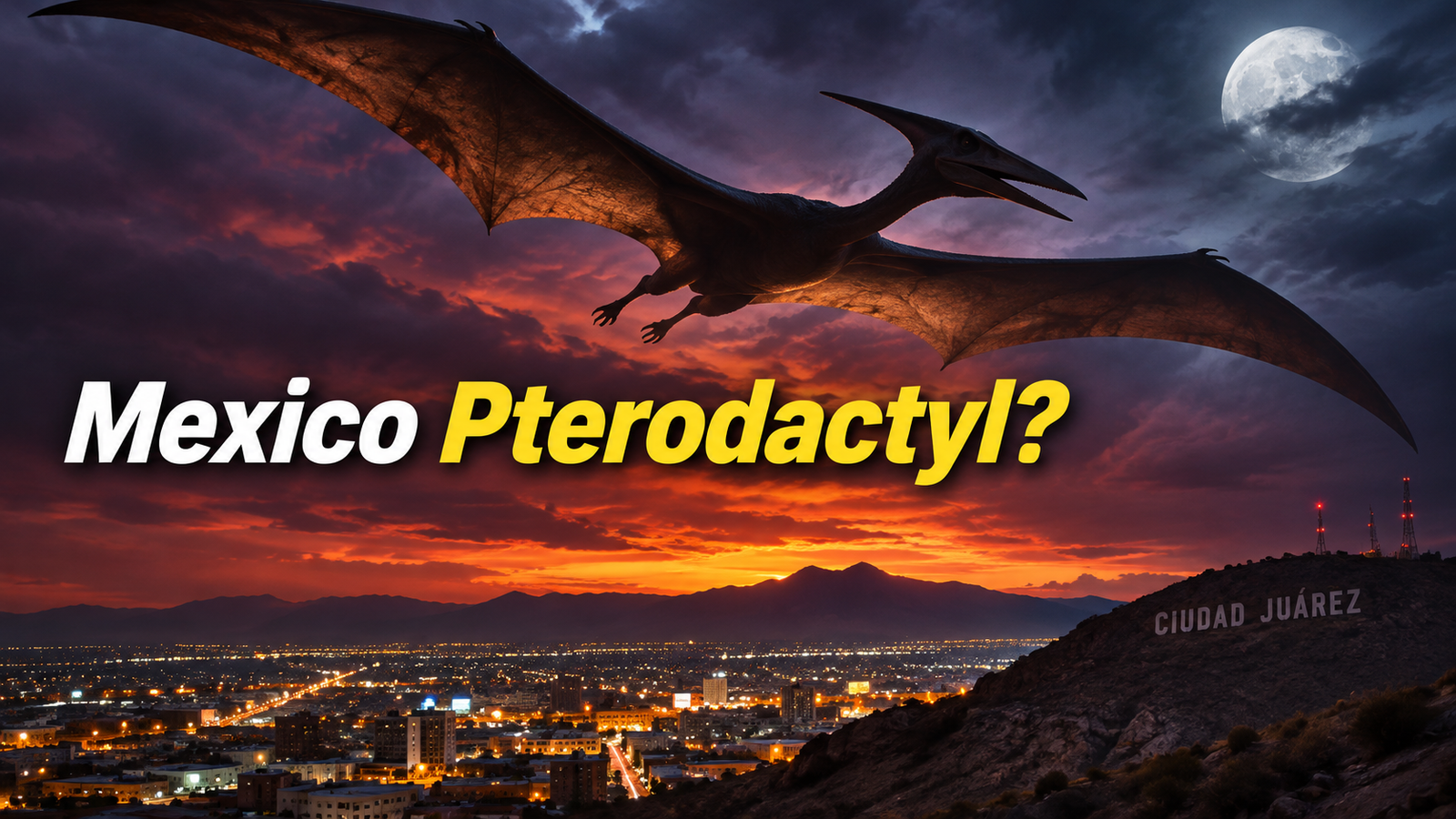
The featured scene captures why the rumor is so compelling: a vast flying reptile with long, tapering wings passes above a city at dusk. It is a familiar scene from films and paleo-art. In real video verification, however, a viewer cannot infer wingspan simply by comparing an airborne silhouette with distant buildings. The object might be closer to the lens than those buildings. Its distance, speed and position matter more than how dramatic the picture looks.
The phrase “Mexico pterodactyl photo” is especially ambiguous online. Some search results mean the alleged camera clip; others mean conceptual art. Treat high-resolution skin texture, clearly modeled faces and cinematic lighting with caution when the purported source is a very low-resolution nighttime video.
Picture 2: Why the Viral Sighting Headline Spread

Viral imagery is engineered to be read in a fraction of a second: a winged animal, a place name, a bold fact-check hook. That does not make the underlying claim genuine. A good source trail should lead from the headline back to the oldest identifiable video upload, its description, the reported recording location, and ideally the unedited camera file. A poster alone provides none of those things.
The Ciudad Juárez story became prominent through online discussion and television coverage associated with Jaime Maussan. Local reporting pointed to the Anapra area and described footage said to have been recorded in late October 2026. Other clips were subsequently shared, including footage associated with locations near the airport. These should be investigated as separate source files; visual similarity is not proof they record one animal.
Picture 3: Real or Fake? What Can a Blurred Wing Tell Us?
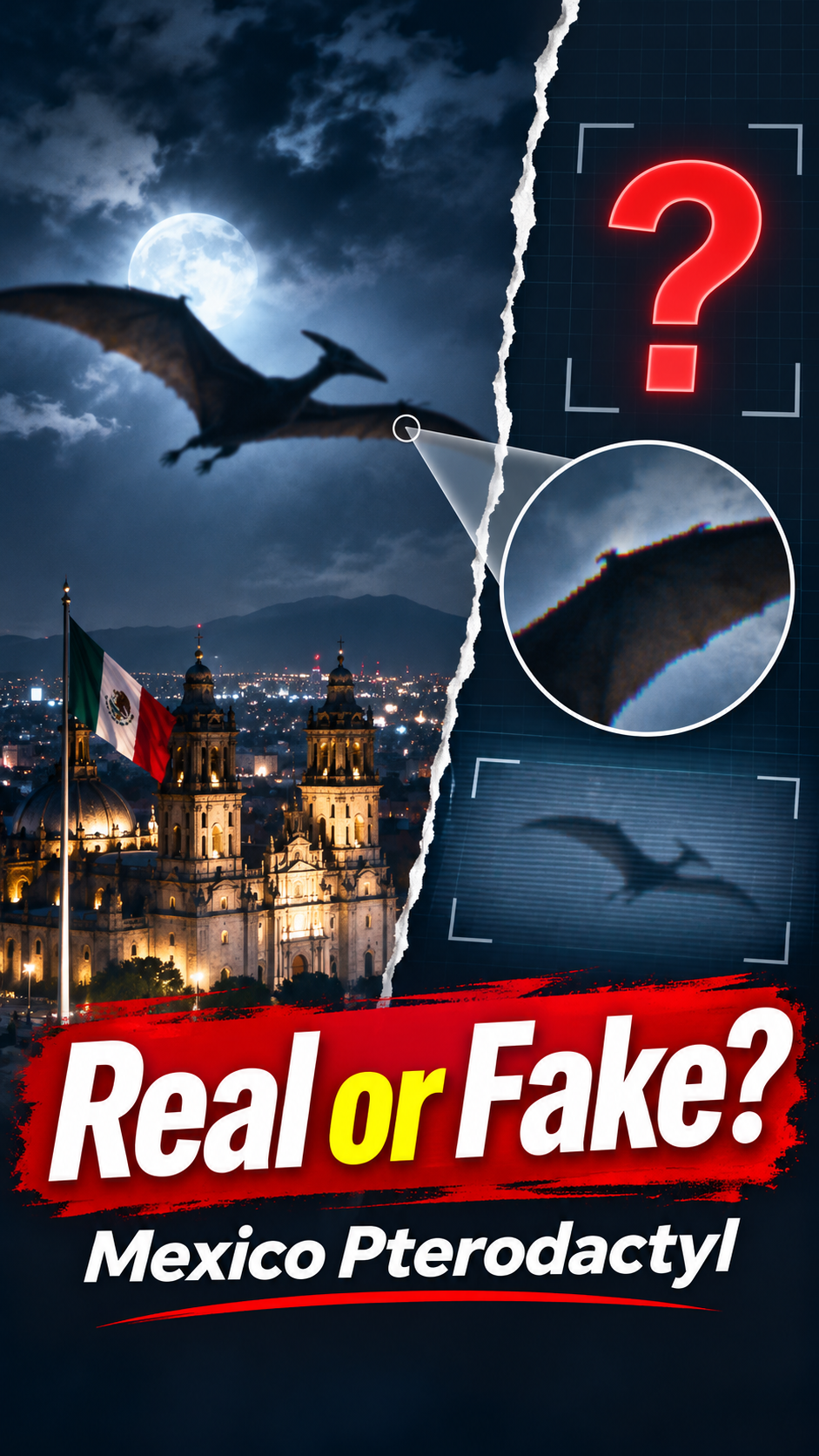
A glowing circle or enlarged crop may look scientific, but the crucial question is whether it comes from authentic source pixels. Repeatedly sharpening, enlarging or reconstructing a compressed clip can generate edges that the camera never recorded. Likewise, an image created to illustrate an article cannot be used to prove shape, jaw structure, feathers, scales or species. Ask for the original file, full frame and unedited timing before trusting a close-up.
Motion blur can stretch a bird’s wingtip; compression can remove subtle contours; low light can hide feather texture; and a short recording may capture only one stage of the wingbeat. A frame with a long beak or strange apparent crest is therefore not a reliable taxonomic description. The proper conclusion may simply be “unidentified object in this recording,” not “ancient species rediscovered.”
Picture 4: Bird or Beast? The Silhouette Comparison

The first question for a wildlife specialist is often whether the animal resembles a known bird. Local coverage of the incident discussed the great blue heron (Spanish: garza morena) as a possible explanation. A large heron in unusual lighting can present long wings, a narrow neck and a silhouette that looks unfamiliar to a casual viewer. That hypothesis is plausible; it is not a laboratory-confirmed identification of every circulating clip.
A reconstruction of a pterosaur can also look birdlike from a distance, but its wing was structurally different. Pterosaurs stretched a membrane along an enormously elongated fourth finger. Birds have feathered wings. Those features are often invisible in distant, low-quality silhouettes. If the only “evidence” is a dark outline, a confident prehistoric-species label is unwarranted.
What Do the Actual Mexico Pterodactyl Reports Establish?
The central news event is real: videos and images circulated, and local authorities addressed the rumors. A November 11 local report said that Ciudad Juárez municipal Civil Protection rejected the prehistoric-animal identification. EFE Verifica’s November 18 review likewise found no evidence that the video showed a genuine flying dinosaur or pterosaur. A separate November 17 fact-check examined digitally altered material circulating online.
These findings should not be overstated. They do not prove that every clip shared with the same caption has an identical origin, and they do not establish exactly which living bird appears in every version. They do establish that the extraordinary claim of a surviving pterodactyl has not been supported by credible scientific evidence. That is the difference between assessing a claim and pretending every detail of a brief recording has been resolved.
How to Find the Original Video Instead of an Unrelated Picture
Search with the location-specific terms Ciudad Juárez pterodáctilo video original, Anapra pterodactyl footage, and Mexico pterodactyl news. Use date filters to find the earliest local coverage, then compare the frame’s buildings, camera angle, time-of-day and movement with subsequent reposts. A video with added zooms or reaction commentary should not be mistaken for an original surveillance export.
Check whether the source names a witness or camera owner and provides access to an unedited recording. See whether the same image predates the claim or appears in an older film, game or artwork. If the screenshot is impossibly sharp compared with the underlying grainy video, do not infer that it has revealed hidden animal features. Ask what processing was used, and what parts were newly created.
Pterodactyl, Pteranodon and Pterosaur: Why Labels Matter
“Pterodactyl” is a popular shorthand, not a precise name for every prehistoric flying reptile. The wider group is Pterosauria, which includes Pterodactylus, Pteranodon and many other genera. Pterosaurs lived alongside dinosaurs but were not themselves dinosaurs; modern birds descend from dinosaurs, not from pterosaurs. Those distinctions are explained by the Natural History Museum.
All known pterosaurs disappeared around 66 million years ago. They are studied through fossils and scholarly reconstructions, not confirmed modern wildlife photographs. A striking large-winged animal in a screenshot is not enough to overturn that established history. For the genuinely biggest flying reptiles, including the North American giant Quetzalcoatlus, the evidence comes from paleontology—an entirely different subject from the viral 2026 videos.
Image SEO: Which Pictures Are Real Photos and Which Are Reconstructions?
When browsing pictures, sort them into categories. Fossil photos show physical bones or rock impressions. Museum reconstructions model extinct animals from known anatomy but may include artistic interpretation. Editorial illustrations help tell a modern news story but are not photographs of what happened. Finally, video frames record what a particular camera captured, yet may still leave species, scale or even file authenticity unresolved.
This matters because a high-resolution “real pterodactyl in Mexico” poster may look more convincing than the alleged source video. Accurate captions prevent the same artwork from being re-shared later as a new sighting. An image can be visually engaging and educational without making a false claim about its source.
Frequently Asked Questions About Mexico Pterodactyl Pictures
Are the viral Mexico pterodactyl pictures genuine photos?
Not all pictures under that keyword are camera photographs. Many circulating pictures are reconstructions or illustrations. The four images in this gallery are illustrative and should not be presented as original footage.
Was a living pterodactyl found in Ciudad Juárez?
There is no verified evidence of a living pterosaur. Local officials rejected the extraordinary interpretation and the recorded silhouette has not established the existence of an extinct species.
Could the creature have been a great blue heron?
Yes, local reporting identified a large heron as a plausible explanation for some silhouettes. That does not prove the exact identity of every video shared online.
Is every Mexico pterodactyl video confirmed to be fake?
Different uploads and edits should be assessed separately. Some material has been flagged as synthetic or altered; a single conclusion cannot automatically be transferred to every unrelated clip.
What is the difference between a pterosaur and a bird?
Pterosaurs were a separate extinct branch of flying reptiles, while birds are living avian dinosaurs. Their wings evolved with different anatomy even though distant silhouettes may look somewhat alike.
Bottom Line: Enjoy the Pictures, Check the Claim
The Mexico pterodactyl story is a strong example of how striking images can outrun the evidence. Four visuals can make the question easier to understand, but they do not add four witnesses. The responsible reading is that people shared an unusual winged silhouette, municipal authorities dismissed a prehistoric explanation, and the source clips do not demonstrate a living pterosaur. For actual fossil evidence and giant pterosaur anatomy, look to museums and peer-reviewed research rather than social thumbnails.
Sources and update — November 19, 2026: EFE Verifica (Nov 18); Radionet (Nov 11); Natural History Museum pterosaur guide; Vista Hub’s original fact-check.
Related English guide: Quetzalcoatlus size and Mexico fossil evidence.

















Share Your Opinion
Comments are closed on this post.