 Vista

Why is the Monsoon Delayed in Madhya Pradesh?
The scorching heat across Madhya Pradesh has left residents anxiously looking towards the skies, yearning for the first drops of rain. This year, the monsoon’s delayed arrival has sparked widespread concern. Several interconnected factors, both global and local, are contributing to this phenomenon, affecting not just MP but the entire country.
Global Warming: The Rising Threat
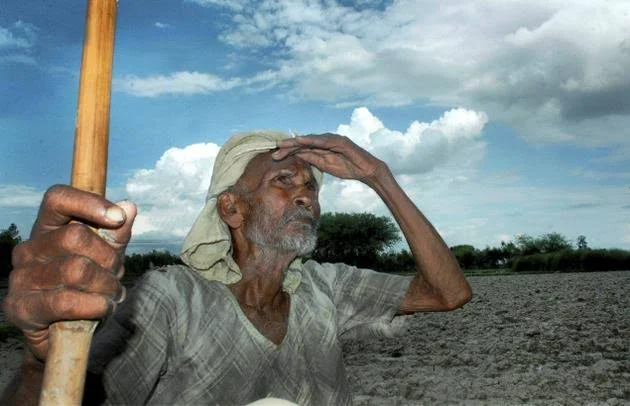
The most significant culprit behind erratic weather patterns, including delayed monsoons, is global warming. Our planet’s steadily increasing temperature is disrupting established climate cycles. This leads to unpredictable weather events such as unseasonal rains, prolonged droughts, and extreme heatwaves. The rise in global temperatures isn’t just a statistic; it directly impacts our daily lives, from heatwaves in cities to water scarcity in rural areas. India is particularly vulnerable, with many of its cities frequently appearing on lists of the world’s hottest urban centers.
El Niño’s Influence on Indian Monsoons
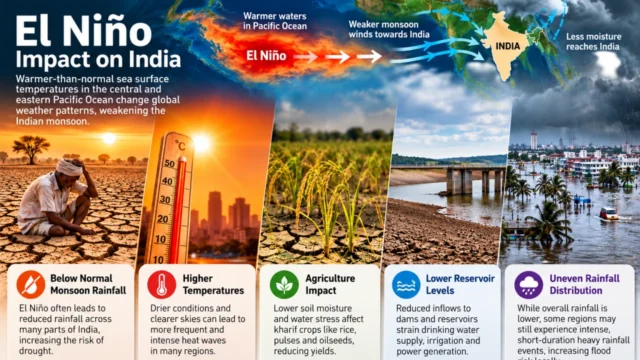
El Niño, a naturally occurring weather pattern characterized by warmer-than-average sea surface temperatures in the central and eastern equatorial Pacific Ocean, has a profound impact on global weather, including the Indian monsoon. When El Niño is active, it tends to weaken the monsoon, causing delays or reduced rainfall across India. The current El Niño conditions are a major reason why monsoon clouds are struggling to reach the Indian subcontinent this year. While El Niño is a cyclical event, its effects are being exacerbated by the ongoing climate change.
Local Factors Contributing to the Delay
Beyond global influences, local environmental changes also play a role in disrupting monsoon patterns:
- Deforestation: The rampant clearing of forests disrupts the ecological balance. Trees are crucial for maintaining atmospheric moisture and influencing rainfall patterns. Reduced forest cover directly impacts the potential for adequate rainfall.
- Urbanization: Unplanned urban development, the proliferation of concrete structures, and a decrease in green spaces contribute to the urban heat island effect. This localized increase in temperature can alter regional weather dynamics, including monsoon onset.
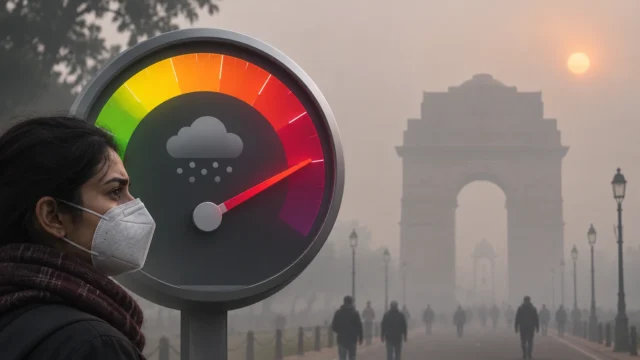
- Pollution: Rising levels of air pollution can interfere with the formation of clouds and disrupt the natural cycle of precipitation.
The Impact of Intense Heatwaves in MP
The delayed monsoon has intensified the heatwave conditions across Madhya Pradesh, with temperatures frequently soaring above 45°C. This extreme heat makes daily life challenging for residents, forcing many to stay indoors. The impact is not limited to humans; animals and crops are also suffering. Water scarcity is becoming a critical issue, particularly in rural communities. These severe heatwaves underscore the urgent need for adaptation and mitigation strategies.
When Will the Monsoon Arrive in MP? IMD’s Forecast
The India Meteorological Department (IMD) has reported the monsoon’s arrival in Kerala, but its progress northward has been slower than usual. Current projections suggest that the monsoon may reach Madhya Pradesh by the second or third week of June. However, there remains considerable uncertainty regarding the intensity and distribution of rainfall once it arrives. Some meteorological experts have cautioned that the overall monsoon season might be below average in certain regions, raising concerns for farmers and the general public.
Consequences of Monsoon Delay
The delay in monsoon arrival has several significant repercussions:
- Agriculture: As an agrarian state, Madhya Pradesh heavily relies on timely monsoon rains for its Kharif crops like soybean, paddy, and maize. Delayed sowing due to lack of water can lead to substantial crop losses for farmers.
- Water Scarcity: Reduced rainfall impacts reservoir levels and groundwater recharge, exacerbating shortages of drinking water and water for irrigation.
- Economic Impact: A decline in agricultural output can lead to increased food prices and negatively affect the state’s economy.
- Health Issues: Prolonged periods of heat and water scarcity can lead to an increase in heat-related illnesses such as dehydration and heatstroke.
What Can Be Done?
Addressing the challenges posed by delayed monsoons requires a multi-pronged approach. Individuals can practice water conservation and adopt measures to stay cool during heatwaves. For farmers, exploring drought-resistant crop varieties and adopting efficient irrigation techniques are crucial. On a larger scale, government initiatives focusing on rainwater harvesting, widespread afforestation, and promoting sustainable agricultural practices are essential. It is vital to acknowledge our role in environmental degradation and collectively work towards climate resilience.
Disclaimer: The information provided in this article is for general awareness. Always consult with relevant experts for specific advice on weather-related decisions, agricultural practices, or health concerns.
Frequently Asked Questions (FAQs)
1. Why is the monsoon delayed in Madhya Pradesh this year?
The delay in the monsoon in Madhya Pradesh is attributed to a combination of factors, primarily the ongoing El Niño phenomenon, which weakens monsoon currents, and the overarching impact of global warming that disrupts normal weather patterns. Local factors like deforestation and urbanization also contribute to altered local climate conditions.
2. What is El Niño and how does it affect the Indian monsoon?
El Niño is a climate pattern where sea surface temperatures in the equatorial Pacific Ocean rise. This warming disrupts atmospheric circulation, often leading to weaker monsoon rainfall and delayed onset in India. It is one of the primary drivers for below-normal or delayed monsoons in the country.
3. What are the main impacts of a delayed monsoon on agriculture in MP?
A delayed monsoon significantly impacts agriculture in MP by disrupting the sowing schedules for Kharif crops like soybean, paddy, and maize. This can lead to reduced yields, crop failure, and substantial financial losses for farmers, potentially affecting food security and rural economies.
4. When is the monsoon expected to arrive in MP according to IMD?
According to the India Meteorological Department (IMD), the monsoon has reached parts of India but is progressing slowly. It is currently projected to reach Madhya Pradesh around the second or third week of June. However, the exact timing and intensity remain subject to change.
5. Besides El Niño and global warming, what local factors contribute to monsoon delays?
Local factors include extensive deforestation, which reduces the moisture-carrying capacity of the air and alters local weather patterns. Unplanned urbanization leads to increased local temperatures (urban heat island effect), and air pollution can interfere with cloud formation processes, all of which can indirectly affect the timing and intensity of monsoon rainfall.


























Share Your Opinion
Comments are closed on this post.