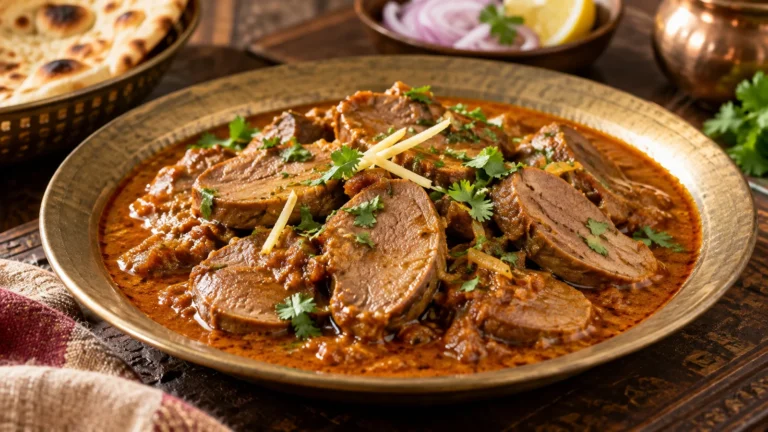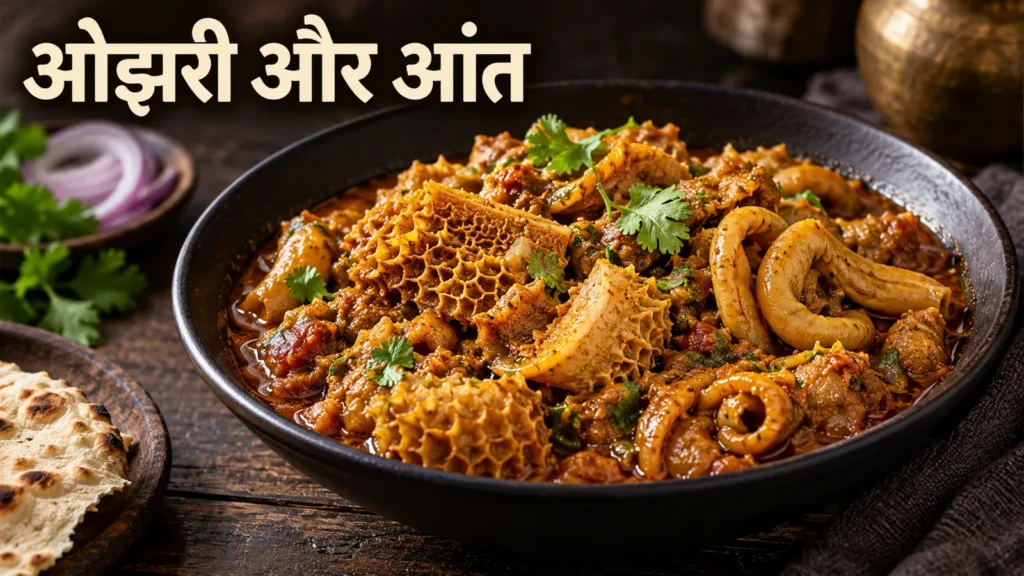
Tripe and intestine difference matters when buying goat offal. Tripe is the edible stomach lining or wall, while intestines are separate digestive organs. Pachauni is a regional food name rather than a standard anatomical term; ask the seller exactly which parts are included. Names such as boti may also vary by place and recipe.
This guide covers identification, nutrition and food safety. Eating an animal organ does not establish a treatment for the corresponding human organ. Reviewed: 10 October 2026.
What is goat tripe?
USDA defines tripe as stomach lining. Goats are ruminants with four stomach compartments: rumen, reticulum, omasum and abomasum. Their textures differ. Not all tripe has a honeycomb appearance, and a food photograph cannot confirm the organ or species.
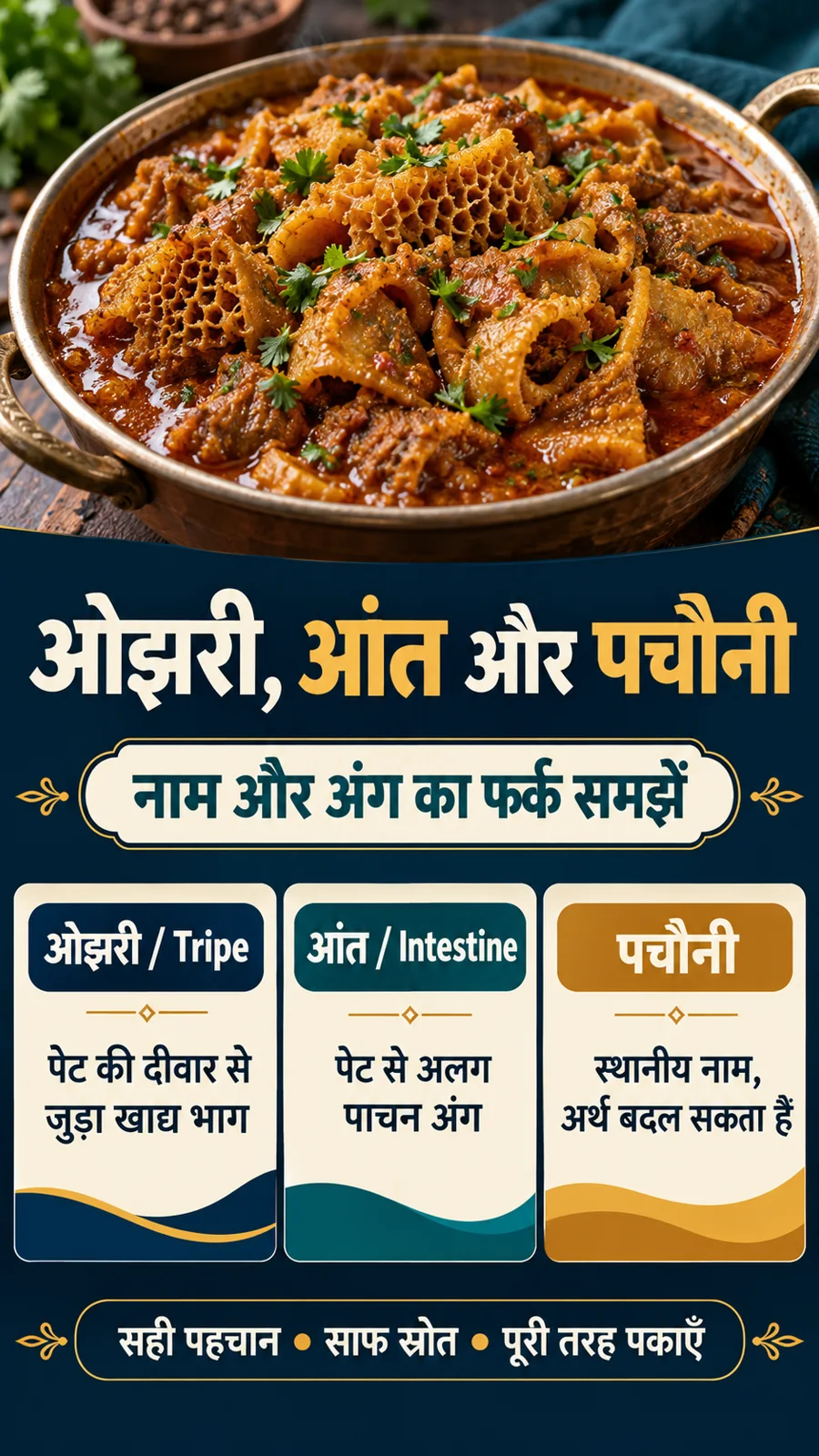
Tripe and intestine difference: comparison
| Name | Meaning | What to confirm |
| Tripe / Ojhari | Edible stomach wall or lining | Stomach part, species and cleaning |
| Intestine / Aant | Separate tubular digestive organ | Small or large intestine and food preparation |
| Pachauni | Regional culinary name | Whether the product is stomach, intestine or a mixture |
| Boti | Usage varies by region and dish | Actual ingredients rather than the name alone |
Goat tripe nutrition and potential benefits
ICMR–NIN Indian Food Composition Tables 2017 lists raw goat tripe, code O009, with approximately 15.36 g protein and 3.36 g total fat per 100 g edible portion. These are sample averages for raw tripe. Cooking changes water content, and added oil changes a curry’s fat content. They should not be applied to intestines or every mixed pachauni dish.
Protein supports tissue maintenance as part of a varied diet. This does not prove that tripe cures digestive disease, anaemia or weakness. Include other appropriate protein foods, vegetables, pulses and grains. See our guides to goat spleen nutrition and goat kidney and gout precautions for other offal.
Cleaning: processing is different from household washing
Digestive contents must be removed and the organs prepared for food use. USDA processing guidance addresses emptying and cleaning stomachs and intestines. A quick wash in a home sink cannot replace proper food preparation. Buy food-grade, pre-cleaned offal from a reputable licensed supplier and avoid products with uncertain processing.
USDA warns that washing raw meat can spread contamination through splashes. This does not mean eating dirty organs: the point is to obtain properly prepared food and avoid contaminating the kitchen. Do not put detergent, soap, bleach or non-food chemicals directly on the meat. Salt, vinegar and lemon do not guarantee destruction of pathogens.
Cook thoroughly and prevent cross-contamination
Keep raw offal in a covered container in the refrigerator, separate from ready-to-eat foods. Use separate preparation equipment and clean hands and work surfaces after handling it. The Food Standards Agency advises thorough cooking of offal. Its general guidance includes equivalent core-temperature combinations such as 70°C for two minutes or 75°C for 30 seconds. Check the thickest part with a food thermometer.
A fixed number of pressure-cooker whistles is not a reliable rule for every portion size or piece. Tenderness alone does not measure temperature. Food that has spoiled or spent too long warm cannot always be made safe by reheating.
Who should take extra care?
People with gout may need to avoid organ meats under their dietary plan. Kidney disease requires individual advice about portion size and the overall meal. Pregnant people, children, older adults and those with weakened immunity should avoid undercooked animal foods. Persistent vomiting, diarrhoea, fever or dehydration after a meal warrants medical help.
Frequently asked questions
Are tripe and intestines the same?
No. Tripe comes from the stomach wall or lining; intestines are separate organs. They may be sold together.
Does pachauni always mean intestine?
Do not assume so. It is a regional culinary term; confirm the organs included with the seller.
Does eating goat stomach strengthen the human stomach?
A nutritional food is not automatically a treatment for digestive disease. That specific therapeutic claim is not established here.
Can lemon and salt make offal safe?
They do not replace proper processing, cold storage and thorough cooking.
Should everyone eat tripe daily?
No. There is no universal daily requirement. Health, diet and the actual ingredients matter.
Sources and limitations
ICMR–NIN IFCT 2017; USDA: tripe definition; USDA: processing; USDA: washing food; FSA: cooking food. Regional terms are not treated as universal anatomical labels.
Health information: General educational information only; not a substitute for medical advice, diagnosis or treatment. Ask a qualified clinician or dietitian for advice when you have a medical condition or prescribed diet.