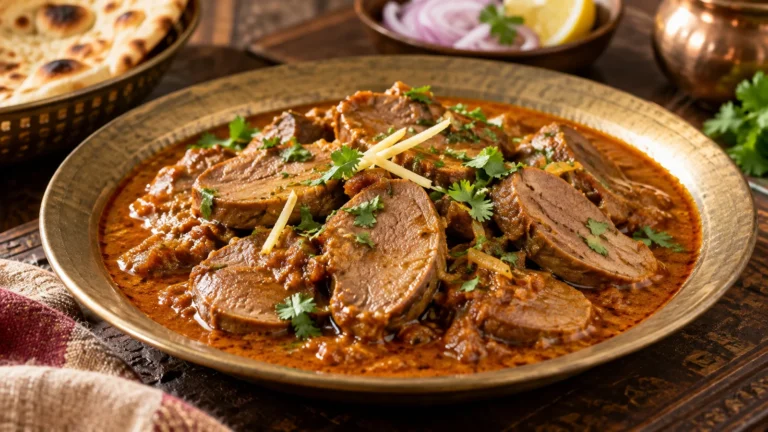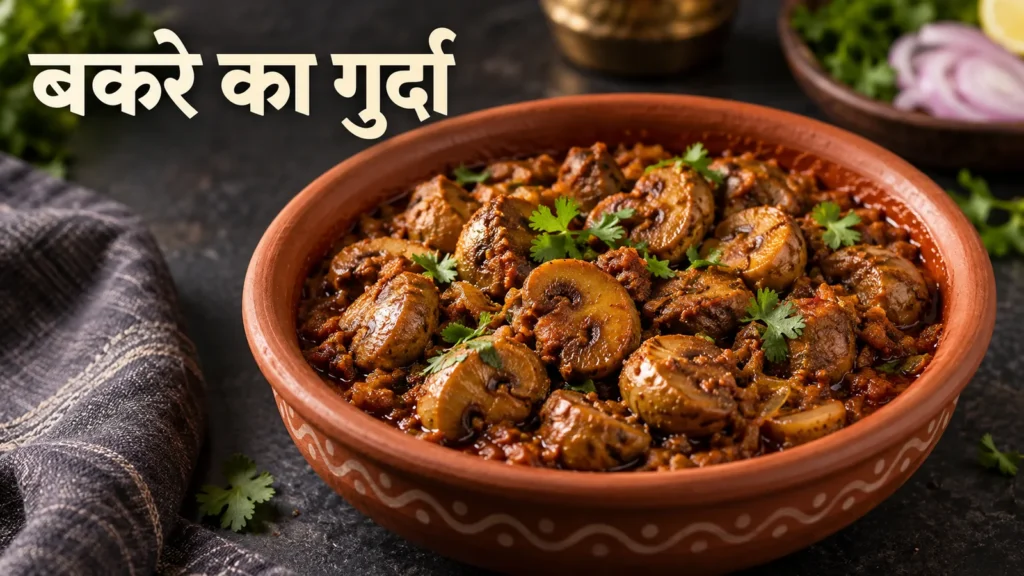
What is goat kidney?
Goat kidney benefits are often linked to claims about strength, blood formation or “repairing the kidneys.” Kidney contains protein and iron, but eating it is not a proven treatment for human kidney disease. This guide separates nutritional value from treatment claims and explains gout precautions, CKD diets and food safety.
Kidney is a different organ from liver or spleen. In India it is called gurda, while liver is kaleji. A gurda-kaleji dish may contain both, so its nutritional value cannot be calculated from kidney data alone. “Mutton kidney” may refer to goat or sheep depending on the market; ask which animal was used.
Goat kidney benefits and nutrition
ICMR–National Institute of Nutrition lists goat kidney as food code O011 in Indian Food Composition Tables 2017. The figures below are averages per 100 grams of the raw edible part, without added oil or salt. They are not values for prepared curry.
| Nutrient | Per 100 g raw goat kidney |
| Protein | 15.60 g |
| Iron | 6.73 mg |
| Total fat | 2.93 g |
| Cholesterol | 419 mg |
Protein contributes to normal tissue maintenance, and iron supports blood formation. Kidney can therefore contribute nutrients as a food. This does not mean that larger portions necessarily provide greater health benefits: the rest of the diet and individual health also matter.
Sample averages cannot predict the exact composition of every organ. Cooking changes water content, while added oil, salt and other ingredients change the finished meal. Values for sheep, cattle or another animal should not be presented as goat values.
Does eating goat kidney repair human kidneys?
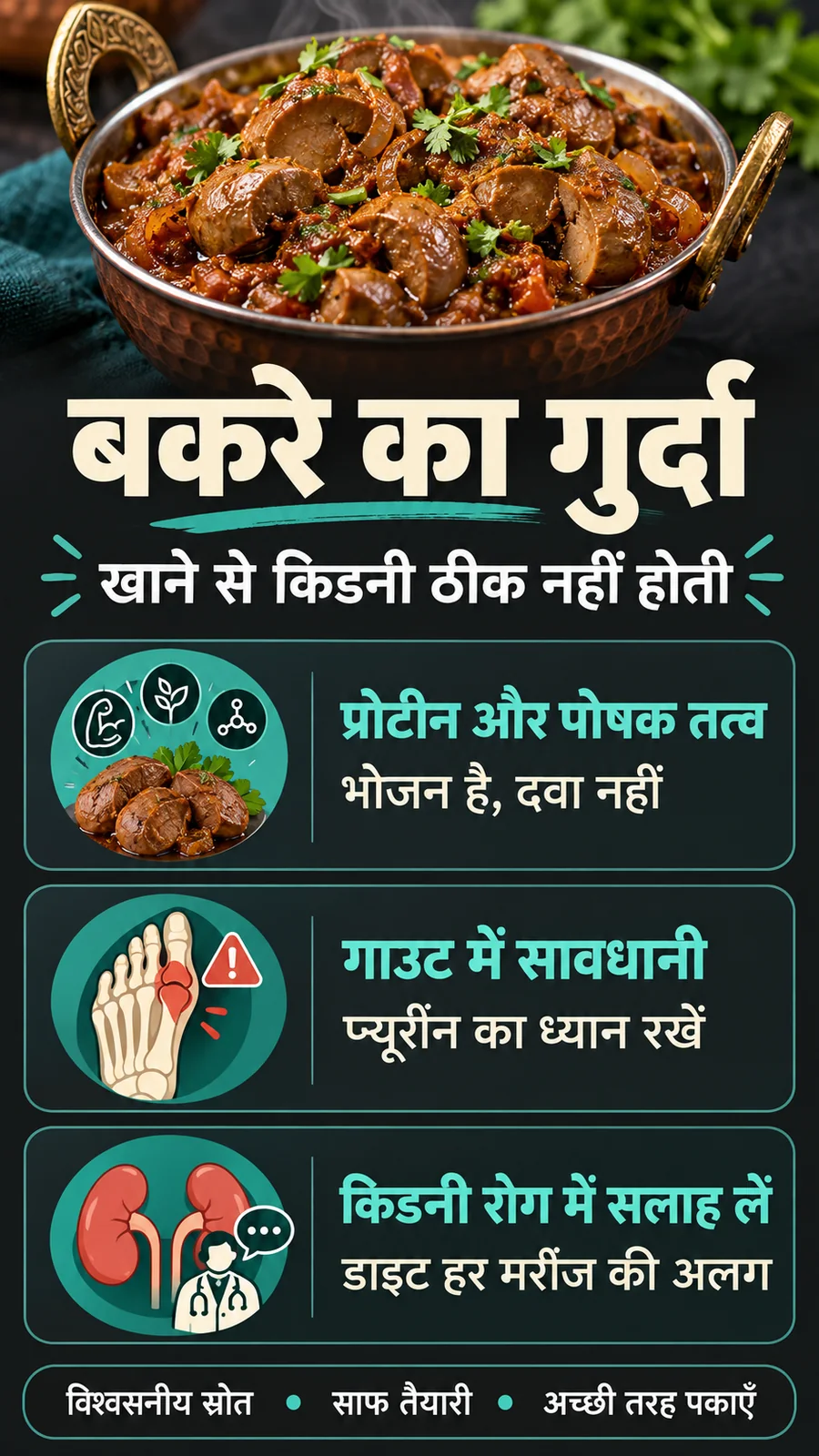
No: it is not an evidence-based kidney-disease treatment. Eating an animal organ does not establish that it repairs the corresponding human organ. Kidney-disease care depends on the cause, stage, test results and treatment needs. Do not believe claims that kidney curry removes the need for medicines or dialysis.
Changes in urination, swelling or abnormal kidney tests need appropriate medical assessment. Treating them merely as weakness and increasing organ-meat intake is not a sound approach. Goat kidney is also not an established treatment for sexual difficulties or a guarantee of improved sexual function.
FACT: An animal kidney is digested as food; it does not attach to the body as a new kidney. A treatment claim needs good human evidence, not only a traditional belief or a matching organ name.
Why CKD makes the diet question different
People with chronic kidney disease do not all need the same diet. NIDDK explains that there is no single meal plan for everyone with CKD. Protein, potassium, phosphorus, salt or fluid advice can vary with the stage, blood tests and treatment.
This does not mean every patient must stop all protein. Too little can contribute to poor nutrition, and needs may differ during dialysis. Ask your renal dietitian or treatment team how organ meats fit into your individual plan.
Do not override that plan on the assumption that kidney provides special nourishment to human kidneys. Curry may include substantial salt, fat, gravy and other organs. A nutrient table for one ingredient cannot establish that the whole meal is suitable for you.
Side effects, uric acid and other precautions
Gout: NHS gout diet guidance identifies kidney and other offal as high-purine foods to avoid. With gout or uric-acid stones, follow individual advice. Drinking more water does not automatically make unrestricted kidney consumption appropriate.
Cholesterol: Kidney contains cholesterol even when its total-fat figure appears relatively low. Follow any dietary recommendations made for cardiovascular health or lipid results, considering both portion size and the overall diet.
Foodborne illness: Undercooked offal and raw juices contaminating ready-to-eat food can cause illness. Lemon, vinegar and spices do not replace adequate cooking. Strong seasoning cannot rescue suspect meat.
The organ’s filtering role does not justify labelling every edible kidney “full of poison.” Reliable sourcing, inspection and preparation matter. It is also inappropriate to claim that every kidney contains dangerous cadmium or parasites without evidence.
Buying, preparing and cooking safely
Buy properly prepared food-grade kidney from a trustworthy, hygienic seller operating under applicable local food rules. Avoid unknown animals, suspect organs and meat stored without appropriate chilling. Refrigerate promptly and keep raw juices away from other foods.
Removing firm central tissue for a recipe and controlling bacteria are separate tasks. Having a seller prepare the organ can help with kitchen preparation. Wash hands with soap, separate raw-meat boards and utensils from cooked-food equipment, and clean surfaces afterwards. Soaking to reduce odour is not proof of safety.
UK Food Standards Agency guidance says kidneys and other offal must be cooked thoroughly throughout. Its general examples include 70°C for two minutes or 75°C for 30 seconds in the centre. Use a clean food thermometer in the thickest part; surface browning alone is insufficient.
Piece size and equipment affect cooking time. A fixed number of minutes or pressure-cooker whistles cannot guarantee safety. FSA advises cooling and refrigerating cooked leftovers within two hours, then eating them within 48 hours or freezing them. Avoid undercooked offal, particularly for children, pregnant people, older adults and those with weakened immunity.
Advice
If you enjoy kidney, treat it as a component of a varied meal, not a health shortcut. Using less oil and salt does not remove disease-specific dietary restrictions. Daily consumption is unnecessary, and there is no universal serving suitable for everyone.
Do not rely on kidney to address persistent weakness or anaemia. Finding the cause and receiving appropriate treatment are more useful. With CKD, gout or another prescribed diet, review the treatment team’s advice before increasing organ-meat consumption.
Frequently asked questions
Are goat kidney and liver the same?
No. Gurda is kidney and kaleji is liver. A mixed gurda-kaleji meal will have different nutritional values from kidney alone.
Does eating kidney strengthen or heal human kidneys?
It is not a proven kidney-disease treatment. Do not stop prescribed investigations, medicines or dialysis.
Can someone with high uric acid eat goat kidney?
Kidney is high-purine offal. With gout or uric-acid stones, seek individual dietary advice and follow your treatment plan.
Must every CKD patient completely avoid kidney?
There is no identical diet for all patients. A renal dietitian or clinician should advise according to disease stage, tests and treatment.
Does goat kidney contain cholesterol?
Yes. IFCT 2017 reports an average of 419 mg per 100 g raw edible goat kidney. This is not the value for a cooked curry serving.
Related reading and sources
Read goat spleen benefits and anaemia claims, goat lungs benefits and the asthma myth and chicken gizzard and safe cooking.
ICMR–NIN: IFCT 2017, O011, Tables 1, 5 and 7; NIDDK: healthy eating with CKD; NHS: gout and diet; FSA: cooking food and offal.
General educational information, not personal medical advice. Follow your clinician’s advice for illness or prescribed diets. Reviewed 9 October 2026. Food illustrations are AI-generated and should not be used to identify an organ.