What does “Mata Aana” mean during Navratri?
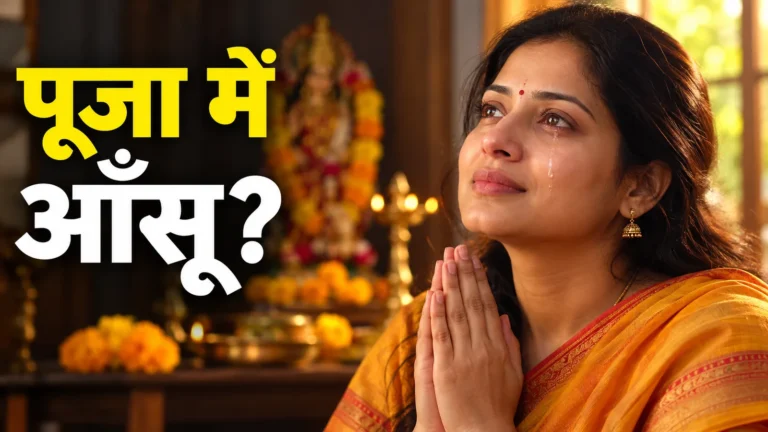
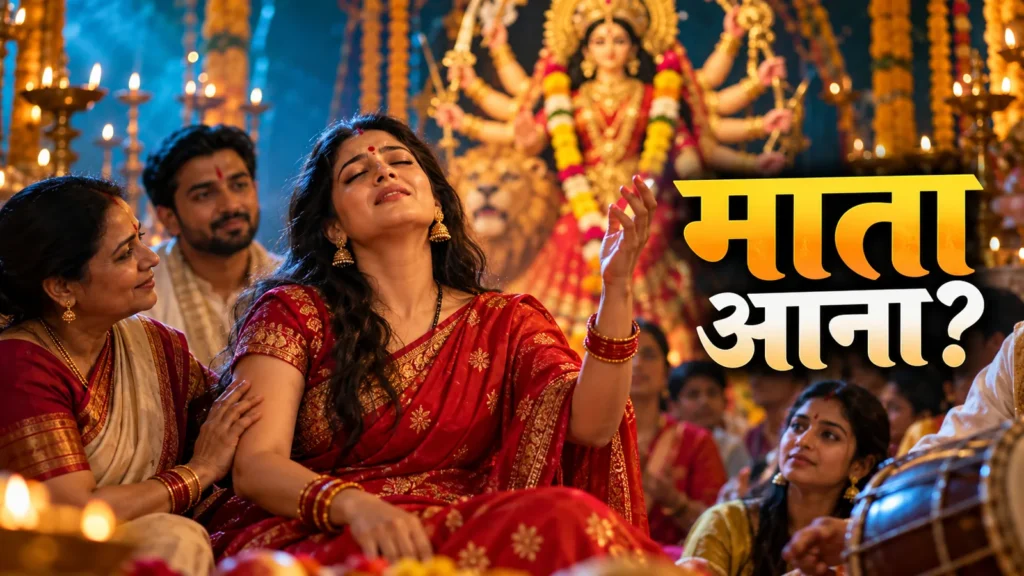
At a Navratri gathering, someone suddenly starts swaying, shaking or speaking differently. People nearby say, “Mata has come.” Some fold their hands, others feel frightened, and someone may immediately call it an act. Watching the scene does not tell us exactly what the person is experiencing or what caused it.
The direct answer is that “Mata Aana,” often called “Devi Ki Sawari,” is a religious and cultural interpretation. An experience can feel real to someone without proving that a goddess has entered their body. Equally, it is unfair to label every such experience a mental illness or deliberate performance. If there is injury, loss of consciousness or trouble breathing, safety and medical help come first.
Mata Aana and Devi Ki Sawari: belief and experience
In some families and communities, changes in behaviour during worship are understood as the presence of a deity. The names and practices differ between places. What one community accepts as a religious experience may be interpreted differently elsewhere. Understanding that background helps us respond respectfully.
The same everyday phrase can describe different events: deep emotion, culturally learned behaviour, an altered state of awareness or a health problem. These should not be treated as one identical condition. Neither a spectator nor an online comment can reliably identify the cause from a brief description.
Why might someone shake or sway during worship?
Music, repeated rhythms, personal expectations and the meaning of a ritual can influence the experience. A person may become deeply absorbed in worship and pay less attention to their surroundings. Research explores how cultural context and music relate to trance-like states. There is no single explanation that fits everyone.
Physical factors also deserve attention. Not eating or drinking enough, heat and standing for a long time can contribute to fainting. These possibilities matter during fasting and crowded gatherings. Shaking alone does not identify a specific illness, and an event happening during Navratri does not establish a supernatural cause.
Reference: NHS guidance on fainting.
Is every religious trance a mental health disorder?
No. Religious belief and becoming emotional during worship do not automatically indicate illness. The person’s cultural setting, whether the experience is wanted, and whether it causes distress or disrupts life all matter. Research has distinguished culturally understood experiences from situations requiring clinical assessment.
Some people experience dissociation, which can involve feeling disconnected from themselves or their surroundings, or gaps in memory. A clinician assesses these symptoms. Reading this word does not mean you or a relative has a dissociative disorder. Other physical and psychological causes need consideration too.
If episodes are unwanted, keep happening or affect daily life, speak to a doctor. Describe what happened rather than arriving with a fixed label. It is possible to respect a person’s beliefs while investigating symptoms and offering appropriate care.
References: NHS information on dissociative disorders and a cross-cultural study of possession-trance.
Mata Aana, fainting or a seizure: can you tell the difference?
A bystander cannot confidently separate them just by looking. Different events can share outward signs. Whether someone responds, breathes normally or has been injured is important for immediate safety, but those observations alone do not provide a diagnosis.
Tell the doctor whether the person remembers the event, how long it lasted and what happened afterwards. Episodes outside worship, repeated blackouts or difficulty returning to normal activities deserve assessment. Claims such as “definitely epilepsy,” “definitely a deity” or “definitely pretending” are not substitutes for examination.
FACT: Having an experience and proving its cause are different things. You can offer safe, compassionate help without first deciding whether you share the religious interpretation.
Can someone experiencing Mata Aana predict the future?
A changed voice, a personal statement or a prediction that later appears correct does not establish the ability to know the future. A claim needs clear, recorded predictions that can be independently checked. Remembering the apparent successes while overlooking mistakes gives an incomplete picture.
Do not stop treatment, accuse a relative, end a relationship or pay a large sum because of such a statement. Claims that someone has performed black magic can damage families. Ask what evidence supports the claim and whether it can be checked without relying on the person making it.
What should you do if someone collapses or has a seizure?
Stay calm and make space. Remove nearby hazards. During seizure-like jerking, cushion the head, note the time and do not restrain the movements. Never put fingers, a spoon or another object in the mouth. Slapping, burning or forcing smoke on someone can cause harm.
After the jerking stops, turn the person onto their side if they are breathing but not fully alert. Stay with them. Do not offer food or drink until they have fully recovered. Religious discussion should not delay practical help.
Seek emergency help for a first seizure, jerking lasting more than five minutes, another seizure without recovery, serious injury or breathing difficulty. In India, call 112. If the person has an existing seizure care plan, someone trained to follow it should do so.
References: NHS seizure first aid and India’s emergency response service.
Advice: respect belief and put the person’s safety first
When things are calm, ask how the person felt, whether they were frightened or in pain, and what they remember. Avoid questioning them in front of a crowd. Do not film or share an episode without consent. The aim is to understand and help, not embarrass someone or prove them wrong.
Keep notes about the dates, duration and circumstances of episodes. Do not change prescribed medicine yourself. Start with a doctor for recurring blackouts or changes in awareness; they can recommend the appropriate specialist. Prayer and medical assessment can coexist.
Families can support recovery by listening, reducing blame and making it easier to seek care. Saying “you are doing this for attention” before assessment can silence someone who needs help. Saying “nothing medical can be wrong because this happened in a temple” can also delay care.
Related reading: White-pumpkin offerings during Navratri. For Hindi music collections, see Navratri songs and aarti playlists.
FAQ: common questions about Mata Aana
Does Mata Aana happen only to women?
Such experiences should not be assumed to belong to one gender. Understanding an individual requires looking at their personal, cultural and health circumstances.
Does a changed voice prove that a deity is present?
No. A changed voice is an observation; it does not establish a supernatural explanation.
Is seeing a doctor disrespectful to faith?
You do not need to abandon your beliefs to have symptoms checked. Assessment is part of caring for someone who is injured, loses consciousness or has repeated episodes.
Is everyone who reports Mata Aana pretending?
No. An experience may feel real and happen without the person wanting it. Accusations without assessment can make it harder to obtain help.
When should professional help be sought?
Seek medical advice for repeated episodes, memory gaps, continuing distress or disruption to work, study and relationships. Emergency symptoms require immediate help.
Health disclaimer: This article provides general information, not a diagnosis or treatment plan. Seek medical advice for blackouts, seizures or changes in awareness. Respect for religious experience should not delay emergency care.