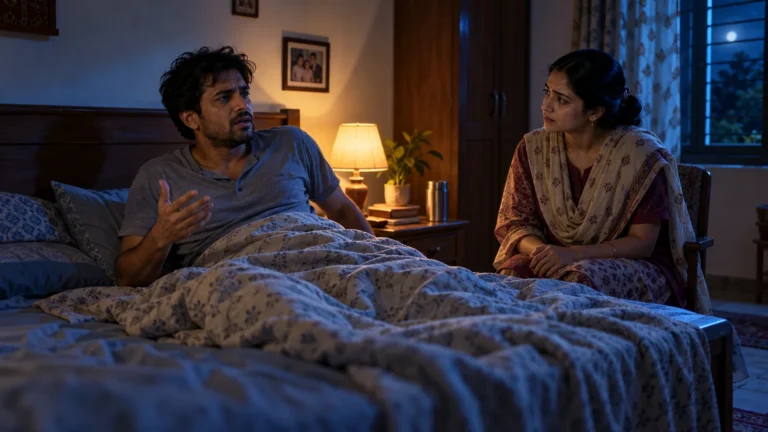
The room seemed ordinary, but one corner suddenly felt colder
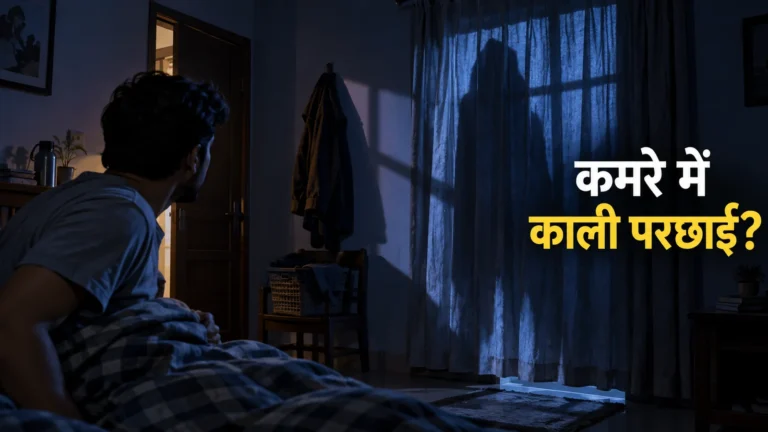
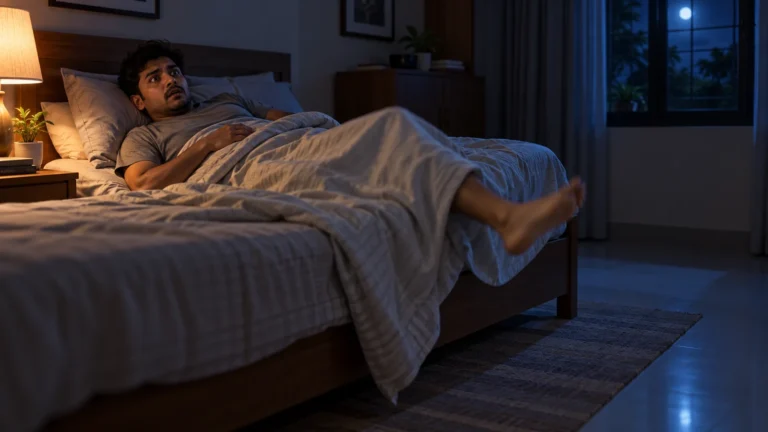
You sit near a window in an older room. Everyone else seems comfortable, but your feet suddenly feel cold. The curtain moves slightly and you remember a ghost-hunting show claiming that a spirit absorbs warmth. This illustrative scene explains how an ordinary sensation can become mysterious before the room conditions have been checked.
Cold spots in a room do not identify a spirit. Airflow, window surfaces and seating conditions may differ within the same room. Feeling cold and establishing a lower air temperature are also different observations. Neither dismissing the person nor declaring an invisible presence helps determine which explanation fits the setting.
Treat a cold spot as an observation that can be investigated. Where were you sitting, was a window open, what was the weather and was anything measured? A description of the circumstances gives you a starting point. An unexplained sensation does not become evidence of a supernatural cause simply because the first inspection finds nothing obvious.
Distinguish cold air, a cold surface and thermal comfort
Room air temperature, the surface temperature of a window or wall and a person’s thermal comfort are different quantities. A room thermometer can provide an air reading; touching a cold wall is not the same measurement. “I felt cold” accurately describes an experience without automatically giving a temperature or establishing a cause.
Sitting near a cold window can feel uncomfortable because heat exchange with surrounding surfaces also matters. Department of Energy window guidance discusses radiant discomfort and cold surfaces. An ordinary air reading does not guarantee that every seat feels equally comfortable. This is a physical possibility to investigate, not a remote assessment of your particular room.
Air movement, clothing and position can affect comfort. Anxiety can also involve chills. These possibilities should guide questions rather than a confident story about blood vessels changing within precisely one second. Feeling chilled does not establish that the room’s temperature dropped, and a temperature difference does not independently identify why it happened.
Air leakage and convection are different sources of a draft-like experience
Gaps around a window frame, door or other opening can allow air leakage. From a safe position, notice whether a curtain moves or air is felt near an opening. This is an observation of airflow, not a way to identify a gas or certify the overall safety of the building.
Even without a gap, air near a cold window surface can cool and descend, creating a local convection flow. Not every draft-like sensation is therefore evidence of a leak. Nor does cold air necessarily collect permanently in one chosen corner. The pattern depends on conditions and should not be turned into a universal rule.
Think of local airflow near a cooler surface rather than a ghost removing heat. Outdoor and indoor temperatures, window position and room layout can matter. Repeated observations under comparable conditions may help describe a repair concern. A single cool evening is not enough to identify the specific cause or justify an expensive intervention.
FACT: a thermal-camera colour patch is not evidence of a spirit
In ordinary thermography, a camera uses infrared radiation from object surfaces to provide temperature information. This is not the same air measurement as a room thermometer. FLIR documentation describes surface temperature, and interpreting readings can also involve material properties and reflected radiation. A coloured image requires context, not a paranormal story.
A blue patch cannot by itself show that the air suddenly froze or that an entity appeared. Cold surfaces and airflow need an ordinary physical explanation. No paranormal detection test is provided here. An expensive camera is not necessary for simple observations, and an impressive-looking display is not automatically an accurate explanation.
Source: US Department of Energy: Window performance and selection
How to make a safe, ordinary comparison at home
Record the time, weather, open doors or windows and whether a fan or air conditioner is running. Notice how different seats feel under similar conditions. If nothing was measured, describe the sensation rather than inventing a precise temperature drop. Simple notes are more useful than a number chosen to match a frightening story.
If you already have a room thermometer, avoid comparing readings taken in direct sunlight, beside a hot appliance or against a cold surface. Follow its instructions and allow the reading to settle. Comparable height and timing can make comparisons more useful. Small differences may reflect device uncertainty; they are not a spirit-detection threshold.
Do not use flames or incense smoke to search for drafts. Avoid opening wiring, climbing onto unsafe structures or entering hazardous spaces to investigate. Visible cracks, dampness or repair concerns can be discussed with a trained person. A photograph and a short factual record can support that conversation without creating a risky experiment.
Why sealing every vent is not the answer
Repairing a poor seal may help an actual draft, but closing every opening without understanding its purpose is not appropriate. Necessary ventilation and the air supply for combustion appliances must remain safe. This article does not recommend completely sealing a room containing a gas appliance, stove or heater simply to eliminate a cold feeling.
Suspected fumes, burning, a gas leak or breathing difficulty are separate safety concerns. Do not reduce them to a cold spot or anxiety. Move to safety and obtain appropriate trained or emergency assistance. A temperature reading does not reliably establish whether harmful fumes are present, absent or safe to remain around.
Recurring dampness, a damaged frame or building deterioration may need professional assessment. Blaming someone in the family or leaving ritual substances in the corner does not identify the problem. Connect a repair to the actual issue. Applying weather-stripping everywhere without assessment is no more a universal solution than assuming that every cold corner is supernatural.
Advice: when the person’s health also needs attention
If discomfort is limited to one seat, changing position, wearing comfortable clothing and checking airflow safely are practical steps. You do not need an experiment that makes you more anxious. Family members can listen and consider ordinary possibilities without declaring that a person is imagining everything or has a supernatural attachment.
Persistent whole-body chills, fever, weakness or other health complaints should not be diagnosed through an article about room physics. Seek medical advice. Serious breathing difficulty, collapse or rapidly worsening symptoms needs immediate assistance. Environmental conditions and a person’s health can both matter; investigating one does not rule out the other.
Keep sensation, air temperature and surface temperature separate. An ordinary investigation can improve understanding without establishing a supernatural claim. If the cause is not immediately obvious, a ghost is not a justified default conclusion. Better observations and the appropriate professional are useful next steps while uncertainty remains.
Frequently asked questions
Does a cold corner prove a ghost is present?
No. A cold sensation or temperature difference alone does not establish that claim. Consider airflow, surfaces and seating conditions.
Can a closed window still feel drafty?
Yes. A cold window can be associated with convection and radiant discomfort. The specific cause in your room still needs observation or assessment.
Does a thermal camera measure room air temperature?
Ordinary thermography provides surface temperature information. It should not be presented as the same reading as an air thermometer or as a paranormal detector.
Should I seal every gap and ventilation opening?
Do not block necessary ventilation or appliance air supply. Draft repair and safe airflow are different questions; seek trained guidance when needed.
What if I have chills and a fever?
Do not assume a cold spot explains them. Seek health advice and urgent assistance for serious accompanying symptoms. Room measurements cannot diagnose an individual illness.
Related reading
Shouting or Speaking Strangely During Sleep and Forgetting It: Causes and Safe Help
Roof noises, footsteps and jingling at night
Rotten egg smell at home: safety first
Fear of a supernatural presence: main guide
Sources and review
Information reviewed: 18 October 2026. The opening scene is illustrative, not a reported case.
US Department of Energy: Window performance and selection
US Department of Energy: Energy-saving hacks to weather the winter
US Department of Energy: Combustion appliance safety
US Department of Energy: Ventilation assessment and action guide
FLIR: Using a thermal camera — surface temperature
Mayo Clinic: Nighttime panic symptoms, including chills
This is general information, not a building-safety or individual health assessment. Obtain trained help for actual hazards.