Their eyes were open, their voice seemed different, and they remembered nothing
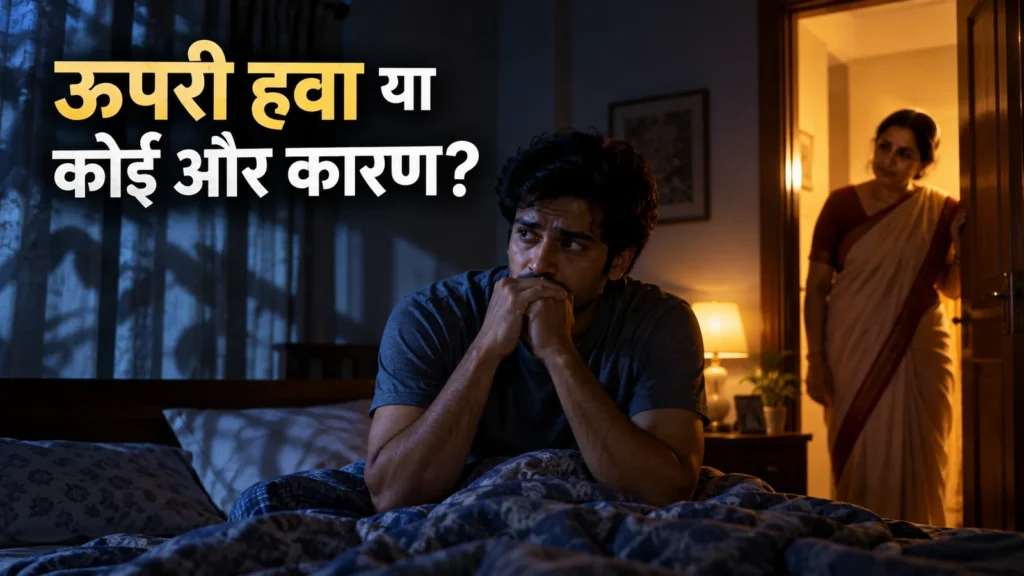
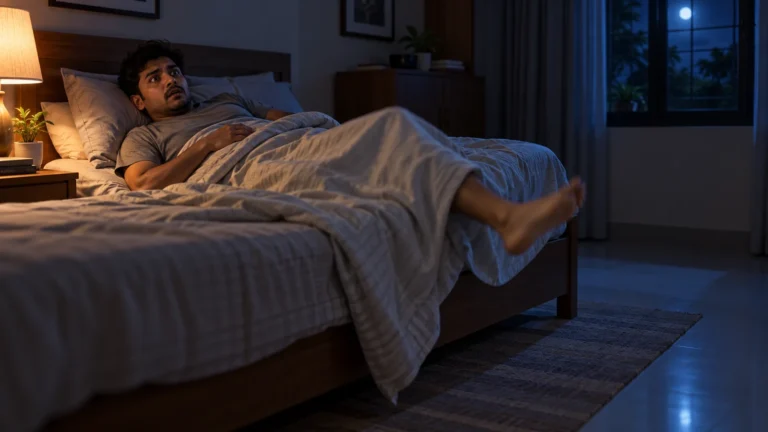
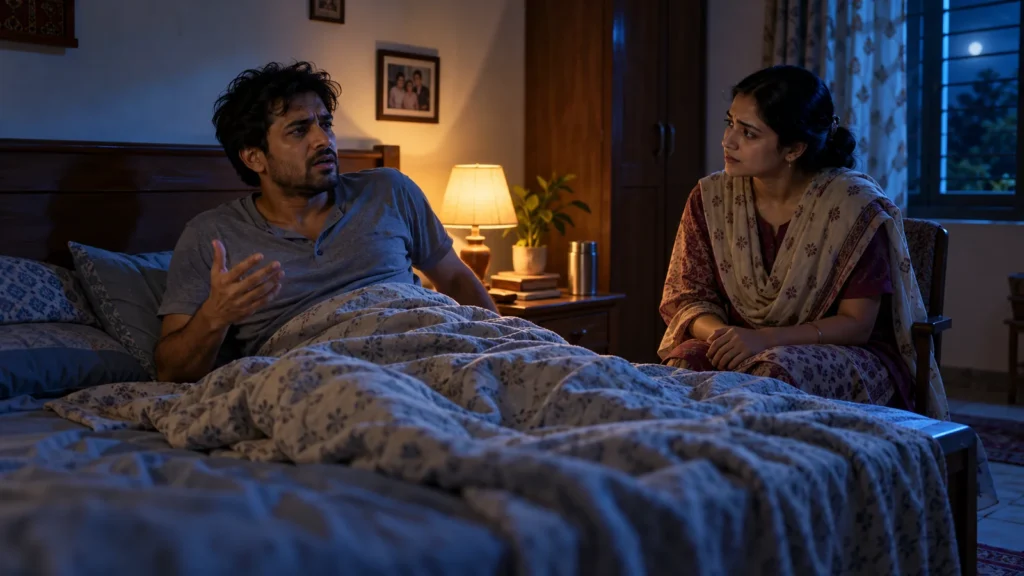
The family is asleep when someone suddenly sits up, says something unclear and shouts. Their eyes are open, but an ordinary question gets no normal response. The next morning they ask when this happened. This is an illustrative scene, but a similar event can leave both the sleeper and the family frightened and uncertain.
Shouting in sleep and forgetting it does not establish possession. Partial arousals, night terrors, sleep talking and other conditions can involve unusual behaviour. However, assuming that every event is a harmless sleep disturbance is not appropriate either. The timing, movements, response, breathing and recovery all contribute useful information.
An unfamiliar or deeper-sounding voice is not a reliable sign that another identity has entered a body. Describe what you observed instead of selecting a frightening label. Not remembering the event is part of the history, not proof of dishonesty or a diagnosis. A respectful account makes appropriate assessment easier.
Confusional arousal: appearing awake is not necessarily being fully awake
During a confusional arousal, a sleeping person may appear to awaken while remaining disoriented, responding poorly or speaking slowly. Stanford Health Care describes little or no recall the next morning as a possible feature. This is a description of a pattern; forgetting an event does not independently establish the diagnosis.
The analogy of some lights on and others off can help introduce partial awakening. It is not a literal map of the brain. Saying an entire frontal lobe has stopped working is more definite than this description supports. An accessible explanation should clarify the experience without pretending to assess a brain region at home.
These events can occur at different ages and are more common in children. Sleep disruption and irregular schedules can be relevant context. There is no rule that they must occur at three in the morning. Record time since falling asleep separately from the clock time; neither observation is a diagnostic test on its own.
Distinguish night terrors, nightmares and sleep talking
A night terror can involve screaming, movement and open eyes while the person remains asleep, often without remembering it afterwards. A nightmare is a frightening dream from which someone wakes and may recall the story. NHS guidance treats them as different events rather than interchangeable names for the same experience.
A few spoken words are different from sustained confused or dangerous behaviour. Voice tone alone cannot identify a medical condition. Being unable to move despite wanting to can resemble sleep paralysis and is another distinct pattern. Combining all these observations under a single supernatural or medical label loses information that may matter.
Some events involve actions associated with vivid dreams; others may occur alongside snoring or disturbed breathing. This is not a checklist for diagnosing every possible sleep condition at home. Tell a professional about accompanying observations so that selecting one familiar term does not prematurely exclude a different explanation.
FACT: unusual nighttime behaviour is not always a parasomnia
Parasomnia is a broad term for certain unusual sleep-related behaviours. Confusional arousals and night terrors can fall within it. Some sleep-related seizures can resemble such events. Forgetting the next morning therefore cannot serve as a definitive test for either parasomnia or epilepsy. History and appropriate investigations help distinguish possibilities.
Sleep-related hypermotor epilepsy, or SHE, can involve brief, recurrent motor events during sleep. Older names include nocturnal frontal lobe epilepsy, but seizures are not necessarily restricted to the frontal lobe. An altered voice alone does not establish SHE. A clinician decides which investigations, if any, the individual pattern warrants.
Source: Stanford Health Care: Confusional arousals
Source: NHS: Night terrors and nightmares
Source: Epilepsy Foundation: Sleep-related hypermotor epilepsy
What can family members do during an episode?
Stay calm and check for injury hazards. Removing sharp objects and allowing safe space can help. NHS advice for a usual night terror discourages forcibly waking or interrupting the person. That guidance is not permission to ignore serious breathing problems, impaired recovery or an unfamiliar event whose cause has not been assessed.
Do not hit, shake, tie the person down or put water, a spoon or medicine into their mouth. For a suspected seizure, avoid restraint and do not place anything in the mouth. Observe breathing and recovery, note the time and obtain emergency assistance when needed. Prioritise the person rather than an explanation.
Stairs, an open exit or nearby hazards can make immediate safety important. Recording should never delay help. If the person has an individual action plan from their clinician, follow it. Generic internet remedies and someone else’s medicines are not a suitable substitute for a plan based on the person’s assessed condition.
A daytime conversation, a sleep diary and a safer environment
Discuss the event without blame: “This is what we saw, and we want help understanding it.” A lack of recall does not prove the person is lying. Avoid frightening labels, particularly in front of children or visitors. Family members can also describe their distress without presenting it as evidence of a supernatural cause.
Record bedtime, episode timing, duration, movements, breathing, response and recovery. Mention recent illness, sleep loss or medicine changes. A safe recording that already exists may help a clinician with consent, but neither public sharing nor deliberately provoking an event is needed. Respect privacy while preserving useful factual observations.
A consistent sleep schedule and a relaxing bedtime routine may help in some situations. Consider bedroom safety when injury is a concern. Do not independently stop prescribed medicines. A routine cannot guarantee prevention of every event, and the presence of stress does not remove the need to assess other possibilities.
Advice: when to arrange assessment and when to seek emergency help
Seek medical assessment for new, repeated, injurious events or episodes affecting sleep and daily activities. A new onset in adulthood is worth mentioning. Depending on the findings, a sleep specialist, neurologist or other support may be appropriate. The initial history helps guide that decision instead of a label selected from a video.
A first suspected seizure, a seizure lasting five minutes or longer, repeated seizures without normal recovery, breathing difficulty or serious injury calls for urgent help. In India, use 112 for emergency assistance. The time threshold refers to suspected seizures; it is not a diagnostic timer for night terrors, and other emergency signs should not be made to wait.
Describe the episode plainly: “They sat up, spoke, did not respond normally and did not recall it later.” Safe observation and appropriate assessment are more useful than ending the conversation with a frightening label. Harmless personal beliefs may offer comfort, but should not prevent necessary care or justify actions that injure the person.
Frequently asked questions
Does a strange voice in sleep prove possession?
No. Voice tone does not establish that explanation. Timing, movements, response and recall give more useful information for assessment.
Does forgetting always mean confusional arousal?
No. Several events or conditions can involve limited recall. Forgetting alone cannot establish a diagnosis.
Are night terrors the same as nightmares?
No. During a night terror the person remains asleep and may not remember it. A nightmare can be recalled after waking.
Should I always force the person awake?
For an ordinary night terror this can increase distress. Check safety; serious breathing problems, suspected seizures or other emergencies need appropriate immediate help.
Can a family member record the episode?
A safe private recording may help a clinician, but never delay assistance to obtain one. Respect consent and avoid sensational public sharing.
Related reading
Why One Corner of a Room Feels Colder: Cold Spots, Airflow and Surface Temperature
Waking gasping or choking in sleep
Sleep paralysis: being unable to move
Fear of a supernatural presence: main guide
Sources and review
Information reviewed: 18 October 2026. The opening scene is illustrative, not a reported case.
Stanford Health Care: Confusional arousals
NHS: Night terrors and nightmares
Epilepsy Foundation: Sleep-related hypermotor epilepsy
Epilepsy Foundation: Seizure first aid
MHA: Emergency response support system — 112
This is general information, not an individual diagnosis or treatment. Seek professional help for severe or persistent symptoms.