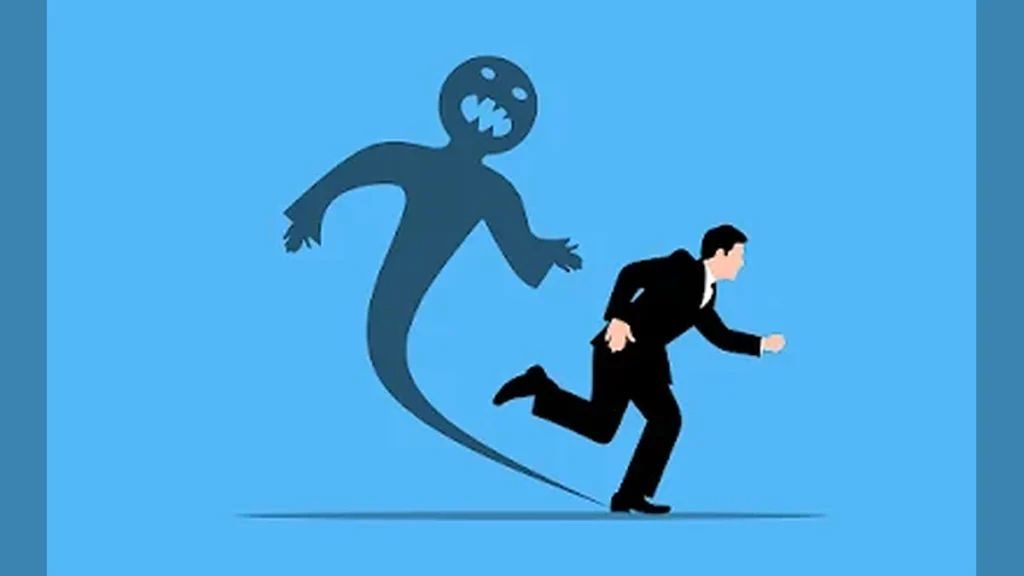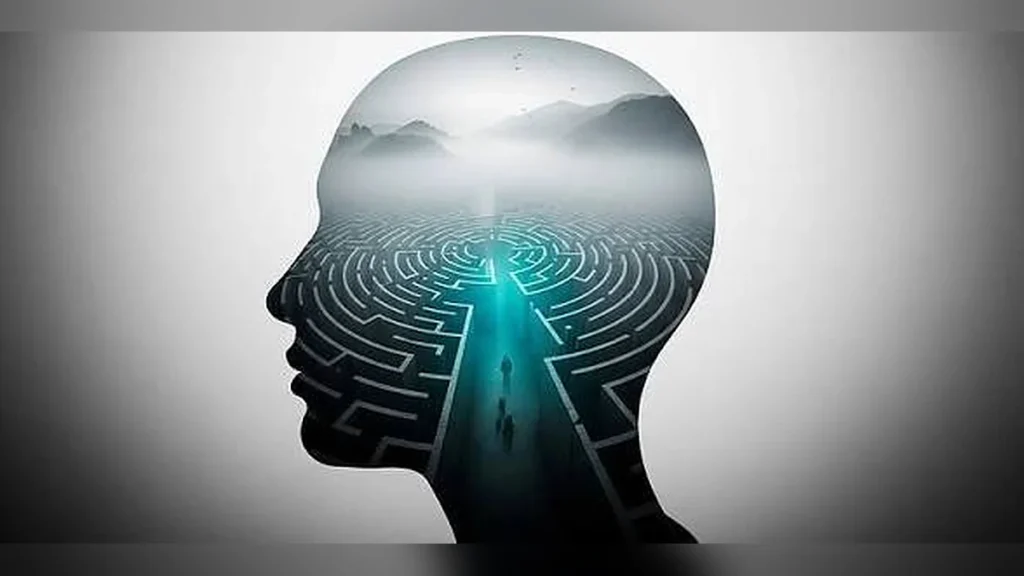
You walk into a room you have never entered. Someone says a sentence you swear you have heard. For two or three seconds the present feels like a rerun. That jolt has a name: déjà vu. This article explains what is deja vu meaning science in plain language — the French phrase, the brain theories people actually use, and why time-travel stories are still claims, not proof.
The feeling is common, short, and easy to over-read. Below, documented everyday experience is kept separate from scientific explanation, folklore-style mystery talk, and modern rumor. No extra percentages, named lab studies, or “secret proofs” are added beyond what the original Hindi explainer already states.
What “Déjà Vu” Actually Means
Déjà vu is a French phrase. In everyday English it means “already seen.” That is the whole dictionary core. It is not a medical diagnosis in the source explanation, and it is not a religious term. It is a label for a mental experience: the brain treats the present as if it had already happened, even when you know — a second later — that the scene is new.
People search the same idea in many ways: what is déjà vu, déjà vu meaning, “have I lived this before,” or the Hindi phrasing that first carried this explainer. The event itself is simple. A new street looks familiar. A conversation feels pre-heard. A small slice of life arrives with a false stamp that says replay.
The original explainer lists three everyday scenes that match the definition:
- You visit a place for the first time and feel you have been there before.
- You hear a conversation and feel you have already listened to the same words.
- A scene or event arrives with the sense that the memory is already stored.
That list is description, not evidence of a past life. Feeling “already seen” is the experience. Proving that the moment truly occurred earlier is a different claim, and the two should not be glued together.
Language matters here. Calling it “already seen” keeps the mystery in perception. Calling it “I time-jumped” turns a few seconds of confusion into a cosmic story. The rest of this article stays with the first reading unless a later section clearly marks a belief or rumor.
Why the Moment Feels So Real
Déjà vu does not arrive as a polite idea. It arrives as a body-level certainty. For a few seconds the mind is not calmly comparing files. It is briefly confused. The Hindi source puts it directly: when the present suddenly feels pre-lived, the brain is mixed up for those seconds, and that mix-up is the feeling.
Intensity varies. For some people the flash is light — a shrug, a smile, then it is gone. For others it feels deep and even frightening, as if the room itself is slightly wrong. Both reactions can sit on the same short event. The strength of the feeling is not a measure of how “true” a past-life or time-travel story is. Strong feeling is still feeling.
That is why the hook works so well in conversation. A person does not say, “My familiarity system misfired.” They say, “This already happened.” The brain’s shortcut is the story. Once the seconds pass, most people can see the mismatch: I have never stood in this shop; I have never met this person; I have never heard this exact line. The aftertaste of certainty is what lingers, not a photograph of an earlier life.
Treat the intensity as a feature of the experience, not as courtroom evidence. A real jolt can still come from a brief processing error. That distinction — real feeling versus proven replay — is the hinge of every later section.
Is Déjà Vu Real — or Proof You Lived This Before?
The most common question is blunt: is déjà vu real? The honest split answer from the source is this. Documented fact: the experience itself is real. People do feel it. It is not imaginary in the sense of “nobody has this.” Scientific explanation, as framed in the source: that does not mean the event was literally lived earlier. It can be a process inside the mind.
The same explainer states a “truth” line in plain words: déjà vu is not magic and not time travel; it may be a play of the brain. That is presented there as the working reading, not as a lab paper with named authors. Keep that label. No scientist is named in the source, so none is invented here.
Still, some listeners refuse the small explanation. They prefer a large one: another timeline, a future self, a hidden visit. Those are modern claims and popular beliefs. They are interesting. They are not the same category as “I felt this for three seconds in a new corridor.” Mixing the categories is how a common glitch becomes a scare story.
So the useful sentence is double. Yes, déjà vu happens. No, the happening does not automatically prove a second life of the same minute. Reality of the sensation is not the same as reality of the cosmic plot.
FACT BOX
Documented in the source explainer: Déjà vu is a French phrase meaning “already seen.” It is described as a short mental experience in which the present feels pre-lived. The same article states that almost everyone has the experience at some point, and it repeats a widely circulated figure that more than 70 percent of people feel déjà vu at least once. It also states that the feeling usually lasts a few seconds and, in ordinary cases, is not treated as dangerous. No named study, year, or laboratory is attached to that 70 percent line in the source, so it stays a source claim — not a new statistic invented here.
What Is Déjà Vu Meaning Science: The Signal-Delay Idea
Once the definition is clear, the next search is scientific. What is deja vu meaning science, if it is not a spell? The Hindi explainer offers a first model often called, in simple English, signal-delay theory. It is presented as what “scientists believe” in general language. Again: no paper title, no researcher name, no year is supplied in that source, so this section only unpacks the idea that is already there.
The picture is mechanical. Eyes meet a new object or place. Signals travel toward the brain. If those signals are even slightly late, the mind may tag the incoming scene as something already viewed. In the source’s easy wording, the brain “glitches” for a few seconds — and that glitch becomes déjà vu.
A second layer of the same idea says the brain works in two parts. New information is said to reach those parts at different times. If one part receives the news first and the other a moment later, the second arrival can be misread as a repeat. The mind then reports: I have seen this. The report is a timing story, not a time-machine story.
Read that as a scientific explanation offered in popular form, not as a courtroom verdict. It tries to keep the cause inside ordinary perception: same event, two arrivals, wrong stamp. It does not require a second universe. It also does not claim that every déjà vu has been measured in a scanner. The source itself later says research is still going on. That humility belongs next to the theory, not after a fake “scientists have finally proved.”
If you only remember one science line, remember this: delayed or split processing can make a first look feel like a second look. Familiarity is the output. History of the moment is not automatically included.
The Memory-Glitch Explanation
A second model in the same explainer is memory-error theory — a “memory glitch.” Here the mistake is filing, not timing. A brand-new event is dropped into the drawer marked old. The brain then treats the fresh scene as a retrieved memory. New thing equals “already stored.” That is why it feels previously seen.
The source states this as a possible truth, not as mysticism: déjà vu may actually be a memory error rather than a mysterious power. That sentence is the whole point of the section. Power language is optional. Filing language is enough.
Think of memory as a clerk who is usually accurate and occasionally rushed. Most days the clerk stamps “new” on new paper. On a rushed day the clerk slaps “old” on a page that just arrived. You, standing in the shop or on the bus, inherit the wrong stamp. You feel recognition without a usable date, place, or earlier chapter. That missing detail is a clue. A true remembered visit usually comes with some context. A glitch often comes with certainty and almost no file.
These two science-style readings can sit side by side without a fight. Signal delay talks about arrival time. Memory error talks about storage. Both stay inside the head. Neither needs magic. The source does not force you to pick a winner. It only insists that “brain process” is a better first answer than “I jumped tracks.”
Fatigue, Stress and Everyday Triggers
The explainer also lists conditions that make the experience more likely. When you are very tired or under stress, chances of déjà vu are said to rise, because the mind is not working at its cleanest and signal processing can go wrong. That is presented as a practical observation, not as a hospital statistic.
Three everyday extras are named in the same breath:
- lack of sleep
- too much thinking / mental overload
- too much screen time
None of those items is framed as a curse. They are framed as load. A tired clerk misfiles. A tired processor double-stamps. If déjà vu clusters on weeks of poor sleep, late-night scrolling, and high worry, the source’s reading is not “the veil is thinning.” It is “the system is strained.”
This is still not a diagnosis. The article does not say every tired person will feel déjà vu, and it does not invent a number for how often screens cause it. It only ties strain to a higher chance. That is enough for a useful habit: if the flashes pile up, look at sleep and stress first, before building a parallel-world plot.
Frequency, in the same source, is uneven. Some people rarely feel it. Some feel it again and again, especially when exhausted or tense. Variation is normal in the explainer’s own FAQ. It is not, by itself, proof of a special destiny.
Time Travel, Parallel Worlds and Other Modern Claims
Now the popular plot. Some people link déjà vu to time travel. Others say the same event already ran in a parallel universe. A third version says a future self already lived the minute and the present self is catching an echo. The source lists those beliefs in almost those words. They sound rich. They are still beliefs.
Modern claim / rumor: you saw the future; another timeline already played this scene; a later version of you sent the feeling back. What the same explainer states about evidence: so far there is no solid scientific proof behind those ideas. For now, science as presented there treats déjà vu as a mental process, not as time travel.
That gap is the whole adult sentence. Interesting is allowed. Proven is not automatic. A story can be shared in a café without becoming a fact box. The article also notes that déjà vu remains a kind of mystery and that research continues, so more may be learned later. “Research continues” is not a hidden yes to wormholes. It is a pause.
Why do the large stories survive? Because the feeling is oversized compared with the seconds it lasts. The mind prefers a movie to a timing error. Folklore and internet talk will keep feeding that preference. A careful reader can enjoy the movie and still keep the label: unproven claim. That is not hostility toward wonder. It is respect for categories.
If a later study someday ties a specific brain circuit to the flash, that would still be a brain finding. It would not, by itself, mint a ticket to another year. Keep the chain of evidence short and honest.
Advice
The source’s practical section is calm on purpose. If déjà vu repeats, there is no need to panic. It is described there as a common condition. The suggested moves are ordinary: stay steady and do not overthink the flash; get enough sleep; try to lower stress; cut screen time. The point is understanding, not fear.
That is critical thinking in daily clothes. First, name the event correctly — a short familiarity error, not a verdict on reality. Second, check load — sleep, strain, endless phone light — because the same explainer already ties those to a higher chance. Third, refuse the upgrade from “odd” to “supernatural” unless evidence arrives that is stronger than a three-second chill.
Vivek Bhai’s line in the original piece is the same rule without perfume: déjà vu is not magic. It can be a small glitch that people inflate into a giant secret. If every strange second becomes time travel in your head, you will scare yourself. Not every odd thing is a mystery. Sometimes it is only the mind slipping. Less rumination, more ordinary life.
Use that as a safety habit, not as medical advice. This article does not treat déjà vu as a disease and does not tell anyone to ignore a wider problem. If flashes come with other serious symptoms, that is outside the source’s scope and belongs with a qualified clinician. For the common, isolated, few-second version described here, the working stance is simple: notice it, do not build a mythology on it, rest the system that may have misfired.
💡 Stay curious about the feeling. Stay strict about the proof. A real shiver can still be a small error. Chill is allowed. Cosmic panic is optional — and usually extra.
FAQ
Is déjà vu dangerous?
According to the source explainer, not in the ordinary case. It is treated as a normal mental experience, lasting a few seconds, and ending on its own.
Does everyone get déjà vu?
The same piece says most people have the experience at least once in life, and it also uses the stronger everyday line that almost everyone meets it at some point.
How often does it happen?
Some people rarely feel it. Others feel it again and again, especially when tired or stressed. The source does not give a weekly number.
Does déjà vu mean time travel?
No, in the scientific framing used there. It is described as a process of the mind, not travel through time. Parallel-universe and future-self readings are listed as beliefs without solid scientific proof in that article.
What should you do if it keeps returning?
The practical list is: stay calm, avoid overthinking, sleep enough, reduce stress, and cut screen load. Treat repeated flashes as a reason to rest the brain, not as automatic proof of another timeline.
Disclaimer
This English article restates the Vista Hub Hindi explainer on déjà vu for search readers. It is general information, not medical, psychiatric, or scientific-journal advice. The “more than 70 percent” figure is carried as a claim already present in that source; no extra statistics, named studies, dates, or proofs were added. Time-travel and parallel-universe talk is labeled as unproven modern claim. If unusual experiences worry you or arrive with other symptoms, speak with a qualified professional.