
Bed shaking sensation at night: start with the description
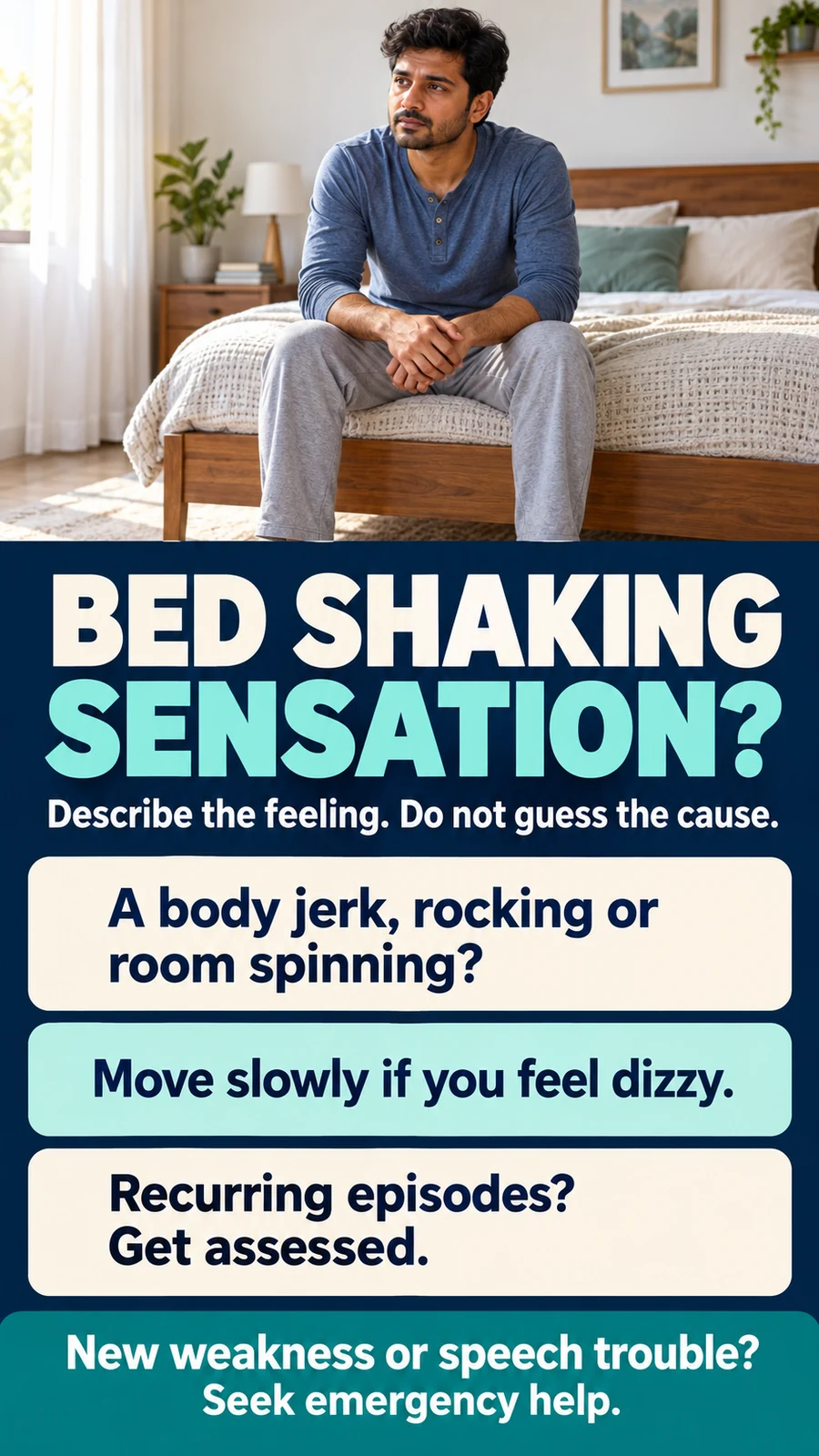
A bed shaking sensation at night can wake you abruptly. You may describe a vibrating mattress, a rocking body or a room that suddenly spins. Finding everything still afterward can feel unsettling. These descriptions are not interchangeable: first consider whether there was visible body movement, external vibration or a sensation of motion without an observed movement.
Seek emergency help if the sensation or vertigo comes with new speech trouble, arm or leg weakness, double vision or loss of vision. In India call 112; elsewhere use your local emergency number. See NHS vertigo warning signs.
Separate actual vibration from a perceived movement
Ordinary sources worth checking include a partner turning over, a pet, an unstable bed frame or nearby equipment. These are examples to consider, not confirmed explanations for your experience. If safe, checking the bed’s stability in daylight may be more useful than guessing all night.
Did someone else notice vibration at the same time? Did other objects move? Such context can help, but no single object remaining still supplies a definitive test. Clear wider shaking or damage warrants attention to local safety guidance and official information.
Someone else noticing nothing proves neither a supernatural presence nor an illness; they may have been asleep. Keep an honest account rather than forcing yourself to choose a cause immediately.
Sleep starts and motion-like experiences around sleep
A brief involuntary muscle jolt while falling asleep may be a hypnic jerk or sleep start. This is actual body movement; not every rocking sensation should receive that name. See Cleveland Clinic on sleep starts.
Some sleep-transition sensory experiences involve falling or floating. A sensation of movement can occur without the whole bed moving. See Cleveland Clinic’s sleep-related experience guide.
If you also cannot move or speak, report that separately. Sleep paralysis involves temporary inability to move around falling asleep or waking; a bed shaking sensation alone does not diagnose it. See NHS sleep paralysis information.
Does turning over make the room spin?
Brief spinning triggered by rolling over or lying down can occur with BPPV, an inner-ear condition involving displaced tiny crystals. That differs from a general claim that tiredness prevents ear fluid from settling. See Cleveland Clinic’s BPPV guide.
Tell a clinician whether the mattress seemed to vibrate or the room seemed to rotate. Finding a BPPV description online does not establish the diagnosis. Do not begin head-hanging or rapid neck-position exercises based solely on feeling the bed move; clarify the cause and safe instructions first.
What about heartbeat and mattress resonance?
If it seems pulse-synchronous, describe that observation to a clinician. Palpitations mean a more noticeable or unusual heartbeat; they do not establish that a pulse is moving the mattress. See NHS palpitations guidance.
The claim that a heartbeat resonates with a spring mattress and therefore shakes the entire bed should not be treated as a universal established explanation. Nor does assigning the label “vestibular illusion” replace assessment of what happened.
FACT: Perceived motion, an observable body jerk, room-spinning vertigo and external bed vibration are different descriptions. That distinction helps guide the next step.
Advice: stay physically safe that night
Use a gentle light. If dizzy, avoid rushing up; remain in a stable safe position and move slowly. Do not drive or climb to investigate something while dizzy. See NHS dizziness safety advice.
Do not crawl under the bed, lift a heavy frame or remove the mattress while half asleep or unsteady. If there is a genuine stability concern, ask for help and use a safe, stable sleeping arrangement.
You do not need to repeatedly lie down and roll over to provoke the feeling. If practical, make a short note: time, approximate duration, a jerk versus spinning, and associated symptoms. Staying awake on watch is not an essential part of understanding the event.
Do not abruptly stop prescribed medication or use another person’s sleeping tablets, alcohol or unverified calming products as treatment.
Related reading: A Sudden Jerk While Falling Asleep: Pulled Feet, Hypnic Jerks and Brain Zaps
Related reading: Cannot Move in Your Sleep and Feel Pressure on Your Chest: Sleep Paralysis Explained
When to arrange assessment and what to mention
Arrange help if events recur, occur when fully awake, or disrupt sleep and daily functioning. Mention hearing changes, ear noises, headaches, falls, new medicines or recent illness.
Palpitations accompanied by chest pain, breathlessness or fainting call for immediate help. See NHS emergency advice. Vertigo with hearing loss also needs immediate assessment, rather than a sleep-related explanation by default.
Ask which ear, balance, sleep or other assessment is appropriate. You do not need to book an MRI, EEG or sleep study for yourself simply because the sensation is unusual. Separate what you observed from what you inferred.
A regular wake time and adequate opportunity for sleep are useful habits. See the NHS insomnia guide. They are not a guaranteed treatment for every type of movement sensation.
Frequently asked questions and disclaimer
Is it definitely an earthquake? No. Consider observable environmental evidence and official information rather than the feeling alone.
Is a shaking-bed feeling proof of a spirit? No. The experience does not establish a supernatural cause.
Is every episode a hypnic jerk? No. A muscle jolt, rocking sensation and spinning room describe different experiences.
Does tiredness make ear fluid keep moving? That is not an established general explanation for this complaint. Have recurring dizziness assessed.
Should I try the Epley manoeuvre myself? Do not start it solely for a bed shaking sensation without understanding the cause and receiving suitable safe instructions.
Disclaimer: General health education only, not a personal diagnosis or treatment plan. Sources are linked in the relevant sections. Seek timely care for new, severe or sudden symptoms.