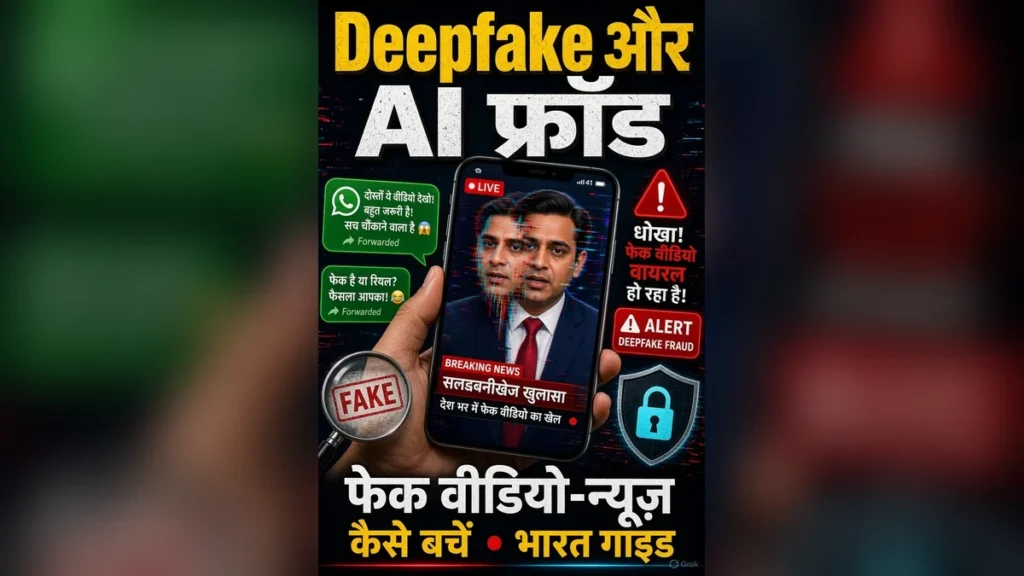
The moment a WhatsApp message pops up in a family group with the caption “Friends, watch this video, the truth is shocking,” our finger instinctively moves toward the Forward button. But before you tap share, take a breath and pause. Deepfake fraud in India is no longer a distant topic from sci-fi movies or high-budget cinema—it has arrived right inside our daily messaging apps, social media feeds, and phone calls.
As artificial intelligence tools become cheaper, faster, and widely accessible, creating convincing manipulated media requires minimal technical expertise. From cloned voice calls asking for urgent financial help to cropped video clips masquerading as breaking news, ordinary phone users are increasingly targeted by digital scammers.
In this comprehensive India guide, you will learn how AI-generated fake videos and voice scams operate, how to spot visual and auditory anomalies, and the exact daily habits you need to adopt to protect your money, identity, and family peace of mind.
What is Deepfake and AI Fraud? (In Simple Terms)
Deepfake refers to video or audio content created or altered using artificial intelligence software to replicate a real person’s face, voice, or expressions. In the early days of digital misinformation, fake news was limited to misleading text posts or crude Photoshop edits. Today, AI models can map facial movements and clone vocal tone so precisely that the media appears genuine at first glance.
AI Fraud is a broader umbrella term. It includes deepfake videos, cloned voice phone calls, fabricated “breaking news” bulletins, AI-written phishing text messages, and fake social media profiles. Despite the varying formats, the core objective of scammers remains constant: to trigger emotional panic or trust, forcing you to share an OTP, reveal UPI PINs, upload KYC documents, or make an immediate financial transfer.
In India, the risk feels particularly personal because our daily communication heavily relies on WhatsApp, Instagram Reels, and YouTube Shorts. A single unverified clip can circulate across thousands of family groups within hours. Someone sees a sensational “LIVE BREAKING” banner and panics, while someone else hears a relative’s voice on a call and immediately transfers funds. The ultimate defense against these threats is not complex software, but a conscious habit: pause, verify, and then act.
The WhatsApp Forward Trap — How the Most Common Scam Works
The classic WhatsApp trap usually begins with a familiar setup: a green message bubble carrying the “Forwarded” arrow, accompanied by high-urgency text such as “Extremely Important,” “The government is hiding this,” or “Watch before it gets deleted.” These messages intentionally target high-emotion states—fear, anger, or extreme curiosity—causing your brain to bypass logical verification steps. The moment critical thinking is bypassed, the fraudster wins.
A second, far more dangerous variation is the personalized emergency scam. You receive a phone call or voice message from an unknown number saying, “I am stuck in an emergency, this is my new number, please send money via UPI immediately.” The voice sounds identical to a family member or close friend because AI voice cloning tools can replicate vocal patterns using just a few seconds of audio sampled from public videos or social media posts. Always remember: a familiar voice does not guarantee true identity.
The third major trap involves fabricated news broadcasts. You might see a short video containing logos like “LIVE” or “BREAKING NEWS” with sensationalized text banners. However, the channel name may be subtly misspelled, official watermarks might be missing, or the clip may consist of a 15-second out-of-context cut taken from an unrelated old video. Genuine news organizations publish verifiable full articles on their official platforms. Treating an isolated, orphan video clip as nationwide truth is a major pitfall.
How to Spot Fake Video News — An Eye & Ear Checklist
Although artificial intelligence is advancing rapidly, many deepfakes still leave subtle visual clues. Paying close attention to physical details often reveals anomalies. Look for unnatural blinking patterns, visual blurring around the lips, teeth, or earlobes, mismatched lighting directions between the subject’s face and the background, and slight delays in lip-synchronization. While high-end deepfakes may appear near-flawless, treating these visual glitches as strong red flags will help you pause before trusting the media.
Audio content also offers distinct warning signs. Listen carefully for a robotic stretch in speech tone, unnatural pauses between sentences, sudden cuts in background ambiance, or dramatic emotional shifts that do not align with the context of the conversation. Instead of listening over a noisy phone speaker, use headphones to inspect suspicious voice notes. Most importantly, verify who published the clip: is it an official media outlet, a verified press handle, or merely an anonymous forwarded file?
Cultivating reverse-checking habits is straightforward. Copy 4–5 main words from the headline and search them on major search engines. Has the claim been reported by established, reputable news outlets? Have official fact-checking platforms issued a clarification? Search video platforms for the full, original press conference or event footage—frequently, sensational clips are just cropped edits designed to mislead. A standalone screenshot or short clip is never conclusive proof on its own.
| Verification Check | What to Observe | Action If Suspicious |
|---|---|---|
| Source Verification | Is it a verified channel or official news domain? | Stop forwarding; search for the primary source link. |
| Facial & Voice Details | Look for lip-sync lag, ear/edge blur, or robotic tone. | Treat as suspicious; remain calm and verify details. |
| Level of Urgency | Phrases like “Share OTP now” or “Transfer money immediately.” | Enforce a hard stop; call back using a known number. |
| Context & Length | Short 10 to 20-second dramatic or sensational cuts. | Search for the complete, original video footage. |
📌 FACT BOX — Essential Realities of Deepfake Fraud in India
- Deepfake Technology: Involves AI models trained to modify or generate realistic human faces and vocal tracks.
- Scope of AI Fraud: Encompasses deepfake video clips, AI voice cloning emergency calls, fake news bulletins, and automated phishing text scams.
- WhatsApp Forward Tag: A “Forwarded” tag simply indicates media circulation; it serves as a prompt to verify authenticity before sharing.
- Fact-Based Reality: Responsible digital awareness relies on clear verification habits rather than unverified figures or exaggerated crime statistics.
- Primary Protection Method: The most effective line of defense against deepfake fraud in India is simple: pause, verify the primary source, and never share OTPs or money under pressure.
Money, OTP, and KYC Scams Powered by AI — Practical Protection
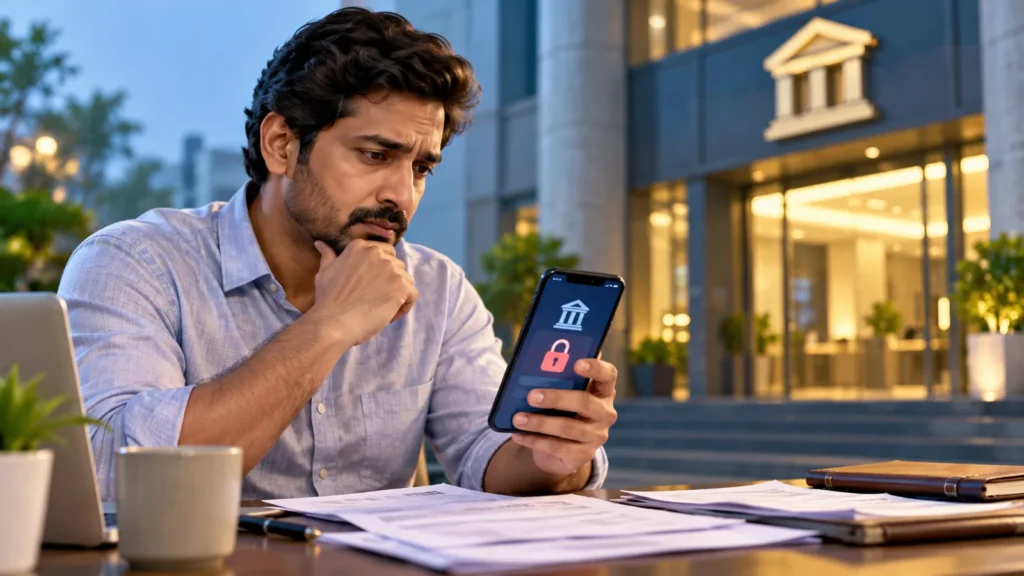
The most financially damaging cases of deepfake fraud in India involve money transfers, OTP theft, and fake KYC updates. Scammers frequently impersonate bank officials, customs officers, or law enforcement agents, using high-pressure tactics to convince victims that their bank account is blocked or a parcel is seized. Alternatively, they use cloned voice calls mimicking a family member claiming to be in hospital or police custody. The underlying mechanism is identical: induce panic to steal your OTP, UPI PIN, bank credentials, or trick you into installing remote screen-sharing apps.
It is crucial to remember a fundamental rule of digital banking: no legitimate bank or financial institution will ever ask for your OTP or UPI PIN to credit money or complete a verification. Your OTP acts as a digital key to your funds—never share it with anyone under any circumstances. Furthermore, automatically treat requests to install remote management software (such as AnyDesk or other screen-sharing tools) as a major red flag whenever they come from unsolicited calls.
Establishing clear family verification protocols offers robust protection. Create a strict rule within your household: any unusual request for money or sensitive credentials requires immediate verification through a direct family video call or a callback to a known, pre-saved phone number. Elderly family members should be educated about these tactics, as scammers frequently leverage their respect for authority and emotional care for relatives to exert pressure.
India Safety Guide: 7 Practical Daily Habits
- Pause Before Forwarding: Take a 20-second pause to ask yourself who created the media and what their motive might be.
- Search Headlines Independently: Type the primary keywords into Google or news search platforms to confirm if mainstream outlets have reported it.
- Inspect Visual and Audio Details: Watch for unnatural facial movements, lighting mismatches, or sudden interruptions in background sound.
- Implement a Hard Stop on Urgency: Any call or message demanding instant OTPs, money transfers, or KYC links must be treated as hostile until verified.
- Establish Family Code Words: Agree on a private verbal passphrase within your family to verify identity during emergency voice call scenarios.
- Disregard Mass Circulation as Proof: A message tagged “Forwarded many times” simply reflects viral spread, not truth.
- Educate All Generations: Show short examples to children and senior family members so they recognize how easy it is to synthesize voices and videos.
What to Do If You Suspect Fraud — Step-by-Step
Step 1: Do Not Share or Forward: Stop the spread of suspicious clips immediately by withholding them from group chats or social media feeds.
Step 2: Request Primary Sources: Ask the sender to provide the original source link or official press release rather than an isolated file.
Step 3: Cross-Check Across Platforms: Verify the claim against at least two established news organizations or official government portals.
Step 4: Freeze Financial Conversations: If a contact requests money or sensitive information, terminate the call and initiate a fresh call using a saved, trusted phone number.
Step 5: Secure Compromised Accounts: If you suspect your banking or UPI details have been exposed, immediately check active sessions via your official banking app, change your UPI PIN, and notify your bank’s official support line.
💡 Vivek’s Practical Advice: Simple Digital Hygiene
Look, let’s keep things completely practical—there is no need to spend your nights worrying about artificial intelligence taking over, but carelessness is equally dangerous. Your strongest defense against deepfake fraud in India isn’t an expensive security application; it is simply your habit of taking a 20-second pause.
Whenever a video or phone call makes your heart rate spike with urgency—“Oh no, I need to act right now!”—take that as an automatic signal that verification is required. Truth does not degrade if you wait 20 seconds to verify it, but a hasty forward can cause real financial and emotional harm to your loved ones.
Set aside ten minutes this week to talk with your family. Explain to parents and grandparents how voice cloning technology operates in simple, calm terms. Establish a private family phrase, reinforce the strict rule that OTPs are never shared over the phone, and refrain from posting sensationalized video content on your social media status without checking source links. Clear thinking and a slow thumb are the best digital safety tools you can carry.
One Line to Remember: The easiest way to catch a deepfake is not by possessing flawless eyesight, but by pausing to challenge the artificial sense of urgency whenever money, OTPs, or shocking news are involved.
FAQ — Deepfake and AI Fraud
1. What is a deepfake in simple terms?
A deepfake is digital media—video or audio—created or altered using artificial intelligence to make a person appear to say or do something they never actually did, effectively cloning their visual or vocal identity.
2. Is every forwarded WhatsApp message automatically fake?
No. The “Forwarded” tag simply indicates that a message has been passed along by multiple users. Genuine information is also shared via forwards. However, the tag serves as a reminder to pause and verify the primary source before trusting or sharing the media.
3. Can I verify someone’s identity purely based on their voice during a call?
With modern AI voice cloning tools, relying solely on voice recognition during emergency financial requests is risky. Always confirm identity by asking a private question, using a pre-agreed family code word, or hanging up and calling back on their known primary phone number.
4. Is it ever safe to share an OTP over a phone call if the caller claims to be from a bank?
No. Legitimate banks and payment platforms will never request your OTP, net banking password, or UPI PIN over a call or text message to update accounts or reverse transactions. Your OTP is private.
5. What should I do if I receive a viral fake news video?
Do not forward it to other groups or post it on your social media status. Search the main claim online across verified media outlets. If the news cannot be corroborated by primary sources, delete or ignore the clip.
Disclaimer: This article is provided strictly for general educational and media literacy purposes. It does not constitute formal legal, financial, or cyber-crime advice. Deepfake detection indicators are not infallible, and individual visual signals do not offer a 100% guarantee. If you experience financial loss or cyber fraud, report the incident immediately through official bank channels and authorized legal authorities. No unverified crime statistics are included in this guide.