 Vista
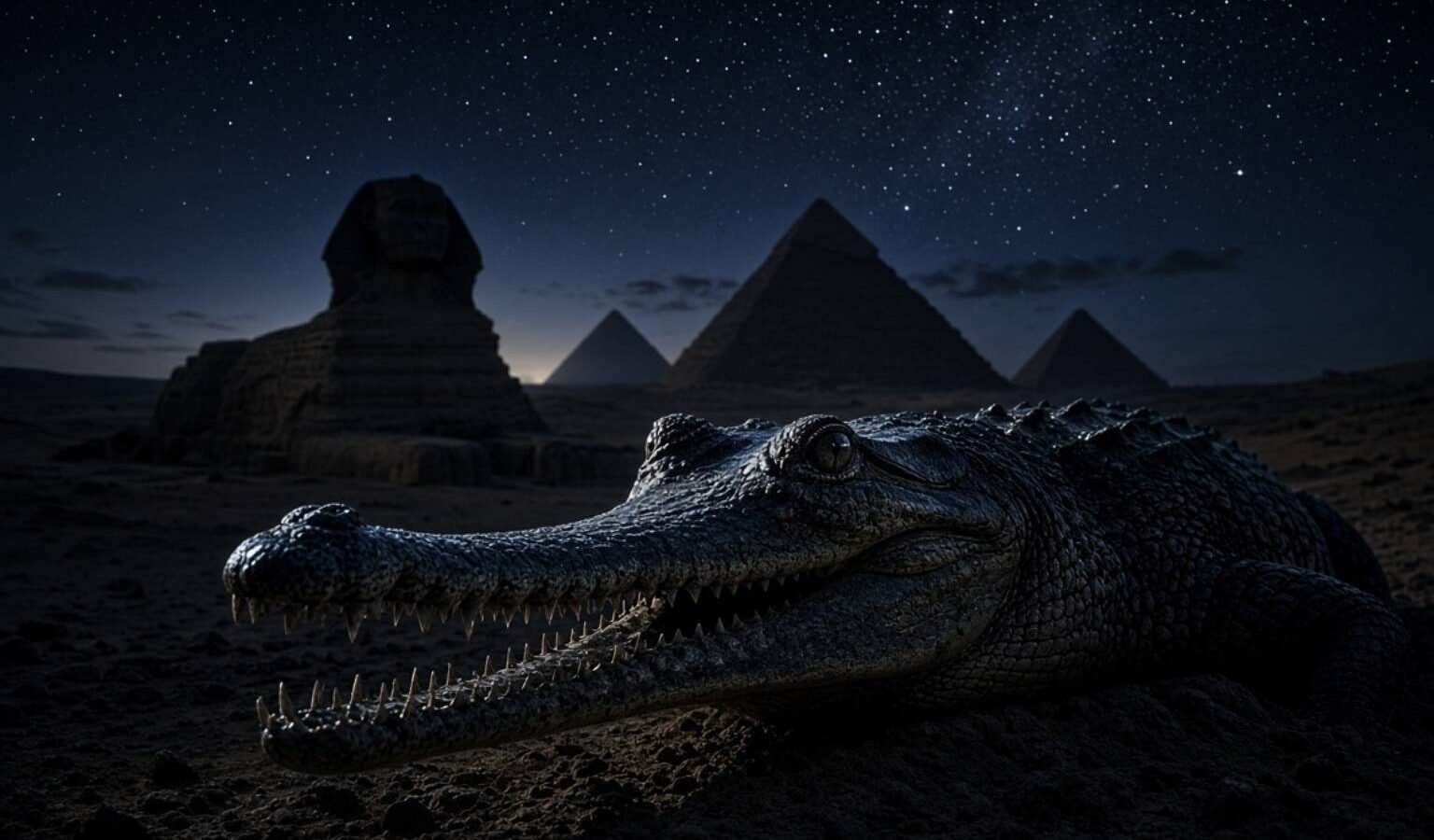
Herugavialis cairensis is an extinct, long-snouted crocodilian recognised in a 2026 scientific re-evaluation of Egyptian fossils about 45 million years old. Its famous Great Sphinx connection is geological: the fossils came from the Mokattam Formation, the limestone formation from which the Sphinx was carved. Here are the skull facts, images and the timeline explained.
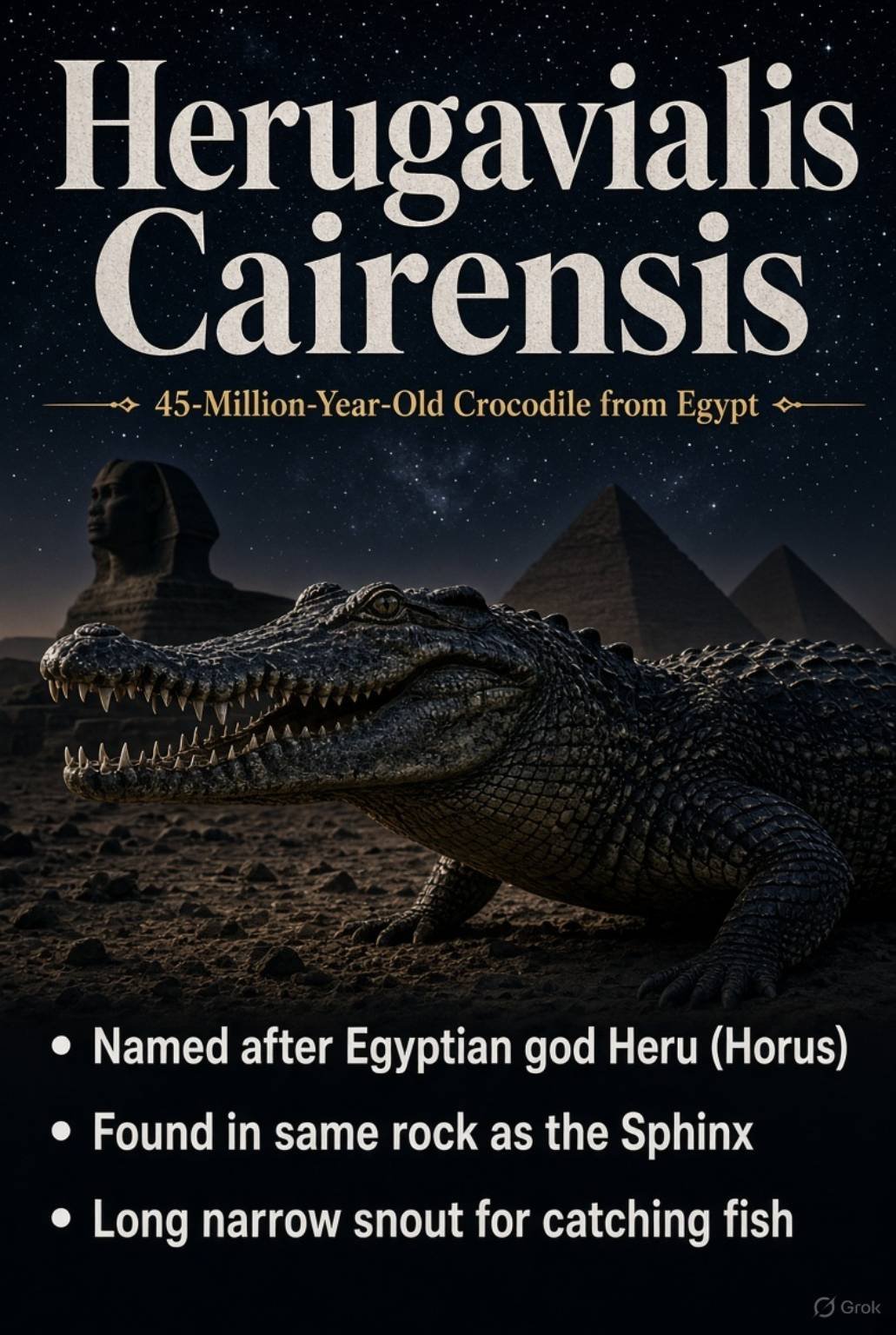
What is Herugavialis cairensis?
Herugavialis cairensis is an extinct long-snouted crocodilian that lived roughly 45 million years ago in the region that is now Egypt. It belongs to the gavialoid side of crocodilian evolution, a group associated with long, narrow jaws and fish-catching habits. A study published in Royal Society Open Science on 7 October 2026 re-examined fossils that had been known for almost a century and placed the previously named species in the new genus Herugavialis. The name combines a reference to Heru, or Horus, in Egyptian tradition with cairensis, a reference to Cairo. This story is sometimes presented as a mysterious crocodile discovered inside the Great Sphinx. That version is incorrect. The scientific connection concerns the age and geological formation of the limestone in which the fossils occurred, not an animal preserved inside the monument.
The real link between the crocodile and the Great Sphinx
Both the Herugavialis fossils and the limestone of the Sphinx belong to the Mokattam Formation, which formed during the Eocene epoch. That is the fascinating geological connection behind the headlines. The famous Sphinx at Giza was carved from natural bedrock thousands of years ago. The crocodilian lived many millions of years before human civilisation and therefore never stalked around ancient Egyptian temples or pyramids. A dramatic image showing a living crocodile beneath the Sphinx is best read as a storytelling juxtaposition of two periods, not a scene from history. The distinction matters because the fossil is useful evidence for prehistoric marine environments, while the Sphinx is an archaeological monument produced much later. The same formation can preserve ancient marine organisms and also provide the rock later shaped by people. One geological layer can tell two very different stories.
A discovery from fossils collected in the 1920s
This was not simply an excavation made in October 2026. Several fossil remains, including a nearly complete skull, were recovered in Egypt in the 1920s and studied at that time. The material was initially associated with a living species, Tomistoma schlegelii, commonly called the false gharial. Later scientists revisited the collection with modern anatomical comparisons and technology unavailable to the early investigators. The skull is preserved in the State Museum of Natural History in Stuttgart, Germany. Its reanalysis demonstrated features that did not fit the older identification and justified recognising Herugavialis cairensis. Such cases are common in palaeontology: an important find can sit in a museum for decades before new methods reveal its significance. The headline year 2026 is the date of a scientific revision; the fossils were discovered much earlier, and the animal itself lived about 45 million years ago.
What the skull reveals about its appearance
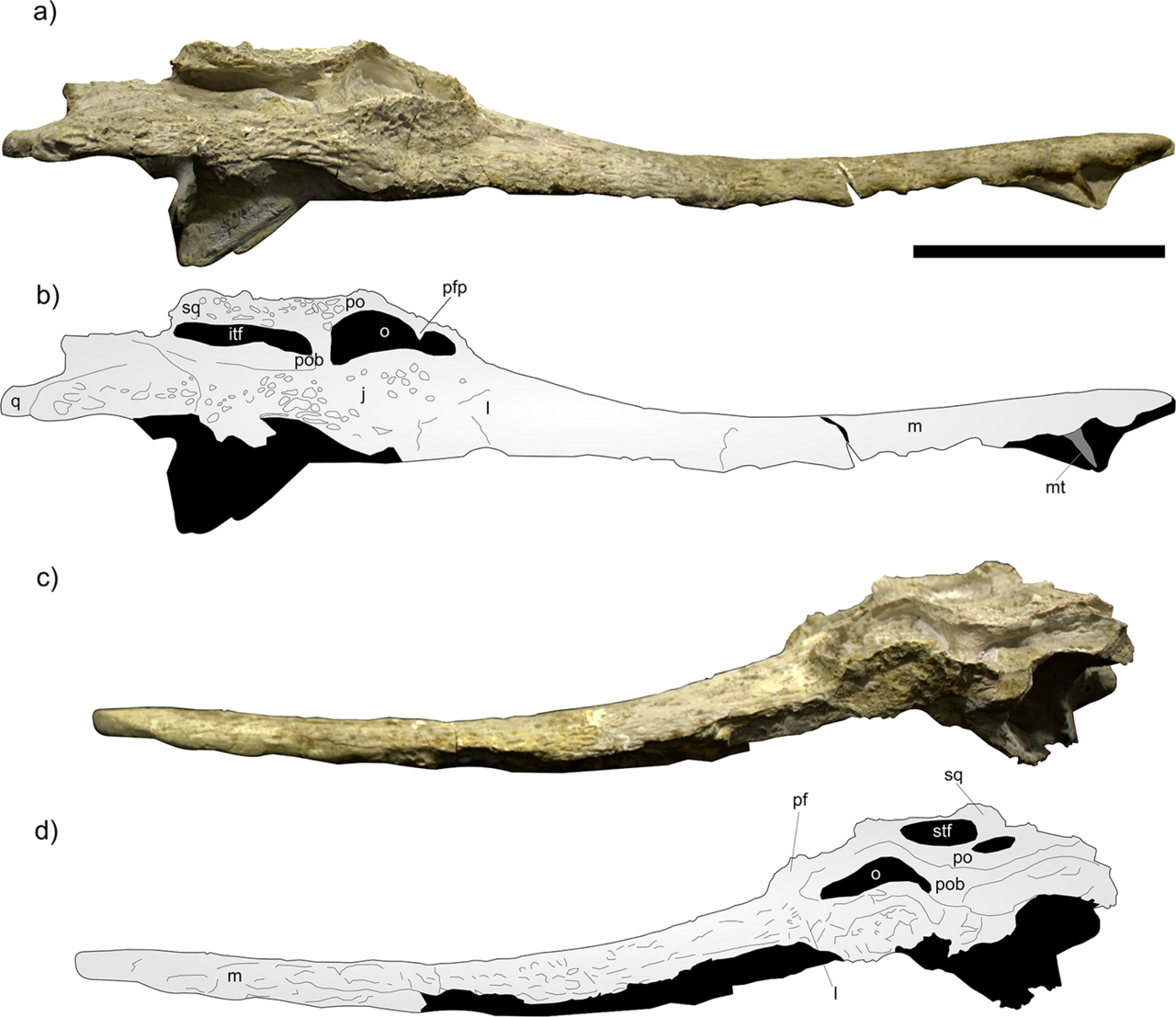
The fossils preserve enough of the head to investigate a long narrow snout and the region around the eye sockets. Researchers used CT scanning to examine internal anatomy without cutting into the historic specimens. They found features separating Herugavialis from Tomistoma and other related gavialoids, including a prominent bony ridge in the eye region. The skull is incomplete in places, with the tip of the snout missing. Therefore a full-body drawing cannot be considered a completely observed reconstruction. Artists infer the soft tissues, skin pattern and body outline by reference to related crocodilians, while bone contours come from the actual fossil record. When looking at a Herugavialis cairensis skull picture, distinguish preserved fragments, diagrams built from specimens and imaginative reconstructions. These represent different levels of evidence, and combining them without explanation invites exaggerated claims.
How did it feed and where did it swim?
The narrow jaws of gavial-like crocodilians are often interpreted as adaptations that make catching fish in water more efficient. The 2026 study places Herugavialis among marine or coastal ecosystems around the ancient Tethys and Mediterranean region. During the middle Eocene, northern Egypt looked nothing like its modern desert landscape. Shallow seas covered areas that are now dry land. These environments were inhabited by a diversity of marine animals and crocodilians, including more than one gavialoid form. The researchers report that at least two other kinds of similar crocodiles lived in the broader region. It is reasonable to explain the species as a fish-oriented coastal predator, but not to invent its exact swimming speed, diet percentages, colour pattern or adult length when those details are not supported by the fossil specimens. Fossils constrain our reconstructions; they do not supply a complete wildlife documentary.
Herugavialis vs modern gharials and false gharials
Living gharials offer a useful point of comparison because their slender snouts visually resemble long-snouted fossil crocodilians. Yet resemblance does not make them the same species, and the living gharial in the Indian subcontinent is not a descendant we can simply identify as Herugavialis. Modern false gharials from Southeast Asia are another important comparison because the Egyptian fossils were originally classified with Tomistoma. CT evidence and detailed cranial anatomy helped researchers reject that identification. A responsible comparison therefore includes the scientific name, time period, geographical occurrence and the studied skull characters. The words gharial, gavial and false gharial can easily be confused in news coverage. Here, ‘gavialoid’ refers to a wider evolutionary grouping, while Herugavialis cairensis names a particular extinct Egyptian member newly differentiated in the 2026 research.
Why were ancient crocodilians so diverse in the Mediterranean?
Palaeontologists study changing habitats as well as individual skeletons. For long stretches of Earth’s history, coastlines and sea connections in the Mediterranean region differed considerably from the modern map. Warm shallow marine environments created ecological opportunities for different crocodilian lineages. UCL researchers note that local diversity changed as climate and sea level changed, and that later drying of the Mediterranean, around six million years ago, brought further upheaval. These broad environmental patterns are far older than any Egyptian dynasty. Herugavialis adds another documented lineage to the history of these prehistoric seas, challenging the assumption that modern crocodile distributions represent how the group always lived. It is also a reminder that climate and geography shape evolution over millions of years, and discoveries made by re-examining museum collections can alter that reconstruction.
Fact check: four claims that need context
Claim: ‘A crocodile was found in the Sphinx.’ The fossils came from the same named geological formation, not from the sculpture itself. Claim: ‘It lived with ancient Egyptians.’ The animal lived about 45 million years ago; the Sphinx is only several thousand years old. Claim: ‘Scientists discovered the fossil in 2026.’ The material was gathered in the 1920s and re-evaluated in 2026. Claim: ‘The skull image tells us precisely what the whole animal looked like.’ Skull bones can constrain reconstruction, but body colour and soft tissue are not directly preserved in this case. The missing snout tip is a genuine anatomical limitation, not proof of mysterious injury or evidence of a connection to the monument’s damaged nose. Keeping timelines and evidence types separate makes the story more interesting, not less.
What to look for in fossil pictures
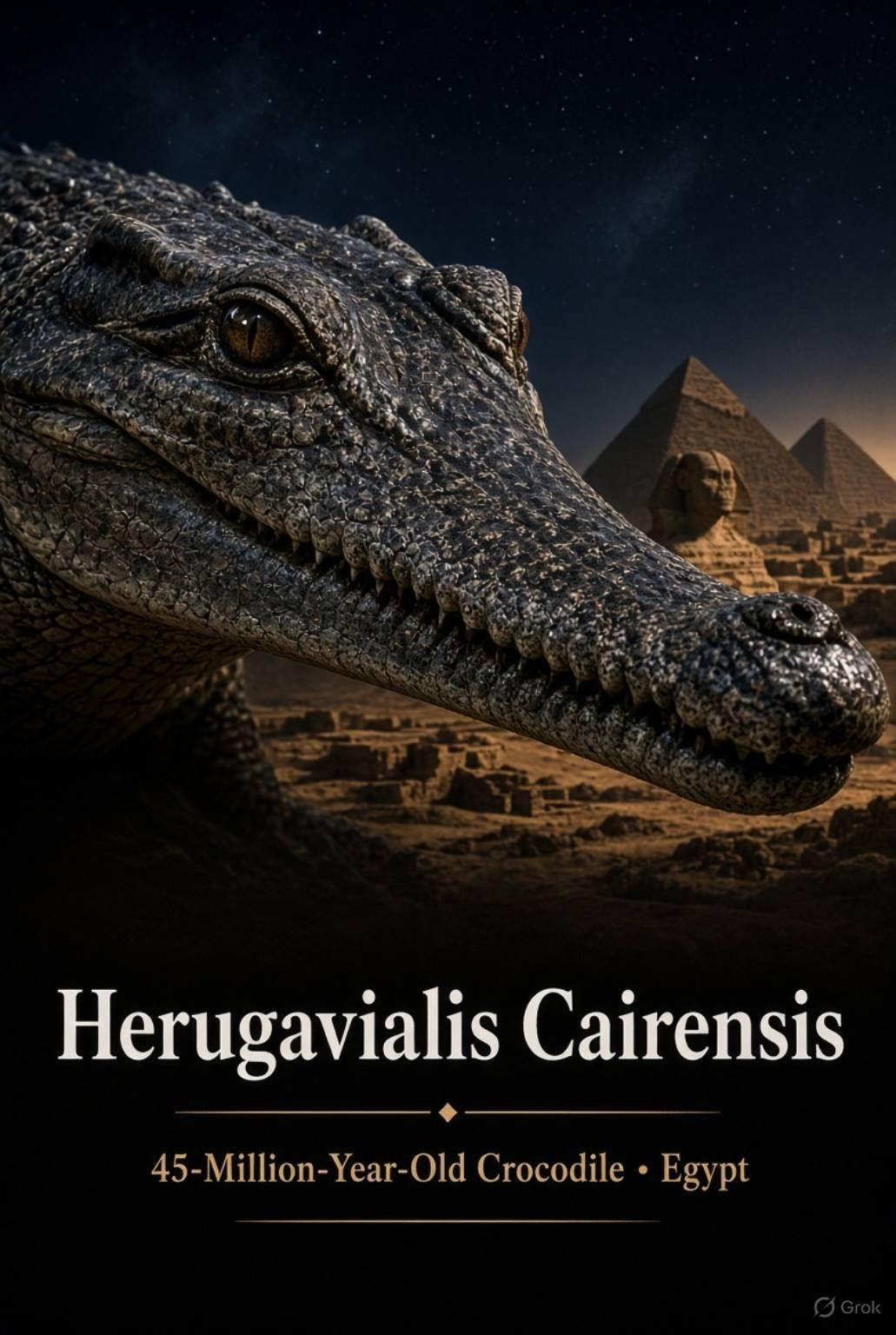
The most useful scientific picture is the one that shows a fossil beside a labelled anatomical drawing, because this identifies which parts of the head are preserved and which are absent. When comparing photographs, note the orientation of the snout, the region behind the eyes and any scale bar supplied by the researchers. A movie-style portrait beside a pyramid has a different job: it can help readers imagine the prehistoric animal, but it is not a photograph of the historical past. The uploaded diagram in this article shows anatomical regions for study, while other images communicate the overall crocodilian shape. Readers looking for verified specimens can follow the primary research and UCL links below to inspect the original scientific evidence. This visual literacy is useful far beyond this one crocodile because it applies to nearly every extinct animal pictured online.
Frequently asked questions
Was Herugavialis cairensis found inside the Sphinx?
No. The fossil material came from the Mokattam Formation, the same geological limestone formation as the Sphinx.
How old are the fossils?
They belong to a formation around 45 million years old in the middle Eocene.
Why was the name announced in 2026?
New research, including CT scans, reclassified fossils originally collected in the 1920s.
Did it look exactly like the pictured crocodile?
Its skull and classification have fossil support, but colours, soft tissues and complete body drawings are interpretations.
Was it related to gharials?
Yes, researchers place it within gavialoid crocodilians, a wider evolutionary grouping associated with long snouts.
Conclusion and references
Herugavialis cairensis is a valuable example of how re-examining a century-old fossil can change our understanding of vanished marine ecosystems. It has a remarkable geological connection to an Egyptian monument, not an archaeological connection to its builders. Last updated: 23 November 2026.
Read: UCL scientific announcement (7 Oct 2026) and Royal Society Open Science research abstract.
Related science reading
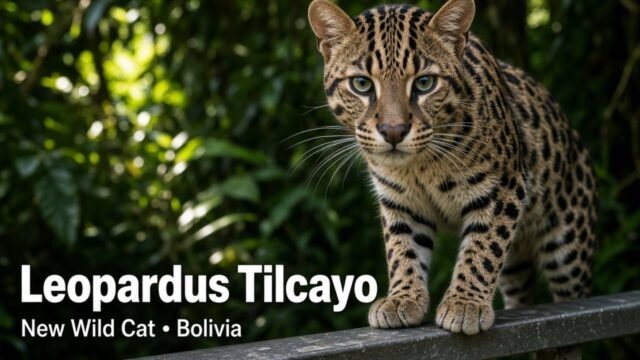
- Leopardus Tilcayo Pictures: New Wild Cat Species Discovered in Bolivia
- Indian Bramble Shark (Echinorhinus roinee): New Kerala Deep-Sea Species, Photos & Facts



























Share Your Opinion
Comments are closed on this post.