 Vista
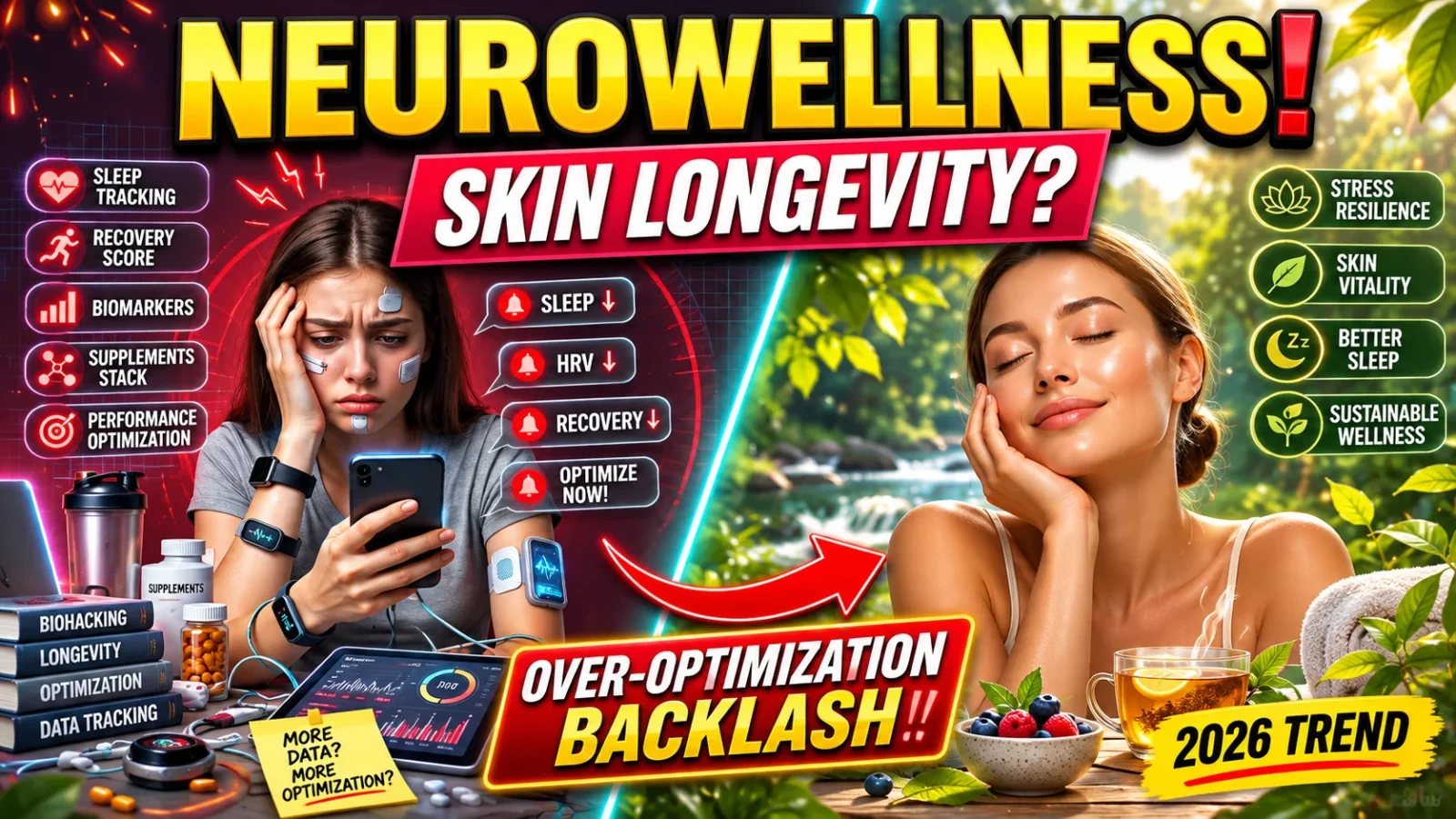
Neurowellness is a 2026 wellness trend focused on making stress regulation, restorative sleep, attention and emotional resilience part of everyday life. Instead of treating the body like a dashboard that must always achieve perfect scores, it asks a more useful question: “What helps me recover and function well?” The related over-optimization backlash describes a consumer shift away from endless sleep tracking, biomarker chasing and “maxxing” every routine. Skin longevity is a parallel but distinct trend that puts long-term skin health, barrier function and protection ahead of promises to reverse aging overnight. None of these labels is a newly proven medical treatment.
Updated 22 November 2026. The Global Wellness Summit’s January 2026 forecast separately highlighted “The Rise of Neurowellness,” “The Over-Optimization Backlash,” and “Skin Longevity Redefines Beauty.” Their connection is a move toward sustainable wellbeing rather than a guarantee of youth, a scientifically standardized “nervous-system reset,” or a particular wearable device. This guide explains the terms, separates the research from the marketing, and provides a realistic routine without turning self-care into another stressful checklist.
What is neurowellness in 2026? A simple definition and its limits
Neurowellness is an umbrella label used in the wellness industry for approaches intended to support how people manage stress, attention, restorative sleep and the body’s responses to daily demands. It draws on topics such as behavioral science, relaxation, sensory environments and, in some commercial offerings, consumer neurotechnology. The Global Wellness Summit’s 2026 analysis describes a shift from performance-led optimization toward resilience and reconnection with the body. The concept is broader than an individual meditation app, breathing exercise or brain headset.
The autonomic nervous system helps regulate involuntary processes such as heart rate, digestion and responses to stress. Its sympathetic and parasympathetic pathways participate in alertness and recovery; they are not simply two buttons labelled “bad” and “good.” The sympathetic response is useful when action is needed, while recovery processes are essential over time. A healthy system responds flexibly to the context rather than staying permanently calm.
Popular expressions such as “regulate your nervous system” or “get out of fight-or-flight mode” can describe a reasonable intention to manage stress. However, they are not standardized diagnoses or universal protocols. A person cannot infer a specific neurological malfunction merely because they feel tense, use a smartwatch or have one low heart-rate-variability (HRV) reading. Anxiety, chronic sleep problems and physical symptoms can have many causes; they may need professional assessment rather than a self-prescribed “reset.”
The 2026 trend combines longstanding practices with new branding. Walking, consistent rest, relaxation exercises, social support and access to appropriate care are not inventions of 2026. Newer products may combine those habits with soundscapes, guided sessions, wearable measurements or device-based stimulation. The evidence for one technique cannot be transferred automatically to every gadget marketed as neurowellness. Product claims should be checked individually for study quality, intended use and safety.
The over-optimization backlash: why more health data is not always better
For years, consumer wellness marketing urged people to track steps, sleep stages, recovery scores, calories, glucose, stress levels, supplements and performance. These tools can be useful—especially when a specific measurement guides an appropriate decision—but not everyone benefits from monitoring everything all the time. In March 2026, the Global Wellness Summit described an “over-optimization backlash”: a cultural response to feeling overwhelmed by relentless self-improvement metrics and a preference for pleasure, recovery and lived experience over scores alone.
This is a trend forecast and observation about consumer behavior, not a clinical finding that every wearable causes anxiety or a verified percentage of people abandoning devices. The American Medical Association has also discussed the growing need for credible evidence and appropriate safeguards around consumer wellness apps and devices. Their usefulness depends on the tool, the user’s goal, data quality and what action follows the number. The AMA’s 2026 discussion makes clear why a wellness tracker and a clinically validated medical device should not be treated as interchangeable.
Consider someone who sleeps reasonably well but checks a sleep-quality score immediately after waking. One low score might make them worry about fatigue before they have assessed how they actually feel. A second person may genuinely benefit from using sleep information to recognize irregular bedtimes. Both examples are plausible, and neither establishes a universal scientific effect. The useful question is whether tracking changes decisions constructively—and whether its benefits outweigh extra worry, cost or time.
What is the difference between helpful tracking and over-optimization?
| Situation | Helpful use of data | Possible over-optimization |
|---|---|---|
| Sleep | Noticing that irregular bedtimes leave you tired | Obsessing over every minute of deep-sleep estimation |
| Fitness | Building a sustainable activity habit | Ignoring pain or exhaustion to preserve a streak |
| Stress | Recognizing difficult weeks and making time to recover | Checking HRV constantly and interpreting every change as illness |
| Skincare | Consistent sun protection and gentle products | Adding many expensive actives without checking irritation |
| Nutrition | Eating regularly with a balanced range of foods | Assuming every meal needs a new metric or supplement stack |
A sensible approach is purposeful measurement, not the rejection of science. Keep monitoring that serves a clear clinical or practical goal; question measurement that creates pressure without improving outcomes. If a medical professional has advised glucose monitoring, cardiac monitoring or another clinically important measurement, do not stop it because an influencer calls tracking “toxic.” The backlash is about unnecessary optimization, not abandoning necessary healthcare.
Neurowellness routines: seven evidence-aware ways to support recovery
There is no single established “neurowellness protocol.” A realistic routine should be adaptable, inexpensive when possible and appropriate to a person’s health circumstances. The US National Center for Complementary and Integrative Health (NCCIH) notes that relaxation techniques can support stress management, though evidence for treating specific health conditions is limited and they work best alongside broader healthy habits. Use the following as a menu rather than a daily performance test.
- Protect adequate sleep opportunity. Aim for a consistent schedule and an environment that supports rest. The CDC recommends seven or more hours for adults aged 18–60, while individual needs vary. Persistent insomnia or marked daytime sleepiness deserves medical attention.
- Move in a way you can sustain. A walk, comfortable exercise session or stretching break can be easier to maintain than forcing a high-intensity workout during every stressful day. Adapt activity to your medical and physical needs.
- Try gentle, comfortable breathing. Slow breathing or quiet attention may help some people feel calmer. Do not hold your breath for long periods, force rapid breathing, or assume a tingling sensation is evidence of a “nervous-system release.” Stop if dizzy or unwell.
- Reduce avoidable sensory overload. Silence unnecessary notifications, schedule breaks from constant checking, or choose a less stimulating setting when feasible. A short break is not an obligation to buy a detox programme.
- Maintain human connection. Talking with trusted people, enjoying shared activities and obtaining professional support when needed are legitimate parts of wellbeing. Technology cannot replace every form of social support.
- Make room for enjoyable activities. Reading, music, cooking, nature, crafts or play may make recovery feel like part of life rather than a task to score. Pick activities that are safe and personally meaningful.
- Track sparingly, if it helps. A simple note about sleep, mood or energy can highlight patterns. If tracking increases distress or rumination, discuss whether a different approach is better; do not discontinue prescribed health monitoring without advice.
The aim is not to “activate the parasympathetic nervous system 24/7.” Bodies are supposed to respond to changing demands. Everyday stress regulation may make it easier to recover between challenges, but it cannot promise immunity from anxiety, depression, trauma symptoms or illness. People with severe or persistent distress should consult qualified professionals rather than rely entirely on lifestyle tips. For further practical reading, see Vista Hub’s stress and anxiety coping guide and mental-stress reduction overview.
What is skin longevity, and how is it different from anti-aging?
Skin longevity refers to supporting the skin’s health and function over time—barrier integrity, comfort, resilience, protection from avoidable damage and, where appropriate, treatment of skin conditions. Traditional anti-aging marketing often emphasizes erasing wrinkles or looking younger immediately. Skin-longevity language places greater attention on preserving function as the body naturally ages. The Global Wellness Summit highlighted this shift as a separate 2026 beauty trend, while peer-reviewed researchers use concepts such as “skinspan” to describe years of better skin health.
A 2025 Mayo Clinic Proceedings review, “Skinspan: A Healthy Longevity Framework for Skin Aging”, describes the skin barrier as central to healthy skin aging and reviews the role of preventive care. Importantly, skin longevity is not the claim that somebody can halt biological aging or reverse all damage. Skin changes with age, genetics, environmental exposure, hormones and health conditions. Good care can support function and sometimes reduce signs of premature damage, but outcomes vary.
For most people, the most defensible starting point is also the least glamorous: protect against excessive ultraviolet exposure. The American Academy of Dermatology (AAD) recommends a broad-spectrum SPF 30 or higher sunscreen and sun-protective measures. A compatible moisturizer and gentle cleansing routine can help maintain comfort, particularly where dryness or irritation is an issue. Medical treatments and active ingredients should be tailored to skin type, conditions and risks.
Skin longevity vs anti-aging: a practical comparison
| Question | Traditional anti-aging framing | Skin-longevity framing |
|---|---|---|
| Primary promise | Look younger or erase visible signs | Support skin function, comfort and resilience |
| Typical measurement | Wrinkles, spots or visible texture | Barrier condition, damage prevention and long-term health |
| Daily priority | Often product or procedure driven | Consistent sun protection and individualized care |
| Risk of hype | Instant reversal claims | Unproven “cellular age reset” or expensive biotech promises |
| Scientific reality | Some treatments can improve signs | Preventive habits help, but aging cannot be stopped |
This contrast describes marketing emphasis, not two legally standardized categories of medicine. Some skin-longevity products may simply rebrand conventional moisturizers and treatments, while some established anti-aging interventions have genuine clinical evidence. Judge specific claims and safety rather than assuming one label is scientific and the other is always fraudulent.
Does reducing stress make skin younger? What evidence supports—and what it does not
Stress, sleep, inflammation and skin health can interact, but the relationship is complex. Chronic stress may aggravate some skin conditions in certain individuals; discomfort from a skin disorder can also worsen stress or sleep. That does not establish that every wrinkle results from high cortisol, that a breathing exercise rebuilds collagen, or that lower stress scores guarantee visible rejuvenation. Such claims need well-designed clinical trials measuring the specific skin outcomes involved.
A 2026 evidence review on topical and systemic skin-aging interventions highlights gaps between commercial promises and robust independent clinical evidence. This caution is especially important for products advertised as “vagus nerve skincare,” “instant skin age reversal,” consumer EEG headbands or “cellular reset” protocols. Some approaches may be interesting research areas, but a compelling mechanism, a tiny uncontrolled study or before-and-after social-media photographs are not sufficient proof of a treatment effect.
The practical overlap between neurowellness and skin longevity is therefore healthy habits rather than a single miracle pathway: consistent sleep opportunity, manageable stress, a balanced diet, gentle skin care and UV protection can be sensible parts of overall wellbeing. They may support how people feel and how their skin functions. None should be sold as a guaranteed reduction in biological age, a cure for inflammatory skin disease or a substitute for qualified medical advice.
The AAD also warns that using too many anti-aging products can irritate skin, and recommends stopping products that sting or burn unless a dermatologist has prescribed them for an appropriate reason. Read its wrinkle-care guidance. Persistent rash, unusual pigmentation, wounds that do not heal or changing skin lesions need a clinical assessment, not an extra wellness serum.
Wellness wearables, HRV, vagus devices and “nervous-system reset” claims: a buyer’s checklist
Consumers may encounter smart rings claiming to report stress, HRV dashboards, meditation applications, sound-based recovery programmes, cold-plunge packages, biofeedback devices and headsets advertised as “neurotech.” Some users find them helpful for structure or motivation. Others may feel pressured by alerts or uncertain metrics. The correct conclusion is neither that devices are uniformly harmful nor that they have proven medical value.
Heart-rate variability (HRV) is a measurement of changes in time between heartbeats. It varies with sleep, activity, age, physiology, measurement conditions and other factors. A single reading does not diagnose stress, nervous-system “damage” or any specific psychiatric condition. Consumer products estimate measurements with different accuracy and algorithms. Do not compare scores from unrelated devices as if they were standardized laboratory values.
The term vagus nerve stimulation is also used for multiple different technologies. Some devices and procedures have defined medical indications, while many consumer gadgets are marketed for general calmness without the same level of evidence. A device’s association with the vagus nerve does not guarantee it is appropriate or safe for every person, especially those with relevant medical conditions or implanted devices. Seek a qualified clinician’s guidance for medical use and review independent evidence for the exact product.
Before buying any wellness technology, ask six questions: What specific outcome is claimed? Is that outcome directly measured rather than inferred? Was the exact product tested in quality human studies? Does the manufacturer distinguish general wellness from medical diagnosis or treatment? How is personal biometric data stored and shared? What can I achieve with a simpler, less expensive alternative? If a seller cannot answer, a higher price or more futuristic interface is not evidence of better care.
A realistic seven-day neurowellness and skin-care starter plan
This example is intentionally small. It does not require a wearable, lab test, supplement stack or paid app. It is not a therapeutic schedule, and there is no reward for completing every item. If you have prescribed monitoring, a diagnosed condition or clinician-approved skin treatment, continue following your personal plan.
| Day | Low-pressure neurowellness idea | Skin-longevity habit |
|---|---|---|
| Day 1 | Notice one time of day when unnecessary notifications interrupt rest | Check that your daytime sun protection is appropriate |
| Day 2 | Make room for a comfortable walk or a movement break | Use a gentle moisturizer if skin feels dry |
| Day 3 | Try a brief, comfortable breathing or quiet-attention exercise | Avoid adding a new active product just to follow a trend |
| Day 4 | Reconnect with a friend or family member | Notice irritation rather than ignoring it |
| Day 5 | Protect a regular sleep opportunity where possible | Keep the routine simple and consistent |
| Day 6 | Enjoy a low-pressure hobby without measuring productivity | Use sunscreen and shade during outdoor exposure |
| Day 7 | Ask: which habit was useful, and which felt burdensome? | Keep what works; seek a dermatologist for persistent concerns |
Success is not a perfect seven-day streak. A better outcome might be feeling less compelled to check an irrelevant score, making time for rest, noticing when a skincare product irritates your skin, or choosing a manageable habit that fits work and family life. The wellness trend has value only if it makes life easier to navigate—not if it turns recovery into another competition.
Neurowellness and skin longevity FAQs
1. What does neurowellness mean in simple terms?
Neurowellness is a broad wellness term for supporting stress regulation, recovery, sleep and emotional resilience using habits, environments or sometimes technology. It is not a single medically approved treatment.
2. What is the over-optimization backlash in 2026?
It describes a consumer trend away from obsessively maximizing wellness metrics and toward feeling well, sustainable routines and recovery. The Global Wellness Summit included it in its January 2026 forecast; the label is not a clinical diagnosis.
3. Can I practice neurowellness without a smartwatch or paid programme?
Yes. Regular rest, suitable physical activity, social connection and comfortable relaxation practices are reasonable starting points. Expensive neurotechnology is not required for these habits.
4. Is HRV a reliable test for anxiety or a damaged nervous system?
Not by itself. HRV varies for many reasons and a single consumer-device reading cannot diagnose a mental-health condition or nerve disorder.
5. What is skin longevity compared with anti-aging?
Skin longevity focuses on preserving skin health, barrier function and resilience over time. Anti-aging marketing often emphasizes reversing visible age-related changes. The labels can overlap; neither guarantees youth.
6. What skincare habits have practical evidence?
Broad-spectrum SPF 30+ sun protection, appropriate moisturizing and avoiding irritating products are useful foundations. Additional treatments should be selected based on skin type, condition and evidence, ideally with professional input when needed.
7. Does nervous-system regulation cure insomnia, depression, eczema or skin aging?
No. General stress-management techniques may help wellbeing, but they are not proven stand-alone cures for those conditions. Persistent or severe symptoms warrant professional assessment.
Sources, update policy and conclusion
Primary industry trend context: Global Wellness Summit’s 2026 trend overview, its separate analyses of neurowellness, the over-optimization backlash and skin longevity. Evidence-informed public health guidance: NCCIH on relaxation, CDC on sleep and AAD sunscreen selection. For the medical research perspective, see Mayo Clinic Proceedings on skinspan and the 2026 review of evidence and gaps in skin-aging interventions.
Bottom line: Neurowellness, skin longevity and the over-optimization backlash are related 2026 wellness discussions, but they are not synonyms or magic cures. The useful ideas are to value recovery alongside performance, keep only measurements that serve a real purpose, and protect skin with consistent evidence-based care. Avoid products promising an instant nervous-system reset, guaranteed collagen regeneration or a 100% health result. Health disclaimer: This article is general educational information, not diagnosis or individual treatment advice; consult an appropriately qualified clinician for medical symptoms, prescribed monitoring or skincare treatment decisions.




















Share Your Opinion
Comments are closed on this post.