 Vista
What is Body Mass Index (BMI) and Why is it Important?
In today’s fast-paced world, prioritizing health is essential. While weight is a common concern, it’s equally important to understand how your weight relates to your height. This is where Body Mass Index (BMI) comes into play. BMI is a simple yet effective measure that indicates whether your weight is healthy for your height. At Vista Hub, we provide comprehensive information on BMI and its significance for your well-being. BMI is a numerical value derived from a person’s weight and height, serving as a quick and accessible method to categorize individuals as underweight, normal weight, overweight, or obese. While it’s a preliminary indicator, it helps in assessing the risk of various health issues such as heart disease, diabetes, high blood pressure, and certain types of cancer. Essentially, BMI tells you if your weight is appropriate for your stature. It’s a globally recognized standard often used by health professionals to track population health trends.
How to Calculate Your BMI (BMI Calculation Formula)
Calculating your BMI is straightforward, requiring only your weight and height. The formula is:
BMI = Weight (in kilograms) / [Height (in meters)]²
For example, if your weight is 70 kg and your height is 1.75 meters (175 cm), the calculation would be:
Height squared: 1.75 * 1.75 = 3.0625
BMI: 70 / 3.0625 = 22.86
You can use an easy-to-use BMI calculator online, where you simply input your height (in cm) and weight (in kg) to get your BMI instantly. This tool simplifies the complex calculation for you.
BMI Categories: What Your Score Means
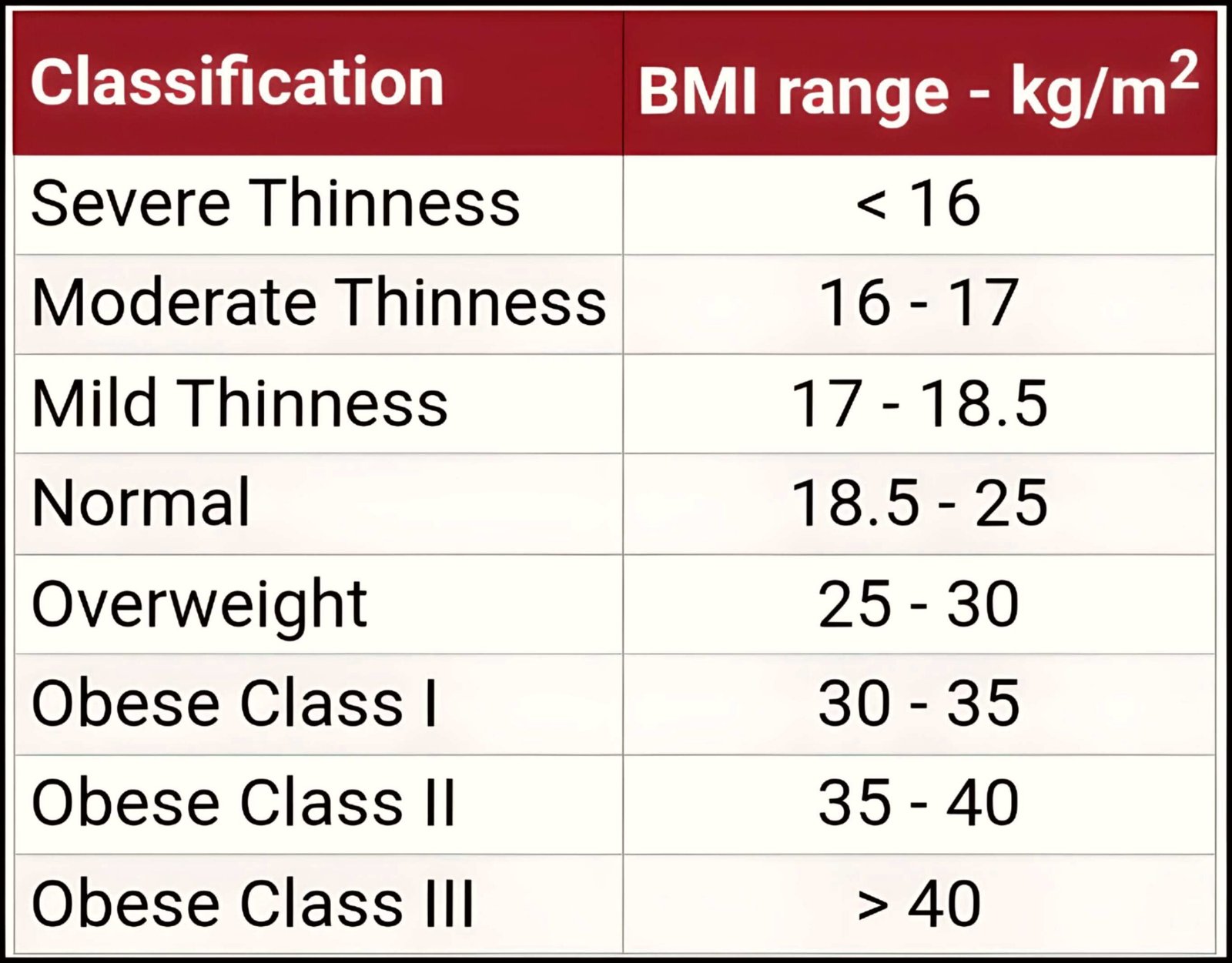
Once you have calculated your BMI, it’s important to understand what this number signifies about your health. The general BMI categories, as defined by the World Health Organization (WHO), are:
- Underweight: BMI below 18.5
This category may indicate malnutrition or other health issues. Being underweight can weaken your immune system, reduce bone density, and lead to fatigue. Consulting a doctor or nutritionist is advisable. - Normal Weight: BMI 18.5 to 24.9
This is the ideal range for most individuals, generally indicating good physical fitness and lower health risks. Maintaining a balanced diet and regular exercise is key to staying in this category. - Overweight: BMI 25.0 to 29.9
If your BMI falls into this range, you are considered overweight. This can increase the risk of future health problems like type 2 diabetes, heart disease, and high blood pressure. It’s a signal to make positive lifestyle changes. - Obese: BMI 30.0 or higher
Individuals in this category are considered obese, a serious health condition linked to significant health risks including heart disease, stroke, diabetes, certain cancers, and joint problems. Immediate medical advice and lifestyle modifications are necessary.
BMI is Not the Whole Story: Understanding Its Limitations
While BMI is a useful tool, it’s crucial to recognize its limitations. It’s a single number and doesn’t provide a complete picture of your health status:
- Muscle vs. Fat: BMI doesn’t differentiate between muscle and fat. Athletes with high muscle mass might have a high BMI, potentially categorizing them as overweight or obese despite being very fit.
- Age and Sex: BMI interpretations can vary slightly with age and sex. Separate BMI charts exist for children and older adults.
- Body Composition: It doesn’t account for fat distribution. Excess abdominal fat (visceral fat) poses a higher risk for heart disease, even with a normal BMI.
- Ethnicity: The relationship between BMI and health risks can differ among various ethnic groups.
Therefore, BMI should always be considered alongside other health factors such as waist circumference, blood pressure, cholesterol levels, and lifestyle habits. It serves as a starting point, not a final diagnosis.
Maintaining a Healthy BMI
If your BMI is outside the ideal range, don’t panic. View it as an opportunity to make positive lifestyle changes:
- For Underweight:
- Balanced Diet: Consume calorie-dense, nutrient-rich foods to gain weight healthily.
- Increase Protein Intake: Protein is vital for muscle building.
- Regular Exercise: Strength training can help build muscle mass.
- Consult a Doctor: Rule out any underlying health issues.
- For Overweight or Obese:
- Balanced and Controlled Diet: Reduce intake of processed foods, added sugars, and unhealthy fats. Prioritize fruits, vegetables, whole grains, and lean proteins.
- Regular Physical Activity: Aim for at least 30 minutes of moderate-intensity activity daily (e.g., walking, jogging, swimming, cycling).
- Adequate Sleep: Lack of sleep can disrupt hormones that contribute to weight gain.
- Stress Management: Practice techniques like yoga or meditation to manage stress, which can lead to overeating.
- Gradual Changes: Focus on small, sustainable changes rather than drastic ones.
When to Seek Professional Advice
If your BMI consistently remains in an abnormal range, or if you have concerns about your weight and health, it is best to consult a doctor or a certified nutritionist. They can assess your individual health status, identify potential underlying causes, and help create a safe and effective plan tailored to you. Remember, everyone is unique, and a personalized approach yields the best results.
Conclusion
Body Mass Index (BMI) is a significant initial indicator of your health status, helping you understand if your weight is appropriate for your height. While it’s a valuable tool, it should always be viewed as part of a larger health picture, encompassing your lifestyle, diet, exercise, and other medical conditions. Know your BMI, understand its implications, and take the necessary steps towards a healthier, balanced life. Vista Hub encourages you to adopt a healthy lifestyle!
Frequently Asked Questions (FAQs)
- What is the healthy BMI range for adults?
The healthy BMI range for adults is generally considered to be between 18.5 and 24.9. - Can BMI be inaccurate for some people?
Yes, BMI can be inaccurate for individuals with high muscle mass (like athletes), pregnant women, and the elderly, as it doesn’t distinguish between fat and muscle. - How can I calculate my BMI without an online calculator?
You can calculate BMI manually using the formula: Weight (kg) divided by Height (m) squared. - What are the risks associated with a high BMI?
A high BMI (overweight or obese) is associated with increased risks of heart disease, type 2 diabetes, high blood pressure, certain cancers, and joint problems. - Should I worry if my BMI is slightly above or below the normal range?
While a BMI slightly outside the normal range might not be an immediate cause for alarm, it’s a good indicator to review your lifestyle. If it’s significantly outside the range or you have health concerns, consult a healthcare professional.




























Share Your Opinion
Comments are closed on this post.