Understanding Fear: The Brain’s ‘Fight or Flight’ Response
When faced with an unknown or perceived threat, our brain automatically triggers the ‘fight or flight’ response. The amygdala, the brain’s fear centre, becomes active, leading to a surge of adrenaline. This causes physiological changes like a racing heart, cold hands, and a general sense of unease. In such moments, individuals often seek solace in a higher power or a symbol of strength.
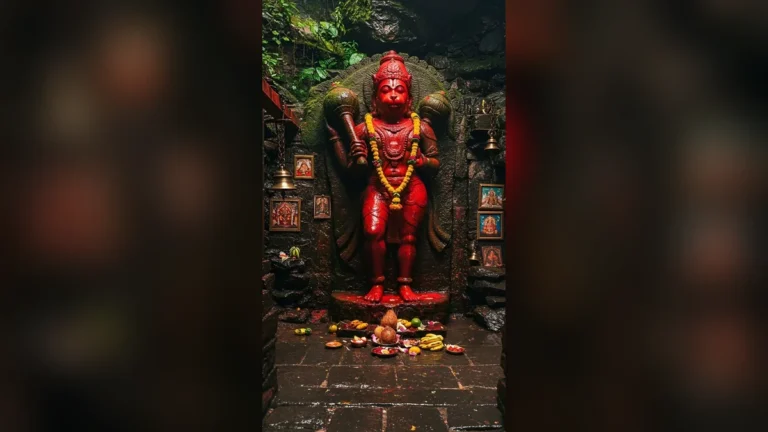
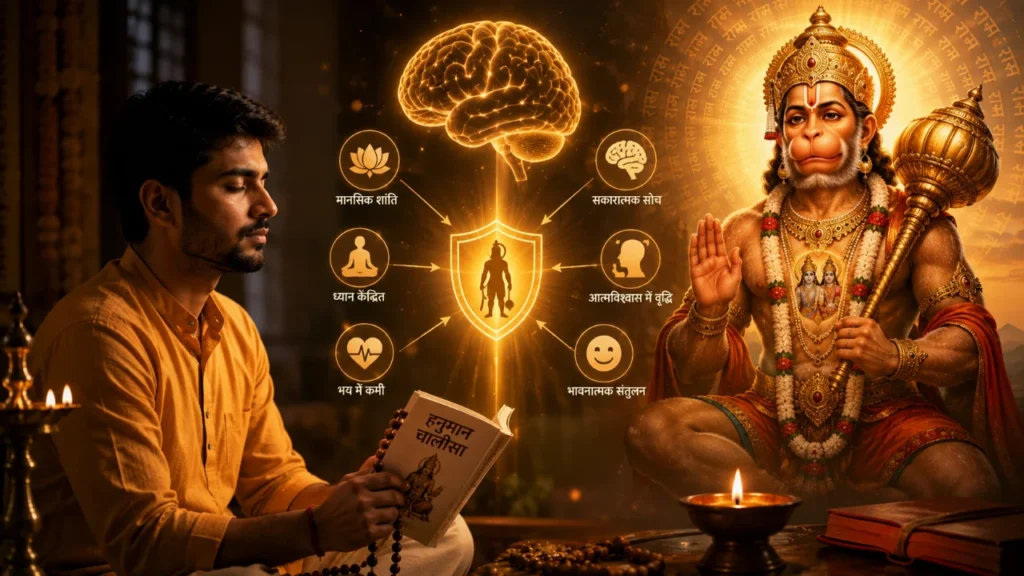
From childhood, many are taught that Lord Hanuman embodies immense strength and courage. Reciting his name or the Hanuman Chalisa during times of distress signals the brain that a protector is present. This psychological reassurance can help slow down the amygdala’s response, thereby reducing the feeling of fear.
The Power of Rhythm and Breath in Calming the Heartbeat
The recitation of the Hanuman Chalisa, when done with attention, functions as an effective breathing technique. The rhythmic chanting of its verses, such as ‘Naasai rog harai sab peera, Japat nirantar Hanumat veera,’ establishes a specific cadence and pace.
This rhythmic pronunciation encourages controlled, deep breathing. When breathing is regulated, the body’s parasympathetic nervous system, responsible for the ‘rest and digest’ state, becomes active. This leads to a normalization of heart rate and a reduction in muscle tension, promoting overall relaxation.
Positive Auto-Suggestion: The Subconscious Mind at Work
Psychology explains the concept of auto-suggestion, where repeatedly affirming a thought can lead to belief. The verses of the Hanuman Chalisa are replete with direct, positivity-inducing words designed to dispel negativity.
Chanting phrases like ‘Bhoot pishach nikat na aavai, Mahabir jab naam sunavai’ (Ghosts and demons do not come near when the name of Mahabir is heard) subconsciously instructs the mind that negative energies cannot approach. As this belief solidifies, the imagined fears of ghosts or darkness naturally dissipate. This process is akin to rewiring one’s thought patterns.
The Feeling of Protection: Overcoming Loneliness
Fear is often amplified by feelings of isolation and helplessness. In dark or deserted places, the true source of fear might not be supernatural entities but the primal fear of being alone.
The recitation of the Hanuman Chalisa instills an unwavering belief in the devotee that they are not alone. Lord Hanuman is revered as ‘Sankat Mochan’ – the remover of all troubles. Remembering him during crises reinforces the presence of an immense power standing with the individual, calming the parts of the brain responsible for anxiety.
Fact: Composed by Goswami Tulsidas, the Hanuman Chalisa contains 40 verses in the Awadhi language. Rhythmic recitation is believed to generate alpha brain waves, which can lower levels of cortisol, the stress hormone.
Dispelling Fear and Invoking Positive Energy
The human mind cannot simultaneously hold both fear and faith or courage. Focusing on the words and meaning of the Chalisa occupies the mind’s processing power, a phenomenon known as cognitive distraction.
By shifting attention from fearful thoughts to the verses and their significance, the chain of negative thinking is broken. This process facilitates the flow of positive energy, completely dispelling the atmosphere of fear.
A Mythological Parallel: Hanuman Assuring Sugriva
The Ramayana narrates an instance where Lord Rama and Lakshmana approached Mount Rishyamukha. Sugriva, living in fear of Bali, mistook them for spies sent by his brother. Trembling with fear, Sugriva sent Hanuman to investigate.
Hanuman, disguised, interacted with Rama and immediately recognized his noble nature. Upon returning, he reassured Sugriva, holding his hand and stating that Rama was the one who would alleviate his suffering. Similarly, for those who seek refuge in Hanuman, his name is believed to vanquish all ‘Bali-like fears’.
Practical Application and Conclusion
If you struggle with nighttime fears, overthinking, or general anxiety, approach the Hanuman Chalisa not merely as a ritual but as a practice to be understood and felt. Engaging with each word and immersing yourself in its rhythm can naturally calm the mind. It serves as a powerful method to reset your mental state.
Whenever you feel restless, close your eyes, take two deep breaths, and begin chanting. The clarity of the words will help divert your attention from fear more rapidly. This blend of devotion and psychology can instill courage within you. Faith possesses the power to instantly calm chemical imbalances in the brain, and the Hanuman Chalisa is a key to unlocking that faith.
Frequently Asked Questions
Is there a specific rule to follow when reading Hanuman Chalisa at night?
When feeling fearful at night, you can recite the Hanuman Chalisa while sitting on your bed with a clear mind, without strict adherence to rigid rules. Lord Hanuman values devotion and purity of heart above all.
Does science support the idea that mantra chanting reduces fear?
Yes, neuroscience suggests that the rhythmic chanting of any mantra or verse stimulates the vagus nerve, which helps slow heart rate and reduce anxiety levels.
How many times a day should one recite the Hanuman Chalisa?
The Chalisa itself mentions, ‘Jo shat baar paath kar koi, chhootahi bandi maha sukh hoi’ (He who recites it a hundred times is freed from bondage and attains great bliss). However, reciting it once or seven times daily is considered highly beneficial for mental peace and confidence.
Can children also recite the Chalisa when they feel scared?
Absolutely. Teaching children a few lines of the Hanuman Chalisa from a young age can boost their mental fortitude and help eliminate imaginary fears of darkness or loneliness.