Ridge gourd flower benefits: are torai flowers edible?
Ridge gourd flower benefits should begin with a more basic question: which plant is being discussed? The flowers and buds of Luffa acutangula have documented food uses. That does not mean every yellow flower is edible or that eating these flowers treats disease.
Flowers from a correctly identified cultivated food plant may be part of a local recipe. Do not collect an unknown roadside vine based on a photograph. Identification, source and safe preparation are more useful than exaggerated health promises.
Torai, ridge gourd and plant identity
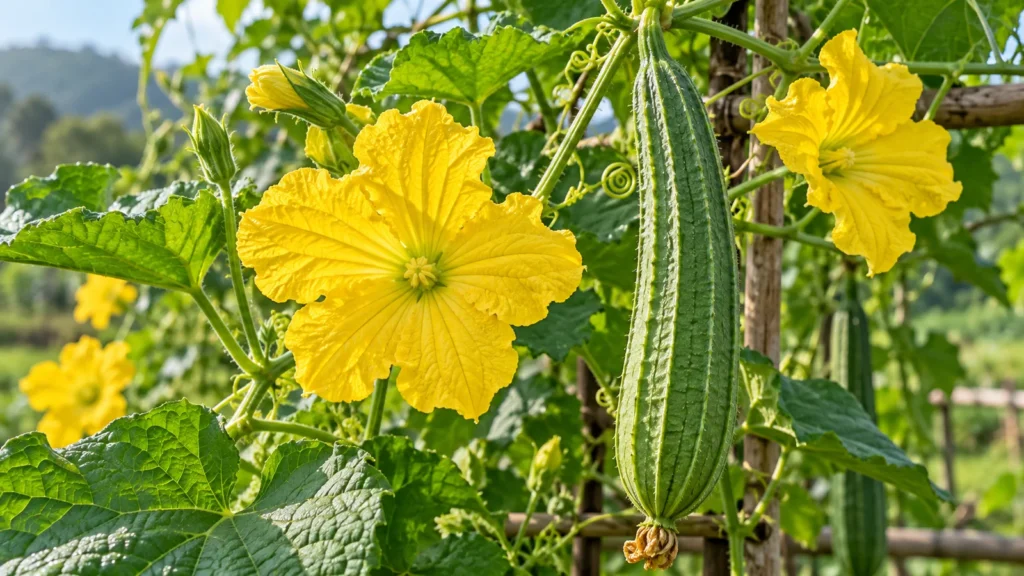
Regional names such as torai, turai or tori may refer to different local vegetables. This article concerns angled luffa or ridge gourd, Luffa acutangula. Smooth luffa can be a different species, so a familiar common name is not enough to establish botanical identity.
Yellow flowers, a climbing habit and a ridged fruit can be clues, but a short description cannot establish that an unknown plant is safe to eat. Confirm the plant with a knowledgeable grower or botanical expert. AI-generated images here are illustrative rather than proof of identity.
What do the food-use sources say?
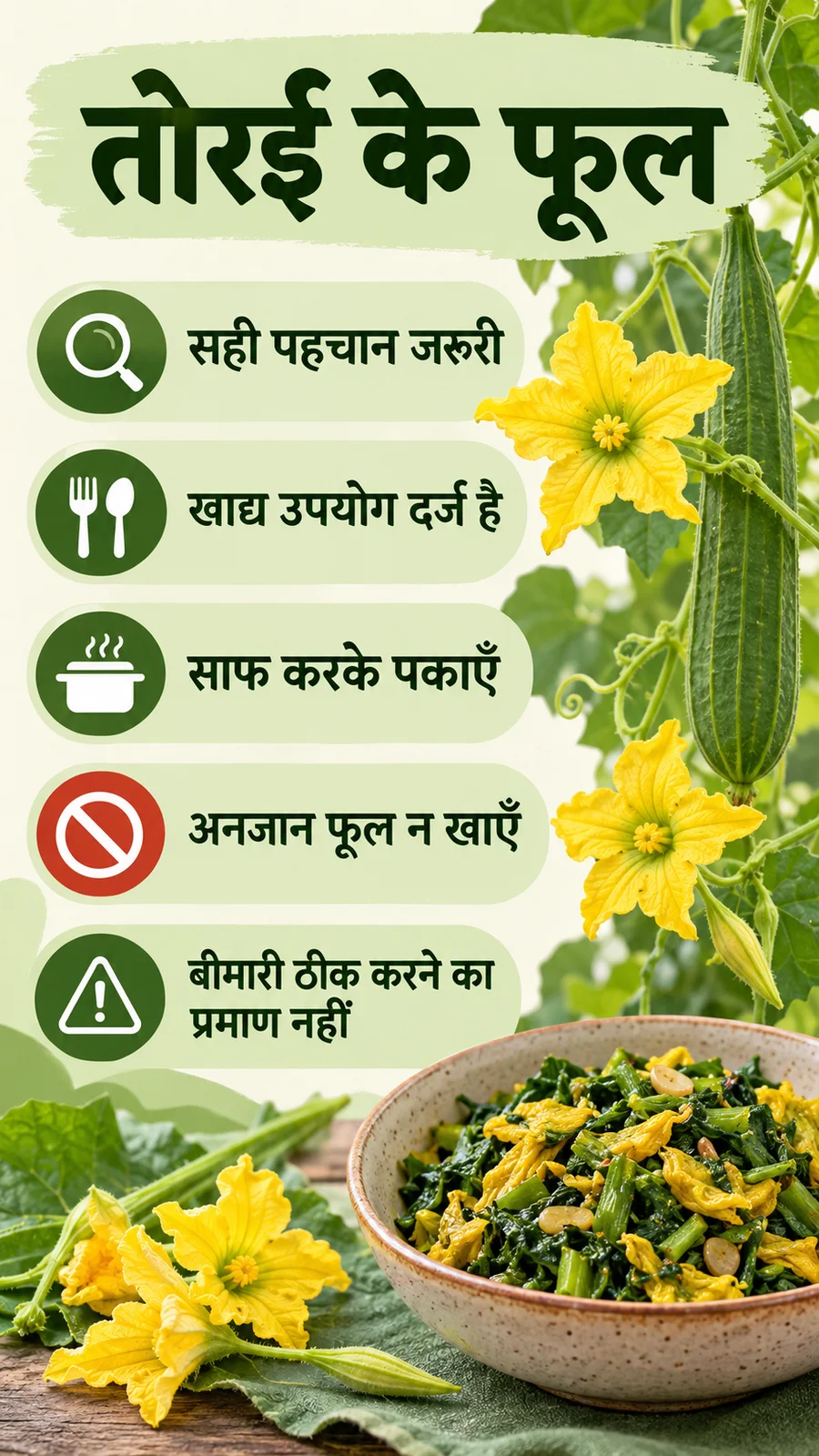
Singapore’s government NParks entry lists flowers among the edible parts of Luffa acutangula and describes flower buds as a vegetable. FAO Ecocrop also records flowers, buds and young leaves cooked and eaten as greens.
These records support a food-use statement. They do not establish that every cultivar, any amount or raw consumption is safe for everyone. Farming conditions, freshness, pesticide use and accurate identification still matter.
Flower-specific nutrition: what is actually known?
A clear verified per-100-gram nutrition table for the flowers was not established in this review. Values for ridge gourd fruit or leaves are therefore not presented as flower values. Parts of the same plant can differ substantially.
Flowers can add flavour and variety to a meal, but claims of exceptionally high iron, rapid weight loss or diabetes treatment are not supported by these food-use records. Batter and frying oil also change the nutritional profile of a flower fritter.
FACT: Traditional food use and clinical effectiveness are different. An extract tested in a laboratory, or research on another plant part, does not prove that eating flowers treats illness.
Cleaning and cooking
Use fresh flowers from a known food plant and a reliable source. Avoid mouldy or damaged material. Where pesticides have been applied, follow the product’s harvest waiting period. Washing does not correct mistaken identity or remove every chemical hazard.
Open flowers gently to inspect for dirt, insects and spoiled parts. Wash with clean running water; do not use soap or detergent on produce. Prepare with clean utensils and keep away from raw meat surfaces.
A familiar cooked vegetable or greens preparation can use modest oil. Deep-fried fritters contain added batter and oil and should not be described as automatically low-calorie. Cooking cannot make every toxic or misidentified flower safe.
Risks and when to avoid them
Do not eat unknown flowers, questionable wild vines or material from an uncertain chemical source. Some people may experience allergy or digestive discomfort. Avoid large quantities on a first exposure; do not attempt a home trial after a previous serious allergic reaction.
Markedly unusual bitterness is not a reason to assume stronger medicinal effects. Do not force yourself to eat a bitter or suspicious preparation. The safe approach is to discard uncertain food rather than assume heat fixes the problem.
This article does not prescribe medicinal doses for pregnancy, children or chronic disease. A food dish and a concentrated herbal extract are different exposures. Repeated vomiting, severe abdominal pain, dizziness, breathing problems or swelling after eating need medical attention.
Advice
You do not need to eat torai flowers for good nutrition. If identification or sourcing is uncertain, choose a familiar vegetable. If you enjoy correctly identified flowers, use them in a cleaned, cooked dish. Do not change diabetes medicine or a prescribed diet because of a flower-benefits claim.
FAQ
Can ridge gourd flowers be eaten?
Food use of Luffa acutangula flowers and buds is documented by NParks and FAO. Identity and safe preparation are essential.
Are pumpkin and ridge gourd flowers identical?
No. They come from different plants. Yellow colour alone is not enough for identification.
Do torai flowers cure diabetes?
The reviewed food-use sources do not establish a clinical treatment effect. Continue prescribed treatment.
Can leaf nutrition be used for the flowers?
No. Flower, leaf and fruit composition should not be treated as interchangeable.
Are raw flowers better?
The food-use evidence described here includes cooking. It does not show that raw consumption is better or universally safe.
Related reading
Pumpkin flowers: benefits and precautions (Hindi) and Agathi flowers: nutrition and health claims (Hindi).
Sources and health disclaimer
NParks: Luffa acutangula; FAO Ecocrop: Luffa acutangula; USDA–FSIS: Washing produce. General food information, not definitive plant identification or personalised medical advice. Consult a clinician or dietitian for a special diet.