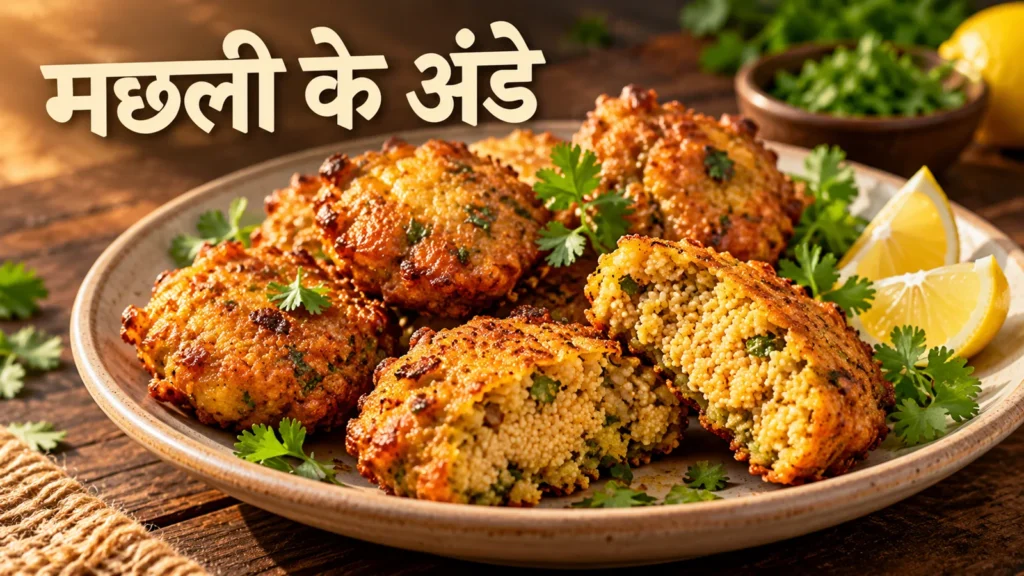
Fish roe side effects depend on the person, species, product and preparation. Fish roe means fish eggs. Roe can supply protein and fats, but different products are not nutritionally identical. Allergy, gout, raw seafood risks and added salt deserve particular attention.
This safety guide complements our existing Hindi article about fish egg benefits. Reviewed: 10 October 2026.
What is roe, and is every fish egg caviar?
Roe may be sold in an egg sac, as separated eggs or as a processed product. Caviar traditionally refers to processed sturgeon roe; products from other fish species are also sold. Fresh rohu or catla eggs and salted packaged caviar are different foods. Milt from male fish is not fish eggs.
Nutrition varies by species and preparation
| Factor | Practical meaning |
| Protein and fat | Amounts differ between species and products |
| Omega-3 fats | Some roe contains EPA and DHA; amounts are not identical |
| Salted products | Check added salt and the nutrition label |
| Fried fritters | Oil, flour and other ingredients change the whole dish |
| Rohu versus caviar | Do not transfer one product’s nutrition values to another |
Published compositional research found differences between processed roe products from several species. This measured food composition, not whether eating Indian freshwater roe treats disease. Protein and omega-3 content should not become promises to cure poor eyesight, sharpen intelligence or treat weakness.
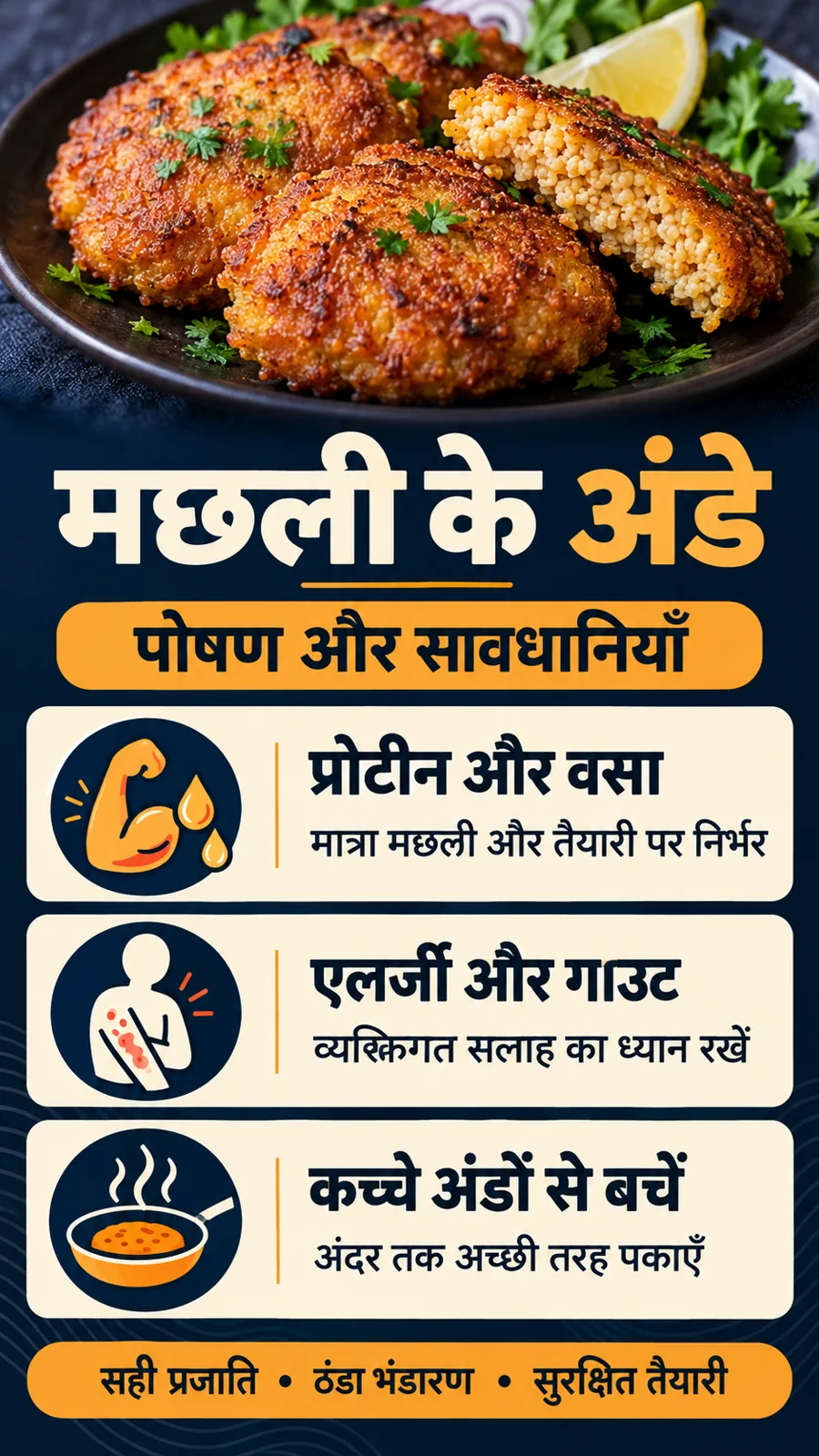
Fish roe side effects: allergy, gout and salt
Allergy: Roe can trigger allergic reactions, including severe reactions. Reports show that roe allergy can occur even in someone who tolerates fish flesh. Symptoms may include hives, swelling, wheezing or vomiting. Do not test a suspected allergy at home with a small portion. Breathing difficulty, severe swelling or fainting needs urgent emergency care. Cooking does not guarantee removal of allergens.
Gout: NHS gout dietary guidance includes fish roe among foods to limit. This is not a claim that every healthy person will develop gout after eating it. People with gout should follow an individual plan for amount and frequency, and dietary changes do not replace prescribed treatment.
Salt and meal preparation: Salted roe products can contain added sodium. Check the label if you have high blood pressure, heart disease or a kidney-related dietary restriction. Frying adds oil. Describing all roe dishes as low-fat or suitable for everyone would be misleading.
Why avoid raw or undercooked roe?
Raw seafood can carry harmful germs, and some fish species can carry parasites. FDA recommends thorough cooking as the safer approach. Freezing does not kill every harmful germ. Lemon, salt and spices are not dependable home safety treatments.
Choose a reputable food supplier and confirm the species and cold storage. Do not assume eggs from an unidentified wild fish are edible. Follow local fishery rules and product instructions. Freshness should be judged from sourcing and storage as well as appearance; a normal smell alone does not prove safety.
Storage and cooking
FDA’s general seafood advice is to refrigerate or freeze promptly. If using within two days, keep fresh seafood at about 4°C or below; otherwise freeze it. Follow a stricter package instruction when provided. Thaw frozen products gradually in the refrigerator and keep raw ingredients separate from cooked foods.
Wash hands after handling raw seafood and clean equipment. FDA advises an internal temperature of about 63°C for most seafood. A thick roe sac or fritter needs thorough cooking in the centre; a browned exterior is not sufficient. If another ingredient in the mixed recipe needs a higher safe cooking temperature, meet that requirement too.
Do not leave perishable seafood at room temperature for more than two hours, or more than one hour when the temperature exceeds about 32°C. Food that has spoiled or has uncertain storage should be discarded rather than rescued by extra frying.
Pregnancy and mercury: avoid broad claims
Pregnant people, children, older adults and people with weakened immunity should avoid raw or undercooked seafood. There is no single roe portion recommendation in this guide for every species and pregnancy situation. Discuss the identified product and preparation with a qualified clinician or dietitian.
Mercury advice based on fish flesh should not be transferred to eggs without relevant data. Claiming that all roe is high in mercury, or that all roe is mercury-free, is unjustified. Species and source matter. For related animal-food safety, see chicken gizzard nutrition and precautions and the tripe and intestine difference.
Frequently asked questions
Can I eat fish eggs every day?
There is no universal daily amount. Species, preparation, overall diet, allergy and medical conditions matter.
Should people with gout limit roe?
NHS gout dietary guidance includes roe among foods to limit. Follow your individual treatment plan.
Are rohu eggs as nutritious as caviar?
A fair comparison needs species-specific data for comparable preparations. One nutrition chart cannot represent both.
Can I eat raw roe during pregnancy?
Avoid raw or undercooked seafood. Use properly cooked products and seek advice about the specific product.
Does frying remove roe allergy?
No. Cooking is not a guarantee against allergic reactions. Avoid a suspected trigger and seek professional assessment.
Sources and limits
FDA seafood safety; Fish roe composition study; Fish roe allergy case report; NHS gout and diet; FDA caviar labeling. This guide does not assign one nutrition profile, mercury level or daily portion to all freshwater roe.
Health information: General education only, not medical advice, diagnosis or treatment. Seek individual advice for allergy, gout, kidney disease or pregnancy.