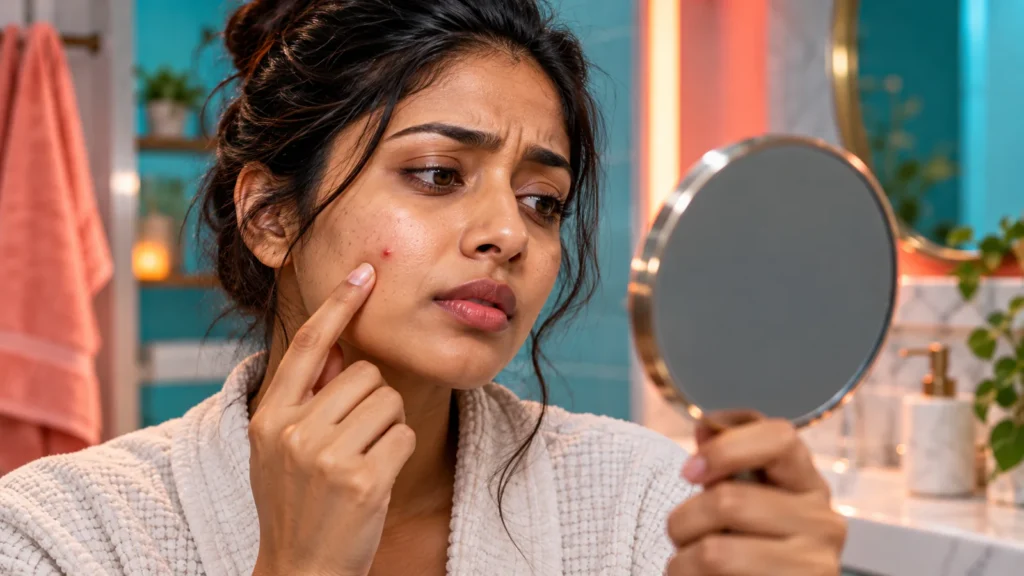
Can a pimple really disappear in five minutes?
You spot a new pimple just before a meeting, a date or a family photograph. Searching for a five-minute fix feels reasonable. The problem is that quick-fix advice often mixes up three different things: making a spot less noticeable, making it feel more comfortable and treating the acne behind it.
A reliable five-minute cure does not exist. You can make sensible choices right now, especially by avoiding picking and last-minute experiments. That is useful even if the spot remains visible. This guide explains how to handle the immediate situation without promising a clear face by lunchtime.
First, consider what you are looking at
A small whitehead, a red surface pimple and a deep painful lump are not interchangeable. A trick shown on one kind of spot may have little relevance to another. A photograph also cannot always establish whether a bump is acne. When the appearance is unusual, assessment matters more than matching a social-media example.
The NHS describes blocked follicles and inflammation as part of acne. A breakout is not proof that you failed to keep your face clean. Scrubbing harder therefore does not solve the problem simply by removing more dirt. Avoid turning a visible spot into a judgement about personal hygiene.
Notice whether the bump hurts, whether similar spots keep returning and whether previous spots left marks. Those observations make a consultation more useful than saying only that your skin looks bad. You do not need to identify the exact diagnosis yourself before asking for help.
What to do when you need to leave soon
Wash gently using a familiar cleanser that your skin already tolerates. Pat dry rather than rubbing. A busy morning is a poor moment to introduce a scrub, a peel and several unfamiliar serums together. Keeping things simple also makes it easier to identify what caused a reaction if one occurs.
Leave the spot alone. The American Academy of Dermatology advises against squeezing deep pimples. Trying to extract a bump with fingernails or a needle may create a longer problem than the original blemish. Having something visible on your face can feel frustrating, but that does not make extraction at home a good shortcut.
If you want coverage, choose non-comedogenic makeup and use a clean applicator. Remove it later. Coverage is a cosmetic option, not evidence that acne has been treated. It is fine to describe the goal honestly: you want the spot to show less in a photograph today.
FACT: treatment is assessed over weeks
The AAD notes that fewer breakouts may become noticeable after around four to eight weeks of appropriate acne treatment. That range is not a deadline for every person or a prediction for the healing of one individual spot. It helps explain why changing products every morning is a poor way to judge a treatment plan.
A hydrocolloid patch can protect some pimples and discourage touching. It is not a universal answer for deep lumps or acne across the face. Follow the package directions and stop if it irritates your skin. A white area in a used patch does not demonstrate that all the acne has been pulled out.
For today, preventing extra irritation is a realistic goal. For the coming weeks, observe new breakouts and discomfort. Checking the mirror repeatedly does not speed up either process.
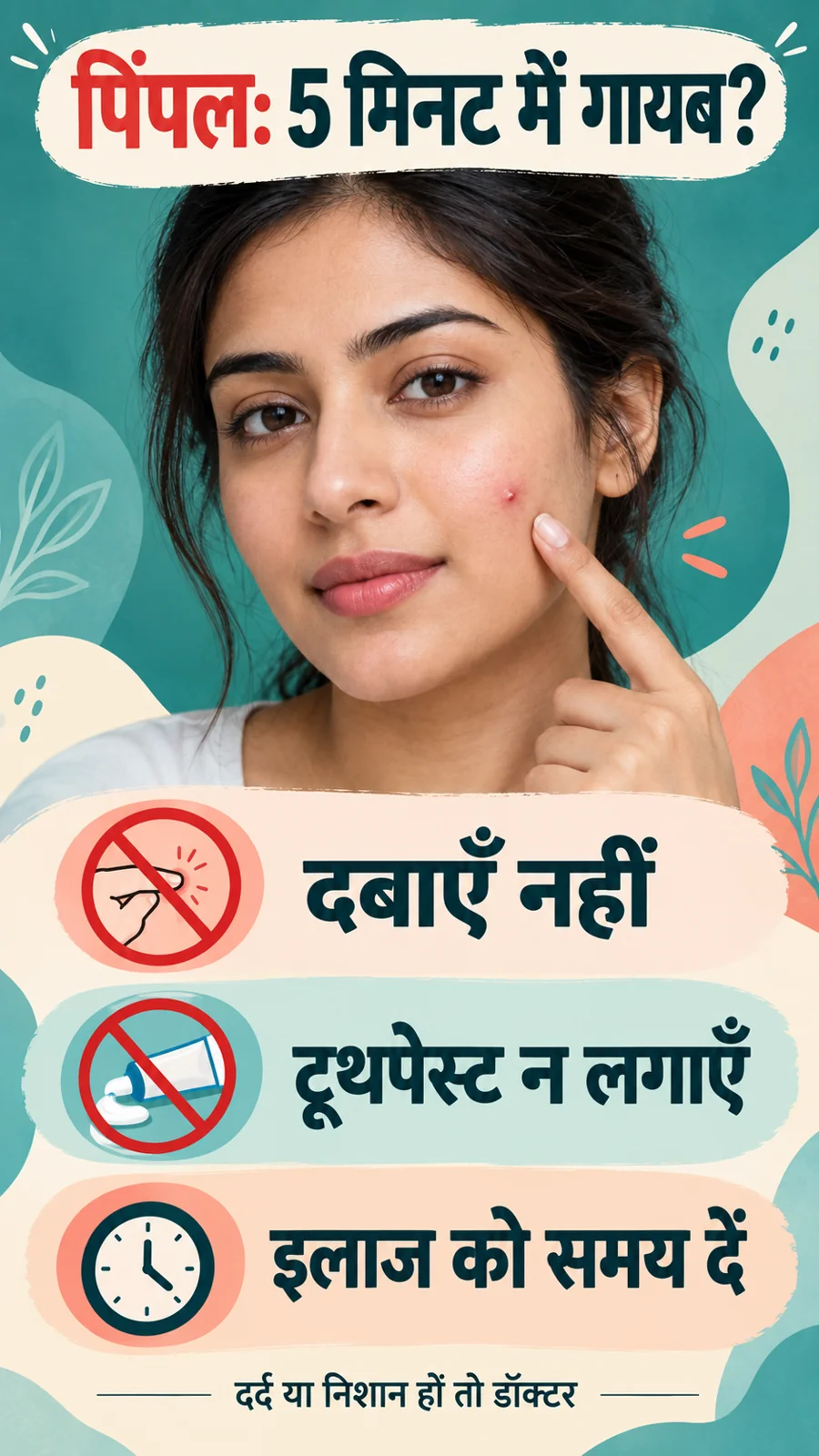
Skip the toothpaste and the burning sensation
The AAD does not recommend toothpaste for acne. Its ingredients can irritate skin, and availability in the bathroom does not make it an appropriate facial treatment. Be equally cautious about advice that asks you to mix several strong household ingredients and leave them on until they sting.
Burning is not a useful test of whether a remedy is working. Do not respond to irritation by adding another treatment on top. If someone recommends an unnamed cream, ask for the ingredients and its intended use rather than accepting a description such as “instant spot remover.”
A friend’s pimple improving after a remedy does not establish that the remedy caused the improvement. The spot may already have been healing. Personal stories can suggest questions to investigate; they cannot give a reliable guarantee for your skin.
Choosing treatment without building a crowded routine
Ingredients such as benzoyl peroxide and salicylic acid can help appropriate forms of mild acne. They are not a shopping checklist to start all at once. Ask a pharmacist or dermatologist how your skin type, previous reactions and existing products affect the choice.
Read the directions. Applying more does not guarantee faster improvement. Record a product’s name, its start date and any irritation. At a later appointment, this is more helpful than trying to remember which of several similar bottles you used first.
If you are pregnant, planning pregnancy or breastfeeding, check treatment suitability with a clinician. Do not borrow prescription tablets, antibiotics or retinoids because somebody else had good results. This article explains decisions to discuss; it does not select an individual medicine or dose for you.
When a dermatologist is the better next step
Deep painful acne, scarring and persistent breakouts deserve professional attention. The AAD explains that products bought in a shop may not adequately treat deep, painful lesions. You can book an appointment before acne becomes severe; there is no requirement to prove you have tried every home remedy first.
Seek prompt medical advice for rapidly spreading redness, substantial swelling, fever or symptoms close to the eye. Do not keep covering an unusual or worsening bump while assuming it is an ordinary pimple. An approaching event should not postpone assessment of symptoms that need care.
Also explain if acne is making you avoid people or causing significant distress. The practical impact is not captured by counting spots alone. A useful treatment discussion includes how the condition affects your daily life.
Advice
Make three decisions for today: do not pick, do not add a harsh remedy and use a simple routine you already tolerate. If you want makeup coverage, treat that as a separate choice. A visible pimple does not mean you must cancel your plans or make your face perfectly smooth before leaving home.
For longer-term care, choose a routine you can follow on workdays, college days and travel days. If a clinician has given you a plan, follow that plan and discuss problems before repeatedly switching products. Someone else’s filtered photograph is not a meaningful reason to abandon your treatment.
If you track progress with pictures, use similar lighting and no beauty filter. Review them at sensible intervals instead of judging every hour. Bring observations about pain, new breakouts and irritation to your next discussion. These details help turn an anxious search for instant results into a clearer plan.
FAQ
Does ice get rid of a pimple immediately?
No. Cooling may provide temporary comfort, but it does not treat the acne itself. Do not rub bare ice onto the skin, and stop if the area hurts or becomes numb.
Can I leave toothpaste on a pimple overnight?
No. Toothpaste is not recommended as an acne treatment. It can irritate skin and turn a small spot into a more uncomfortable problem.
Will a pimple patch work on every spot?
No. Its usefulness depends on the lesion and the product. Do not expect it to adequately treat a deep painful lump or widespread acne.
How long will clearing my skin take?
There is no single deadline. Acne type and treatment matter, and regular treatment is generally evaluated over weeks rather than minutes.
Must I stop wearing makeup if I have acne?
Not necessarily. Choose non-comedogenic products, keep applicators clean and remove makeup. Stop products that irritate your skin and ask for advice.
Sources
- AAD: adult acne treatment
- AAD: deep painful pimples
- NHS: acne treatment
- NHS: acne overview
- AAD: acne and makeup
Health disclaimer: This article provides general information. It does not diagnose your condition or replace individual treatment or advice from a qualified healthcare professional. Ask a clinician before starting medicines, supplements or skin procedures. Seek medical care for severe or sudden symptoms.