When a Claim Feels True, Even If It Is Not
Every day, people open their phones and see thousands of messages, videos, screenshots and posts. Some contain useful information, some contain opinions, and some contain claims that may not be fully checked. A surprising headline, an emotional video, or a mysterious-looking screenshot can quickly catch attention. Many people think that if something is appearing everywhere online, it must have some truth behind it. But online popularity and accuracy are not the same thing.
A rumor is information that spreads without proper verification. It can begin from a misunderstanding, an incomplete report, an old image shared with a new explanation, or a statement that changes as it moves from person to person. Not every rumor is created with the intention to mislead. Sometimes people unknowingly pass along information that they believe is correct.
Conspiracy theories are another type of claim that often spreads online. These claims usually suggest that a hidden group, secret plan, or unseen force is responsible for an event. Some people find these stories interesting because they offer simple explanations for complicated situations. However, a claim being interesting or widely discussed does not automatically make it true.
The online world makes information move faster than ever before. A single post can reach many people within minutes. This speed can help useful information spread, but it can also allow unclear or incorrect claims to travel quickly.
Understanding why rumors become viral is an important part of digital literacy. The goal is not to believe everything or doubt everything. The goal is to learn how to ask better questions before accepting or sharing information.
Why Emotions Make Stories Go Viral
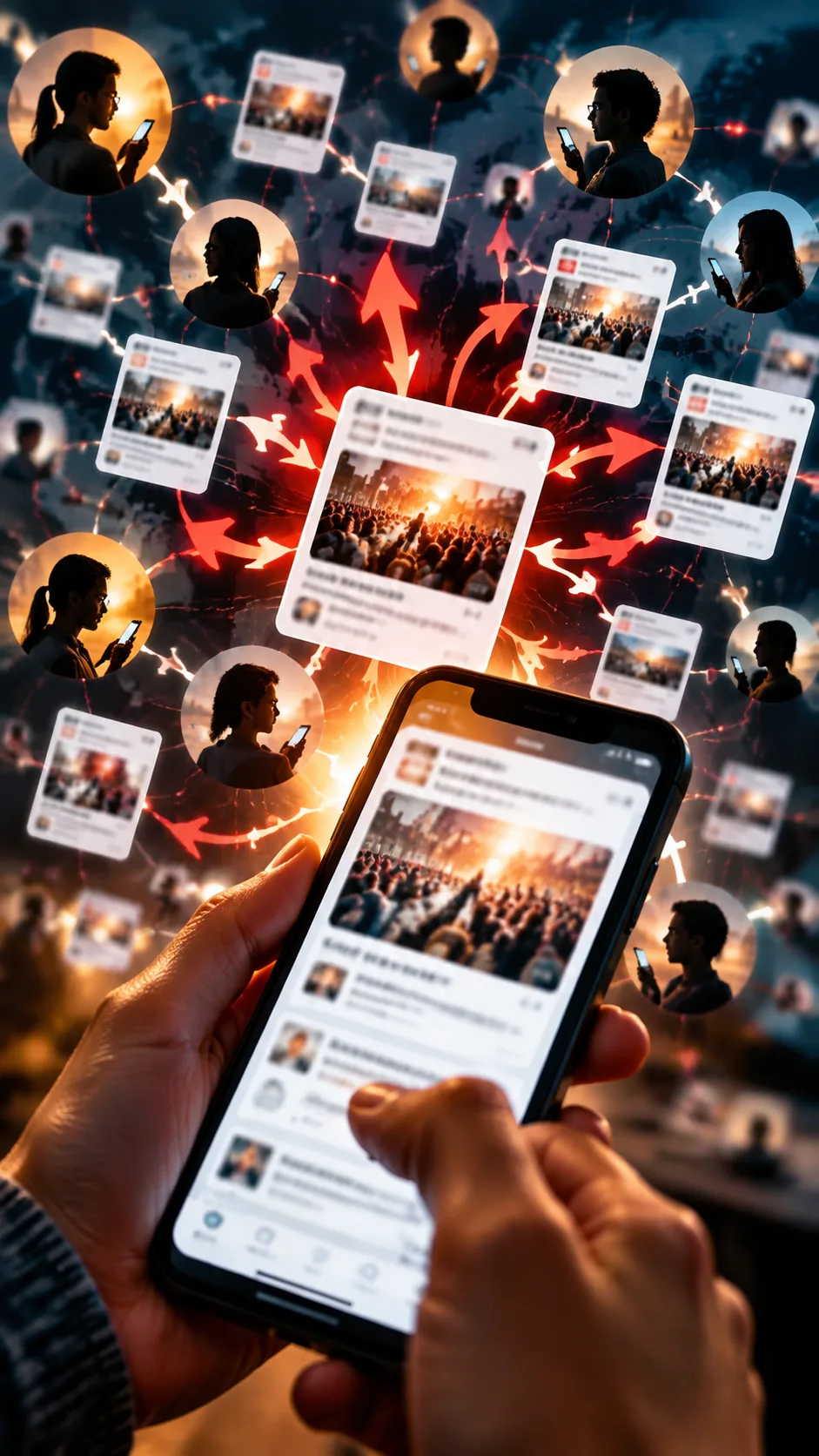
Human emotions play a major role in what people notice and share online. Content that creates fear, anger, surprise, excitement, or curiosity often receives more attention because it creates a stronger reaction.
For example, a normal piece of information may not get much attention, but a post with a shocking claim can immediately make people stop scrolling. Our brains naturally pay more attention to things that feel urgent or important. This ability can be useful in real-life situations, but online it can sometimes make people react before checking facts.
Many rumors use emotional patterns. They may present a situation as a hidden danger, suggest that something is being covered up, or create the feeling that only a few people know a special secret. This type of presentation can make a claim feel more important than the available evidence supports.
A strong emotional reaction is not proof that information is correct. A person can feel worried about something and still need to check whether the information is accurate.
Taking a short pause before sharing can make a big difference. Asking simple questions like “Where did this information come from?” or “Is there reliable evidence?” can help people make better decisions.
Repetition: Why Seeing Something Again and Again Feels Real
One reason rumors spread is repetition. When people see the same claim many times, it can start to feel familiar. Familiar information sometimes feels more believable, even when there is no additional evidence supporting it.
This does not mean people are careless. It is simply how human memory and attention work. Something that appears repeatedly can seem more important because our brain recognizes it more easily.
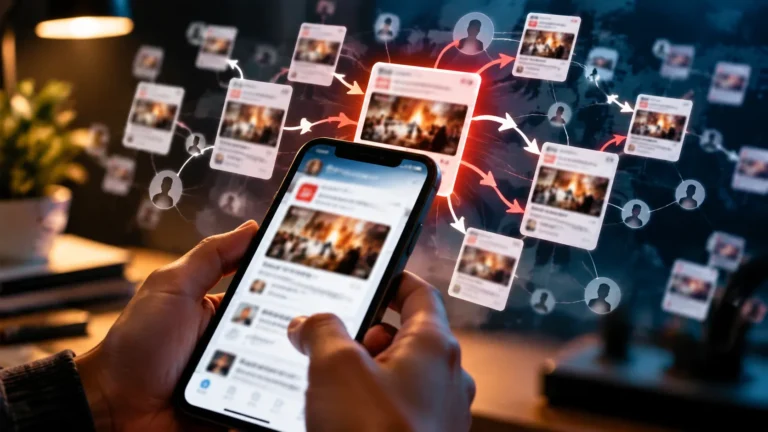
On social media, repetition can happen quickly. The same message can be copied into different groups, posted by multiple accounts, or shared with small changes. This can create the impression that many independent people are saying the same thing, even when the information may come from one original source.
An old photo or video can also gain new attention when it is shared with a different explanation. If viewers do not check the original date, location, or context, they may believe the new claim connected to it.
Popularity is not the same as proof. A post with millions of views may still contain mistakes. Similarly, a less popular source may sometimes provide accurate information. The important thing is checking evidence, not simply counting shares.
FACT: A post becoming viral online does not prove that the information is correct. Viral reach and truth are two different things.
How Social Media Algorithms Influence What We See
Social media platforms use recommendation systems and algorithms to decide what content appears more often in users’ feeds. These systems usually look at signals such as views, comments, shares, and the amount of time people spend looking at a post.
Content that receives strong reactions may get shown to more people. This can happen with useful educational content, breaking news, entertainment, and also misleading claims.
An algorithm does not automatically understand whether every post is true or false. It mainly responds to patterns of user activity. If a controversial or emotional post receives a lot of engagement, it may become more visible.
This can create a situation where people see one type of information repeatedly and feel that it represents the complete picture. However, online visibility is influenced by many factors, not only accuracy.
At the same time, social media is also used to spread helpful information. Emergency updates, educational campaigns, and important public messages can reach large audiences through the same systems.
The key point is understanding that the internet is not a simple collection of facts. It is a space where attention, technology, human behavior, and information all interact.
The Problem With Screenshots, Old Videos and Missing Context
Images, screenshots, and short videos are powerful because people can understand them quickly. A single picture or a short clip can create a strong impression. However, these small pieces of content often show only a limited part of a bigger story.
A screenshot may remove important details such as the original source, date, or full conversation. A video may be real but shared with an incorrect explanation. A photo from one place or time can be presented as if it belongs to another event.
Context matters. Without context, even genuine content can create a misunderstanding.
Modern editing tools have also made it easier to change images and videos. This does not mean every image or video is fake, but it does mean people should be more careful before accepting a claim connected to visual content.
Checking the original source, looking for the complete information, and comparing with reliable reporting are useful steps.
A good digital habit is to avoid making a conclusion from only one screenshot or one short clip. A complete story usually requires more than one small piece of information.
Why “Leaks” and Big Hidden Claims Attract Attention
People are naturally curious about information that appears secret or unknown. This is why claims involving “hidden facts,” “secret documents,” or “exclusive leaks” often attract attention.
The idea that only a few people know something can make information feel special. However, a claim being presented as secret does not automatically make it reliable.
Sometimes an unclear document, an anonymous message, or an unexplained image may be presented as evidence for a much larger story. Without proper verification, such material can create confusion.
Healthy curiosity is useful. Asking questions is an important part of learning. But questions should be followed by evidence, not only assumptions.
Reliable information usually provides clear sources, dates, explanations, and supporting material. When a claim depends mainly on mystery and strong emotions but lacks evidence, it deserves careful attention.
What Everyday Users Can Do
Completely avoiding rumors online is difficult because people receive a huge amount of information every day. However, simple habits can help users become more careful and informed.
First, avoid sharing a claim only because it looks shocking. Strong emotions can make people react quickly, but a short pause can prevent mistakes.
Second, check the source. Is the information coming from a known organization, expert, official statement, or original report? Or is it only being passed around through forwarded messages?
Third, check the context. When was the photo or video created? Where did it come from? Is the explanation connected to the original content?
Fourth, notice your own reactions. If a post immediately makes you extremely angry, afraid, or excited, take extra time before accepting it.
Media literacy does not mean becoming suspicious of everything. It means learning how information works and making decisions based on better understanding.
Advice
The best online habit is simple: pause, think, and then react. The internet moves quickly, but responsible users do not have to match that speed every time.
Before sharing a post, ask yourself a few basic questions. Do I know the original source? Is there evidence behind this claim? Has the information been reported by reliable sources? Am I sharing because it is true, or only because it created a strong emotion?
People naturally pay more attention to information that matches their existing beliefs. This is normal human behavior. However, learning to check different sources and viewpoints can help create better understanding.
Every share becomes part of the information journey. A single forwarded message can travel far beyond the original audience. This is why online responsibility matters.
💡 Remember: “Check first, then share” is one of the simplest habits for staying safer in the digital world.
Good media literacy is not about knowing every answer. It is about knowing what questions to ask.
FAQ
Q1. Are all viral posts false?
No. Many accurate and important pieces of information also become viral. However, being viral alone does not prove that something is true.
Q2. What is a conspiracy theory?
A conspiracy theory is a claim that suggests a hidden plan or powerful group is responsible for an event. Such claims should be examined through evidence and reliable sources.
Q3. Why do people believe rumors?
Rumors can spread because of emotions, repetition, social influence, and the way information appears online. These factors can affect how people judge information.
Q4. How can I check whether an online claim is reliable?
Look at the source, date, context, and available evidence. Compare important claims with reliable reporting or official information.
Q5. Can media literacy reduce misinformation?
Media literacy helps people recognize questionable information, ask better questions, and make more informed decisions.
Disclaimer: This article is for educational media literacy purposes. It does not support or endorse any specific rumor or conspiracy theory.