 Vista
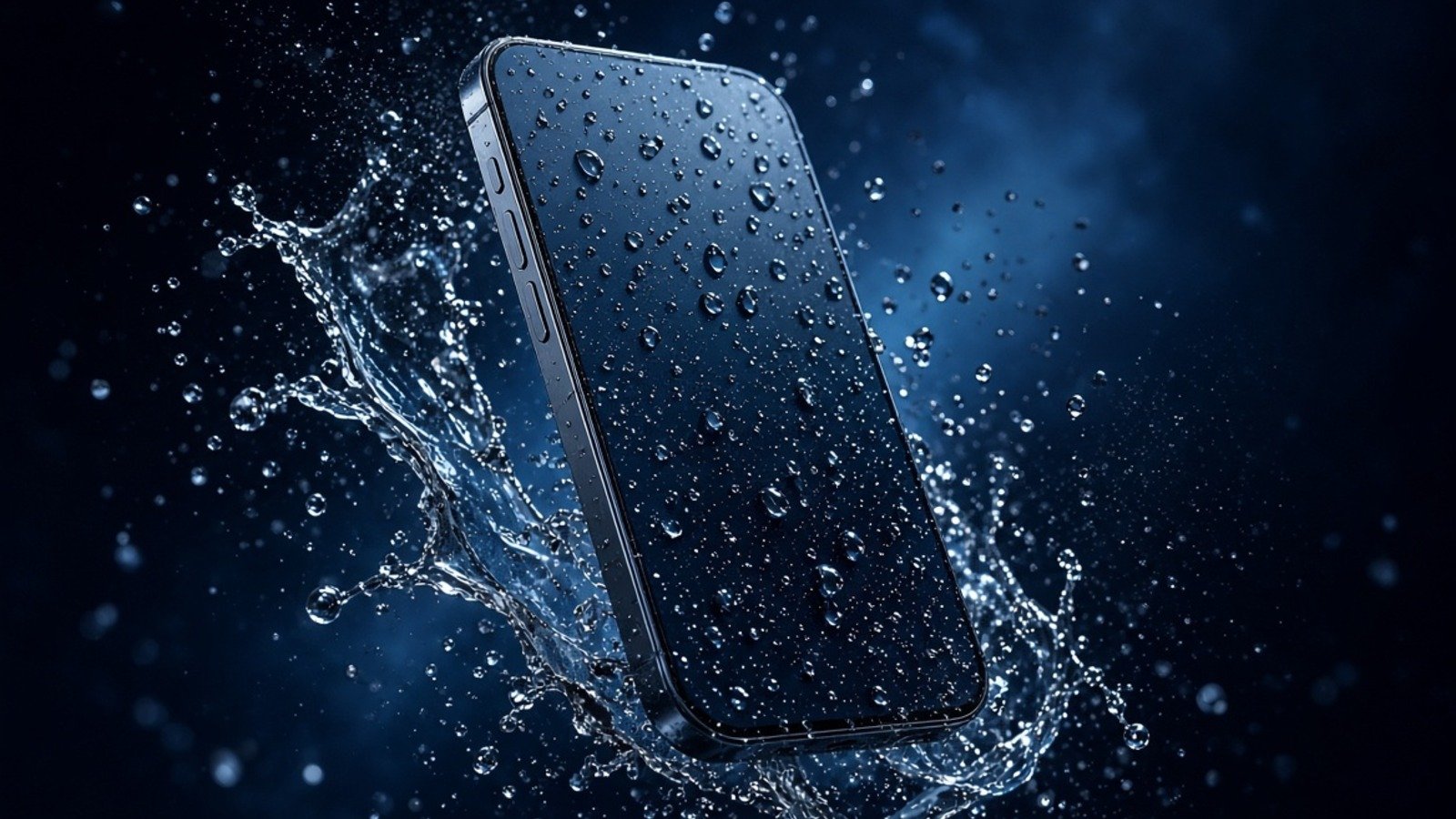
Quick answer: An IP rating tells you what an enclosure has been tested to resist: the first digit describes protection from solids and access to hazardous parts, while the second concerns water exposure. IP54, IP65, IP67, IP68 and IP69K are not simply five ascending levels of ‘waterproof’. Jets, immersion and hot high-pressure washdown are distinct tests, so the right rating depends on the application.
Updated: 21 November 2026.
How to read IP ratings: two digits and sometimes a letter
The letters IP denote the protection classification for an electrical enclosure. In a familiar code such as IP67, the first characteristic numeral 6 identifies dust-tight protection and the second numeral 7 denotes protection against harmful ingress during temporary immersion under standardized test conditions. A rating is not a general promise that every opening or accessory remains waterproof in all circumstances. The protection applies to a defined assembled enclosure, with seals and fittings as tested.
An X is sometimes used where a characteristic numeral is not specified, as in IPX7. It does not mean that the product failed dust testing; it means that dust protection is not declared in that particular position. Additional letters may provide specific information under the governing standard. Look at the product label and the standard invoked, not just a seller’s large ‘WATERPROOF’ marketing graphic. The meaning of a code comes from the test regime rather than the physical appearance of a rubber gasket.
First digit 0–6: dust and solid-object protection
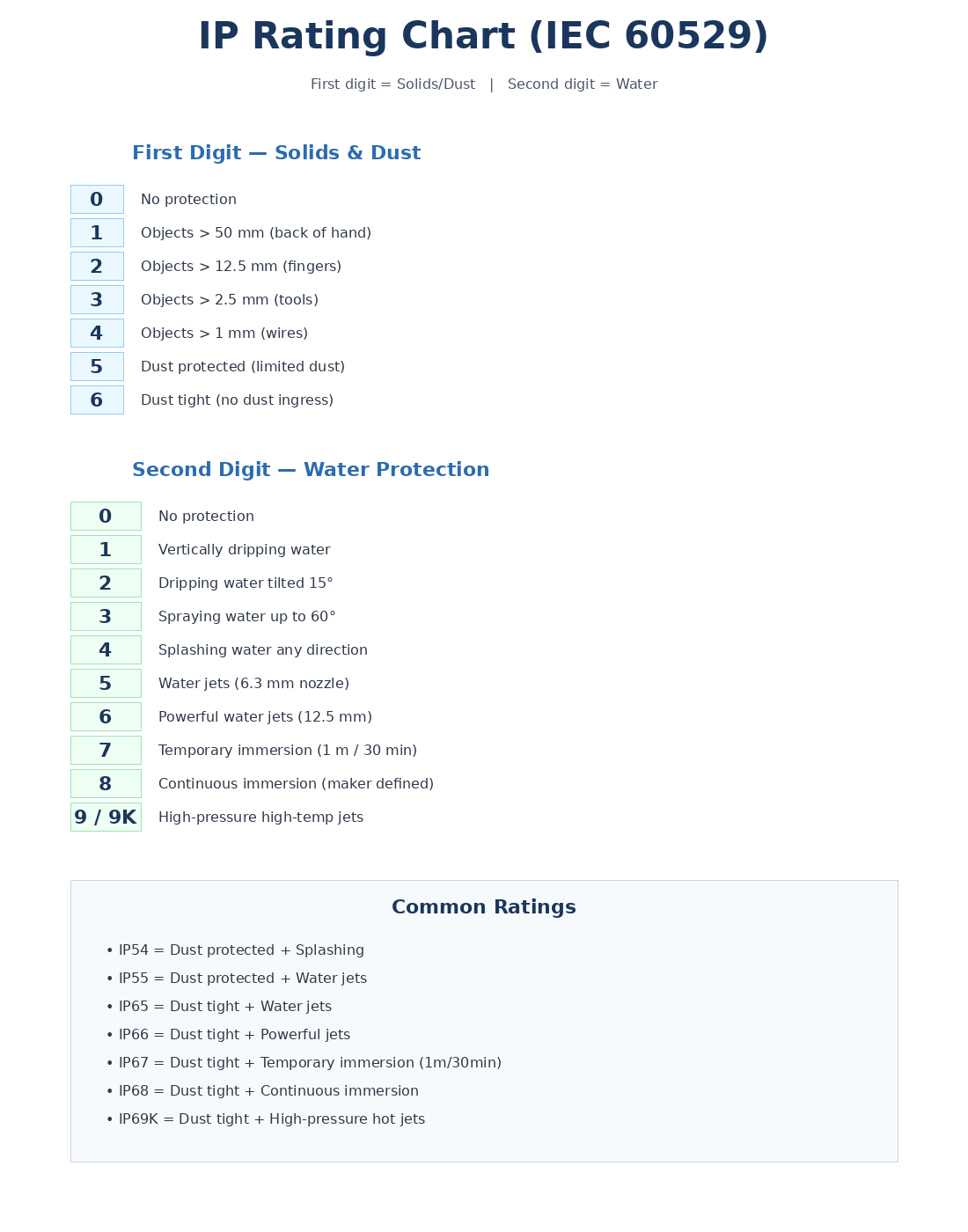
The first numeral ranges from zero to six. A zero means no stated protection; the intermediate digits describe restrictions on access and solid foreign-object ingress, with progressively smaller object sizes associated with higher digits. Numeral 5 indicates dust-protected construction where limited dust entry is permitted provided it does not interfere with satisfactory operation. Numeral 6 indicates dust-tight construction under its specified test conditions.
Do not confuse dust protection with absolute invulnerability. A dusty industrial workshop exposes equipment to particles, vibration, chemicals and abrasion that go beyond the IP number alone. A cable gland, connector or port can reduce an assembled installation’s protection if fitted incorrectly, even when the main box advertises IP66. If a field enclosure needs dust-tight performance, verify every mating component and the final installed state. Maintenance damage, missing screws or aged sealing surfaces can change the result after initial certification.
Water digit 0–9: splash, jet, immersion and washdown
The second numeral communicates a defined water test, not how long a product survives all possible wet conditions. Common marks include 4 for splashing from any direction, 5 for water jets, 6 for powerful water jets, 7 for temporary immersion, 8 for more demanding immersion conditions agreed for the product, and 9 for high-pressure, high-temperature jets in the IEC framework. Exact test conditions are laid down in the applicable edition.
An important catch is that the immersion tests and jet tests are different. Products rated IPX7 or IPX8 are not necessarily certified to IPX5 or IPX6 without additional testing or multiple markings. A phone rated IP68 may have been tested in controlled fresh water, but not against a high-pressure vehicle wash. The same distinction applies to industrial sensor housings: suitability for spray cleaning cannot be inferred solely from a deeper immersion number. Consult the complete product test statement for the actual conditions.
IP54 vs IP65 vs IP66: dust and spray comparisons
IP54 combines dust protection at first digit 5 with splash protection at water digit 4. It is often seen on equipment that may face ordinary splashing but not strong directed jets. IP65 has dust-tight first digit 6 and water-jet protection at second digit 5. IP66 adds the relevant powerful water-jet test. These descriptions are useful for selecting enclosures for workshops, outdoor controls and equipment rooms, but real operating conditions also involve rain, UV exposure and temperature.
A code with a higher second digit is not automatically the best solution for every project. If an electrical cabinet is exposed to chemical vapour or sunlight, the enclosure material and corrosion resistance can matter independently of its ingress protection. Check manufacturer limits for mounting orientation, gaskets, drains, pressure equalisation and compatible cable glands. A dealer’s claim that IP54 is suitable for heavy washdown should be questioned; at the same time, the presence of an IP66 stamp does not certify compatibility with aggressive solvents.
IP67 vs IP68: temporary and continuous immersion
IP67 specifies dust-tight protection plus a temporary immersion test using standardized pressure and time conditions. IP68 indicates dust-tight protection plus immersion under conditions that are more severe than the numeral-7 test and defined by agreement between maker and user or specified in the product’s documentation. The exact depth and duration therefore cannot be read from the two digits ’68’ alone.
This explains why two different IP68 products can have different advertised immersion depths. Some consumer phones are tested at a particular depth and time, while an industrial underwater sensor may have very different validated conditions. Neither rating guarantees survival of salt water, soaps, pool chemicals, high-speed water impacts, repeated aging cycles or a cracked housing. If water resistance is essential, read the product manual’s test parameters and exclusions, not a simplified shopping comparison that says ‘IP68 = safe at any depth’.
IP69 versus IP69K: IEC and vehicle-standard differences
IEC 60529 includes a second characteristic numeral 9 for resistance to defined high-pressure, high-temperature water jets. The ‘K’ suffix is associated with ISO 20653, a road-vehicle equipment protection standard that defines special IP code conditions. ISO 20653:2023 distinguishes its K-related provisions from the IEC system. Some products market IP69K where aggressive washdown is expected, but the exact standard on the certification must be checked.
A hot, high-pressure jet test is not a deep underwater test. IP69K does not inherently prove that a device meets the separate IPX7 or IPX8 immersion requirements, and IP68 does not by itself prove it meets a high-pressure wash test. Certain devices carry multiple ratings because their manufacturers tested different conditions. Do not assume the letter K is a cosmetic bonus that every IP69 product automatically earns. Compare standards, editions, test reports and the assembled configuration when evaluating washdown equipment.
Phone, CCTV camera, earbuds and industrial enclosures
For a smartphone, the relevant concerns may include accidental drops into fresh water, rain and long-term seal aging. For earbuds, perspiration and brief splashes matter differently from pool submersion. Outdoor CCTV equipment faces weather, dust, condensation and possibly strong directed water, while an industrial food-processing enclosure may require cleaning with hot jets. The same ‘higher number is always better’ buying rule cannot cover all these use cases.
Phones repaired after a display replacement may no longer have their original sealing integrity. A plug or charging port cover left open can compromise the advertised protection. Even a product’s warranty may exclude liquid damage despite an IP-rated design, because the rating represents laboratory tests under defined conditions. In outdoor installations, cable connections are often the weak point. Choose IP protection in combination with mounting, thermal rating, chemical resistance and manufacturer-approved accessories.
IP rating myths, buying checklist and safer use
The myth ‘IP68 is waterproof forever’ should be replaced by ‘IP68 meets a defined immersion test when intact and correctly configured.’ The myth ‘IP69K is better than all other IP numbers’ ignores the distinction between hot jets and immersion. ‘IPX7 means no dust resistance’ is also wrong; it indicates no declared dust grade in that code. The useful consumer question is: exactly what exposure was tested, under which standard and with which openings closed?
Before buying, write down whether your main hazard is dust, splash, rain, powerful jets, temporary immersion or high-pressure cleaning. Find the full datasheet, verify a certification or credible test statement, read the intended depth and time and check warranties. Keep the seals clean and follow servicing instructions. Never deliberately submerge mains-powered equipment merely to test an IP label. An IP chart is a reference that helps ask better questions, not a replacement for electrical safety rules or the manufacturer’s approved installation method.
Frequently asked questions
Does IP68 mean completely waterproof?
No. It describes tested immersion resistance under specified conditions, not universal or permanent waterproofing.
Is IP67 better than IP65 for water jets?
Not automatically. Temporary immersion and directed-jet testing are different; check the exact ratings.
Can IP69K equipment stay underwater?
The hot high-pressure water test does not itself certify underwater immersion.
What does IPX7 mean?
Temporary immersion protection is specified; the solid-protection digit is not declared in that code.
Is IP54 dustproof?
It is dust-protected, not the same dust-tight rating as first digit 6.
Conclusion
Compare ingress-protection claims by the relevant exposure type, applicable standard and actual test conditions. Bigger numbers alone do not establish suitability for every dust and water hazard.
Sources
- IEC — Degrees of protection by enclosures (IP Code)
- ISO 20653:2023 — Road vehicles, degrees of protection
- EAO — IP protection tests FAQ
Safety: never deliberately expose live mains electrical equipment to water to test an IP rating.

















Share Your Opinion
Comments are closed on this post.