 Vista
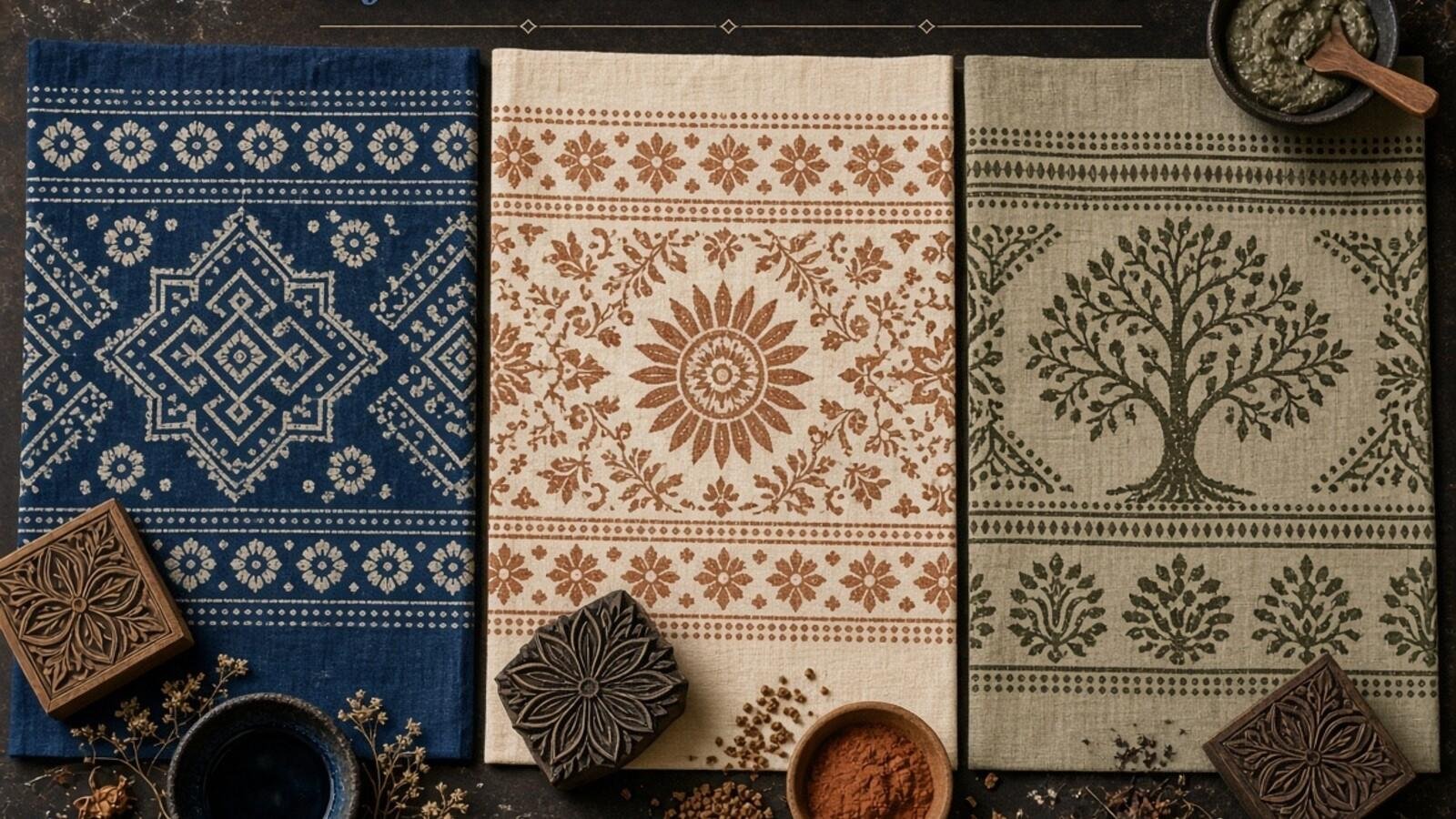
Quick answer: Ajrakh, Bagru and Dabu are often sold together as traditional Indian block-print textiles, but they are not three mutually exclusive printing processes. Ajrakh refers to a historically rooted, complex resist-and-dye craft associated especially with Kutch and Sindh. Bagru is a Rajasthan printing centre and craft tradition. Dabu is a mud-resist technique used by artisans in areas including Bagru. A fabric can therefore be both Bagru-made and Dabu-printed.
Updated: 21 November 2026.
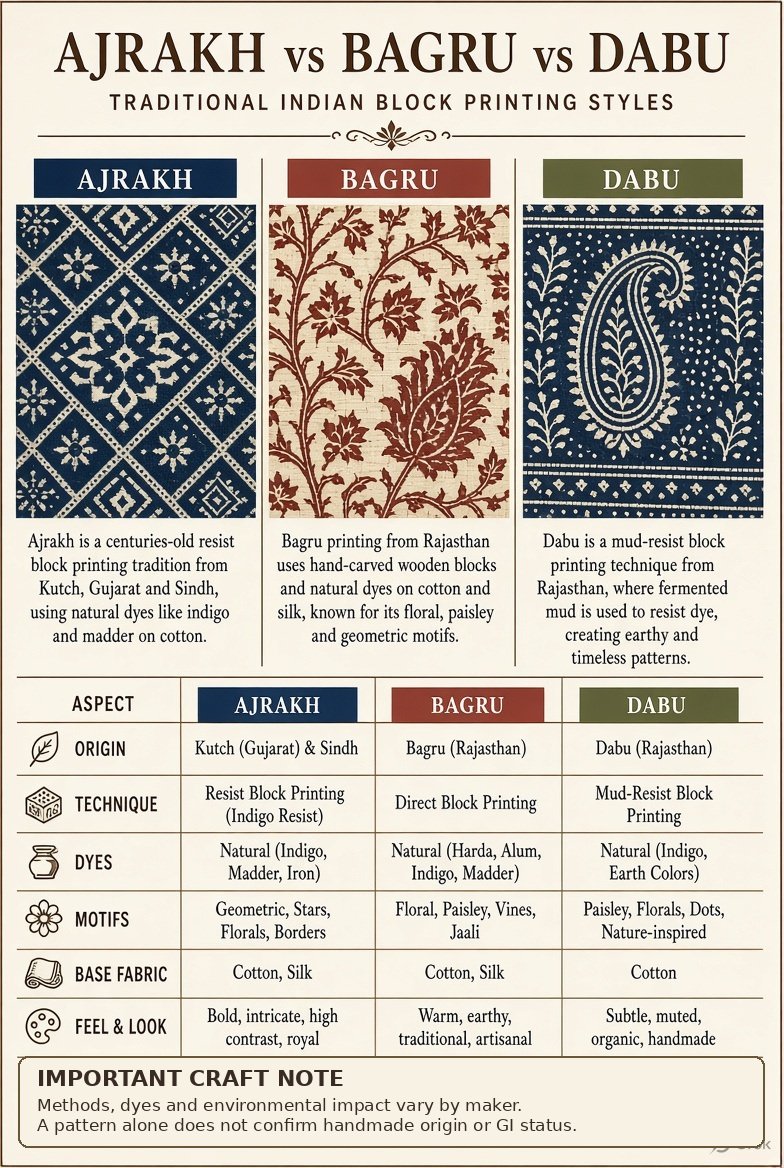
Ajrakh, Bagru and Dabu overview table
| Name | What it identifies | Typical association | Process clue |
|---|---|---|---|
| Ajrakh | Craft tradition | Kutch, Sindh and other centres | Multi-stage resist, mordants and dyeing |
| Bagru | Craft/place tradition | Near Jaipur, Rajasthan | Hand block printing; direct and resist approaches |
| Dabu | Printing method | Rajasthan and elsewhere | Mud-resist application and dyeing |
Ajrakh, Bagru and Dabu: quick comparison
Ajrakh is widely recognised for dense repeats, geometric layouts, deep indigo, madder red and layered printing and dyeing. Bagru textiles are often associated with earthy black, red and natural or cream grounds, traditionally made with hand-carved wooden blocks. Dabu creates a resist pattern by applying a paste to areas that should resist the next dye bath. The visible motif and colour palette can overlap, so no single thumbnail proves a garment’s provenance.
An important search distinction is that Ajrakh can denote a particular craft and regional identity, while Bagru may refer to place and workshop tradition, and Dabu describes resist technique. These dimensions can overlap in the same piece. Someone shopping for ‘Dabu Bagru’ is not necessarily comparing it with an unrelated category called Bagru. Explain the terms before showing visual patterns, so the chart teaches a useful conceptual distinction.
Ajrakh origins: Sindh, Kutch and the Khatri craft
Ajrakh has longstanding links with Sindh and is practised by craft communities in Gujarat’s Kutch region, including Ajrakhpur, as well as parts of Rajasthan. Makers may carry out many rounds of washing, mordanting, block application, resist and indigo or other dye baths. Traditional motifs are often geometric and can involve careful registration on both sides of fabric in particular styles. Not every Ajrakh piece will look identical, and contemporary artisans may innovate rather than reproduce one fixed historical pattern.
The artisan’s knowledge of repeated motifs, register and dye behaviour is central to Ajrakh. Kutch’s Ajrakhpur is an especially documented centre, but historic links with Sindh and work in Rajasthan should not be erased. An attractive online image cannot tell you which family or workshop produced the textile. Interviews, labels, authentic exhibition records and traceable sellers provide stronger evidence for origin than a guessed geographic caption.
How Ajrakh resist printing is created
A complex Ajrakh piece may require preparation of cloth, multiple carved blocks, use of mordants or resist pastes and repeated dyeing and washing. The exact stages depend on workshop, design, colours and product. Double-sided printing is a celebrated attribute of some traditional Ajrakh work, but it should not be claimed for every cloth marketed under the name. An AI drawing of geometric diamonds cannot establish that actual hands used this sequence of processes.
A multi-stage resist-and-dye process may require careful washing and alignment between prints. Indigo may be built in stages, and some pieces involve complex two-sided registration. Yet not every contemporary Ajrakh product is identical in technique, materials or pattern. Avoid claiming that all pieces require a fixed number of washes or exactly twenty blocks. Those details vary with workshop, design and the product being made.
Bagru hand block printing: Rajasthan place and craft
Bagru near Jaipur is associated with block-printing traditions and the work of artisan communities. Wooden blocks can transfer outlines and colour fills in repeated patterns, often using characteristic earthy colours. Some workshops print directly with dyes and mordants, while others also use resist approaches. Describing Bagru solely as ‘Dabu’ or solely as one colour palette oversimplifies a living craft. For a trustworthy caption, name the origin and technique where known rather than claiming an unknown fabric came from a specific village.
A Bagru print can use hand-carved blocks for repeated outlines and fills, but its design vocabulary extends beyond a few stereotyped flowers or earth tones. The community’s techniques have evolved, so a deep blue or contemporary motif does not automatically rule out Bagru origins. Conversely, a mass-printed floral fabric should not be sold as handmade Bagru solely because the print resembles a Rajasthan motif. Ask about workshop provenance and production method.
Dabu technique: mud resist, dye and texture
Dabu is a resist-printing process. A paste—often described as mud-based in traditional applications—is printed or applied to selected areas; after it dries and the fabric goes through a dye process, the protected portions behave differently from exposed cloth. Repeating the process can build layered motifs and textured colour differences. Recipes, additives and workflow can vary. Calling all earthy indigo cloth ‘Dabu’ is not reliable; a textile’s production method needs workshop evidence, not a guessed visual style.
The resist used for Dabu creates protected and exposed areas during subsequent dyeing. Depending on the craft process, paste ingredients and drying arrangements differ. ‘Mud-resist’ describes the principle without proving a specific recipe or that every dye involved is natural. Multiple resist-and-dye cycles can produce layered patterns, but a single printed motif may imitate that appearance. Documentation from the artisan is the soundest way to verify the process.
Bagru vs Dabu: why a fabric may fit both labels
Bagru answers a geographic or tradition question, while Dabu describes a method. A Dabu piece can come from a Bagru artisan, and a Bagru hand-block textile may use direct printing instead. These labels are therefore not perfect alternatives on an online shopping filter. When a seller says ‘Bagru Dabu print,’ ask which workshop made the textile and whether mud resist was actually used. The final colour alone is not proof of manufacturing steps. Keeping these distinctions clear also prevents misleading image alt text.
A single online product can be labelled Bagru Dabu because it was produced by artisans in Bagru using a Dabu resist technique. The same workshop may sell direct hand-block prints that do not involve Dabu. A comparison grid can help visual recognition, but must not imply that Bagru and Dabu never overlap. This distinction matters when crafting SEO titles, image alt text and shopping guidance that correctly represent the maker’s work.
GI tags: Kutch Ajrakh and Bagru authenticity claims
India’s Geographical Indications records include the Kutch Ajrakh Print of Gujarat and Bagru Hand Block Print. These are specific registered names tied to their legal descriptions and eligible origin or producer conditions; a generic ‘Ajrakh-style’ shirt printed elsewhere is not automatically entitled to a protected GI claim. Dabu as a technique is not automatically the same GI category as a Bagru product. Verify the current GI Registry record and seller documentation instead of trusting a logo-like stamp on a random image.
GI registration is a legal origin-related framework, not a decorative guarantee that every similarly patterned scarf qualifies. Kutch Ajrakh and Bagru Hand Block Print have specific Indian GI records; eligibility depends on the registered product conditions and authorised origin or production context. Avoid adding a false GI icon to AI-generated textile art. For an authentic purchase, consult the relevant record and ask the seller for documentation, including the workshop’s location.
How to recognise and care for authentic-looking prints
Look closely at motif registration, tiny hand-block variations, colour layering and the reverse side. These clues may be consistent with hand printing, but skilled screen or digital prints can imitate their appearance, so they are not proof. Ask the seller for workshop, region, fabric, printing method and dye-care instructions. Some handcrafted textiles need gentle washing, shade drying and separation from light fabrics because colourfastness varies. Follow the actual garment label, not a universal ‘natural dyes are always colourfast’ assumption.
Small registration offsets and uneven tones may be consistent with hand block printing, yet deliberate simulation is possible in digital production. Similarly, some natural dyes can still bleed and some modern dyes can be colourfast; there is no universal shortcut. Check the back of the cloth, print feel, textile composition and care label. If you plan to wash a handcrafted garment, follow its stated instructions and consider a colourfastness test on an inconspicuous area where appropriate.
Using pictures responsibly for visual search
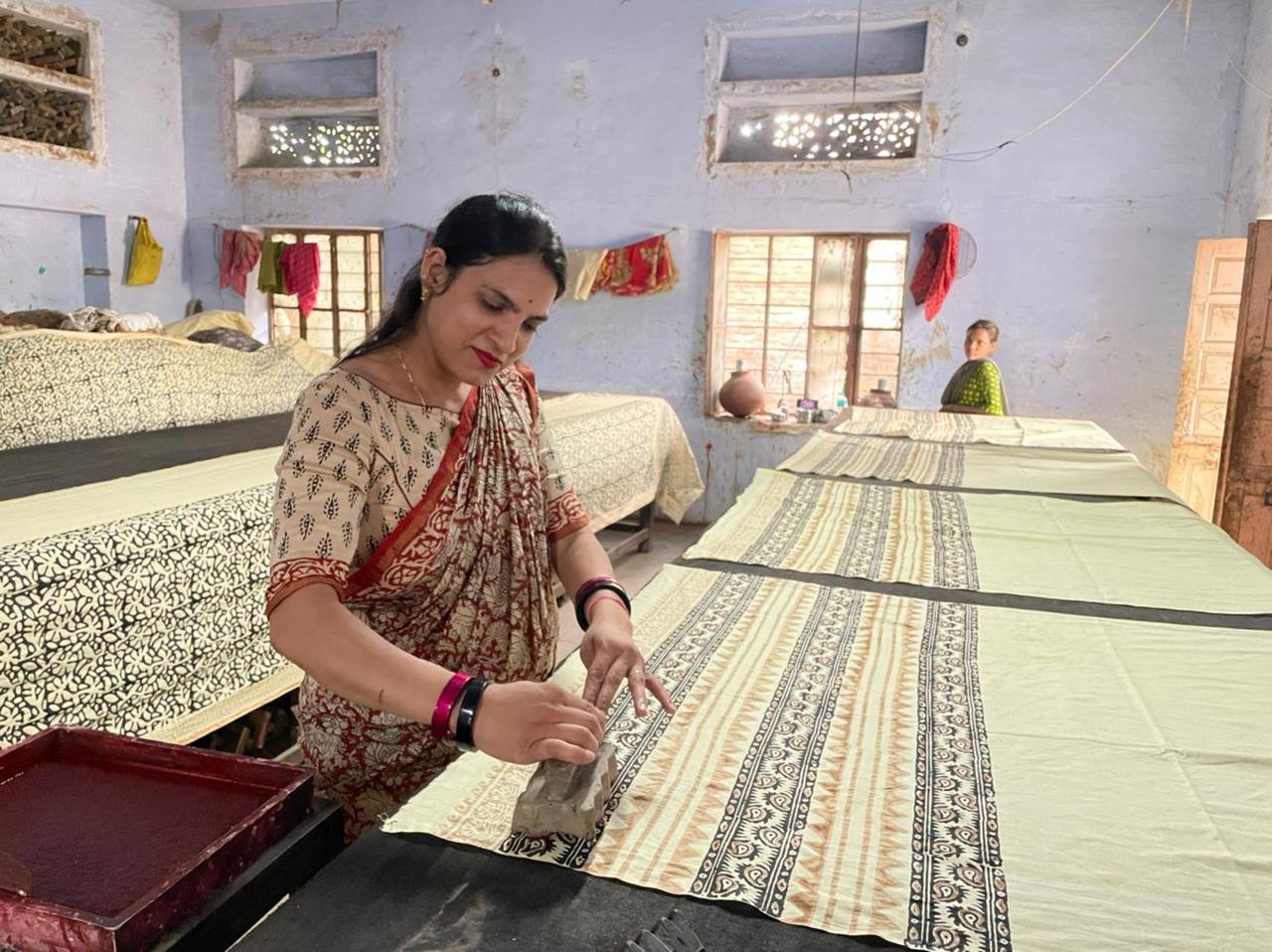
An Ajrakh vs Bagru vs Dabu comparison chart should describe characteristic examples without pretending that AI-generated motifs are historically documented specimens. Use a broad 16:9 featured image to introduce the subject, then a labelled vertical informational chart and a real properly credited block-printing-process photo. The process photo can show a craft context but does not establish the origin of every textile pictured. Supply meaningful ALT text with the style and technique words that actually correspond to the visual.
Google Images users benefit from a clear split between illustrative motifs and real craft photographs. A stylised triptych is useful as an overview, but the scene does not authenticate any actual textile. Credit a real photo and say what it genuinely shows, such as an artisan using a wooden block in Bagru. Do not tag every motif with ‘authentic’ or ‘GI certified’ unless the image and its provenance support the words. Accurate captions build more durable usefulness than keyword stuffing.
Frequently asked questions
Is Dabu the same thing as Bagru printing?
No. Dabu is a resist process; Bagru names a Rajasthan craft centre and tradition. They can overlap.
Is Ajrakh only made in Gujarat?
Ajrakh has links to Sindh and is practised in Kutch, parts of Rajasthan and beyond; protected Kutch Ajrakh is a specific GI name.
What colours are common in Ajrakh?
Deep indigo, red, black and undyed tones are common, with many contemporary variations.
Can AI textile photos prove a print is handmade?
No. Production and origin need authentic workshop or seller evidence.
Does every Dabu fabric have a GI tag?
No. GI claims depend on specific registered goods and eligibility, not simply use of a technique.
Conclusion
For an ethical visual guide, distinguish a design inspired by a craft from a photographed, documented example made by an identified artisan. The correct label should not overclaim origin, use of natural dyes, double-sided work or legal GI status. A direct workshop description, textile-care label and the current GI registration record provide stronger evidence than colour alone.
Sources
- Gujarat Tourism — Ajrakh
- IP India — Kutch Ajrakh GI Record
- IGNCA — Mapping Indian Textiles
- PIB — Ajrakh GI context
Cultural education, not independent authentication of a commercial textile or legal GI claim.



















Share Your Opinion
Comments are closed on this post.