The Unseen Self: Why Private Habits Matter
Society often presents a curated image of women – poised, perfect, and always in control. We see them on social media, in public spaces, and in our daily interactions, adhering to unspoken rules of decorum. However, human behavior is far more complex. Psychological facts reveal that our most authentic selves emerge when we are free from social pressure and the fear of judgment. For women, this is particularly true. When the door is closed and privacy is assured, a different set of behaviors surfaces – habits that might seem unusual or even contradictory to their public persona. These aren’t signs of hidden flaws, but rather a natural coping mechanism. After a long day of conforming to societal expectations, these private moments allow women to decompress and release pent-up energy through seemingly quirky actions. From a human behavior perspective, let’s explore some of these top-secret habits that women rarely admit to but often engage in.
1. ‘FBI Level’ Social Media Stalking

When alone, a woman’s mind can transform into a highly effective detective agency, with social media as its primary hunting ground. This isn’t just about checking up on a crush. It can involve meticulously scanning an ex-boyfriend’s new girlfriend’s profile, uncovering details like the pet’s name or past vacation spots. If a particular woman is disliked, her profile might be scrutinized for perceived flaws. Psychologically, this is driven by ‘social comparison’ and innate curiosity. In solitude, the mind seeks to understand the lives of others, especially those we feel connected to, whether through affection or animosity. This deep dive into others’ lives, while seemingly obsessive, is a way to process our own social standing and relationships.
2. Imaginary Talk Shows and Mirror Concerts
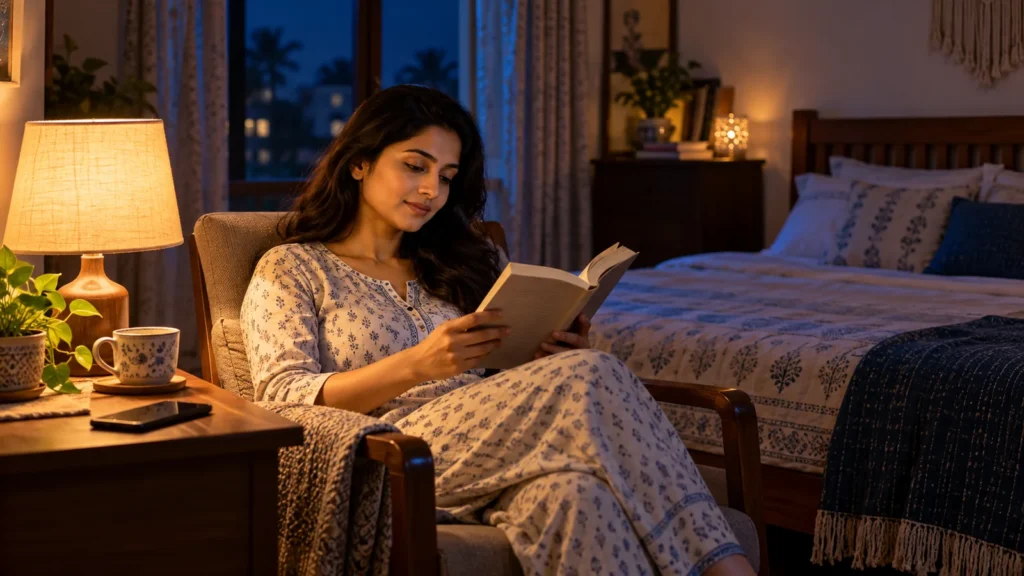
The idea of women quietly reading a book in solitude is often a myth. Once the door is shut, the private space can become a stage. Many women transform into pop stars or talk show guests in front of their mirrors. A hairbrush or deodorant can become a microphone for an impromptu concert, complete with stadium-level energy. Equally common are ‘fake interviews,’ where women imagine themselves as celebrities discussing their struggles with a journalist. These scenarios are powerful dopamine boosters, releasing feel-good hormones and providing a fun, imaginative escape.
3. Unconventional Grooming Habits
The societal pressure on women to maintain a flawless appearance often crumbles in private. Alone, women engage in grooming habits that might seem intense or even slightly unsettling to outsiders, but are deeply satisfying for them. This includes spending extended time in front of the mirror, meticulously extracting pimples or blackheads that might not even be visible to others. Plucking ingrown hairs or examining their bodies from various angles and poses are also common. This hyper-awareness of their physical form is part of a deep self-analysis that occurs when external scrutiny is removed.
4. The ‘No-Manners’ Eating Phase
The elegant way a woman might eat pasta on a date contrasts sharply with her behavior when dining alone at home. Table manners often take a backseat. Indulging directly from a jar of Nutella or peanut butter with a finger is not uncommon. Lounging on the sofa in awkward positions, perhaps with feet up, while binge-watching a favorite series and snacking on chips is a common sight. Spills on clothing are of little concern during these moments of liberation from the ‘perfection fatigue’ – a time dedicated solely to relaxation.
5. Bizarre Wardrobe Experiments
The common refrain, “I have nothing to wear,” often masks a complex relationship with one’s wardrobe. When alone, a woman’s room can become a private fashion runway. Outfits that would never see the light of day in public are tried on and combined. Pairing track pants with high heels for a mirror pose or trying on an old, heavy saree can be a significant form of private entertainment. Numerous selfies might be taken, most deleted, before ultimately returning to the comfort of familiar, loose pajamas and a t-shirt, proving that comfort often reigns supreme.
6. Emotional Release Through Overthinking and Crying
While often labeled as overly emotional, women tend to suppress their true feelings in public. Daily frustrations, harsh words from friends, or career anxieties are often internalized. In solitude, this emotional build-up can surface dramatically. Women may find themselves caught in deep overthinking spirals. Sometimes, they intentionally listen to sad songs or watch emotional movies to facilitate crying. This act, known as catharsis in psychology, helps release cortisol, the stress hormone. Crying acts as a system reset, after which they can wash their face and resume their ‘normal’ demeanor.
7. Talking to Oneself: Externalizing Thoughts
In private, women often become their own best friend and harshest critic. Talking aloud to oneself is a common practice. This can involve rationalizing decisions (“I shouldn’t have messaged him, I was so silly”) or providing commentary on daily tasks (“Now I need to drink water, then I’ll finish this series”). Psychologists suggest that externalizing thoughts through speech aids clarity and helps clear mental clutter. It’s a healthy way to process internal dialogue.
FAQs
Q1. Is talking to oneself a sign of a mental illness?
No, not at all. Self-talk is considered a healthy habit in psychology, helping to reduce anxiety and improve focus. As long as you are not conversing with an imaginary entity that responds, it is entirely normal.
Q2. Why do women engage in social media stalking?
This behavior stems from human psychology, often termed ‘morbid curiosity.’ Our minds are naturally inclined to want to know what’s happening in the lives of people we were once connected to, like ex-partners. It can serve as an ego boost or a way to find a sense of closure or satisfaction.
Q3. Does overthinking and crying alone worsen depression?
Initially, it can be a way to release stress, as crying releases endorphins that act as natural painkillers. However, if crying alone becomes a daily habit and prevents you from moving past the past, it could indicate clinical depression, necessitating professional help.
Disclaimer
This article is based on general psychological trends and observational data regarding human behavior. Individual experiences may vary. The information provided is for educational and entertainment purposes only. For any serious mental health concerns, always consult a certified therapist or counselor. The internet is not a substitute for professional medical advice.