Understanding Hindi and English Month Names: A Practical Guide
In our fast-paced world, knowing the names of months in both the Hindi (Indian Panchang) and English (Gregorian) calendars is often necessary. Whether you’re teaching children, tracking festival dates, or dealing with official matters, having accurate month names is essential. This guide offers a comprehensive and easily downloadable chart of Hindi and English month names to meet your needs.
Why Are Month Names Important?

Time is a fundamental aspect of our lives, and months are a primary way we measure it. The Gregorian calendar is used globally, while in India, the Indian Panchang (Hindi months) holds significant cultural and religious importance. Understanding both systems and their relationship helps us stay connected to our heritage while remaining globally aware.
The Gregorian Calendar (English Months): Global Standard
The Gregorian calendar is the most widely recognized calendar worldwide. It has 12 months, starting with January and ending with December. Each month has a fixed number of days, with February being an exception during leap years.
- January – 31 days
- February – 28/29 days
- March – 31 days
- April – 30 days
- May – 31 days
- June – 30 days
- July – 31 days
- August – 31 days
- September – 30 days
- October – 31 days
- November – 30 days
- December – 31 days
Memorizing these month names and their day counts is vital for everyone, from students to professionals, aiding international communication, travel, and business.
The Indian Panchang (Hindi Months): Our Cultural Heritage

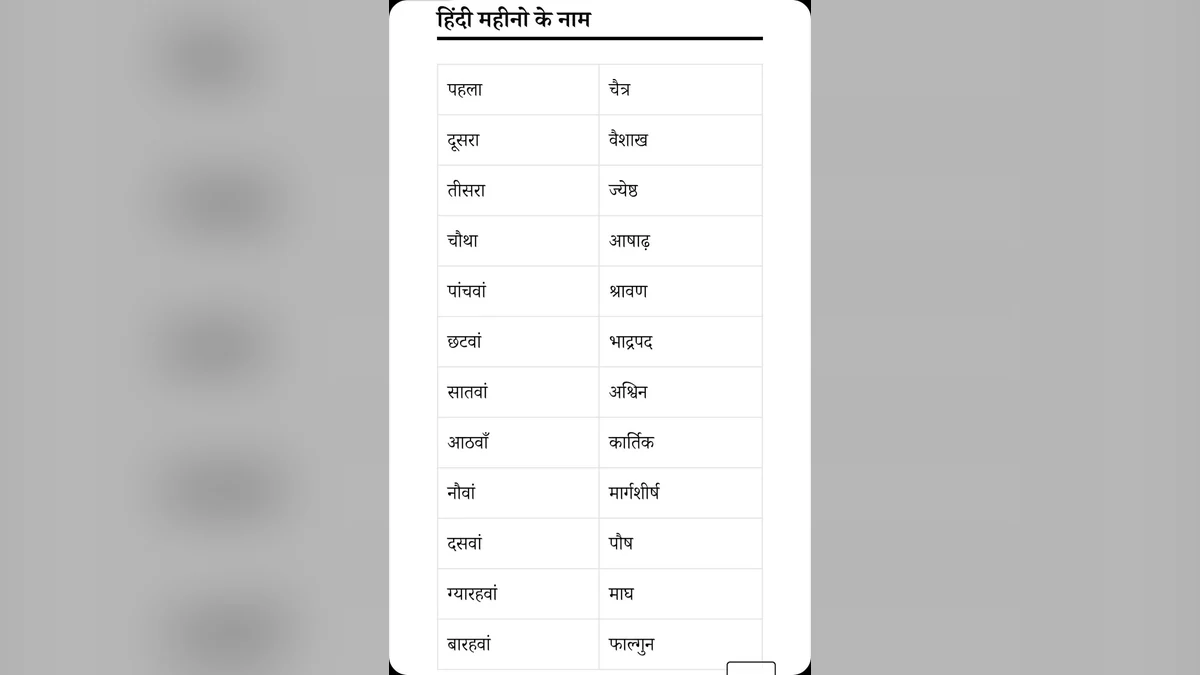
The Indian Panchang, also known as the Hindi calendar or Vikram Samvat, is based on lunar cycles. Its months are determined by the phases of the moon (Purnima and Amavasya), which is why they don’t perfectly align with the Gregorian months. Hindi months are crucial for Indian festivals, customs, and auspicious timings.
- Chaitra (March-April)
- Vaishakh (April-May)
- Jyeshtha (May-June)
- Ashadha (June-July)
- Shravana (July-August)
- Bhadrapada (August-September)
- Ashwin (September-October)
- Kartik (October-November)
- Margashirsha (November-December)
- Pausha (December-January)
- Magha (January-February)
- Phalguna (February-March)
These months are also associated with Indian seasons. For instance, Chaitra and Vaishakh fall in spring, while Shravana and Bhadrapada are monsoon months. Knowledge of Hindi months keeps us connected to our roots and helps us understand the timing of our festivals.
Why You Need a Hindi and English Month Names Chart
While both calendar systems have their uses, a combined chart is incredibly helpful when you need information from both simultaneously. Imagine needing to know which Hindi month Holi falls in and its corresponding Gregorian month. Or perhaps your child needs to list Hindi and English month names together for a school project. A clear, easy-to-understand chart provides an excellent solution.
Features and Uses of Our Chart

The Hindi and English month names chart is designed for your convenience. It features a simple and clear design for easy comprehension. You can download high-quality images of these charts, which are also printable. They can be used as wallpapers on your computer, tablet, or smartphone for quick reference. This chart is also a fantastic educational tool for teaching children both sets of month names, helping them learn and remember easily. For planning Indian festivals, the chart is invaluable as it shows the corresponding English months for each Hindi month.
Tips for Downloading and Using the Chart
Downloading the chart is straightforward. Simply click on your preferred chart image and save it to your device. We offer charts in various styles and designs to suit your taste. Ensure you download an image format suitable for your device. If printing, use good quality paper for clarity. For children, opt for colorful charts that are visually appealing and aid learning.
Conclusion
Knowing the names of months in both Hindi and English is invaluable for our daily lives and cultural understanding. This special chart is created to provide this information in an easy and accessible way. Download it, use it, and enhance your knowledge. We hope this chart proves useful, and you’ll share it with friends and family.
Frequently Asked Questions
What is the primary purpose of having a Hindi and English month names chart?
The primary purpose is to easily reference and understand the correspondence between the Indian Panchang (Hindi months) and the Gregorian calendar (English months), which is useful for cultural events, education, and daily planning.
How do Hindi months differ from English months?
Hindi months are based on lunar cycles and vary in length and start/end dates relative to the Gregorian calendar, which is solar-based and follows a more fixed structure.
Can I use this chart for educational purposes?
Yes, absolutely. The chart is an excellent tool for teaching children the names of months in both languages and understanding the differences between the two calendar systems.
Are the Hindi months aligned with specific seasons?
Yes, Hindi months are traditionally associated with Indian seasons. For example, Chaitra and Vaishakh are spring months, while Shravana and Bhadrapada are part of the monsoon season.
Where can I find a downloadable chart of Hindi and English month names?
You can find easily downloadable, high-quality charts on this page, designed for clarity and convenience.
























Share Your Opinion
Comments are closed on this post.