 Vista
BepiColombo is a joint ESA–JAXA mission that is placing two spacecraft in orbit around Mercury, and its key December 2026 milestone is the separation of the two orbiters from each other on 9–10 December 2026. According to ESA’s published timeline, the Mercury Transfer Module (MTM) separated on 3 September 2026, the stacked orbiters were scheduled for capture into Mercury orbit on 21 November 2026, ESA’s Mercury Planetary Orbiter (MPO) releases Japan’s Mio on 9–10 December, and science operations begin in April 2027. ESA notes that exact dates may change for operational reasons, so check ESA’s mission page for the latest status.
Update, 29 November 2026: ESA confirms Mercury orbit insertion on 21 November. The MPO and Mio spacecraft are scheduled to separate on 9–10 December; that separation has not happened yet.
What Is the BepiColombo Mission?
BepiColombo is Europe’s first mission to Mercury and the first to orbit the planet with two spacecraft at once. It was launched on 20 October 2018 on an Ariane 5 rocket and has spent about eight years travelling through the inner Solar System. The mission carries two science orbiters: ESA’s Mercury Planetary Orbiter (MPO), which studies the planet’s surface, interior and thin atmosphere, and JAXA’s Mercury Magnetospheric Orbiter (Mio), which studies the magnetic field and the surrounding space environment. The name honours the Italian scientist Giuseppe “Bepi” Colombo, whose orbital calculations helped shape the way earlier missions reached Mercury.
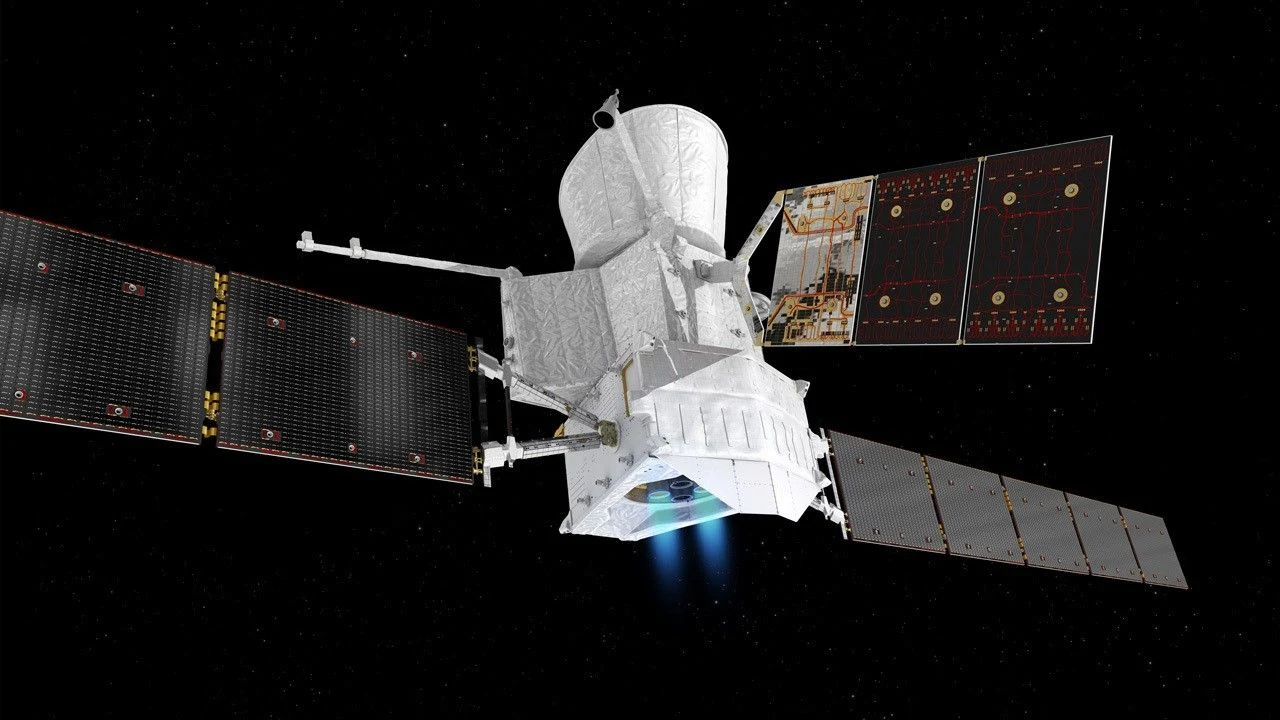
BepiColombo Mercury Mission 2026 Latest Updates
- 3 September 2026: ESA mission control confirmed that the Mercury Transfer Module separated successfully, beginning the arrival phase. MPO’s own thrusters then took over steering.
- 21 November 2026: ESA confirmed Mercury orbit capture of the stacked spacecraft; its 23 November update reported a stable orbit and the December separation still on track.
- 9–10 December 2026: planned separation of MPO and Mio.
- April 2027: planned start of science operations for both orbiters.
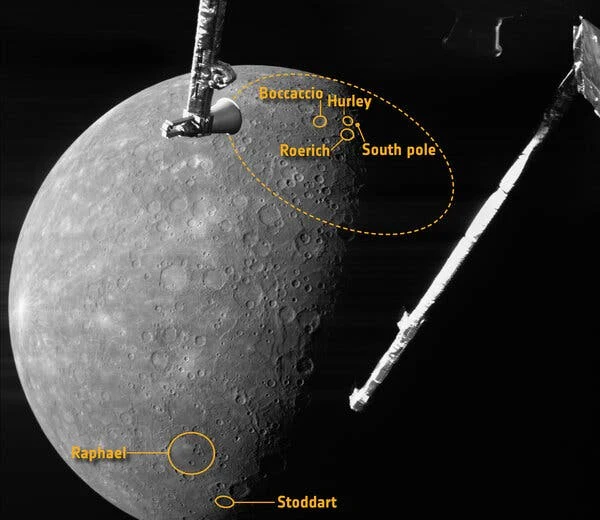
BepiColombo Separation December 2026
The separation in December is the final step that turns one stacked spacecraft into two independent orbiters. While travelling, Mio sits inside a protective sunshield structure called MOSIF, attached below MPO. After orbit capture, MPO releases Mio into Mio’s final elliptical polar orbit on 9–10 December 2026. MPO then manoeuvres to its own, lower polar orbit, and ESA’s timeline lists the release of Mio’s sunshield (MOSIF) on 16 December 2026. After that, both spacecraft go through commissioning of the spacecraft and instruments before the science phase starts.
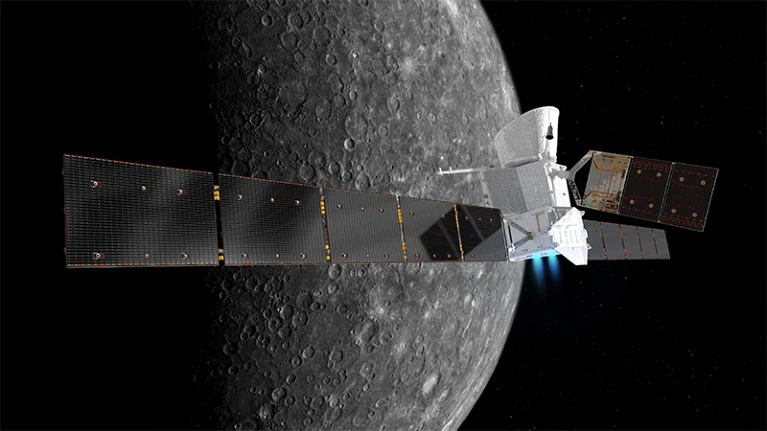
Spacecraft Structure and Scientific Instruments
| Component | Agency | Role |
|---|---|---|
| Mercury Transfer Module (MTM) | ESA | Provided power and propulsion for the journey; separated 3 Sept 2026 and has no antenna or computer of its own |
| Mercury Planetary Orbiter (MPO) | ESA | Maps surface, studies interior, exosphere and composition |
| Mercury Magnetospheric Orbiter (Mio) | JAXA | Studies Mercury’s magnetic field, magnetosphere and its interaction with the solar wind |
| Mio Sunshield and Interface Structure (MOSIF) | ESA | Shelters Mio during cruise; to be released after the orbiters separate |
Mercury Planetary Orbiter
MPO will orbit closer to the planet than Mio. Its suite of instruments is designed to image and map the surface, measure its chemical and mineral makeup, study the planet’s gravity and internal structure, and sample the thin exosphere. Together these allow scientists to link what the surface looks like with what the interior is doing.
Mercury Magnetospheric Orbiter (Mio)
Mio, built by Japan’s space agency JAXA, will travel in a more elongated orbit. Its job is to measure charged particles, plasma and magnetic fields around the planet and show how the solar wind shapes Mercury’s small magnetosphere. Flying two spacecraft at different distances at the same time lets scientists compare conditions in different places simultaneously.
Mercury Transfer Module
The MTM used solar-electric propulsion (ion thrusters) for most of the cruise. Having completed that job, the module can no longer operate independently after separation and stays on its own trajectory rather than orbiting Mercury.
Mission Timeline
| Date | Event |
|---|---|
| 20 October 2018 | Launch |
| 10 April 2020 | Earth flyby |
| 15 Oct 2020 and 10 Aug 2021 | Two Venus flybys |
| 1 Oct 2021 | Mercury flyby 1 |
| 23 June 2022 | Mercury flyby 2 |
| 19 June 2023 | Mercury flyby 3 |
| 4 Sept 2024 | Mercury flyby 4 |
| 1 Dec 2024 | Mercury flyby 5 |
| 8 Jan 2025 | Mercury flyby 6 |
| 3 Sept 2026 | MTM separates |
| 21 Nov 2026 | Planned capture into Mercury orbit |
| 9–10 Dec 2026 | MPO and Mio separate |
| 16 Dec 2026 | MOSIF sunshield release |
| 6 April 2027 | Planned start of science operations |
Gravity Assist Maneuvers
The nine flybys (one of Earth, two of Venus, six of Mercury) used the gravity of planets to slow the spacecraft relative to the Sun. This is necessary because a probe falling toward the Sun gains speed, and without braking it would simply sweep past Mercury.
Why Mercury Is Difficult to Reach
Mercury is the closest planet to the Sun, which sounds easy but is not. Travelling inward means falling deeper into the Sun’s gravity well, so the spacecraft gains speed that must be cancelled to enter orbit. Fuel for doing that with chemical engines alone would be enormous, which is why BepiColombo combined ion propulsion with repeated gravity assists. The environment is also harsh: strong sunlight, large temperature swings and intense radiation require heat shields, radiators and careful thermal design.
Solar Radiation and Temperature
Mercury’s dayside reaches roughly 430 °C, while its nightside can fall to about −180 °C because it has almost no atmosphere to retain heat. Spacecraft must survive both extremes and strong solar radiation.
What Scientists Want to Discover About Mercury
Mercury Surface Composition
Mercury is dense for its size, which suggests a very large metallic core. Mapping the elements and minerals on its surface helps test ideas about how the planet formed and why it contains more volatile material than some models predicted.
Mercury Magnetic Field
Mercury has a global magnetic field, which is unusual for such a small planet. It is much weaker than Earth’s. Measuring it from two vantage points at once helps scientists separate the planet’s internal field from effects of the solar wind.
Mercury Polar Ice
Despite the heat, radar and spacecraft observations indicate water ice in permanently shadowed craters near the poles. BepiColombo’s measurements will add detail on where it is and how it got there.
For another space mission, see ISRO’s Gaganyaan mission timeline.
BepiColombo vs NASA MESSENGER
| Feature | BepiColombo | NASA MESSENGER |
|---|---|---|
| Agencies | ESA and JAXA | NASA |
| Number of orbiters | Two (MPO and Mio) | One |
| Launch | 2018 | 2004 |
| In Mercury orbit | Capture planned 21 Nov 2026 | 2011 to 2015 |
| Special strength | Simultaneous measurements from two orbits | First spacecraft to orbit Mercury |
MESSENGER ended its mission in 2015 by impacting the surface. BepiColombo builds on its findings with new instruments and a two-spacecraft design.
Frequently Asked Questions
1. What is BepiColombo?
A joint ESA–JAXA mission with two orbiters to study Mercury.
2. When is the BepiColombo separation in December 2026?
ESA’s timeline lists MPO and Mio separating on 9–10 December 2026, subject to operational change.
3. What separated on 3 September 2026?
The Mercury Transfer Module, which powered the journey, separated from the two orbiters.
4. When will BepiColombo start science work?
Science operations are planned for April 2027 after commissioning.
5. Why did the journey take eight years?
The spacecraft needed nine gravity-assist flybys and gentle ion propulsion to slow down enough to enter Mercury orbit.
6. How is BepiColombo different from MESSENGER?
It has two orbiters working together, whereas MESSENGER was a single NASA spacecraft.
7. Will we get new pictures of Mercury?
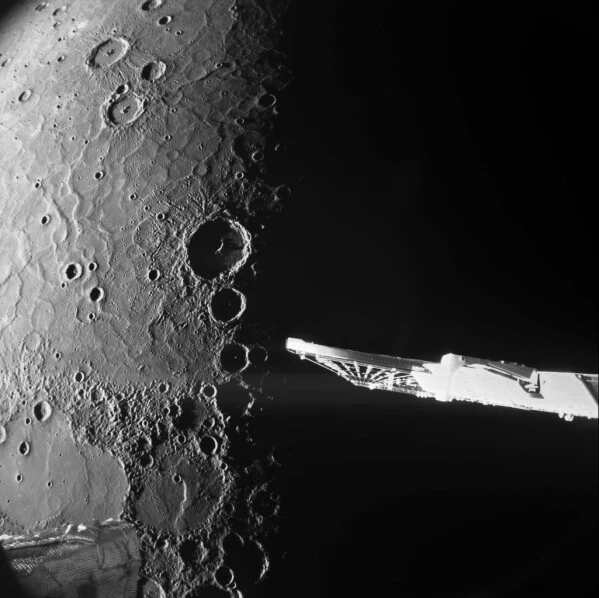
Yes, imaging is part of the mission, but the main science phase starts in April 2027; the mission has already released images from earlier flybys.
Conclusion
BepiColombo’s December 2026 separation completes an eight-year journey and prepares two orbiters for the most detailed study of Mercury yet. Dates come from ESA’s timeline and can shift, so rely on ESA for the latest confirmation.
Sources consulted: ESA (BepiColombo arrival timeline and Latest updates, September 2026; MTM separation report).


















Share Your Opinion
Comments are closed on this post.