 Vista
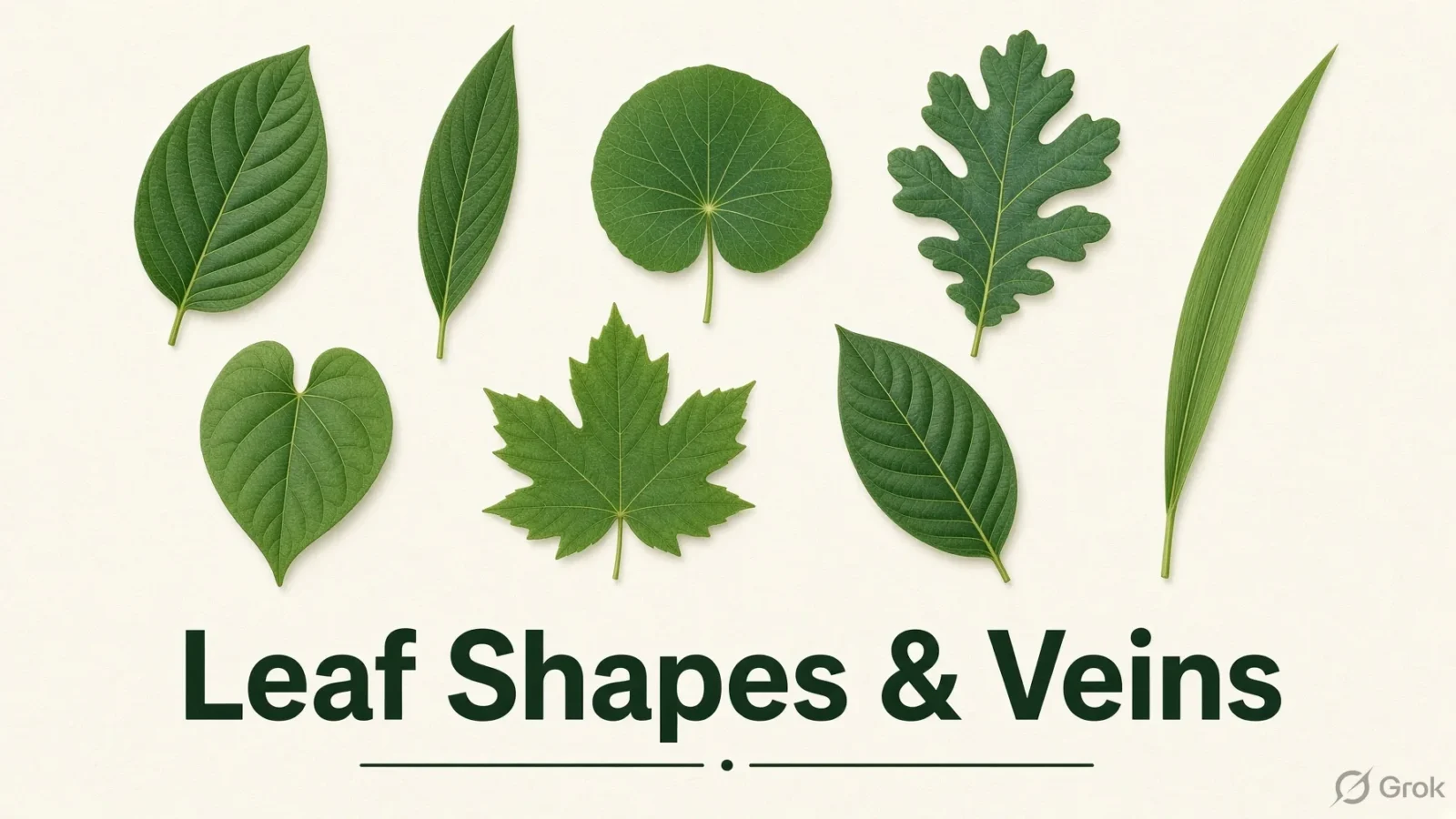
Leaves are usually the first thing people look at when identifying a plant: their shape, edge, vein pattern, arrangement and whether they are simple or compound. If you are searching for a botanical leaf shapes chart, a leaf margin identification chart or leaf venation types with pictures, and want to know how to identify plants by leaf shape, this guide explains those basic terms. One firm caveat: leaf features alone cannot establish a plant’s species, and they must never be used to decide whether a plant is safe to eat or use as medicine.
Parts of a leaf
A typical leaf has a blade (the broad green part), a petiole (the stalk) and sometimes a base that attaches to the stem. The central thick vein of the blade is the midrib. The bud at the junction of leaf and stem is an important identification clue, as you will see in the section on simple and compound leaves.
Common leaf shapes
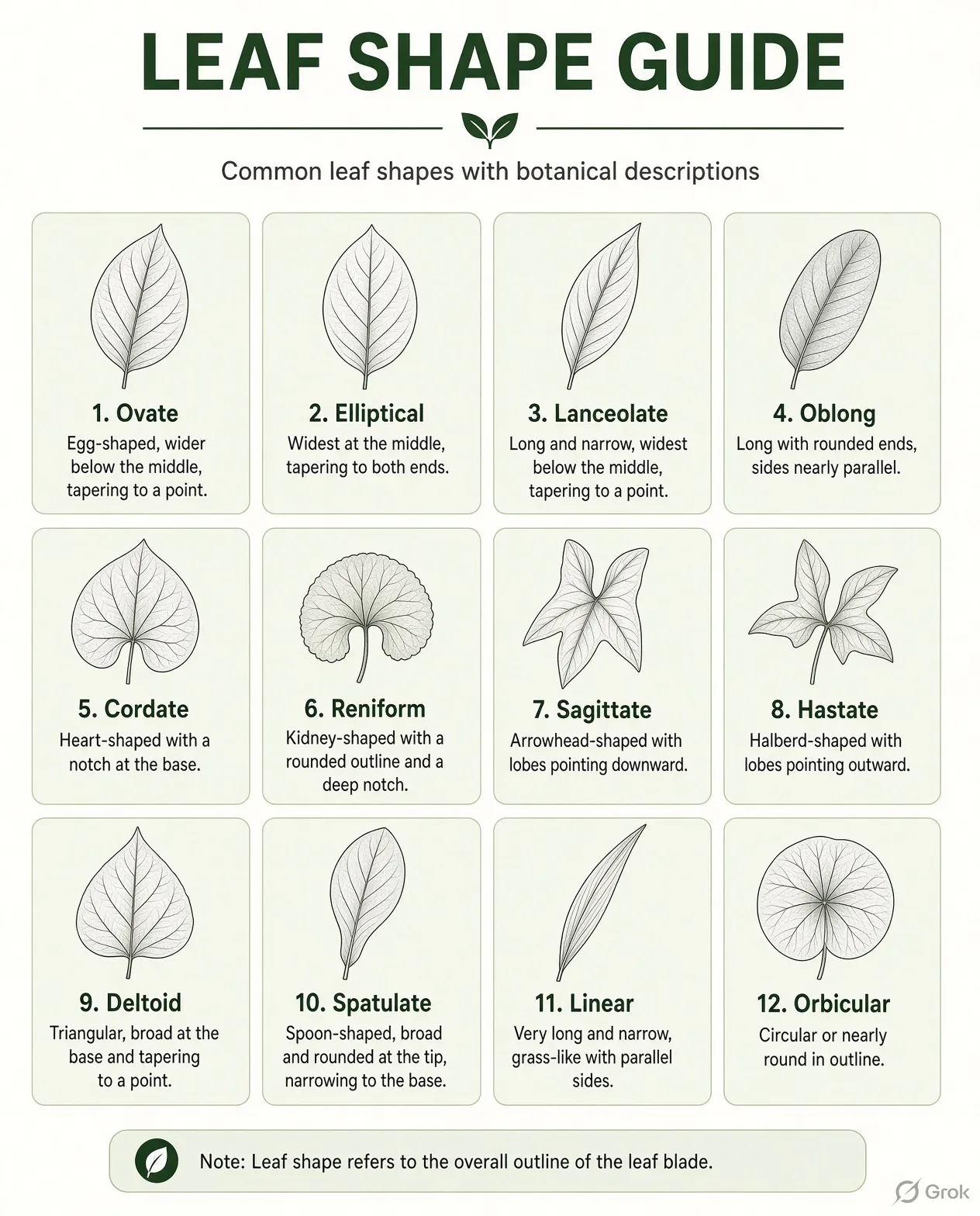
Ovate, lanceolate, cordate and more
| Shape | Description |
|---|---|
| Ovate | Egg-shaped, widest below the middle |
| Lanceolate | Long and narrow, like a spearhead |
| Cordate | Heart-shaped with a notch at the base |
| Orbicular | Nearly round |
| Linear | Very narrow and long, like grass |
Leaf margins
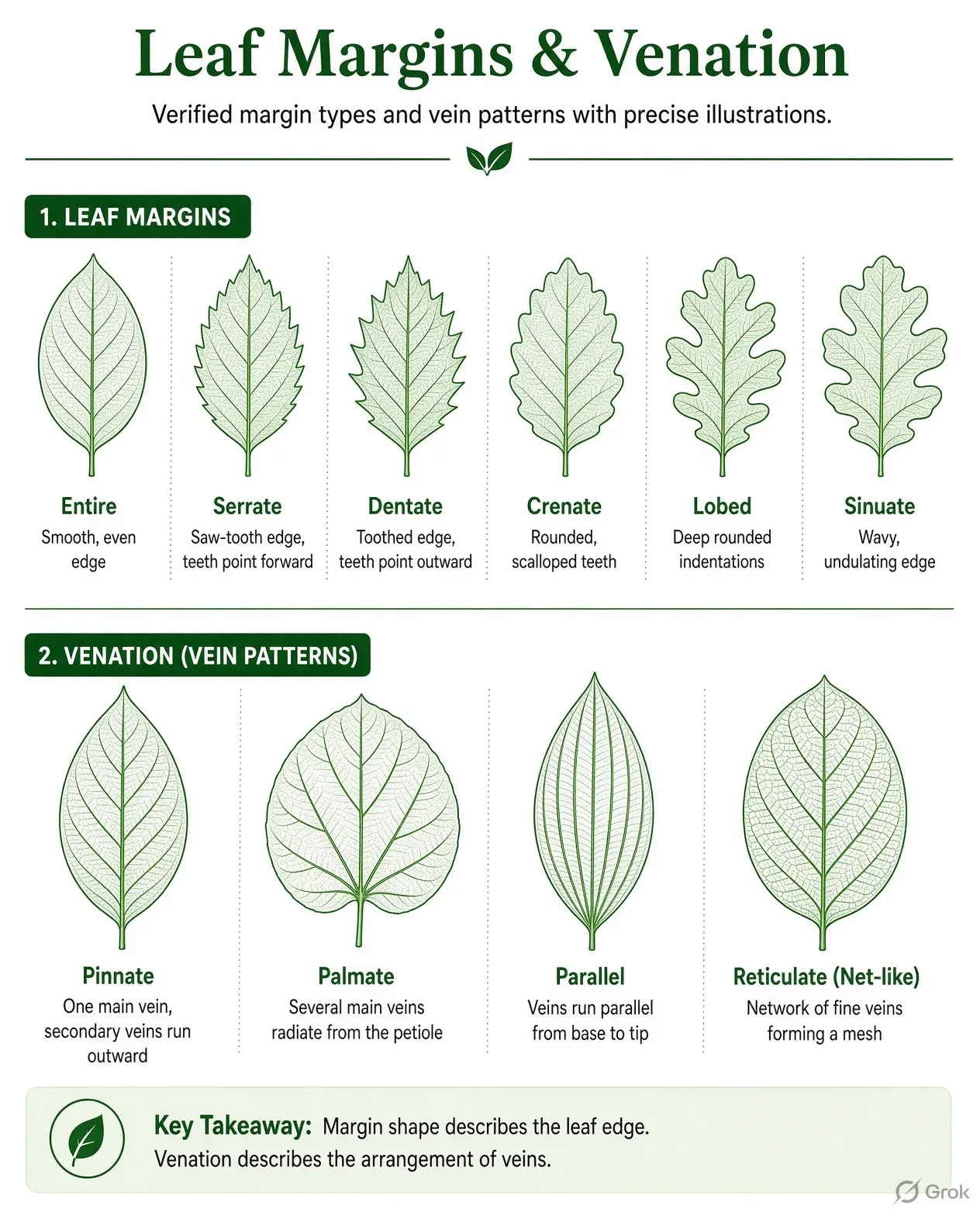
Entire, serrate, dentate and crenate
- Entire: smooth edge with no teeth.
- Serrate: saw-like teeth pointing forward.
- Dentate: teeth pointing outward.
- Crenate: rounded teeth or scallops.
To judge a margin, hold the leaf against the light and trace its outline. If the teeth are too small to see, a hand lens or the zoom on a phone camera helps.
Leaf venation
Pinnate, palmate and parallel veins
Pinnate venation has one main vein with branches along it; palmate venation has several main veins radiating from one point, like fingers from a palm; parallel venation has veins running side by side along the leaf, as in grasses. Parallel veins are common in monocots and net-like veins in dicots, but there are exceptions, so treat this as a tendency, not a rule.
How leaves are arranged on the stem
Check how leaves attach to the stem: alternate (one leaf per node), opposite (two leaves facing each other at a node) or whorled (three or more at a node). Arrangement is often a more dependable clue than shape, because shape can vary on the same plant.
Simple versus compound leaves
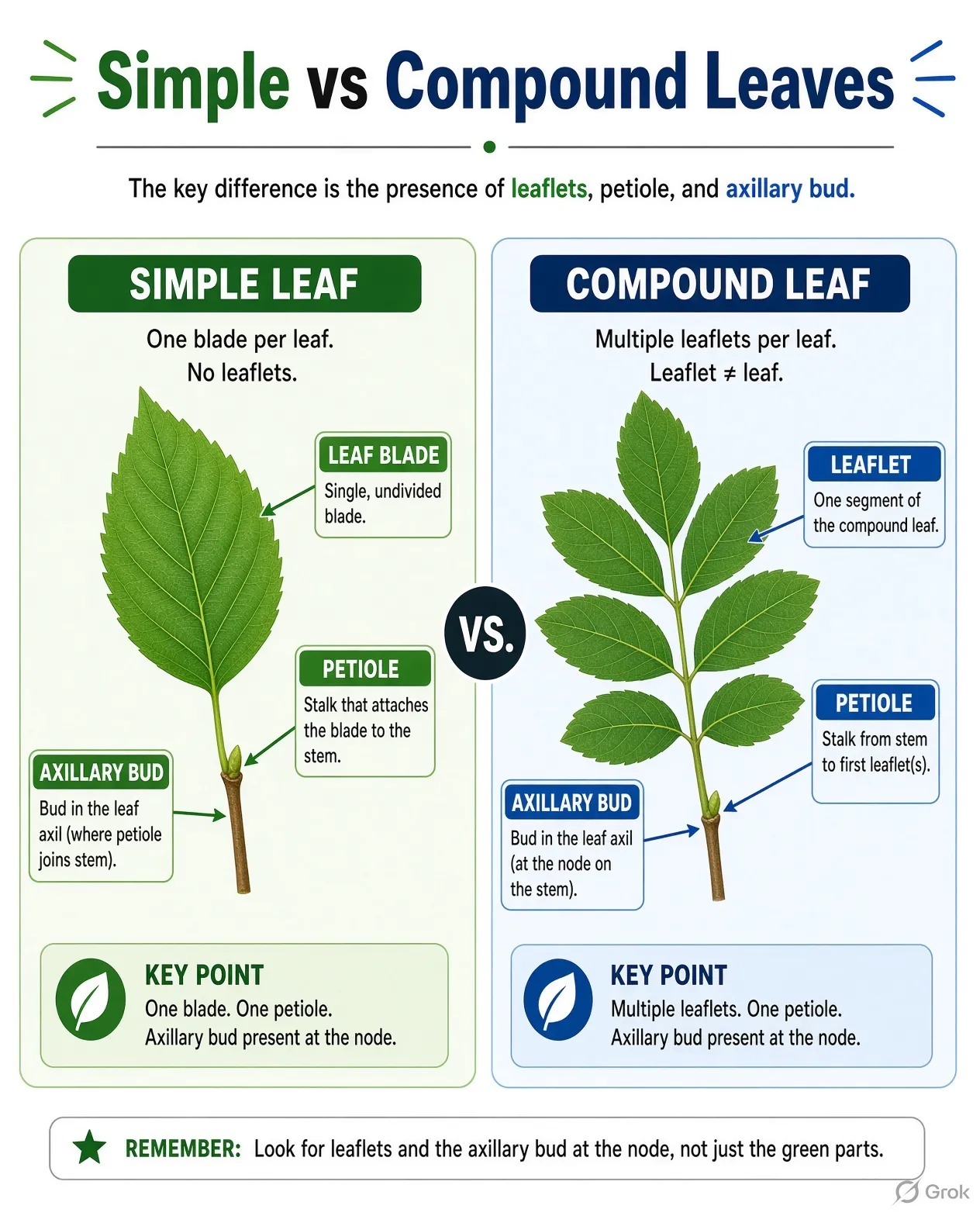
A simple leaf has one undivided blade. A compound leaf has several leaflets on a shared stalk. The tell-tale check is the bud: it sits where the whole leaf stalk joins the stem, not at the base of each leaflet.
Worked examples, practical checks and limitations
As illustrations: a peepal (sacred fig) leaf is broadly heart-shaped, while a neem leaf is compound. For real identification, combine leaf features with flowers, fruit, stem, bark and habitat. Leaf shape can also vary on one plant with sun, shade and age.
If leaves are turning yellow, see our plant nutrient deficiency chart for possible causes.
- Step 1: decide whether the leaf is simple or compound by finding the bud.
- Step 2: note the arrangement: alternate, opposite or whorled.
- Step 3: record shape, margin and venation.
- Step 4: add photos of flower, fruit, stem and habitat, then compare with a trusted flora or ask an expert.
Common mistakes and when to seek expert confirmation
Eating, brewing or feeding an animal a wild plant based on its leaves is dangerous, because many toxic plants resemble edible ones. Get confirmation from a botanist, a local agricultural extension office or a university herbarium.
Frequently asked questions
How do I identify plants by leaf shape?
Note shape, margin, veins, arrangement and simple or compound structure, then confirm with flowers, fruit and stem.
How do I tell a leaf from a leaflet?
Look for the bud: it is at the base of the whole leaf, not of a leaflet.
Can leaf shape tell me if a plant is edible?
No. Never judge edibility from leaves alone; get expert confirmation.
What do parallel veins indicate?
They are typical of monocots such as grasses, though there are exceptions.
What are the types of leaf margins?
Common ones are entire (smooth), serrate (forward saw teeth), dentate (outward teeth) and crenate (rounded scallops).
Can leaf shape differ on the same plant?
Yes. Sun, shade and age can change it, so examine several leaves.
Conclusion
Leaf vocabulary is the first step in plant identification, not the last. Combine several features and seek expert confirmation before relying on an identification.
Sources
- Plant Identification: Plant morphology, leaves (BC Open Textbooks)
- UT Austin: Botany basics, understanding leaves
- University of Rochester: leaf glossary















Share Your Opinion
Comments are closed on this post.