An old Bengali porcha is a starting point
A family file may contain a Bengali land record with a recognisable name but unfamiliar khatian, dag and mouza references. Before treating that name as an answer about today’s owner, identify what record the page represents and how it connects with the present information.
This guide concerns West Bengal. Do not transfer its procedures to Bangladesh or another state simply because a document looks similar. “Jomir porcha” may be a familiar everyday description; read the actual heading and issuing office on your page.
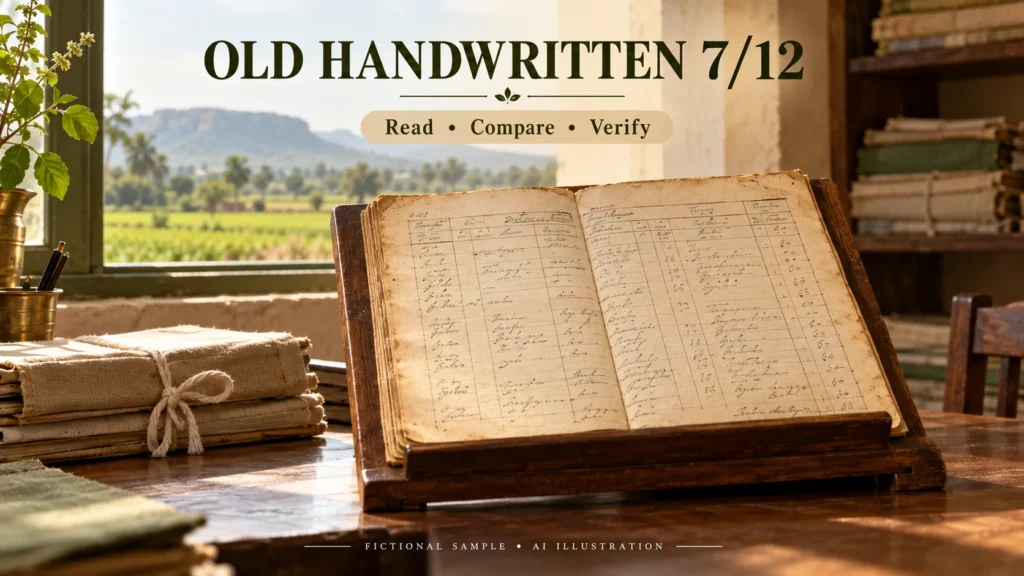
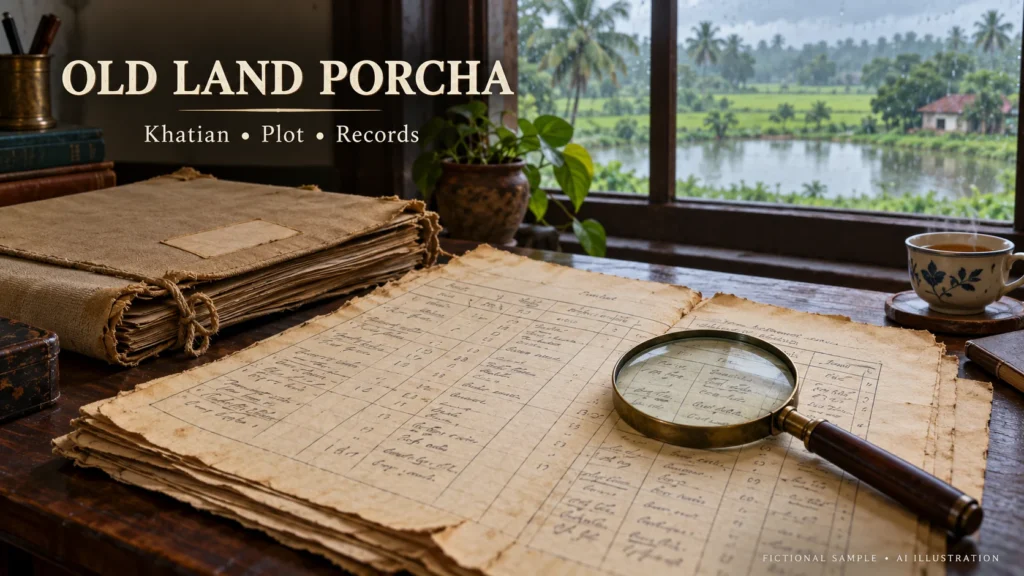
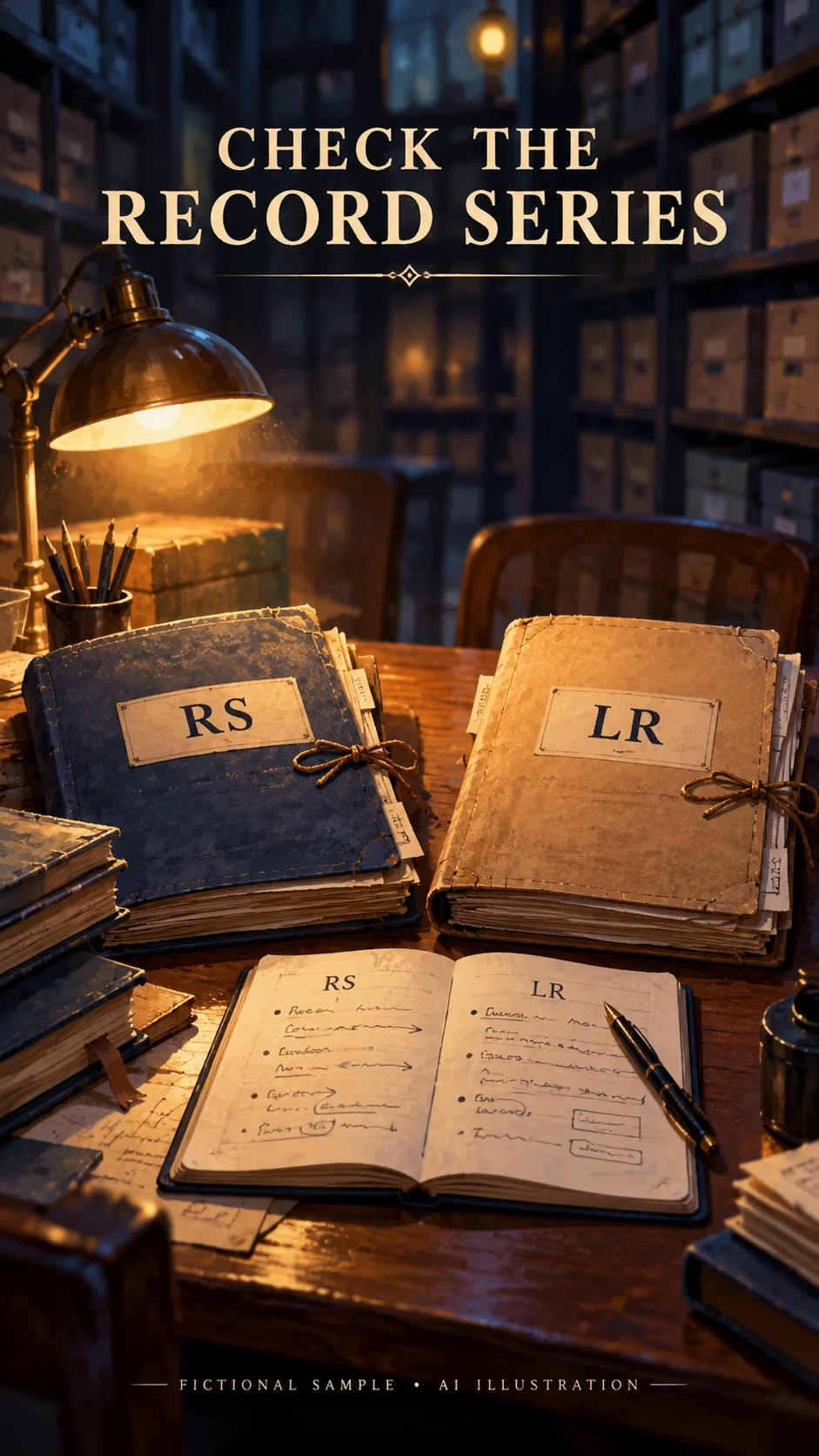
All three pictures are fictional AI illustrations. They are not authentic porcha records, certified khatians or records of a real family. Their invented writing contains no real information to recover.
Porcha, khatian, dag and deed: distinguish the references
In this context khatian or RoR concerns the land-record system, while dag or plot number refers to a parcel. Do not assume a khatian number is a plot number. Entering one in the other search field can lead to the wrong result.
A registered deed is a different source. A revenue entry and the terms of a registered instrument answer different questions. Obtaining a porcha does not automatically provide the complete chain of transactions affecting the property.
Identify the mouza, administrative context and record series. The same-looking number in another mouza or series does not establish the same property. Settle document identity before comparing entries.
Details to transcribe from the old page
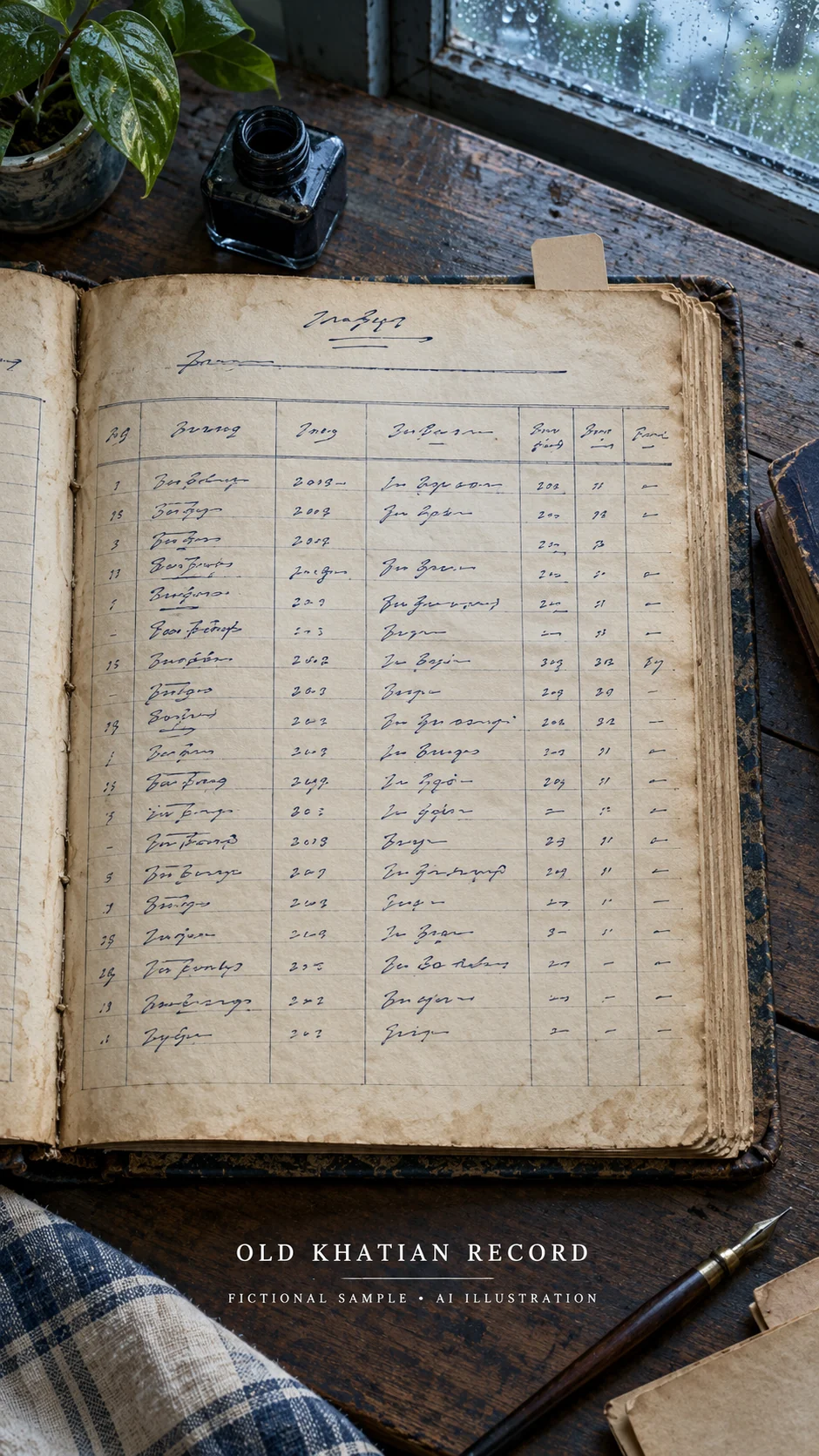
Record district, block or the administrative reference actually shown, mouza and any J.L. number. Preserve historical place names rather than silently replacing them with guesses about current names.
Note the heading, any RS or LR series reference, record period and copy-issue date separately. A historical record can be copied much later; one date does not necessarily date every entry.
Transcribe khatian and plot numbers separately. Preserve uncertainty about Bengali numerals. Read names alongside parent or spouse details, share, area unit and remarks. The whole plot’s area need not equal an individual’s recorded share.
Do not infer the meaning of a crossing-out, different ink or margin note from appearance alone. Look for the related change or continuation. Mark uncertain wording as unreadable rather than creating a confident transcription.
Where to seek a historical or certified copy
Use the official Banglarbhumi service. NIC describes digitally signed RoR, plot information and map-delivery services. Keep an informational search result separate from the form of issued copy required for your particular purpose.
Paschim Medinipur district administration lists certified RoR, plot information and scanned RS records among services available through BL&LRO offices. Enquire about the required mouza, period and record type rather than assuming universal coverage.
No online result does not prove that a record never existed. First check mouza, number and series. A record search, an archival scan and a current extract can be different requests.
Comparing RS–LR and older–current plot references
Do not assume RS and LR pages are merely older and newer printouts of the same entry. Their record series and parcel context matter. Uttar Dinajpur’s land-office help list provides separate guides for Hal–Sabek searches and RS Khatian requests.
In a fictional example an older dag “A” and a current reference “B” cannot be linked solely through a similar personal name. Seek the available correspondence or intervening record. The letters refer to no real plot.
Subdivision, changes or the relevant survey context may matter, but a single explanation should not be assigned to every case. Nor should a one-to-one correspondence be promised.
Write down the two sources, what agrees and what still requires confirmation. Do not add a guessed modern number to the old copy and present it as original information.
Advice: preserve the page and ask a clear question
Keep complete, clear images, including the reverse, margins and page references. Retain the source separately from any contrast-enhanced reading copy. Do not fill missing wording and present the result as a corrected original.
Treat OCR or AI readings of Bengali as suggestions, not certified translations. If a decision depends on a name or numeral, seek confirmation from the relevant records and appropriate expertise. Conceal unnecessary personal information in public copies.
An enquiry can identify mouza, known khatian, plot and series, then ask about available records, certified copies and older–current number correspondence. This organises the question; it is not a prescribed government application.
Retain applications, receipts and responses. Check current menus, charges and eligibility with the responsible service. No fixed fee, universal digitisation coverage or guaranteed correction time is promised here.
Five questions about old Bengali land records
Are khatian and plot numbers interchangeable? Do not treat them as the same identifier.
Does this procedure cover Bangladesh? No. This guide concerns West Bengal services.
Where can an old RS record be requested? Ask the relevant BL&LRO about availability and procedure.
Is an online information view automatically certified? Check the issued copy and official certification arrangements.
Does an old porcha finally decide today’s ownership? Later records, law and the facts must also be considered.
Sources and illustration disclosure
Disclaimer: general information about West Bengal land records, not legal advice on an individual title, boundary or dispute. Procedures depend on records and circumstances. All three pictures are AI-generated fictional illustrations. Sources checked: 25 October 2026.
- Banglarbhumi: official West Bengal land-record portal
- Government of West Bengal, Paschim Medinipur: RoR and scanned RS records
- NIC Informatics: eBhuchitra and Banglarbhumi, digitally signed record services
- DL&LRO Uttar Dinajpur: Hal–Sabek, RS Khatian and RoR help guides
- NIC government presentation: Banglarbhumi services, 2026
- Supreme Court of India, 19 December 2025: mutation and title, paragraph 19
Related: handwritten Maharashtra Satbara and digital-record comparison
Related: old Urdu and Modi land documents, transcription and translation